Tiles
Floor tiles 120 × 120 cm: for which room, substrate, adhesive and handling
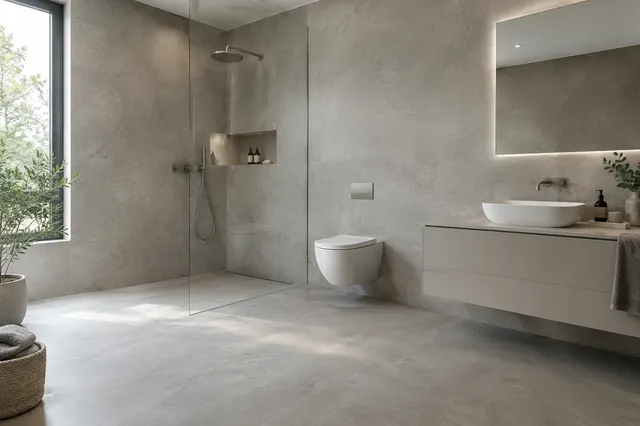
Tiles 120 × 120 cm have only 0.69 tiles and 1.7 meters of grout joints per m² – the floor appears almost as a single surface. One tile has 1.44 m², therefore it requires a very flat substrate, flexible adhesive applied to both the surface and the back, two people with suction cups, and a cutter longer than 120 cm. It shines most in a larger bathroom, in the living room, and in a shower with a drain.
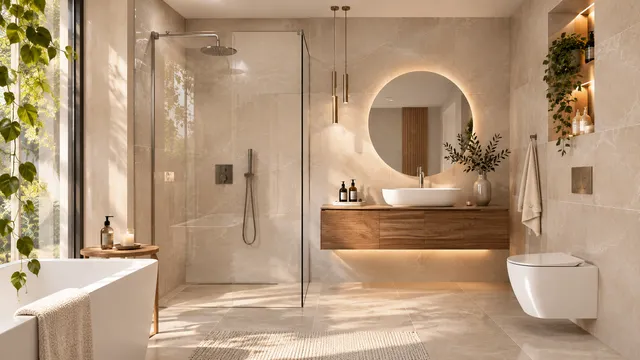
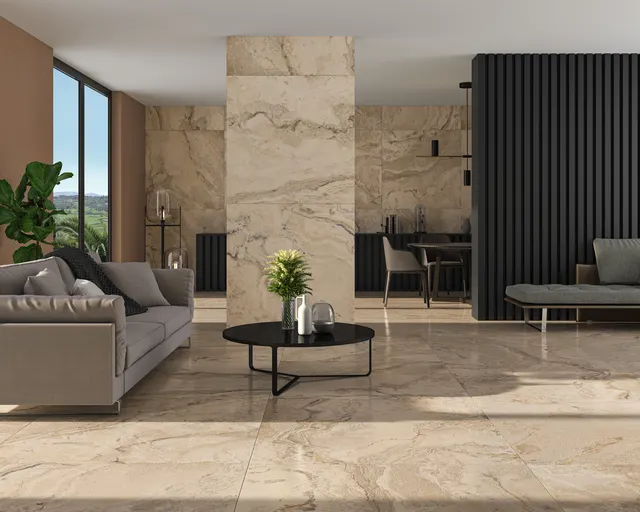
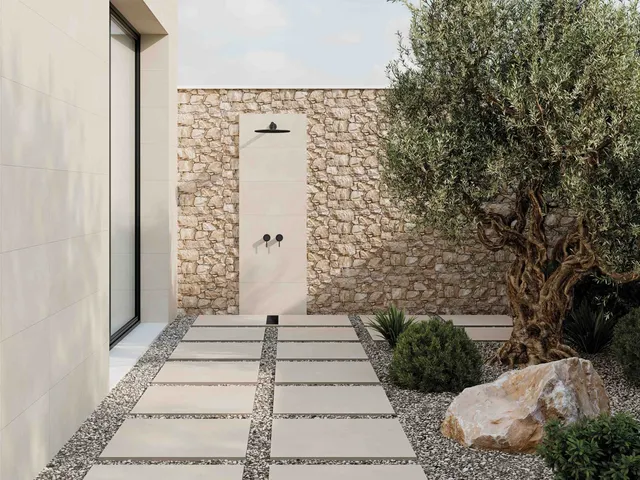
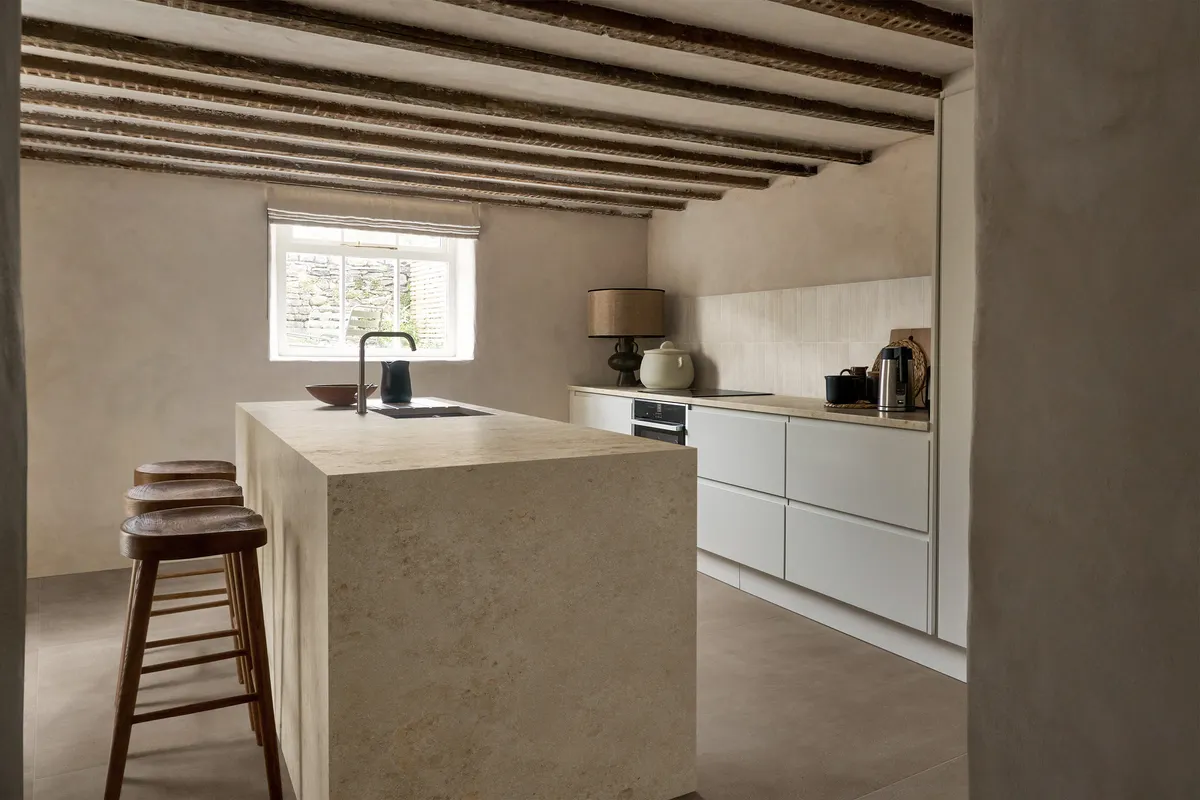
In the photo: Marazzi Grande Resin Look
Square 120 × 120 cm (also 120x120 or 1200 × 1200 mm in e-shops) is the largest format that is still commonly laid on the floors of flats and houses. As of November 2026, there are over 200 tiles in this size on vkupelni.sk – from concrete and stone to marble and solid-colour surfaces. Larger sizes are only plates 120 × 280 and 160 × 320 cm, which are mainly used on walls. An overview of all formats can be found in the article Formats of Wall and Floor Tiles.
Floor tiles 120 × 120 cm in numbers
| Data | 120 × 120 cm | For comparison |
|---|---|---|
| area of one tile | 1,44 m² | 60 × 60 cm: 0,36 m² |
| pieces per 1 m² | 0,69 | 80 × 80 cm: 1,56 |
| grout joints per 1 m² | 1,67 m | 60 × 120 cm: 2,5 m |
| for 10 m² of flooring | 7 tiles and 17 m of grout joints | 60 × 60 cm: 28 tiles and 33 m of grout joints |
| thickness | 6 mm or 9 to 10 mm | standard porcelain stoneware 8 to 10 mm |
| weight of one tile (estimate) | around 22 kg at 6 mm, around 32 kg at 9 mm | according to the weight of Marazzi Grande slabs |
Weight is an estimate: Marazzi states that a 160 × 320 cm slab with a thickness of 6 mm weighs around 77 kg in the package, which is about 15 kg per m². For 1.44 m², this comes to approximately 22 kg, and at a thickness of 9 mm, 32 kg. The exact weight can be found in the technical sheet of the specific series.
Where does 120 × 120 fit
- Larger bathroom from about 8 m² – with straight walls and few corners. In a 3 × 3 m bathroom, two whole tiles and a 60 cm strip will fit, at 2.4 m width exactly two tiles.
- Shower with a drain at the wall – the floor slopes in one direction, so the large tile is only cut straight and there are almost no grout joints in the shower. With a point drain in the centre, 120 × 120 cm is unsuitable – the tile would have to be cut to fit. More in the article Bathroom without grout joints.
- Living room connected to the kitchen – on a large surface, the pattern of stone or concrete stands out without the disruptive grid of grout joints.
- Wall behind the bath or sink – a tile 120 × 120 cm will cover a continuous area without a horizontal grout joint up to a height of 120 or 240 cm. Check the weight limit for wall tiles on the drywall installation wall, see Drywall in the bathroom.
- A small and irregular bathroom is less suitable – around the bath, installation wall, and soil stack, most tiles would need to be cut, resulting in significant waste. Opt for 60 × 60 cm or 80 × 80 cm there.
Transport and handling
A tile 120 × 120 cm cannot be bent and must not be carried flat by one edge – it would break under its own weight. It should be transported upright, by two people using suction cups or in a frame. Measure the route before purchasing: doors, corridors, stairs, and lift. The diagonal of the tile is almost 170 cm, so it will only fit through doors either upright or on its side. If the pallet won't fit in the lift, be prepared to carry it up the stairs or take another route.
Substrate: flatness and tolerances
The larger the tile, the larger the area where unevenness will be noticeable. The American standard ANSI A108.02 allows a substrate deviation of no more than 3 mm over 3 m and 1/16 inch (about 1.6 mm) over 60 cm for tiles with at least one side measuring 38 cm. Therefore, level the floor with self-levelling compound and the wall with a filler – not with a thicker layer of adhesive.
Tiles are not perfectly flat either. The American standard ANSI A137.1 allows for an edge warp of up to 1.8 mm and a dimensional difference within the calibration of up to 2 mm for rectified porcelain tiles longer than 61 cm. Therefore, for 120 × 120 cm, use levelling clips at every grout joint, check with a long level, and ensure tiles are from the same batch and calibration.
Adhesive and installation
- Adhesive: flexible cement adhesive class C2 with deformability S1 or S2 according to STN EN 12004 – S1 means a transverse deformation of at least 2.5 mm, S2 at least 5 mm. The specific type is indicated in the technical data sheet of the tiles.
- Double application: adhesive on the substrate with a notched trowel and also thinly on the back of the tile. The ANSI A108.5 standard requires contact on at least 80% of the surface in dry areas and 95% in wet areas, such as in the shower and bathroom by the bath. For a tile of 1.44 m², a void under the corner will result in cracking under the first significant load.
- Direction of notches: The Ceramic Tile Foundation recommends pulling adhesive notches parallel to the shorter side for large tiles and shifting the tile perpendicular to the notches – this allows air to escape. For squares, choose and maintain your direction.
- Consumption: Ceresit states 4.8 kg of adhesive per m² for tiles over 30 cm with 12 mm notches. For the combined method, consumption is higher – for 10 m², count on at least 48 kg.
- Grout joint: 2 to 3 mm according to the technical data sheet. RAKO specifies at least 2 mm for rectified products, while the American standard ANSI A108.02 requires at least 3 mm for porcelain. Grout for tiles 9 mm thick and a 2 mm joint will be about 0.05 kg per m² according to the Mapei formula.
Cutting, holes, and waste
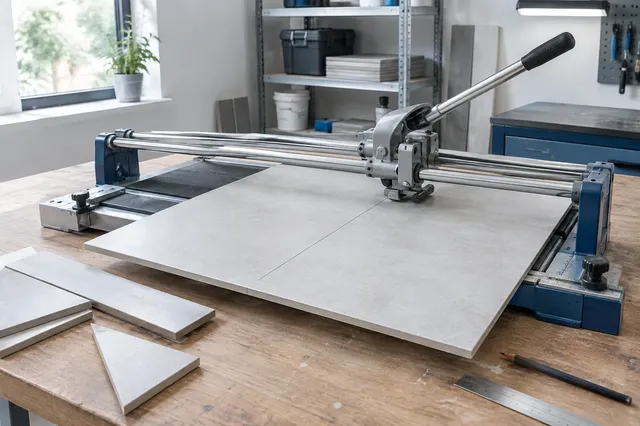
For a straight cut on a 120 cm tile, you need a cutter with a cutting length over 120 cm or a system with a rail for large formats – a standard manual cutter with a cut of 64 or 85 cm is insufficient. Holes for drains, taps, and pipes are drilled with diamond core bits. Thin slabs with a thickness of 6 mm require a special cutter and an experienced tiler. Procedures and tools are described in the article Cutting wall and floor tiles.
A cut from a 120 × 120 cm tile is often unusable elsewhere. Allow for a reserve of 15 to 20%, more in an irregular room – RAKO recommends increasing the quantity by up to 25% for large formats starting from 45 × 45 cm. For such a large tile, it is worth drawing the layout on the floor plan and counting pieces, not just m². The tile quantity calculator and our 3D bathroom planner will help show joints based on your dimensions.
Laying straight and staggered
Floor tiles 120 × 120 cm are almost always laid straight, joint to joint – the grid is so sparse that staggering makes no sense. If you still want to stagger, the American standard ANSI A108.02 allows a maximum stagger of 33% for tiles with a side of 38 cm, which is 40 cm, unless the manufacturer specifies otherwise. Start the layout from the room's axis or from the most important wall so that the cut strips are equally wide on both sides.
Combinations with other formats
- 120 × 120 cm on the floor and walls – the same series on all surfaces, making the bathroom appear as if carved from a single stone. Walls up to 240 cm high will be without cuts at height.
- 120 × 120 cm and 60 × 120 cm – modules connect, wall joints can continue into floor joints if both tiles are from the same rectified series.
- 120 × 120 cm and slabs 120 × 280 cm – a floor of large squares and walls from floor to ceiling without a horizontal grout joint.
- 120 × 120 cm and mosaic – only if there is a point drain or niche in the shower, otherwise keep large format everywhere.
What to choose and how much it costs
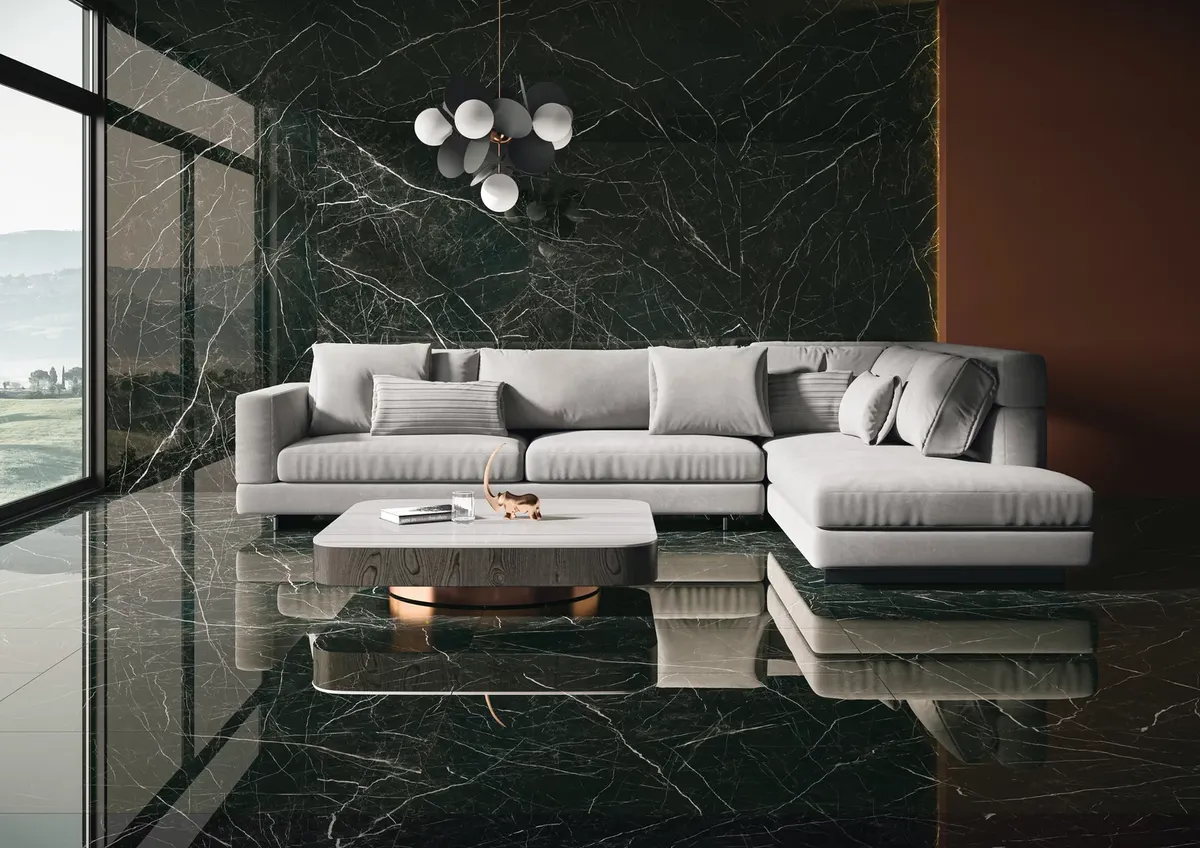
When choosing, pay attention to the surface and slip resistance. Glossy and polished floor tiles 120 × 120 cm often have class R9 – for example, Marazzi Grande Marble Look Statuario Lux with a thickness of 6 mm is R9 according to the e-shop and suitable only for interiors. For bathrooms, a matte floor tile with R10 is safer, R11 or class B for showers. The matte Marazzi Mystone Berici Bianco measures 1200 × 1200 × 9 mm, is rectified, frost-resistant, and has variability V2. The article Tile parameters explains what the classes and abbreviations mean.
Prices on vkupelni.sk (as of November 2026) range from approximately 56 €/m² for custom order floor tiles to 86 to 91 €/m² for the Marazzi Mystone Berici, Marazzi Slow, and Prissmacer Lab.Iron series, up to 195.55 €/m² for ABK Interno 9 Wide and 287.71 €/m² for glossy Marazzi Grande Marble Look. You can find the entire offer under the link wall and floor tiles 120 × 120 cm on vkupelni.sk.
Tiles 120 × 120 cm in the photos
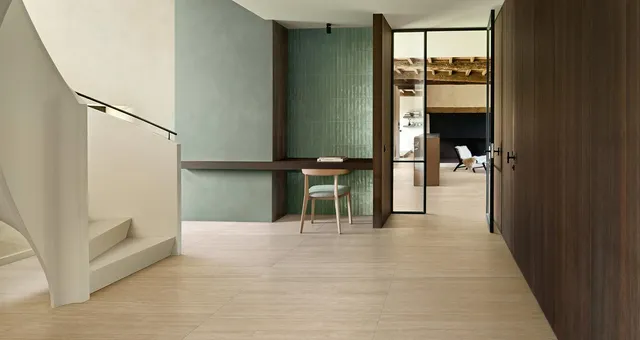
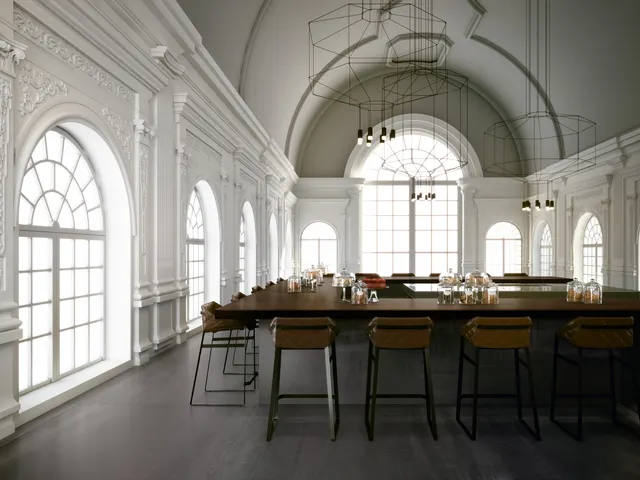
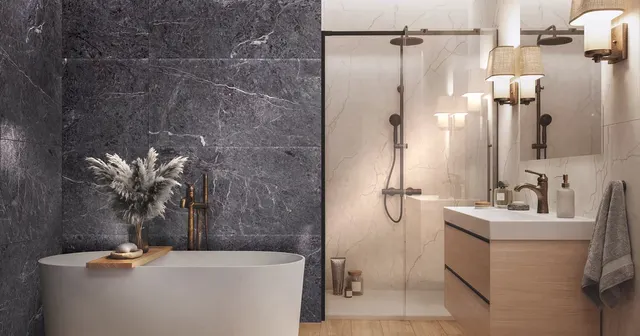
Collections from the photo gallery and completed visualisations featuring the 120 × 120 cm format on the floor or walls. The collection photos are from the manufacturers.
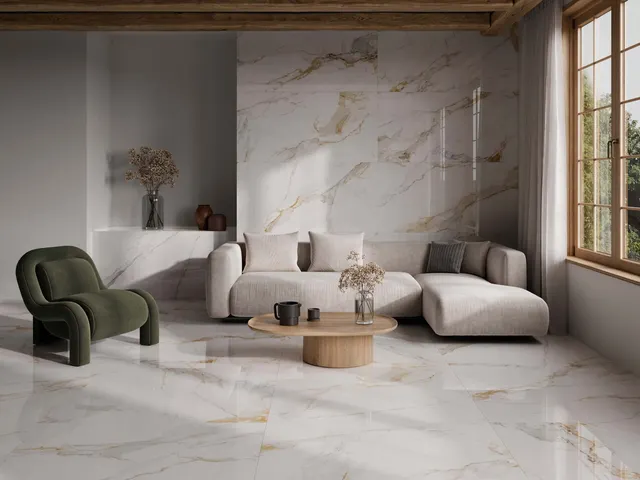 EcoceramicMarshall
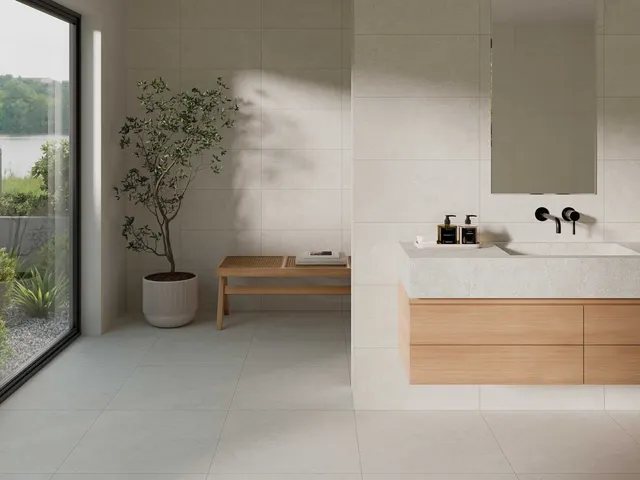 EcoceramicBabilon
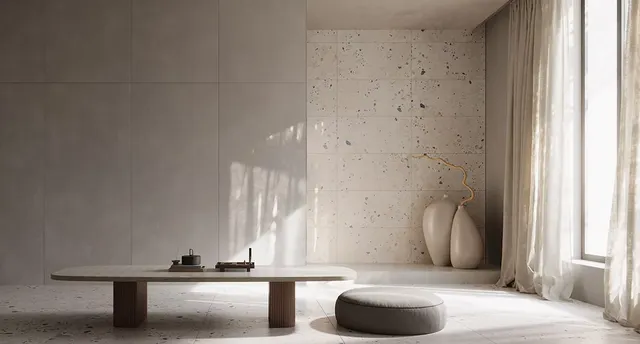 ParadyżArchiteq
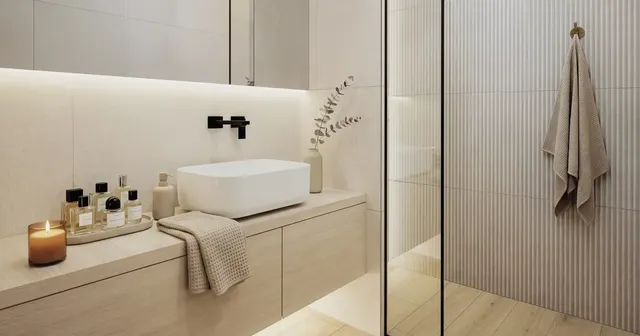 ParadyżConvero
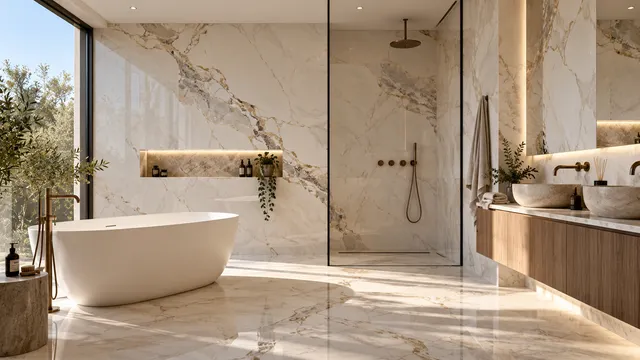
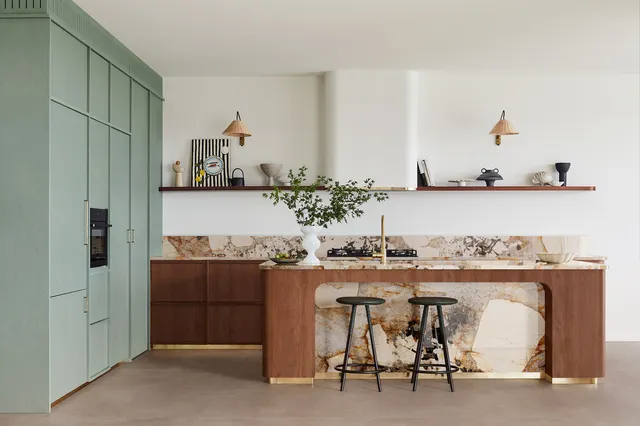 MarazziGrande Marble Look
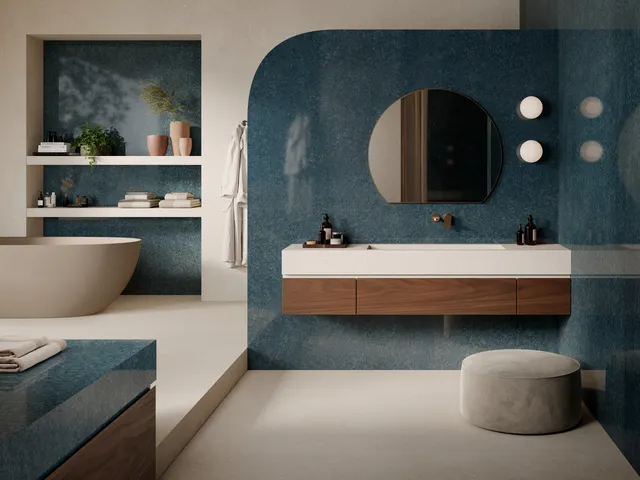 MarazziGrande Lume
In the vkupelni.sk e-shop in the size 120 × 120 cm: Marazzi GRANDE MARBLE LOOK, Marazzi MYSTONE PIETRA LIGURE, Marazzi SLOW, Marazzi SLOW COLD, Paradyż Fortess Base Beige, Ecoceramic ICELAND, Rako FLY. Additionally: all wall and floor tiles 120 × 120 cm on vkupelni.sk · all collections 120 × 120 cm in the photo gallery.
Common mistakes
- Purchased without route measurement – the pallet cannot fit in the lift and the tiles must be carried up the stairs.
- Substrate without level control – unevenness under a large tile will cause hollows and edge overhangs.
- Adhesive only on the substrate – without application on the back, hollows will remain under the corners.
- Glossy floor tiles R9 in the shower – slippery on wet surfaces; R11 or class B is required in the shower.
- Small reserve – a damaged tile of 1.44 m² is difficult to replace with the same batch.
What next
- 1. View
- 3D bathroom planner – try the 120 × 120 cm tiles with the dimensions of your bathroom and view the grout layout.
- 2. Calculate
- calculation of the amount of wall tiles and floor tiles with a reserve and consumption of adhesive and grout
- 3. Samples
- view samples at the TGB store in Senec, Bratislavská 71 – arrange a visit
Colours in this format: white · light grey · anthracite · black · beige · brown and wood · green · blue · terracotta – and colour combination table.
Sources: Floor Trends – ANSI A108.02: substrate flatness, grout joint, displacement, and edge overhangs; Ceramic Tile Foundation – adhesive contact 80% and 95% (ANSI A108.5); Ceramic Tile Foundation – adhesive under large wall tiles; TileLetter – tolerances for large formats (ANSI A137.1); technical data for Marazzi Grande (slab weight 160 × 320 cm with a thickness of 6 mm); RAKO – customer information sheet; technical data sheet for Ceresit CM 11 Plus (consumption based on tile size and trowel notches, combined method); technical data sheet for Mapei Ultracolor Plus (grout consumption formula); STN EN 12004 (adhesives C1, C2, T, E, S1, S2), STN EN 13888 (grouts CG2), STN EN 14411 (groups by water absorption), DIN 51130 and DIN 51097 (slip resistance), EN ISO 10545-7 (PEI); parameters and prices for 120 × 120 cm tiles on vkupelni.sk (as of November 2026); our articles Cutting tiles and floor tiles, Bathroom without grout joints, and Plasterboard in the bathroom.
Terms in the glossary: Gres (porcelain stoneware tiles) · Linear shower drain · Floor drain (point drain) · Moisture-resistant plasterboard · Installation wall · Soil stack (riser)
Frequently Asked Questions
How many tiles 120 × 120 are needed for 1 m²?
Approximately 0.69 tiles, one tile has 1.44 m². For 10 m² of flooring, that’s 7 tiles without cutting; with a reserve of 15 to 20%, it’s better to have 8 to 9.
How much does a tile 120 × 120 weigh?
Depending on the thickness. At 6 mm around 22 kg and at 9 mm around 32 kg – estimate based on the weight of Marazzi Grande slabs (about 15 kg per m² at 6 mm). The exact weight is provided in the technical data sheet.
Is tile 120 × 120 suitable for a small bathroom?
Rather not. In a small and irregular bathroom, most tiles would need to be cut, resulting in significant waste. Better options are 60 × 60 or 80 × 80 cm, or 120 × 120 cm only on a flat wall.
What adhesive for tile 120 × 120?
Flexible cement adhesive C2 with deformability S1 or S2 according to STN EN 12004, applied to both the substrate and the back of the tile. The specific type is determined by the technical data sheet of the tile.
What tile cutter for tiles 120 × 120?
With a cut length over 120 cm or a system with a rail for large formats. A standard cutter with a cut of 64 or 85 cm is insufficient for this format.
Can tile 120 × 120 be used in the shower?
Yes, if there is a drain in the shower and the floor slopes in one direction. Choose slip resistance R11 or class B. For a point drain in the centre, mosaic or a smaller format is better.
AI Advisor
Have a question on the topic? Ask the advisor – they will respond based on TGB Kúpeľne articles.
AI advisor – answers are generated by artificial intelligence from TGB Kúpeľne articles and may contain errors.
Bathroom design
These are tips. We will draw your bathroom for you.
In the 3D bathroom planner, you can design your bathroom yourself for free. We will prepare a custom visualisation with specific wall tiles for you in the studio – free of charge with your purchase.
Online design for free Custom visualisation
TGB Kúpeľne Studio · Bratislavská 71, Senec · Map