Tiles
Large-format tiles for the bathroom: advantages, disadvantages and installation
Large format tiles 60×120, 120×120, and 120×280 cm: when they are worth it, how to lay them, what the substrate needs, and how much cut to account for.
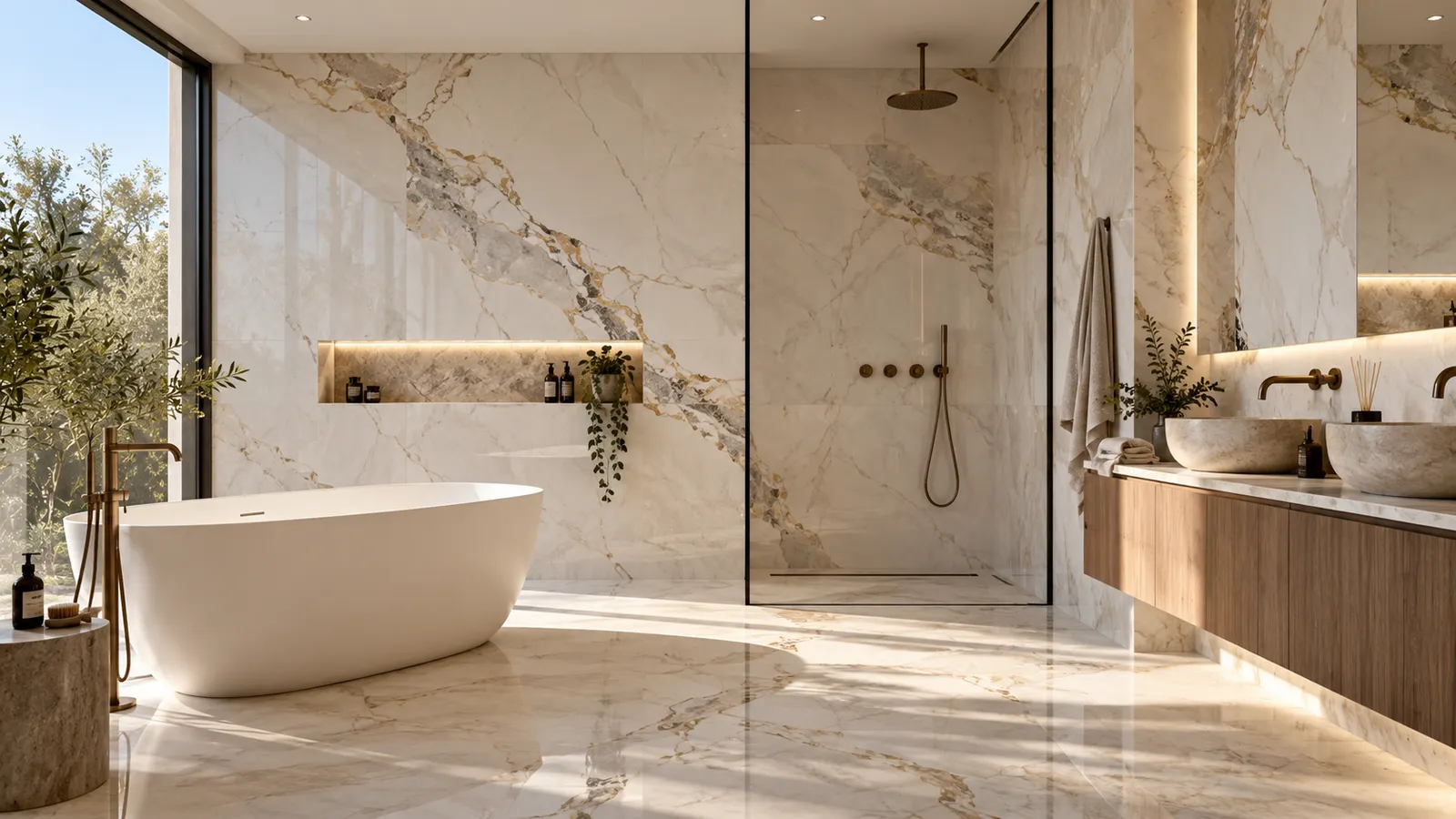
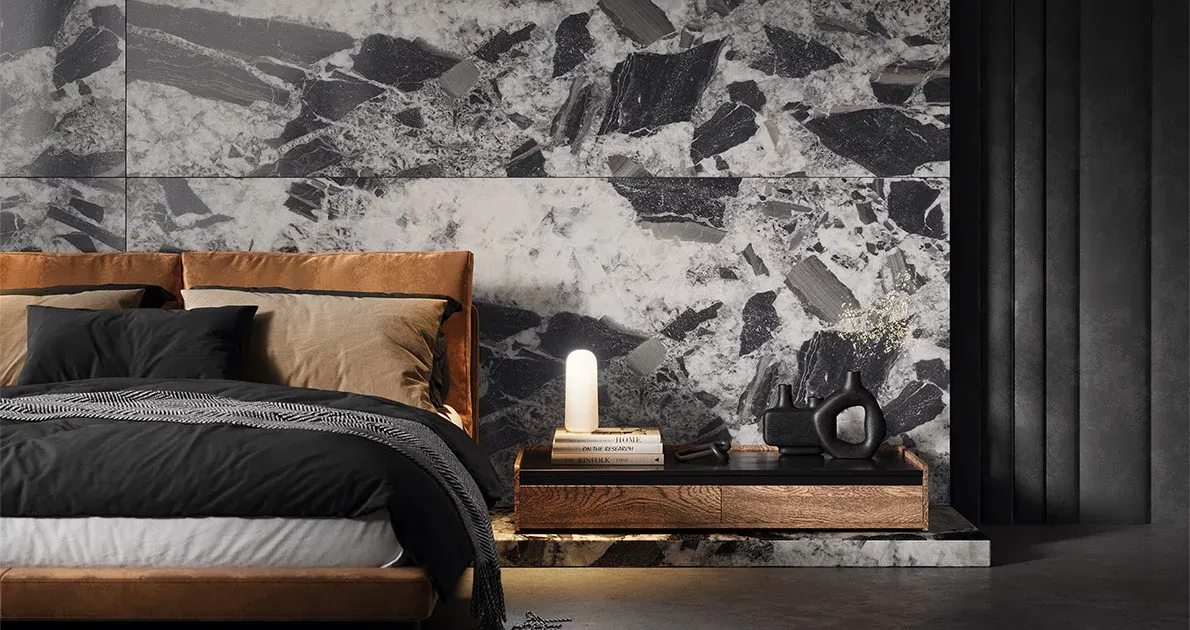
Large formats have become one of the most sought-after bathroom solutions in recent years. A surface with minimal grout joints appears calm and luxurious, is easier to clean, and showcases the patterns of marble, travertine, or concrete. However, they also have their rules that need to be known before purchase.
What is considered a large format
Large-format tiles are generally considered to be those with a longer side of 120 cm: 60×120, 80×160, 120×120, 120×240, and 120×280 cm. The largest slabs are also called panels and can cover an entire wall from floor to ceiling without a horizontal grout joint.
Advantages
- Fewer grout joints: easier maintenance, fewer places for dirt to accumulate.
- Visually larger space: even in a smaller bathroom, the surface appears cohesive.
- More authentic patterns: stone and marble imitations look more natural on a large surface.
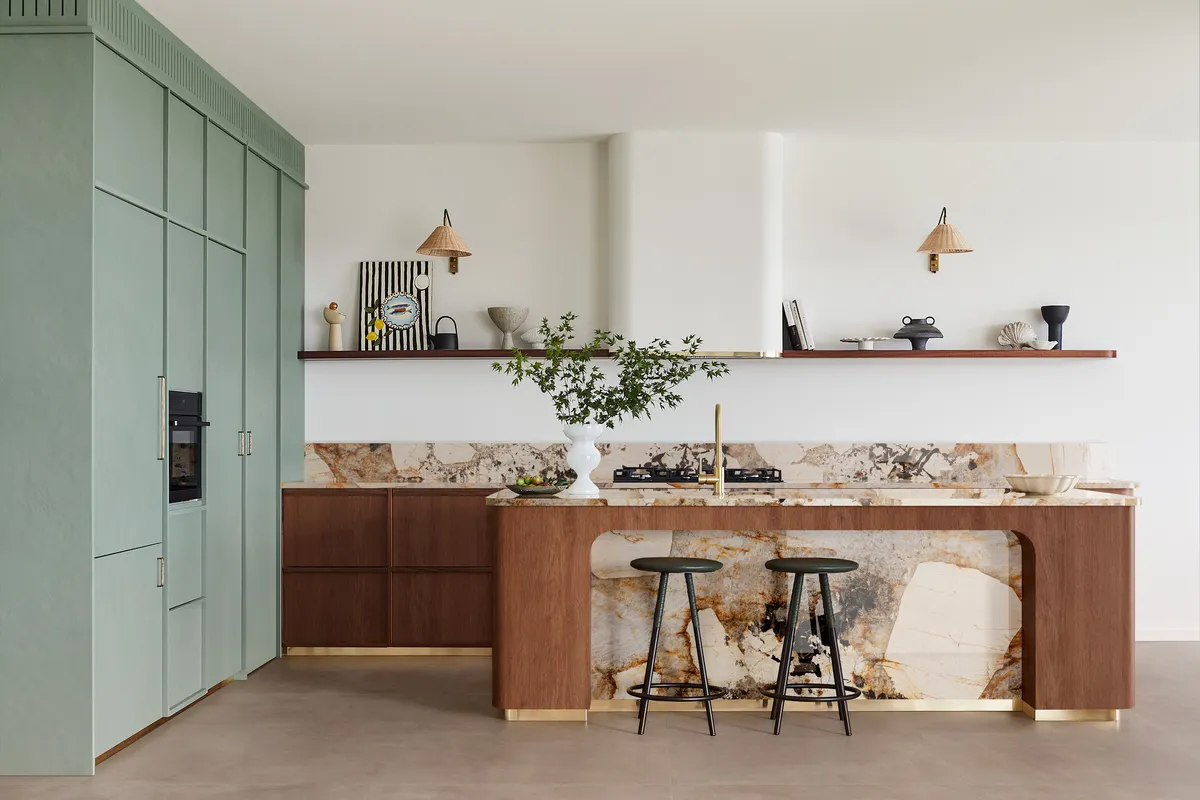
- Uniform material: the same slab can be used on walls, floors, as well as on furniture fronts or vanity tops.
What to watch out for
- Flatness of the substrate. Large tiles do not forgive unevenness. Walls and floors must be level; otherwise, edge overlaps will occur.
- Transport and handling. Slabs 120×240 cm and larger require two people, suction cups or a supporting frame, and checking whether they can pass through doors and staircases.
- Cutting in complex bathrooms. Windows, niches, installation shafts, and soil stacks increase waste. Count on a reserve of 15 to 20%.
- Experienced tiler. Installing large formats is a craft in itself. Ask the tiler for references specifically with large formats.
How large formats are installed
A flexible adhesive of class C2 (often C2TE S1) is used, which is applied on both sides, on the substrate and on the back of the tile, to prevent voids under the tile. Leveling clips and wedges are used to align the edges. The grout joint is typically 2 to 3 mm and is combined with waterproofing under the tiles in wet zones.
What types of bathrooms are they suitable for
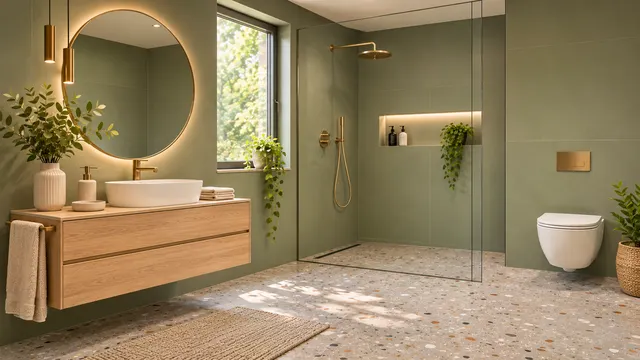
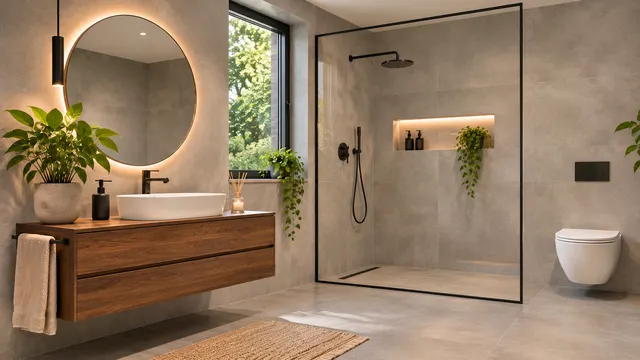
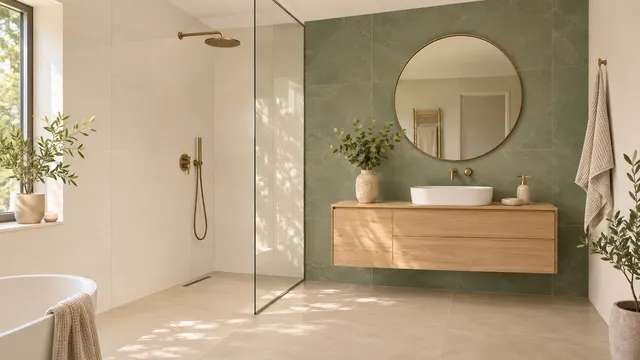
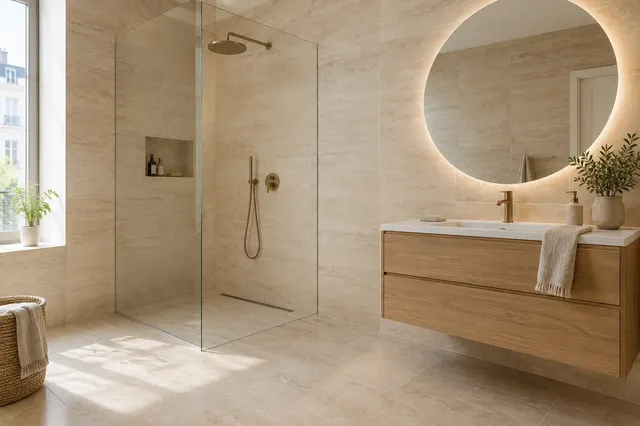
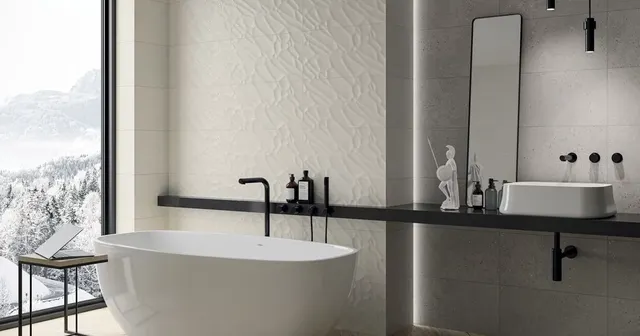
Large formats are suitable for most bathrooms, including smaller apartments. In a small bathroom, 60×120 cm on the walls looks better than small wall tiles, as it does not break up the space. However, in very small areas with many corners, a format of 30×60 or 60×60 cm may be more sensible. Check out bathrooms with large-format tiles in our gallery.
Frequently Asked Questions
Is large-format tiling suitable for a small bathroom?
Yes. Large format with minimal joints creates a calm effect in a small bathroom and visually enlarges it. However, in very complex spaces, wastage increases, so a good laying plan is essential.
What adhesive is used for large-format floor tiles?
Flexible cement adhesive class C2 is used, most commonly C2TE S1, applied on both the substrate and the back of the tile.
How much extra should be bought for large formats?
For large formats, we recommend a reserve of 15 to 20%, depending on the complexity of the bathroom and the method of laying.
AI Advisor
Have a question on the topic? Ask the advisor – they will respond based on TGB Kúpeľne articles.
AI advisor – answers are generated by artificial intelligence from TGB Kúpeľne articles and may contain errors.
Bathroom design
These are tips. We will draw your bathroom for you.
In the 3D bathroom planner, you can design your bathroom yourself – for free and without registration. If you want assurance, we will prepare a photorealistic custom visualisation based on actual dimensions and specific tiles in the studio. It's free with a purchase.
Online design for free Custom visualisation
TGB Kúpeľne Studio · Bratislavská 71, Senec · Mon–Fri 8:00–12:00 and 12:30–17:00, Sat 9:00–12:00 · Map