Tiles
Wall tiles and floor tiles for the whole house
Today, porcelain tiles are most commonly chosen for the whole house, suitable for hallways, kitchens and living rooms, and in the same design for the terrace. Wall tiles belong where the wall is exposed to water, grease or impacts – in bathrooms, WCs, kitchens, on staircases and on the house's plinth. Below you will find what to choose where, what parameters to watch for, and links to detailed articles by room.
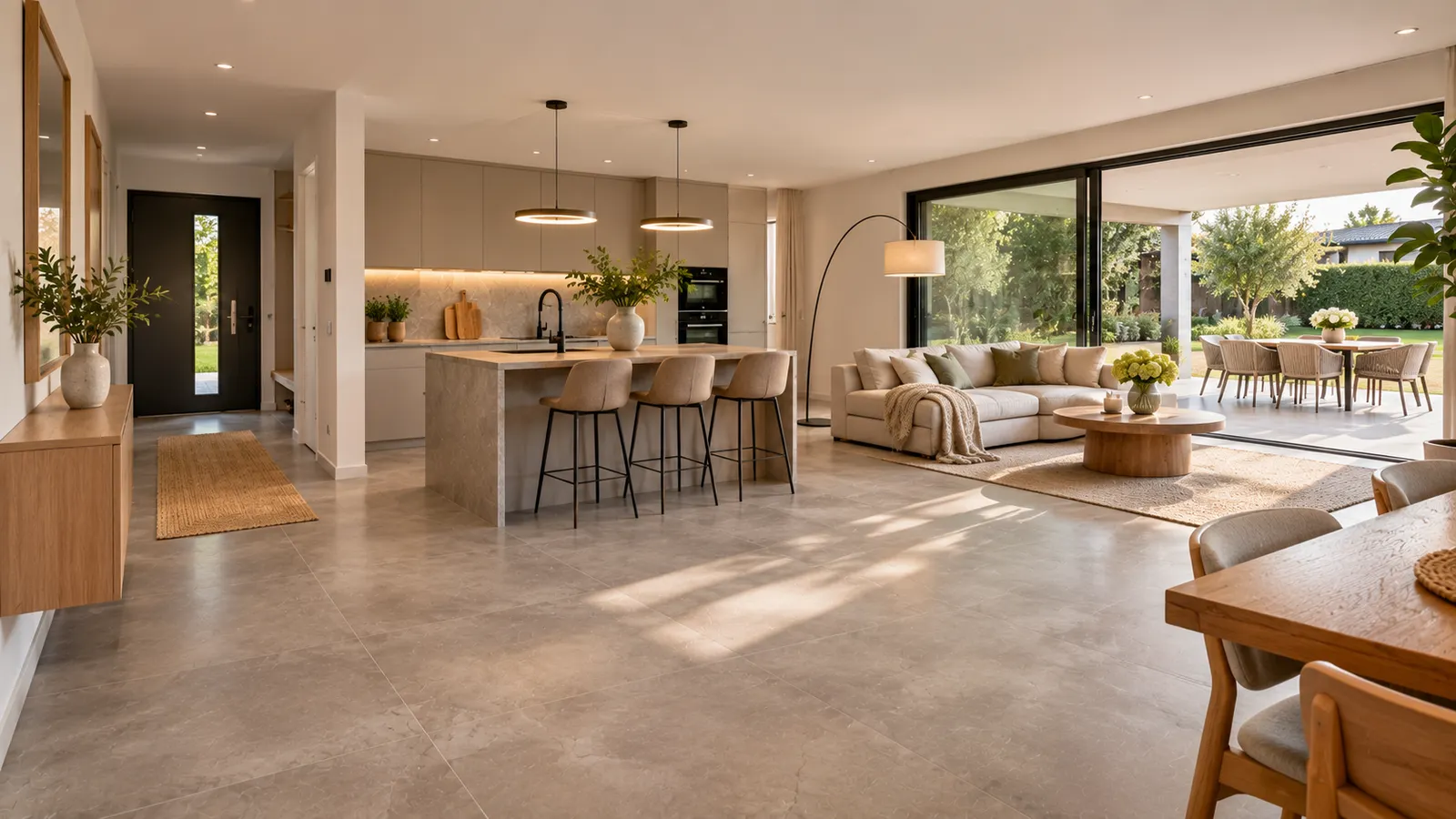
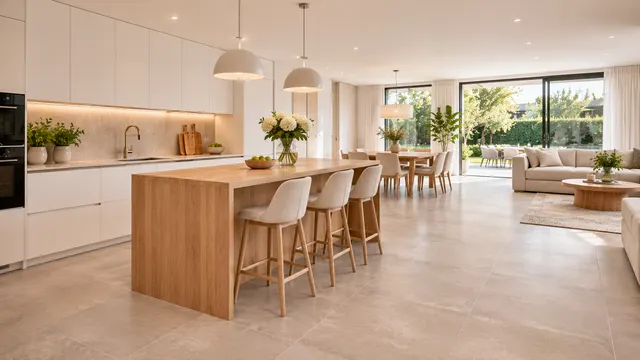
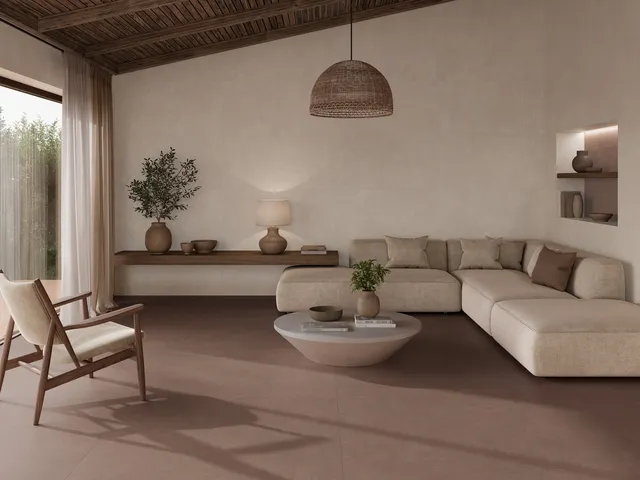
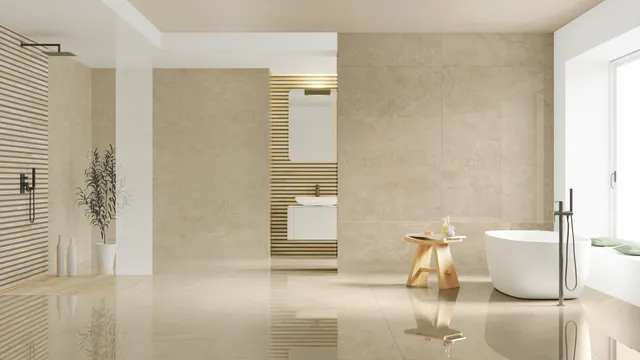
Illustrative image: ground floor of the house with the same large-format tiles in the hallway, kitchen, living room and on the terrace
Those who are building or renovating a house deal with tiles and flooring at once in several rooms. Therefore, it is worth considering the whole house, not just the bathroom: where there will be one tile, what parameters the hallway, kitchen or terrace needs, and where wall tiles belong. This page provides an overview and links to detailed articles.
Tips by room
- Tiles for the kitchenDurability, stains, colour and connection with the living room
- Kitchen tilesBetween cabinets, behind the stove, and large slabs
- Hallway and stair tilesDurable tiles, stair tiles, and anti-slip
- Terrace tiles2 cm tiles on pedestals, on gravel, and on adhesive
- Garage tilesDurable enough for cars and salt
- WC tilesHeight of the tiles, small WC, and accent wall
- Gres tilesWhy they are suitable for the whole house and outdoors
- Wood effect tilesFormats, herringbone, and underfloor heating
- Adhesive, grout, and trimsWhat to buy together with the tiles
- PVC panels and self-adhesive tilesWhen they make sense and when they don't
One tile throughout the house
Having the same tiles in the hallway, kitchen, living room, and corridor is one of the most popular solutions today. The space appears larger and calmer, there is no need for transition trims between rooms, and gres conducts heat excellently with underfloor heating.
- Select a series with multiple surfaces – for the bathroom and hallway, you need anti-slip R10, while R9 is sufficient for the living room. Some series have the same design in both matte and glossy finishes.
- Same laying direction – when using rectangular tiles and wood imitation, lay the tiles in the same direction throughout the space, most commonly along the longest wall or from the entrance.
- Expansion joints – in large areas and at doorways, expansion joints are required according to the project and the manufacturer's recommendations for the tiles. A discreet trim will cover them at the doors.
- Floor height – the thickness of the tiles with adhesive is usually around 1.5 cm. It should be aligned with the height of the parquet and doors in other rooms.
- One batch – purchase the entire quantity at once with a reserve of 10 to 15% to ensure all tiles have the same shade.
- Also outdoors – many series also have a 2 cm exterior version, allowing the living room tiles to continue onto the terrace.
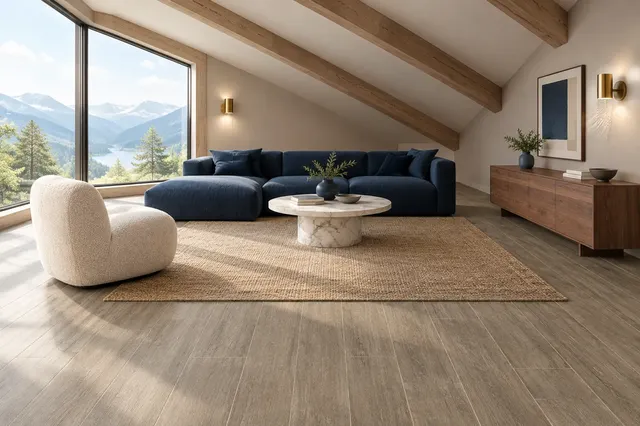
Interior tiles: what goes where
Gres is most commonly laid in interiors today – it is hard, almost non-absorbent, and can withstand underfloor heating. The differences between rooms mainly lie in anti-slip properties and surface abrasion resistance:
| Room | Tiles | Anti-slip | Abrasion resistance |
|---|---|---|---|
| living room, bedroom | gres, large format or wood imitation | R9 | PEI III |
| kitchen | gres, matte or finely structured | R9 to R10 | PEI III to IV |
| hallway and corridor | gres in a medium shade | R10 | PEI IV |
| bathroom | gres, matte | R10, shower R10 to R11 | PEI II to III |
| interior stairs | gres with stair tiles | R10 | PEI IV |
| terrace and balcony | frost-resistant gres, also 2 cm | R11 | designed for outdoor use |
| garage | gres coloured throughout, thicker | R10 to R11 | PEI IV to V or unglazed |
The values are general recommendations; the technical data sheet of the tiles is decisive. What R9 to R13 and PEI mean is explained in the article Tile parameters, and why gres is the most commonly used is discussed in the article Gres tiles.
What format for the home
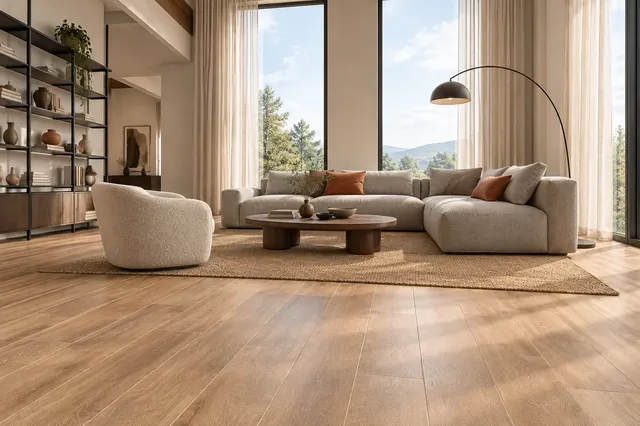
For large open spaces, formats like 60 × 120 cm or 120 × 120 cm are ideal – the floor has fewer joints and appears generous. The universal format of 60 × 60 cm is easier to lay in smaller rooms. A warmer impression is given by tiles in wood imitation in the format of 20 × 120 cm or larger. You can find an overview of all formats in the article Tile and floor formats.
Wall tiles
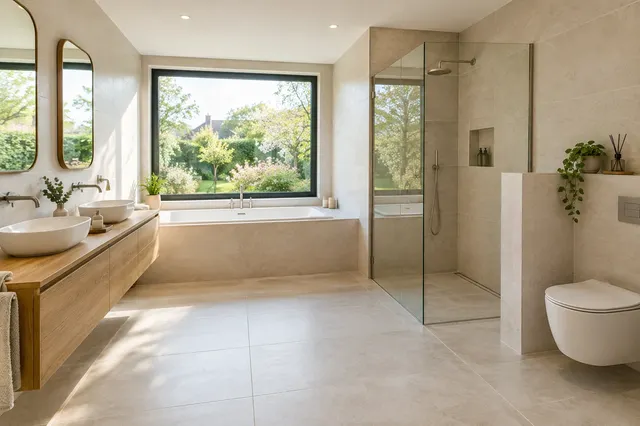
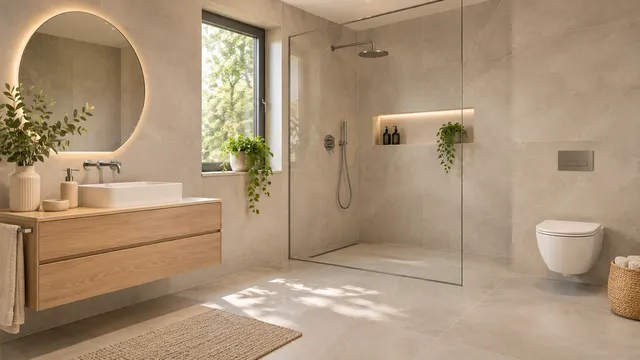
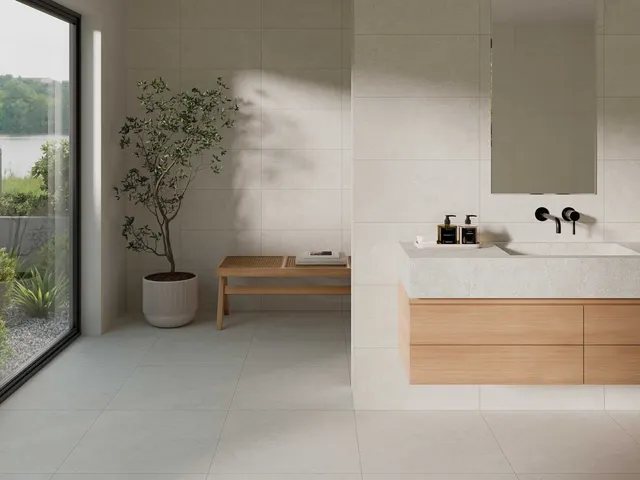
Wall tiles protect the wall where it is exposed to water, steam, grease, or impacts. In the home, this is mainly the bathroom and WC, the wall behind the kitchen unit, the utility room, and the skirting in the hallway or on the stairs. However, tiles can also be decorative – an accent wall in the living room or around the fireplace.
| Wall tiles | Where it fits | Where not |
|---|---|---|
| ceramic tiles and gres | everywhere – bathroom, kitchen, WC, hallway, living room | – |
| large ceramic slab | wall behind the unit, shower, accent wall, around the fireplace | wall with many cut-outs and corners |
| wooden slats and cladding boards | living room, bedroom, hallway | shower, wall behind the hob |
| 3D plaster and polyurethane panels | dry walls of the living room and bedroom | bathroom, kitchen |
| PVC panels and self-adhesive tiles | temporary solution, dry walls | shower, around the hob |
Interior wall tiles
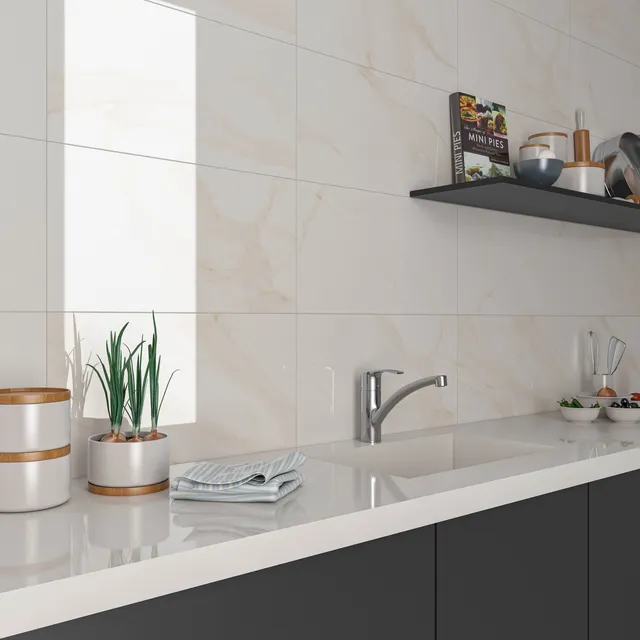
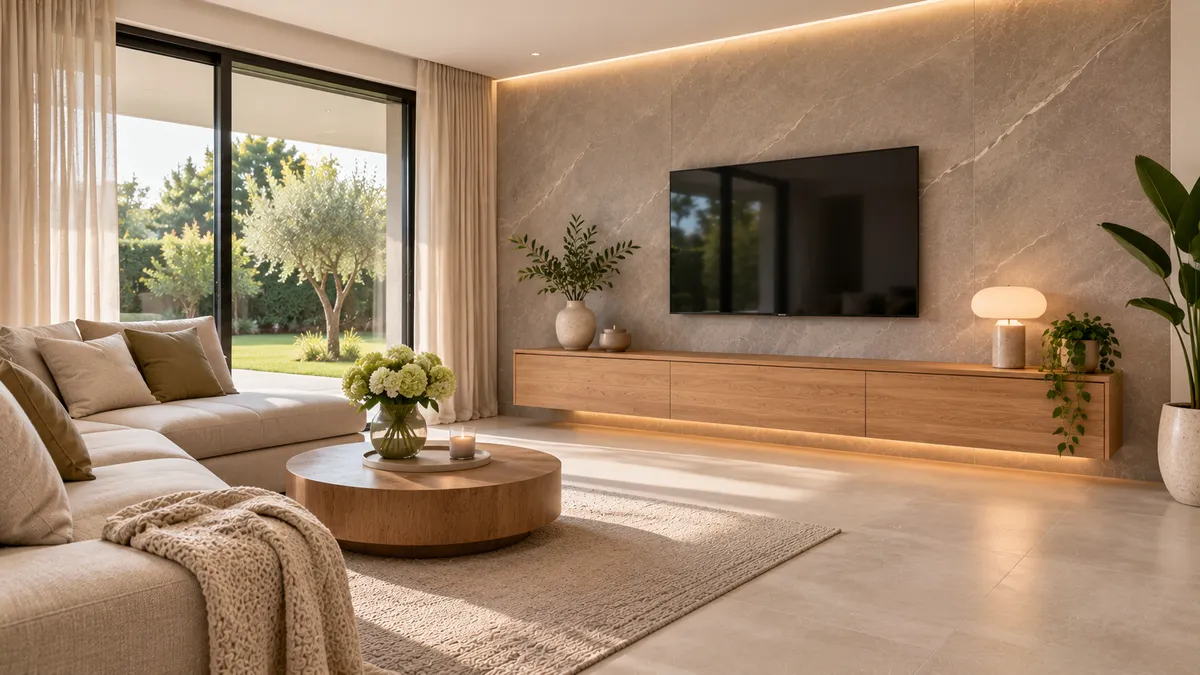
Ceramic tiles are produced from small tiles of 7.5 × 15 cm to slabs of 160 × 320 cm. For walls in the bathroom and kitchen, the most commonly chosen formats today are 30 × 60 cm or 60 × 120 cm. For an accent wall in the living room, a large format in stone or marble imitation is suitable. Be mindful of the weight – large and thick tiles require a solid wall and flexible adhesive, more in the article Adhesive, grout, and profiles.
3D wall tiles
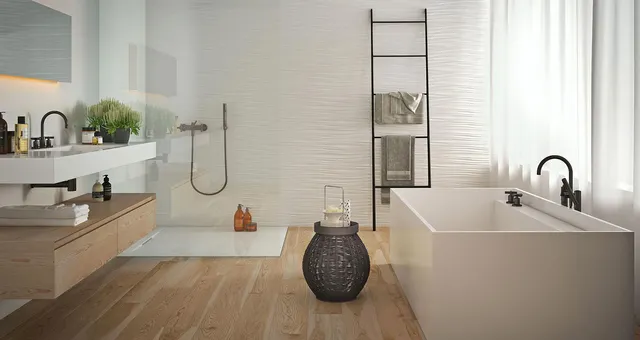
The term 3D tiles refers to two different things. Ceramic tiles with relief or wave patterns have a textured surface and are suitable for bathrooms and kitchens. Plaster and polyurethane 3D panels are painted and are only suitable for dry walls in the living room or bedroom – moisture and washing are not beneficial for them.
Wooden wall tiles
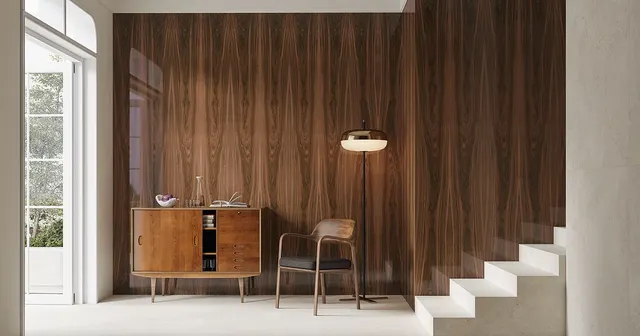
Real wood – slats or cladding boards – creates a cozy atmosphere in the living room and bedroom and improves acoustics. However, for the bathroom, kitchen, and hallway, ceramic tiles in wood imitation are more practical: they look similar, are not affected by water, and are easy to clean. More in the article Wood imitation tiles.
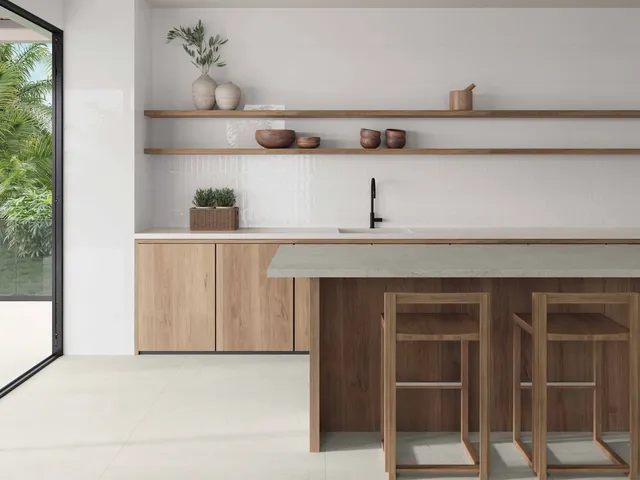
Self-adhesive and PVC wall tiles
Self-adhesive tiles and PVC panels are cheap and quick, but they last significantly less than ceramics and are not suitable for showers or hobs. When they make sense and when they don't, we discuss honestly in the article PVC panels and self-adhesive tiles.
Kitchen
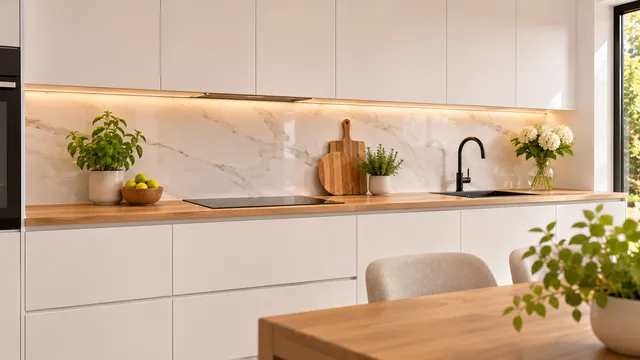
In the kitchen, water, grease, heat, and falling pots come together. For the floor, gres with a matte or slightly textured surface is suitable, which is not slippery even after water spills. A tile or one large ceramic slab without joints is placed on the wall between the lower and upper cabinets. If the kitchen flows into the living room, lay one type of flooring throughout the space. Detailed information can be found in the articles Flooring for kitchens and Wall tiles for kitchens.
Hallway, corridor, and stairs
The hallway and corridor are the most heavily trafficked areas in the home – sand from shoes acts like sandpaper, and in winter, water and salt are added. Choose tiles with a PEI IV wear resistance or gres coloured throughout, with R10 slip resistance and a medium shade, such as grey, beige, or concrete, which does not show every speck of dust. An embedded mat will help at the entrance.
Stair treads are suitable for stairs – tiles with an edge that protects the front of the step. We have stair treads and tiles for them in the TGB studio. A ceramic skirting from the same series as the tiles belongs at the bottom edge of the walls in the hallway and on the stairs. Detailed information can be found in the article Flooring for corridors and stairs.
Terrace and balcony
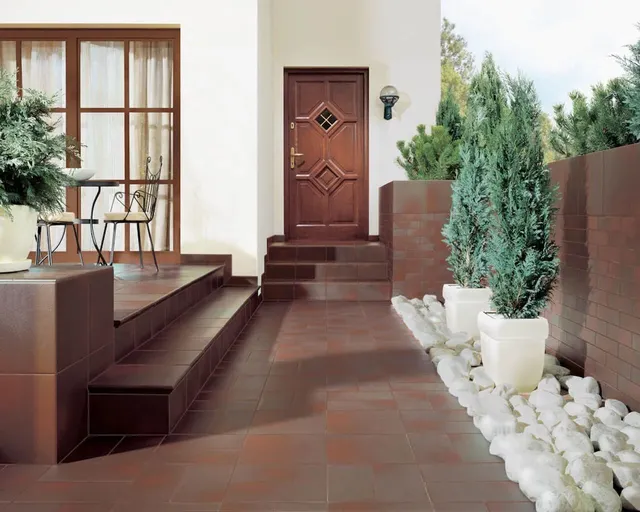
Outside, the tiles must be frost-resistant and have R11 slip resistance. The most practical is a 2 cm thick tile, which can be laid on adjustable pedestals, on gravel, or glued. We have 2 cm tiles and pedestals in the TGB studio. All laying methods are compared in the article Tiles for terraces.
Garage and utility room
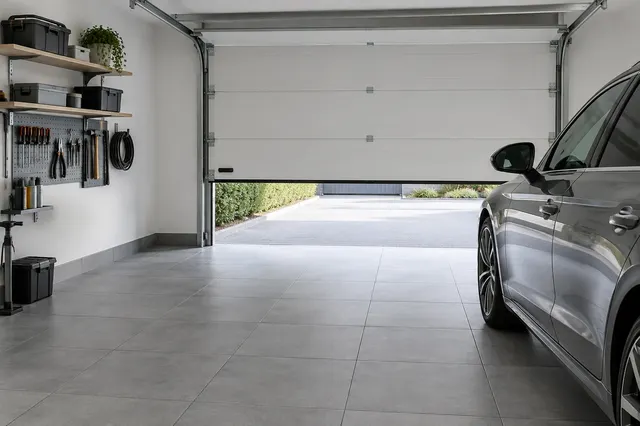
In the garage, the tiles withstand the weight of the car, wheel turning, oil, and road salt. Choose thicker gres coloured throughout, with R10 to R11 slip resistance and PEI IV to V wear resistance. A flexible adhesive should be applied over the entire surface to prevent voids under the tiles that could crack under the wheels. For the utility room and laundry, standard gres with R10 slip resistance is sufficient. More in the article Tiles for garages.
Wall tiles for the house: facade and skirting
For the house skirting, terrace, and exterior walls, frost-resistant gres, cladding stone, or brick strips are used. For exteriors, adhesive designed for outdoor use, class C2 S1 or S2, and tiles with low water absorption are required. Large slabs on the facade are not glued but anchored to the substructure (ventilated facade) – such a facade is designed by an architect. The house skirting can be clad with the same tiles as the terrace, giving the house a cohesive appearance.
How to proceed with selection
- Measure the areas of all rooms and the terrace, including stairs and skirting.
- Decide where one type of flooring will be and where you need a different surface, such as in the bathroom or garage.
- Check the parameters according to the table above – slip resistance, wear resistance, and for exteriors, frost resistance.
- View samples in person in both daylight and evening light. Tiles look different in photos and on screens.
- Order at once the entire quantity with a reserve of 10 to 15% from one batch. The tile calculator will assist you.
Samples available in the studio in Senec
View samples of tiles and wall tiles at the TGB Kúpeľne studio at Bratislavská 71 in Senec. Bring your house plan or room dimensions – we will advise you on where one type of tile is worthwhile, what parameters are needed for the hallway or terrace, and what goes with the tiles, from adhesive to stair tiles. Collections in the photos can be found in the tile and floor tile photo gallery, and tiles and floor tiles are also available in the e-shop vkupelni.sk. If you are also addressing the bathroom, we will draw it for you – check out the bathroom design.
Related: Kitchen tiles · Kitchen wall tiles · Terrace tiles · Stair tiles · Garage tiles · Gres tiles · Tiles and floor tiles
Sources: DIN 51130 (slip resistance R9 to R13), EN ISO 10545-7 (abrasion resistance PEI), STN EN 14411 (absorption and frost resistance of ceramics), STN EN 12004 (adhesives).
Frequently Asked Questions
What tiles for the whole house?
Porcelain tiles with a wear resistance of at least PEI III, for hallways and corridors PEI IV. For bathrooms and hallways, choose slip resistance R10, in the living room R9 is sufficient. The most commonly chosen format is 60 × 120 cm or wood imitation.
Can the same tiles be used in the bathroom and living room?
Yes. Choose a series with a surface slip resistance of R10 suitable for bathrooms – it won’t matter in the living room and kitchen. The whole house then appears uniform and there is no need for transition strips between rooms.
What wall tiles for the interior?
For bathrooms, kitchens, WCs and hallways, ceramic tiles or porcelain, most often in formats of 30 × 60 or 60 × 120 cm. For an accent wall in the living room, large format stone imitation, wooden slats or 3D panels are suitable.
Are self-adhesive wall tiles suitable?
Only as a temporary solution for dry walls. They are not suitable for showers and behind cooktops, lasting significantly less than ceramics.
Can interior tiles continue onto the terrace?
Yes, if the series also has an exterior version. Most often, this is a 2 cm thick tile with slip resistance R11, which is laid on pedestals, gravel or adhesive.
What tiles for the garage?
Thicker porcelain tiles coloured throughout with wear resistance PEI IV to V and slip resistance R10 to R11, glued with flexible adhesive over the entire surface, without voids.
Where can I see tile samples?
At the TGB Kúpeľne studio at Bratislavská 71 in Senec. Bring your floor plan or room dimensions and we will advise you on what to choose where.
AI Advisor
Have a question on the topic? Ask the advisor – they will respond based on TGB Kúpeľne articles.
AI advisor – answers are generated by artificial intelligence from TGB Kúpeľne articles and may contain errors.
Bathroom design
These are tips. We will draw your bathroom for you.
In the 3D bathroom planner, you can design your bathroom yourself – for free and without registration. If you want assurance, we will prepare a photorealistic custom visualisation based on actual dimensions and specific tiles in the studio. It's free with a purchase.
Online design for free Custom visualisation
TGB Kúpeľne Studio · Bratislavská 71, Senec · Mon–Fri 8:00–12:00 and 12:30–17:00, Sat 9:00–12:00 · Map