Tiles
How to match wall tiles and floor tiles: colours, formats, materials and grout
Wall tiles and floor tiles do not have to match, but they must belong together. A few rules help: stick to one colour temperature, choose either tone-on-tone or a clear contrast, use a bold tile on only one surface, and do not mix more than three materials in the bathroom. Below you will also find a table of proven colour pairs and a link to 20 ready-made setups.
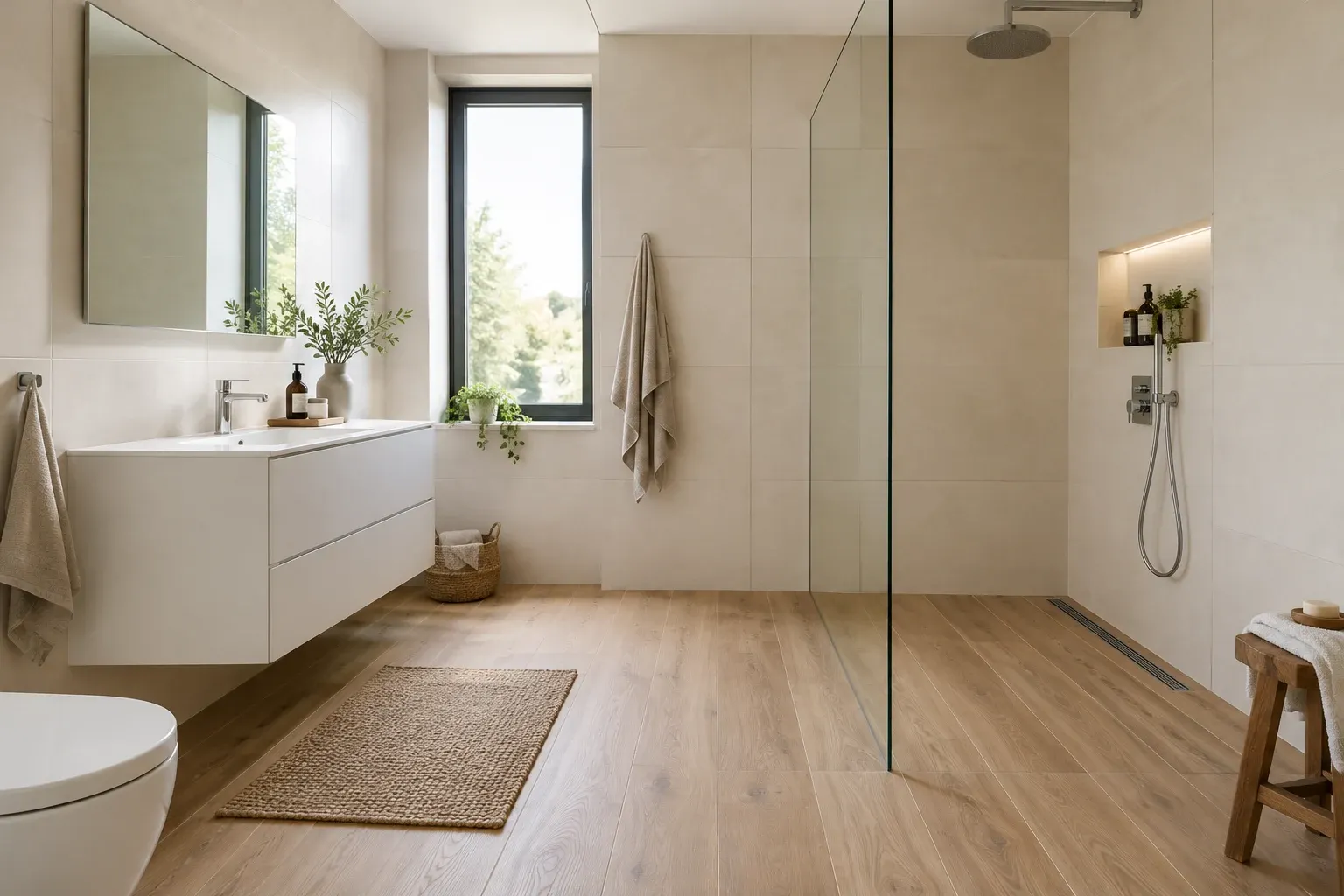
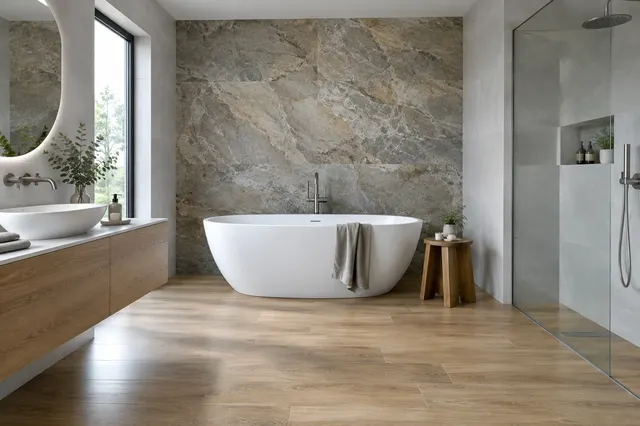
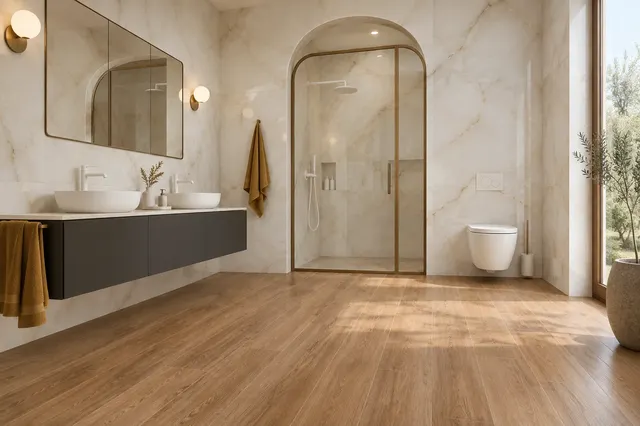
Illustrative image: bathroom with light large-format wall tiles on the walls and floor tiles in an oak wood effect
Most unsuccessful bathrooms do not have bad wall tiles or floor tiles – they simply do not match. A cool grey wall next to warm wood, three different marbles, or a patterned floor with a patterned wall. This article is about the rules for matching wall tiles with floor tiles. You can find ready-made verified setups with photos in the article Combinations of wall and floor tiles: 20 setups, collections by appearance in the photo gallery Wall and floor tiles.
Warm and cool tones
Every colour has a temperature. Warm colours are beige, ivory, travertine, wood, terracotta, and warm grey. Cool colours are pure white with a bluish tint, cool grey, concrete, anthracite, and blue. The bathroom appears coordinated when both the wall tiles and floor tiles adhere to one temperature.
If you want to combine warm and cool, you need a bridge – neutral white or black and a material that has both, such as grey stone with beige veining or oak with a cooler grey tone. Light also changes the temperature: in warm light, beige feels cozy, while in cool light, it can appear grey. More in the articles Colour of wall tiles for bathrooms and Grey bathroom.
Tone-on-tone or contrast
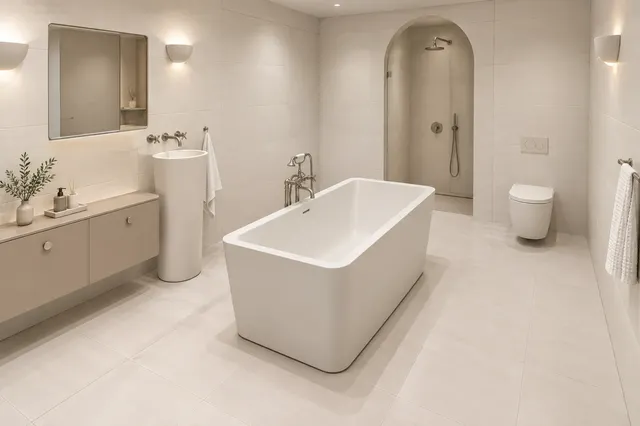
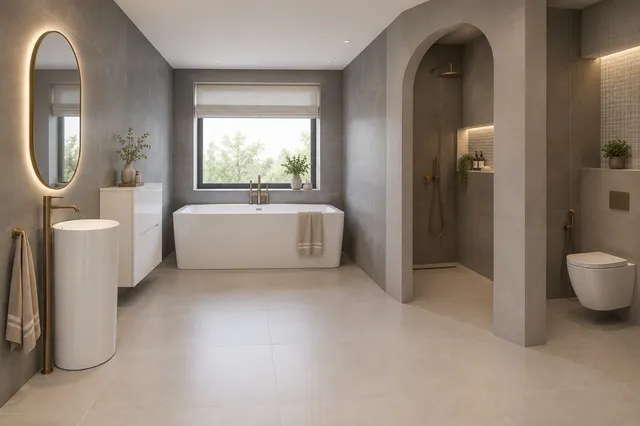
- Tone-on-tone – wall and floor in one colour, with the floor at most one shade darker. The bathroom feels calm and larger, suitable for small bathrooms and large formats. The easiest way is to take both wall tiles and floor tiles from the same collection.
- Subtle contrast – light walls and medium-dark floor, for example, white and oak. This is the safest choice for a family bathroom.
- Strong contrast – white and black, light marble and anthracite. It looks elegant and graphic, but it will show every speck of dust on the dark floor and limescale on the dark wall.
One bold surface
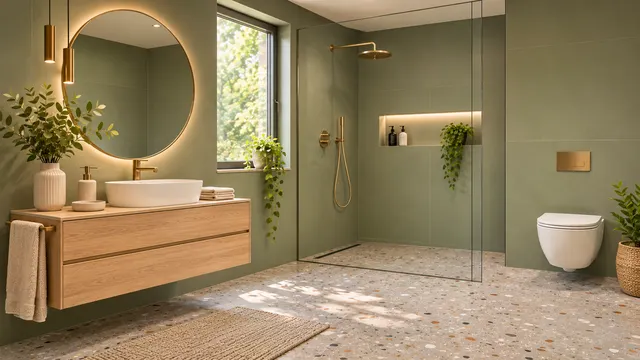
A pattern, bold design, or dark colour belongs only on one surface – on the floor, the wall behind the sink, or the back wall of the shower. Leave the other walls calm, monochromatic, or with a subtle texture. If the floor has a pattern, the walls should match one of its colours. The same rule applies to patchwork, terrazzo, and marble with bold veins – more in the article Retro bathroom and patchwork floor tiles.
Wall and floor format
- Two formats from one collection – for example, 60 × 120 cm on the walls and 60 × 60 cm on the floor. The colour and surface match, and the bathroom feels cohesive.
- Modular formats – some manufacturers produce formats that can be combined on one surface with the same width of grout joint. RAKO refers to them as modular sizes.
- Smaller format in the shower – in a level-access shower, the floor tiles adapt better to the fall. Mosaic or small tiles in the colour of the main floor tiles will not disrupt the whole.
- No too many formats – two, at most three formats in one bathroom are sufficient. Each additional one adds grout joints and cuts.
Combination of materials
| Pair | How it feels | What to consider |
|---|---|---|
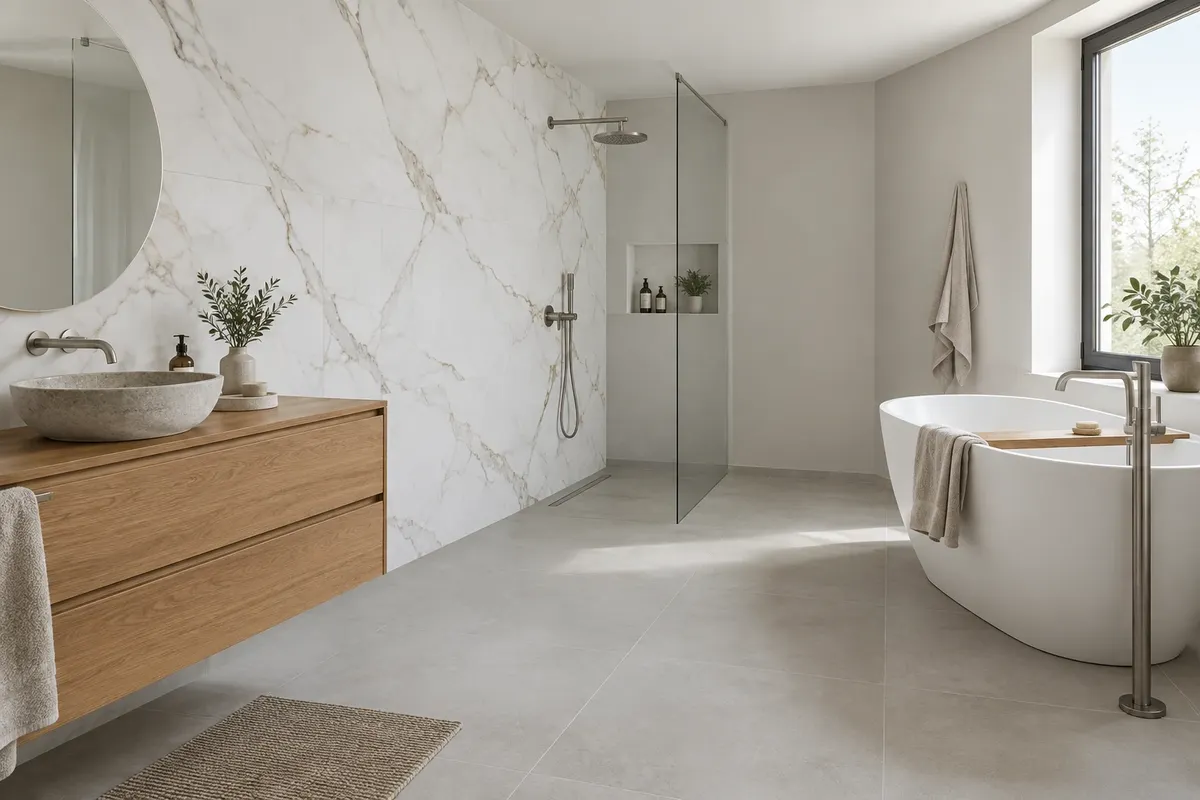
| wood and marble | warm and elegant | marble with light, not bluish veining, wood preferably natural oak |
| concrete and wood | modern, wood warms up concrete | warmer grey and wood without prominent knots |
| stone and white | calm, natural | stone on the floor or on one wall, the rest white |
| travertine and wood | warm, Mediterranean | two tones of beige, no more |
| terrazzo and monochromatic walls | playful | walls in the colour of one of the terrazzo chips |
Collections by material can be found in the sections Wood effect, Marble, Concrete and cement, Stone, Travertine, and Terrazzo.
No more than three materials in one bathroom
A proven rule: one main material for most surfaces, one accent for the floor or part of the walls, and one highlight – mosaic, pattern, or a feature wall. These three also include large areas of furniture. A wooden cabinet counts as one wood – another wood on the floor should have a similar shade.
Grout colour
Grout joint is the fourth "material" that is often decided upon only with the tiler. A grout joint in the tone of the floor tiles unifies the surface and hides minor imperfections, while a contrasting one highlights the pattern – with metro tiles or hexagons, this is an effect, but with large formats, it can be distracting. Light grout joints on the floor get dirty more quickly. You can find the grout colour chart according to the tiles in the chapter Grouts and silicone.
Proven colour pairs
| Wall | Floor | Effect | Collections |
|---|---|---|---|
| white, matte or glossy | oak, wood effect | warm, cosy | wood effect |
| white marble | anthracite or dark grey | elegant, contrasting | marble |
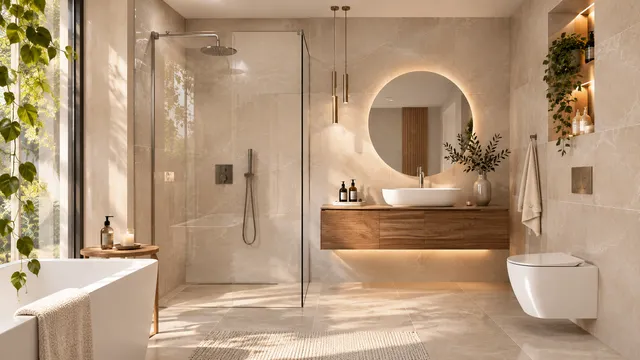
| beige or travertine | beige a tone darker | calm, tone on tone | travertine, beige |
| light grey concrete | natural oak | modern, warmer | concrete |
| white | medium grey | clean, neutral | grey |
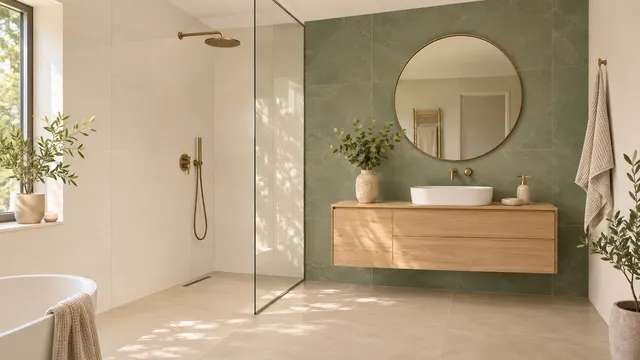
| green on one wall, otherwise white | light floor tiles or wood | fresh | green |
| light, monochrome | terrazzo | playful | terrazzo |
| black or anthracite on one wall | light stone | striking | black and dark |
Specific collections for pairs from the table include Marazzi Stream Travertino (travertine), Ecoceramic Besana (white and grey), or Paradyż Woodland (wood).
How to verify a combination
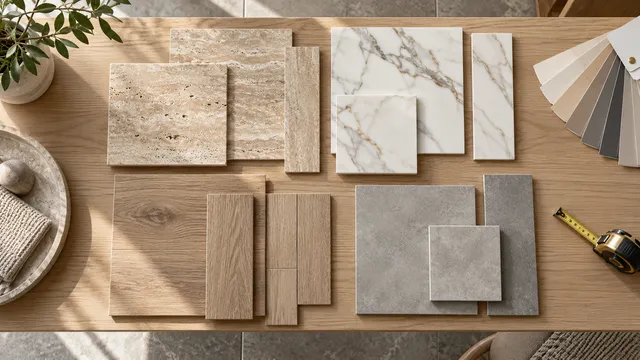
- Samples side by side – at least two or three tiles of both wall and floor tiles, in daylight and under the lighting that will be in the bathroom.
- The entire bathroom – try the setup in 3D bathroom planner. The image is illustrative but will show the ratio of surfaces.
- In person – you can view samples and displayed bathrooms at the TGB Kúpeľne studio in Senec, schedule your visit here.
Take images generated by artificial intelligence only as inspiration – why, we explain in the article Visualisation in the showroom or via artificial intelligence.
Sources: RAKO – shades, dimensions and modular formats; our articles on Combinations of wall and floor tiles, Colour of tiles for bathrooms, Grey bathroom, and the chapter Grouts and silicone.
Terms in the glossary: Travertine · Large-format tiles · Patchwork · Terrazzo · Shower tray · Fall
Frequently Asked Questions
Must wall tiles and floor tiles be from the same collection?
Not necessarily, but it is the safest route. The colour and surface will match, and the manufacturer often offers more formats. If you combine different collections, stick to one colour temperature and check them against samples side by side.
Should the floor tiles be darker than the wall tiles?
Most often yes – a darker floor creates a stable appearance and shows less dirt. For tone on tone, one shade darker is sufficient, while for contrast, significantly darker is better. A light floor with a dark wall is striking but more challenging to maintain.
How many materials to use in one bathroom?
No more than three: one main for most surfaces, one accent, and one additional. This includes large areas of furniture, such as a wooden cabinet.
What colour grout for the wall tiles?
Grout in the tone of the wall tiles unifies the surface and hides minor imperfections, while contrasting grout highlights the shape of the tiles. For the floor, a grout one shade darker than the tiles is practical.
How to check if the wall tiles and floor tiles match?
Place samples side by side in both natural and artificial light, try the setup in the 3D bathroom planner, and see the materials in person at the studio in Senec.
AI Advisor
Have a question on the topic? Ask the advisor – they will respond based on TGB Kúpeľne articles.
AI advisor – answers are generated by artificial intelligence from TGB Kúpeľne articles and may contain errors.
Bathroom design
These are tips. We will draw your bathroom for you.
In the 3D bathroom planner, you can design your bathroom yourself for free. We will prepare a custom visualisation with specific wall tiles for you in the studio – free of charge with your purchase.
Online design for free Custom visualisation
TGB Kúpeľne Studio · Bratislavská 71, Senec · Map