Tiles
How wall tile formats have changed: from 15 × 15 cm to large slabs 120 × 280 cm
Once, 15 × 15 cm tiles were common in bathrooms, today the format 60 × 120 cm is laid on walls and slabs nearly as tall as the room. Formats have grown alongside production technology: rapid firing in roller kilns, porcelain stoneware, edge rectification, and pressing large slabs. The overview shows what was common in which period, why formats increased, and where small tiles still have a place today.
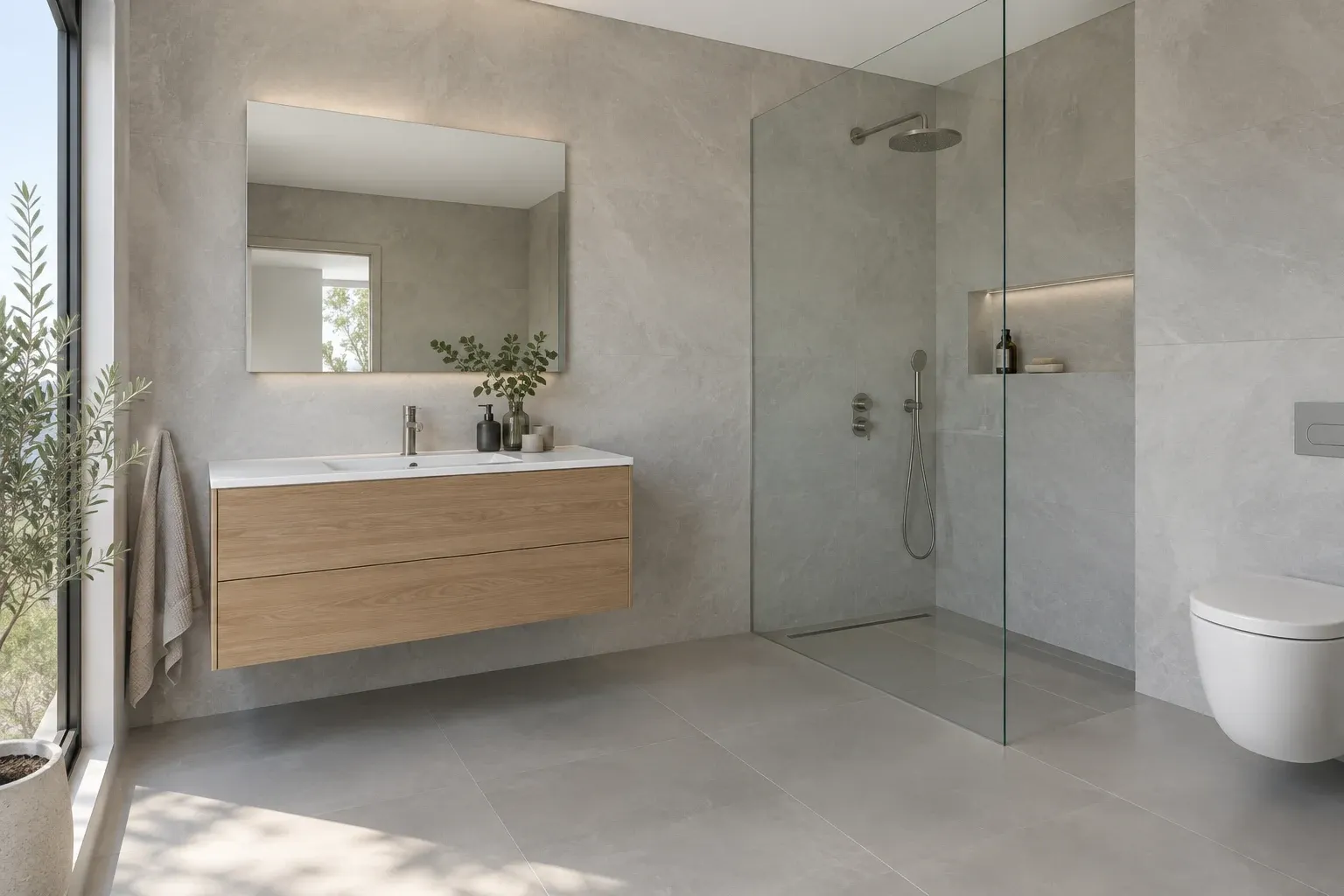
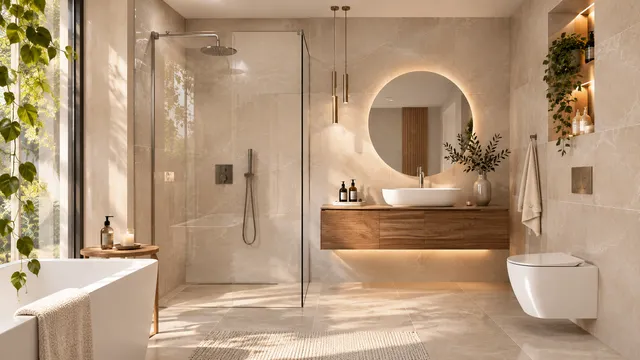
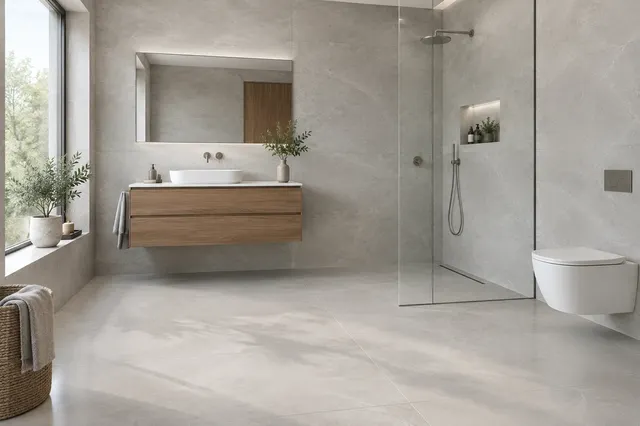
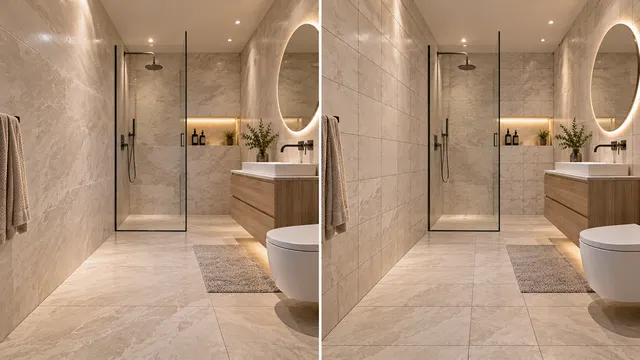
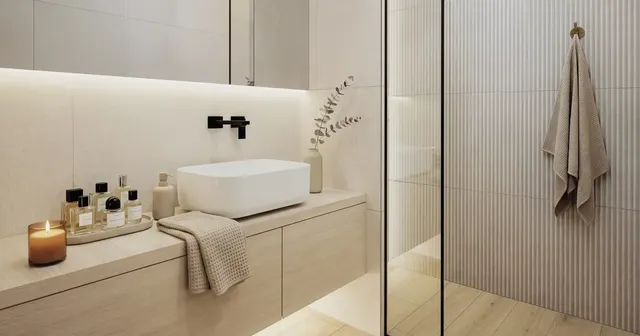
Illustrative image: modern bathroom with walls made of large ceramic slabs in a stone effect
If you have ever demolished an old bathroom, you know the drill: under the sink, small square tiles, and on the floor, 30 × 30 cm tiles. Today's bathrooms feature tiles 120 cm long on the walls or entire slabs. The change was not just a fashion statement – each increase in format was made possible by new production technology. What formats are sold today and how to choose them can be found in the article Wall and floor tile formats, with specific collections in the photo gallery Wall and floor tiles.
Formats over time: overview
| Season | Typical formats | What made this possible |
|---|---|---|
| early 20 century | white tiles 15 × 15 cm with borders, mosaics | dry pressing of tiles (since the mid-19 century) |
| 80 years (Italy) | porcelain stoneware 13 × 13 to 30 × 30 cm for industrial floors, 40 × 40 cm for apartments | rapid single firing in roller kilns since the late 70 years |
| even in the years 2014 and 2016 | economical series of tiles 20 × 25 and 25 × 33 cm with floor tiles 33.3 × 33.3 cm | low price |
| since 2004 | thin slabs 100 × 300 cm, later also 162 × 324 cm | pressing large slabs |
| today | 30 × 60, 60 × 60, 60 × 120 cm, slabs 120 × 280 to 160 × 320 cm | porcelain stoneware, rectification, digital printing |
Data on the years come from sources listed at the end of the article. Economical series 20 × 25 and 25 × 33 cm can be found in the ProCeram catalogues from 2014 and 2016, for example.
Small tiles: 15 × 15 and 20 × 20 cm
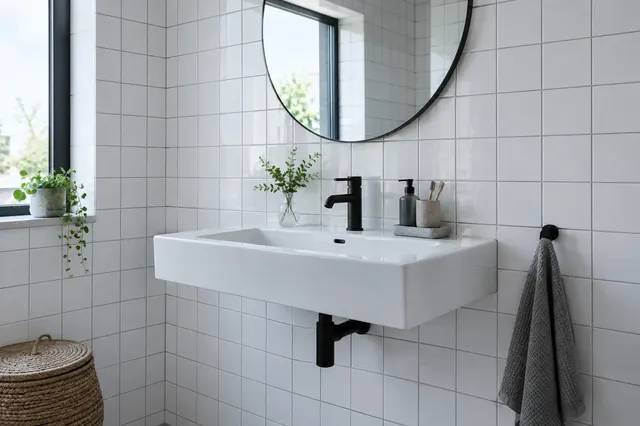
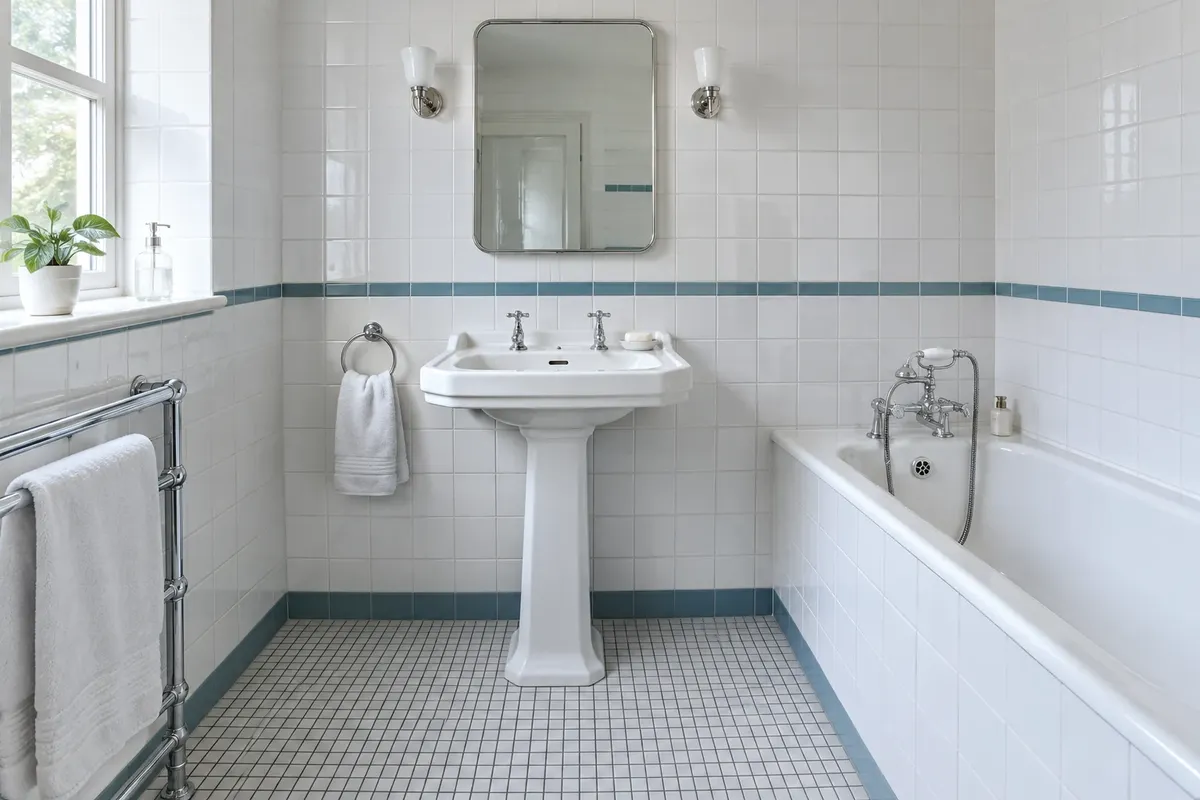
White tiles 15 × 15 cm complemented with black and white borders are listed by RAKO in their publication for the 140th anniversary as typical for the early 20th century. The Rakovník factory patented the technology of so-called broken mosaic in 1911. Small formats were easy to produce and lay, and they lasted for decades on the walls of bathrooms and kitchens.
Today, small squares are back, but in a different way. Roman Pommer, chairman of the Czech Tiling Association, told Novinky.cz that the era of formats 15 × 15 and 25 × 25 cm is "long gone retro". This is why they are returning in retro bathrooms – for example, RAKO Color One 20 × 20 cm is available in the e-shop vkupelni.sk for €27.50/m² (as of November 2026).
Why formats have increased in size
- Manufacturing. According to a study from the Qualicer conference, wet grinding, high-pressure presses, spray drying, and rapid single-firing in roller kilns in the late 1970s enabled larger dimensions to be produced in the Sassuolo area.
- Gres. Sintered stoneware with low water absorption is strong even in large formats. In Italy, gres accounted for only 1.3% of ceramic production in 1980, but by 2000 it had risen to 42.5%.
- Rectification. The edges are ground to precise dimensions after firing, allowing for a narrow grout joint – around 2 mm for rectified tiles. More in the article Rectified tiles.
- Fewer grout joints. For the format 60 × 120 cm, there are 2.5 m of grout joints per m² of wall, while for 30 × 60 cm, there are 5 m – that’s twice as many. The bathroom appears calmer and requires less cleaning.
- Digital printing. Realistic drawings of marble, stone, or wood stand out best on large surfaces. RAKO states that digital printing has nearly replaced other decorating techniques today.
Large slabs: from 3 mm to 20 mm
The turn of the millennium brought a breakthrough. Italian Laminam was founded in 2001 and introduced the first slab measuring 1000 × 3000 mm, only 3 mm thick, in 2004. In 2015, a slab measuring 1620 × 3240 mm and 12 mm thick followed. Today, entire bathroom walls are clad with large slabs without a single horizontal grout joint. We describe how to work with them in the articles Ceramic slabs 160 × 320 cm and Large-format tiles for bathrooms.
Larger formats also have their requirements: a flat substrate, adhesive for large formats (C2TE S1), bonding to both the substrate and the back of the tile, precise cutting, and a maximum offset of one-third in the bond. We explain why in the article Patterns for laying wall and floor tiles. RAKO recommends allowing for a material reserve of up to 25% for formats from 45 × 45 cm.
Where small formats still have a place today
- Shower floor with fall – mosaic or small tiles adapt to the fall towards the drain.
- Accent – a strip behind the sink, a niche, one wall in the shower. The rest of the bathroom remains in a calm large format.
- Retro bathrooms – SIKO includes formats 10 × 10, 15 × 15, 10 × 20, and 10 × 30 cm among retro styles. We describe how to achieve a modern retro look in the article Retro bathroom and patchwork tiles.
- Metro tiles and unconventional shapes – for example, Equipe Metro 7.5 × 15 cm is available in the e-shop vkupelni.sk for €21.45/m² (as of November 2026). We describe hexagons, rhombuses, and zellige in the article Unconventional tile shapes.
- Intricate walls – slopes, windows, and pipes, where a lot would need to be cut from a large format.
When small tiles are suitable and when they are not, we discuss in the article Small tiles. Collections by appearance can be found in the sections Large-format and Patterns and decors.
What format to choose today
For a typical residential bathroom, the most versatile combination today is 60 × 120 cm on the walls and 60 × 60 or 60 × 120 cm on the floor, with a smaller format or mosaic in the level-access shower. In a small and intricate bathroom, 30 × 60 cm with less cutting also makes sense. You can find a comparison in the article Tile 60 × 120 or 30 × 60, and collections in the format 60 × 120 cm include Ecoceramic Lombok or Ecoceramic Besana. You can try how the selected format would look in your space using the 3D bathroom planner.
Sources: RAKO – guide to the 140th anniversary (15 × 15 cm, cut mosaic 1911, digital printing); Qualicer – development of gres (roller kilns, formats of the 1980s, share of gres in 1980 and 2000); Interni Magazine – ceramics and design; Laminam – 20 years of innovations (2001, 2004, 2015); Novinky.cz – Roman Pommer, chairman of the Czech Tiling Association; ProCeram – catalogues 2014 and 2016; aRecenze.cz – retro formats according to SIKO; RAKO – product information sheet 2019 (reserve for large formats); offer from vkupelni.sk (November 2026); our articles on Formats of wall and floor tiles and Small tiles.
Terms in the glossary: Gres (porcelain stoneware tiles) · Rectified tiles · Water absorption · Large-format tiles · Flexible tile adhesive (C2TE S1) · Fall (gradient)
Frequently Asked Questions
What wall tile formats were once common?
For a long time, small squares were typical, such as 15 × 15 cm – RAKO lists them as typical since the early 20th century. In Italy, in the 1980s, floor tiles 40 × 40 cm were produced for apartments, and even in the catalogues from 2014 and 2016, you will find economical series 20 × 25 and 25 × 33 cm.
Why are wall tiles so large today?
Technology has made it possible: rapid firing in roller kilns, porcelain stoneware with low water absorption, edge rectification, and pressing large slabs. A larger format means fewer grout joints, a calmer appearance, and easier cleaning.
Since when have large ceramic slabs been produced?
Laminam, founded in 2001, introduced a slab 100 × 300 cm thick 3 mm in 2004 and a slab 162 × 324 cm thick 12 mm in 2015. Today, slabs of 120 × 280 and 160 × 320 cm are also produced.
Is the small format still worth it?
Yes, for shower floors with fall, for accents, in retro bathrooms, and on intricate walls. For large areas, the larger format is more practical with fewer grout joints.
What format is most commonly used today?
In bathrooms, the most frequently laid tiles today are 60 × 120 cm on walls and 60 × 60 or 60 × 120 cm on floors, with smaller and intricate bathrooms also using 30 × 60 cm.
AI Advisor
Have a question on the topic? Ask the advisor – they will respond based on TGB Kúpeľne articles.
AI advisor – answers are generated by artificial intelligence from TGB Kúpeľne articles and may contain errors.
Bathroom design
These are tips. We will draw your bathroom for you.
In the 3D bathroom planner, you can design your bathroom yourself for free. We will prepare a custom visualisation with specific wall tiles for you in the studio – free of charge with your purchase.
Online design for free Custom visualisation
TGB Kúpeľne Studio · Bratislavská 71, Senec · Map