Tiles
Cutting wall tiles and floor tiles: cutter, angle grinder, water saw, and large formats
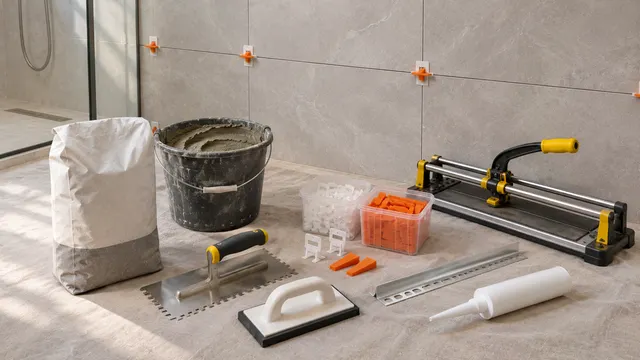
You can make straight cuts of wall tiles and floor tiles fastest with a manual cutter – score the cut with a wheel and snap the tile, dust-free. For hard and thicker gres, cuts under 45°, and precise cuts, an electric saw with water is suitable; for cutouts around pipes, use an angle grinder with a diamond blade for tiles, and for round holes, a diamond crown. Large formats and thin slabs require a special cutter and an experienced tiler.
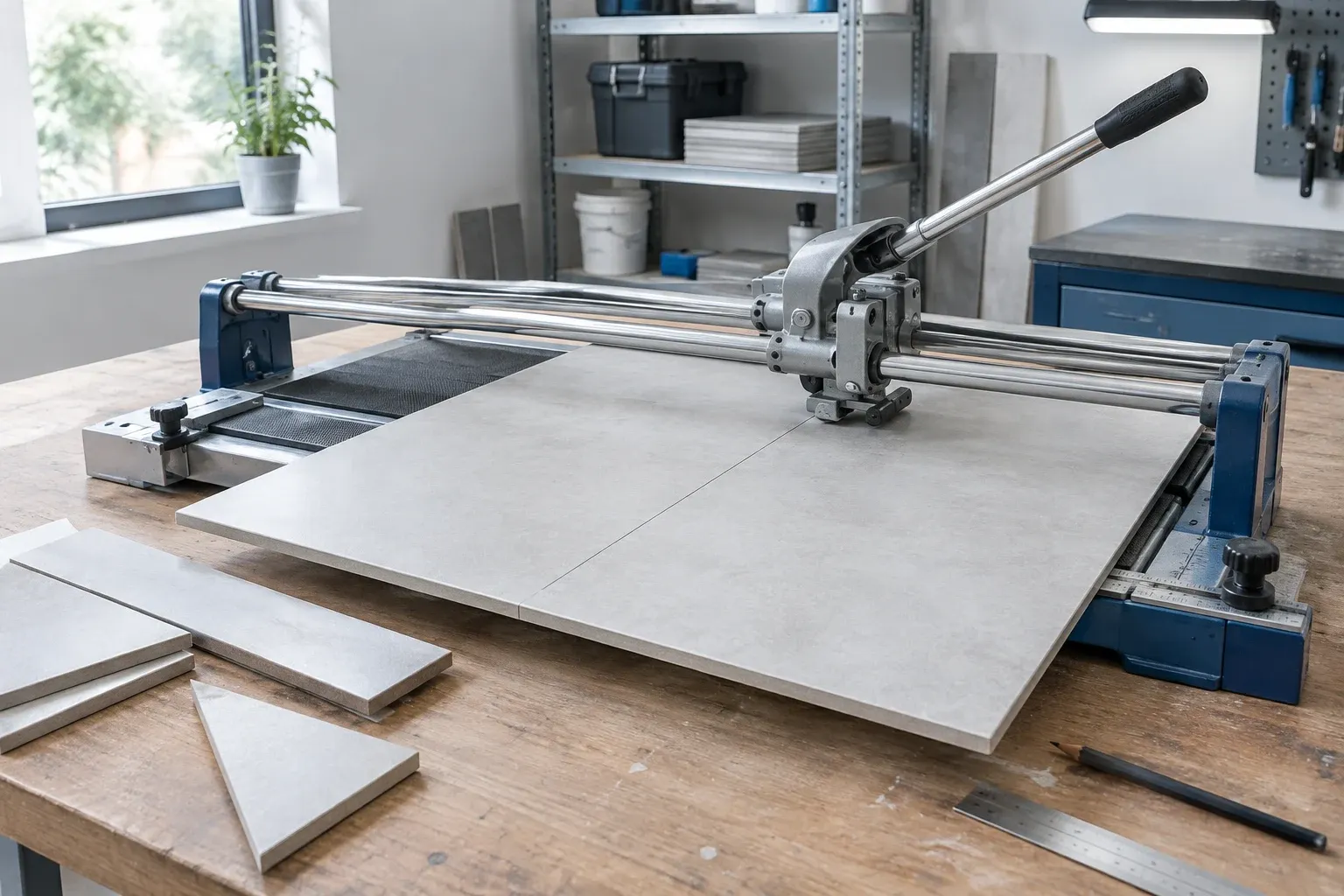
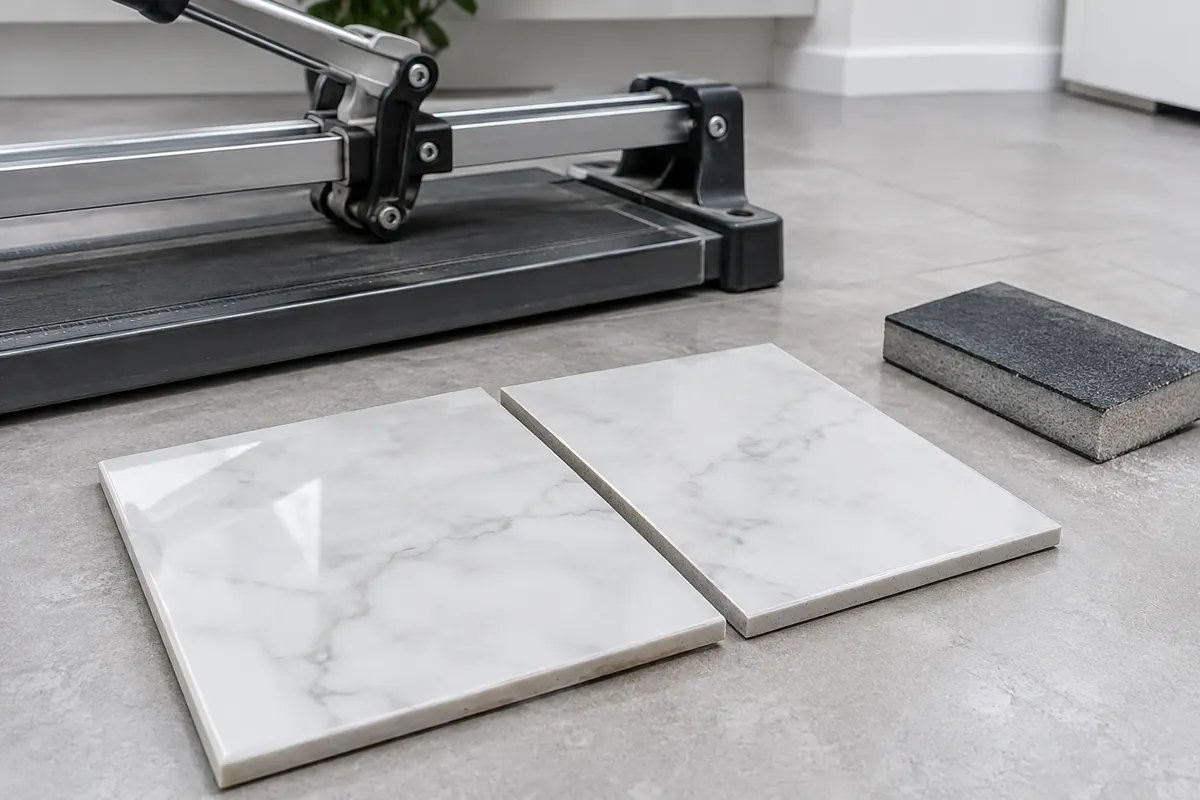
Ilustračný obrázok: ručná rezačka na obklady s narysovanou gresovou dlaždicou na pracovnom stole
When tiling a bathroom, you will cut more than you expect. The last piece in the row, edges at the ceiling and floor, holes for taps, drains, and sockets, cutouts around door frames and external corners under 45°. Each cut is made with a different tool. In the article, you will find what to cut which cut with, how to proceed with a manual cutter, angle grinder, and water saw, what is different with large formats, and how to protect yourself from dust.
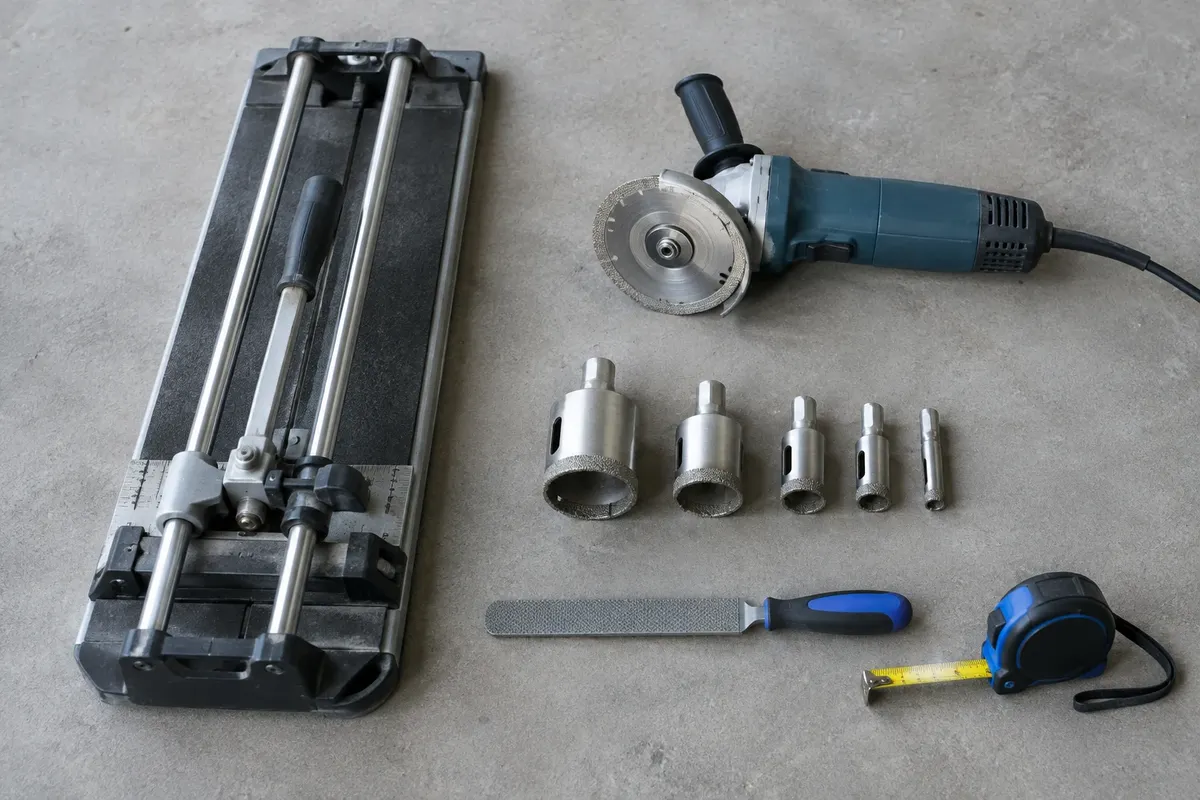
Which tool for which cut
| Tool | Suitable for | What to watch out for |
|---|---|---|
| manual cutter | straight cuts and diagonal cuts of smaller tiles – quick, quiet, dust-free | the cut length must be greater than the tile, a narrow strip at the edge is difficult to break |
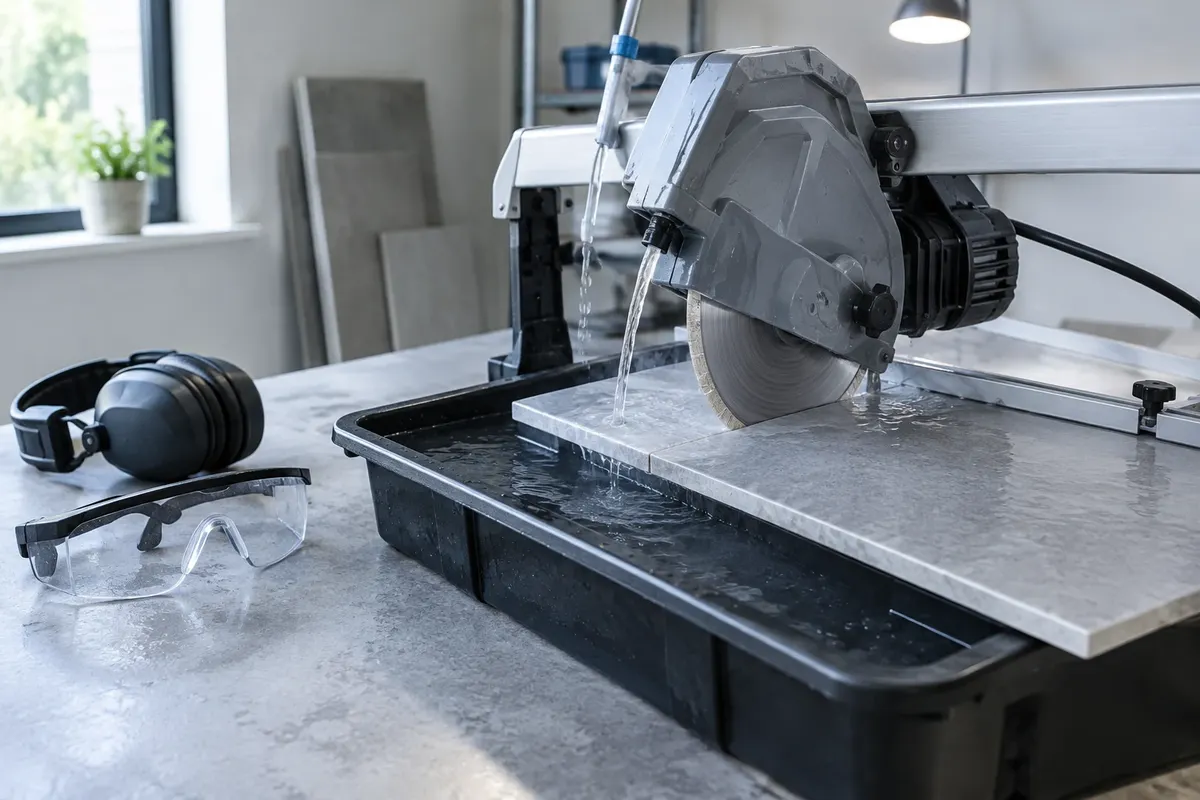
| electric saw with water cooling | precise cuts, cuts under 45°, hard and thick gres – clean edge, water cools the blade and binds dust | water and electricity – socket with residual current device |
| angle grinder (flex) with diamond blade | L-shaped cuts, around pipes and door frames, shortening laid pieces | lots of dust and noise, edge chips easily |
| diamond drilling crown | round holes for taps, drains and sockets | start by drilling at an angle or with a template to prevent the crown from slipping |
| large format cutter with rail | tiles 120 × 240 cm, large and thin slabs – cut along the entire length in one stroke | the tile must lie flat, transported by several people |
A manual cutter is essential – most cuts in the bathroom are straight cuts. Its size is determined by the longest cut. For example, the Bosch PTC 640 cutter cuts straight up to 64 cm and diagonally tiles up to 45 × 45 cm. For a format of 60 × 120 cm when cutting along the length, you need a cutter with a cut length of at least 125 cm. For one bathroom, buying a large cutter is often not worth it – it can be rented from a tool rental.
How to cut with a manual cutter
- Measure and mark the cut on the face side of the tile. When cutting against the wall, subtract the width of the grout joint and the expansion gap.
- Place the tile against the stop so that the scoring wheel runs exactly along the line.
- Score the cut in one stroke with even pressure. Do not go over the same line a second time – the cut will run.
- Break the tile with the breaking foot of the cutter in the middle of the line.
- Grind the edge with a sanding sponge or diamond grinding pad, especially if the edge will be visible.
With hard gres, a quality, undamaged wheel of suitable diameter helps – a worn wheel makes an uneven break. A strip narrower than 2 to 3 cm is difficult to break on the cutter. Therefore, plan the tiling so that narrow pieces do not occur at the wall. This also helps with the appearance.
Cutting with a flex and drilling holes
An angle grinder is a tool for shape cuts – when you need to go around a pipe, door frame or wall corner. The blade is crucial. Bosch states that a continuous rim diamond blade reduces edge chipping, and for thicker tiles and stone slabs over 10 mm, wet cutting is recommended. A concrete blade or universal segmented blade will leave a chipped edge on the glaze.
- L-shaped cut: first drill a hole in the corner of the cut with a crown, then cut to it from both sides. A sharp inner corner is where the tile most often breaks.
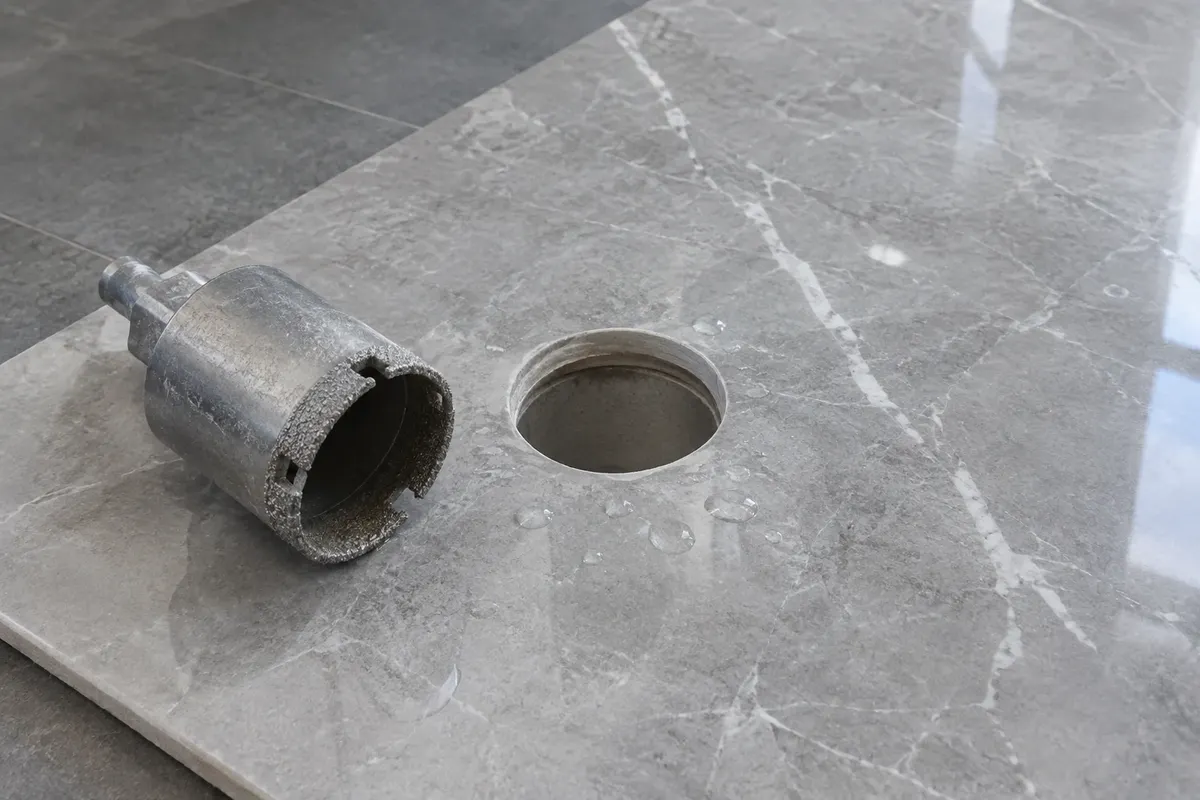
- Hole for a pipe or tap: use a diamond crown a few millimetres larger than the pipe – the hole will be covered by the tap's rosette.
- Hole for a socket: choose the crown diameter according to the electrical installation box. The hole will be covered by the switch or socket frame.
- Drilling into finished tiling: when hanging accessories, drill with a tile drill without percussion and at slow speeds at the start. Tape the area with masking tape to prevent the drill from slipping on the glaze.
Do not use a flex to cut the old grout between the tiles. Bosch warns that diamond cutting blades are not designed for this and may damage the tiles – oscillating tools with the appropriate attachment are used for grout. Always check pipes and cables behind the tiles before drilling. If you are unsure of the wiring, a detector or renovation photos can help.
Saw with water: precise cuts and cuts under 45°
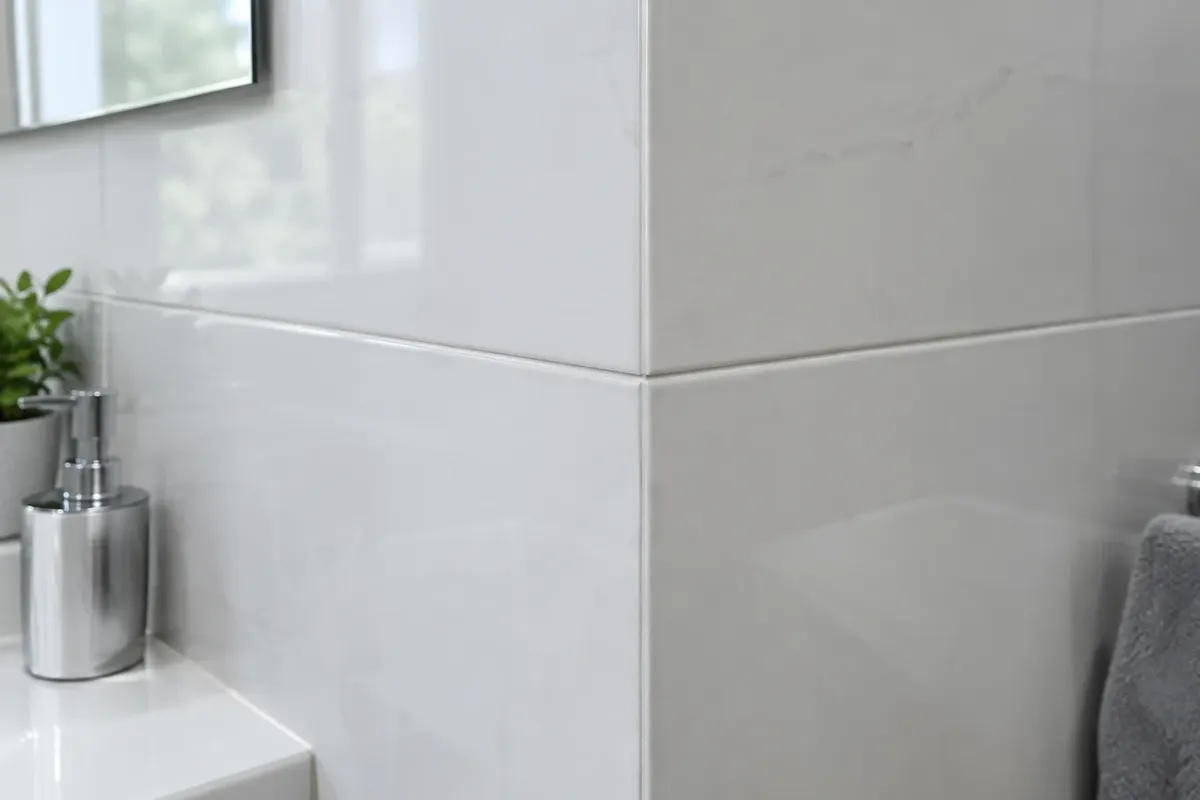
An electric saw with a diamond blade and water cooling makes the cleanest cut. It is suitable for thick and hard gres, for long precise cuts and for cutting edges under 45° at external corners without a trim. Such a corner looks elegant, but is more fragile, and for corners that are often bumped, a trim is more practical. When to choose a trim and when to cut under 45°, we describe in the article Glue, grout and trims.
When using a saw with water, think about safety: water and electricity together pose a risk of injury. Use saws designed for wet cutting, plug them into a socket with a residual current device, and keep the cable away from water. If you are unsure, leave the cutting to a tiler.
Large formats and thin slabs
Tiles 60 × 120 cm are now commonly laid, and the number of bathrooms with formats 120 × 120 cm, 120 × 240 cm, and large slabs is also increasing. More rules apply to them:
| Format | What to cut with | What to consider |
|---|---|---|
| 60 × 60 cm, 30 × 60 cm | manual cutter with a cut length of around 85 cm – for example, the Rubi HIT-850 N can also handle diagonal cuts of 60 × 60 cm | for rectified tiles, precise cuts to keep the grout joint narrow |
| 60 × 120 cm | manual cutter with a cut of at least 125 cm or saw with water | the tile must not bend when cutting or transporting |
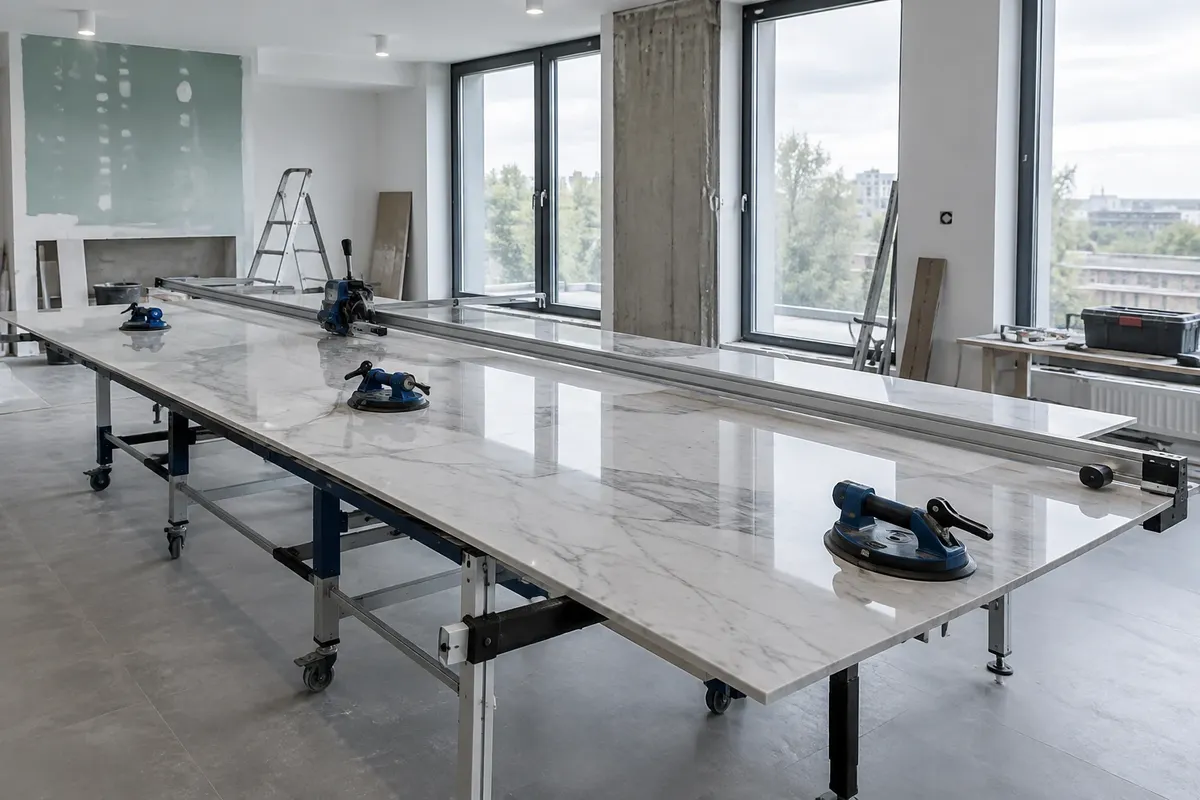
| 120 × 120 cm, 120 × 240 cm | large format cutter with rail, saw with water | support over the entire surface, transporting with suction cups in pairs |
| large slabs 160 × 320 cm and thin slabs | special cutting system from the tool manufacturer | Florim recommends transporting them by four at once, Rubi states that thin slabs typically have 3 to 6 mm |
For large formats, cuts should be planned in advance. The cut edge should be where it will be covered by a trim, silicone, or furniture, and openings for taps and drains need to be measured very precisely – a mistake on one tile costs an entire tile. Laying large formats with C2TE S1 flexible tile adhesive applied to both the substrate and the tile is a job for an experienced tiler with the right equipment. You can find out more about large formats in the articles Tile 60 × 120 or 30 × 60 and Large slabs 160 × 320.
Dust and safety
Ceramic tiles contain silicon dioxide. The Irish Health and Safety Authority (HSA) warns that cutting, grinding, and drilling tiles generates very fine silica dust that can be easily inhaled and may damage the lungs with repeated exposure. How to protect yourself:
- cut wet or use a tool with dust extraction and a vacuum cleaner with a HEPA filter,
- where possible, break on a manual cutter instead of cutting with a grinder,
- respirator – the manufacturer uvex recommends at least FFP2 class when tiling and cutting tiles, HSA recommends FFP3 or a half mask with P3 filter for silica dust,
- protective glasses, hearing protection, and gloves – always when using a grinder,
- cleaning damp – dampen the dust before sweeping or vacuuming, dry sweeping will lift it again.
When renovating an apartment, think of others: cover the bathroom door with foil and do not cut with a grinder in the living room. The dustiest cuts can be made on the balcony or outside the apartment, but with a water saw only where there is a safe socket with a breaker.
Most common mistakes when cutting
- double pass with the wheel on a manual cutter – the break starts off the line,
- using a concrete blade instead of a tile blade – chipped glaze,
- cutting too close to the edge – a narrow strip breaks differently than intended,
- large tile laid on only two supports during cutting – it will crack,
- uncut edge visible where it will be seen,
- forgotten grout width and expansion gap at the wall,
- drilling with impact into the tile – the tile will crack.
Borrow tools or hire a tiler?
If you are undertaking a small adjustment – for example, tiling the wall behind the sink or changing a few tiles – a borrowed manual cutter, grinder with a tile blade, and a core bit will suffice. For a whole bathroom, large formats, and cuts under 45°, cutting is part of the work of a tiler who has the equipment and experience. How to choose a tiler and what to ask them is described in the article How to choose a tiler and a company. How many tiles to buy extra for cuts is calculated in the article How many tiles to buy.
You can see wall and floor tiles in various formats live at our store in Senec – side by side, you will see how the edge of a rectified tile looks and how thick the tiles are for interiors and exteriors. Schedule a visit.
Related: Adhesive, grout, and trims · Rectified tiles · Porcelain stoneware tiles · How to choose a tiler and a company · Grouts and silicone
Sources: Bosch – cutter PTC 640 (cut length 64 cm, diagonal 45 × 45 cm), Rubi HIT-850 N (cut 85 cm, diagonal 60 × 60 cm) and diamond blades for tiles (full perimeter segment, wet cutting over 10 mm, blades not for grouts); Rubi – thin ceramic slabs 3 to 6 mm; Florim – handling format 160 × 320 cm; HSA (Ireland) – silica dust; uvex – respirators when tiling.
Terms in the glossary: Large-format tiles · Gres (porcelain stoneware tiles) · Grout · Rectified tiles · Sanitary silicone · Flexible tile adhesive (C2TE S1)
Frequently Asked Questions
What is the best way to cut floor tiles?
Straight cuts with a manual cutter – it is quick and dust-free. For hard and thick gres, precise cuts, and cuts under 45°, an electric saw with water is better; for cutouts around pipes, use an angle grinder with a diamond blade for tiles.
What blade should I use to cut tiles with an angle grinder?
A diamond blade designed for tiles and gres, preferably with a continuous or fine turbo segment. A concrete blade chips the glaze. For tiles thicker than 10 mm, Bosch recommends wet cutting.
How to cut a hole in a tile?
With a diamond drill bit a few millimetres larger than the pipe. Start drilling at an angle or with a template to prevent the bit from slipping, and without hammering. The hole will then be covered by the battery rosette or socket frame.
What size cutter do I need for tiles 60 × 120?
For lengthwise cuts with a cutting length of at least 125 cm. The tile must not bend during cutting, so it must lie flat. For one bathroom, it is worth renting a cutter.
Is dust from cutting tiles dangerous?
Yes, tiles contain silicon dioxide, and fine dust is generated during cutting, which can damage the lungs with repeated exposure. Cut wet or with extraction and wear a respirator – at least FFP2, and FFP3 for longer work.
How to cut the edge of a tile at 45°?
With an electric saw with water that has a tiltable head or table. The cut should be made precisely, and the edge should be lightly ground. For corners that often get bumped, a more durable strip is recommended.
Can a large slab be cut at home?
Only with a special cutter with a rail and helpers – Florim recommends that slabs 160 × 320 cm be carried by four people at once. Cutting and laying large slabs is better left to an experienced tiler.
AI Advisor
Have a question on the topic? Ask the advisor – they will respond based on TGB Kúpeľne articles.
AI advisor – answers are generated by artificial intelligence from TGB Kúpeľne articles and may contain errors.
Bathroom design
These are tips. We will draw your bathroom for you.
In the 3D bathroom planner, you can design your bathroom yourself – for free and without registration. If you want assurance, we will prepare a photorealistic custom visualisation based on actual dimensions and specific tiles in the studio. It's free with a purchase.
Online design for free Custom visualisation
TGB Kúpeľne Studio · Bratislavská 71, Senec · Mon–Fri 8:00–12:00 and 12:30–17:00, Sat 9:00–12:00 · Map