Tiles
Small tiles 10 × 10, 15 × 15, 15 × 20 and 20 × 25 cm: when to use them
Small tiles like 10 × 10, 15 × 15, 15 × 20 or 20 × 25 cm are making a comeback in retro and patchwork bathrooms, in showers with a fall, and in niches. However, they have significantly more grout lines – for the 10 × 10 cm format, there are 20 metres of grout lines per square metre, compared to only 3.3 metres for 60 × 60 cm. Therefore, they are suitable for smaller areas and places where large formats do not fit.
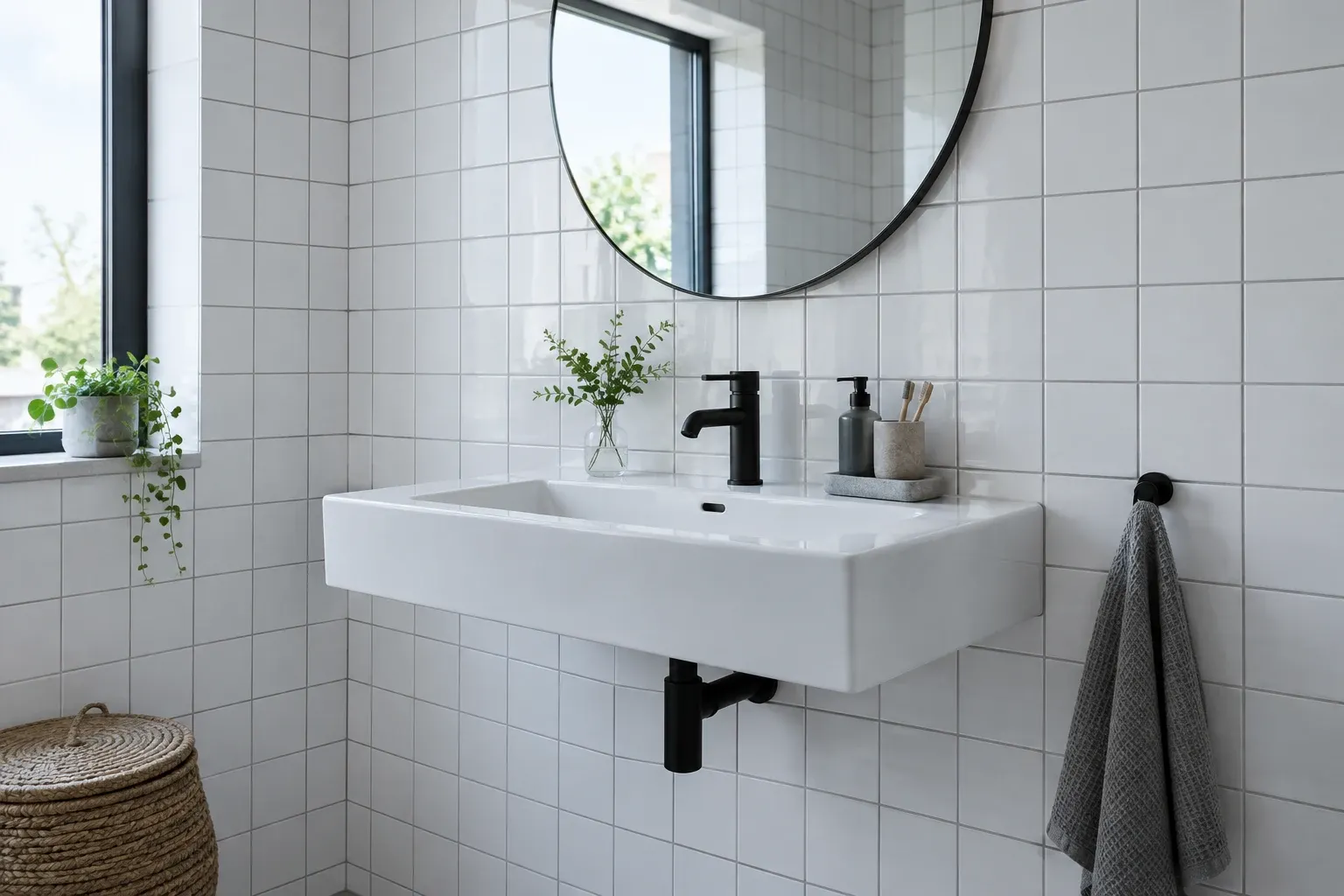
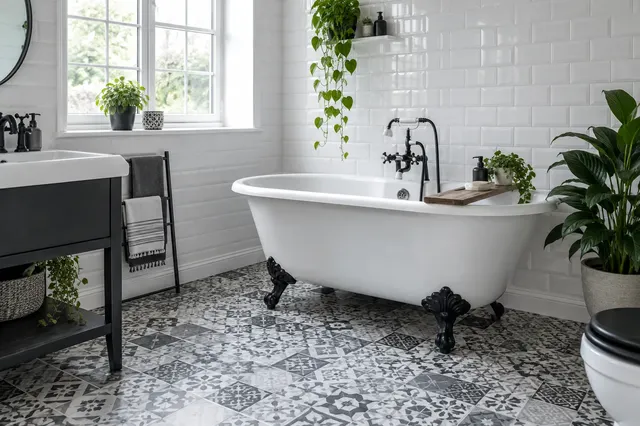
Illustrative image: bathroom with small square wall tiles 10 × 10 cm and contrasting grout
Just a few years ago, small tiles were associated with old bathrooms that everyone wanted to demolish. Today, they are making a comeback – in colourful retro bathrooms, in patchwork floor tiles, and in showers where the floor slopes towards the drain. Small formats have their place; you just need to know where they help and where they add to your workload.
Small formats in numbers
The biggest difference compared to large formats is the number of pieces and the length of the grout lines. You can easily calculate the length of grout lines per 1 m²: 100 divided by the width plus 100 divided by the height of the tile in centimetres (the result is in metres).
| Format | Joints per 1 m² | Joints on 1 m² | Typical use |
|---|---|---|---|
| 10 × 10 cm | 100 pcs | 20 m | retro, shower floor, niches |
| 15 × 15 cm | 44 pcs | 13,3 m | patchwork, country and retro style |
| 15 × 20 cm | 33 pcs | 11,7 m | wall tiles, smaller bathrooms and WCs |
| 20 × 25 cm | 20 pcs | 9 m | wall tiles, common in older flats |
| 30 × 60 cm (for comparison) | 5,6 pcs | 5 m | common wall tiles today |
| 60 × 60 cm (for comparison) | 2,8 pcs | 3,3 m | common floor tiles today |
The number of pieces does not include grout joints and cutting, you will realistically buy more. How much wall tiles to order including a reserve can be calculated by the calculator in the article How much wall tiles and floor tiles to buy.
When small tiles are suitable
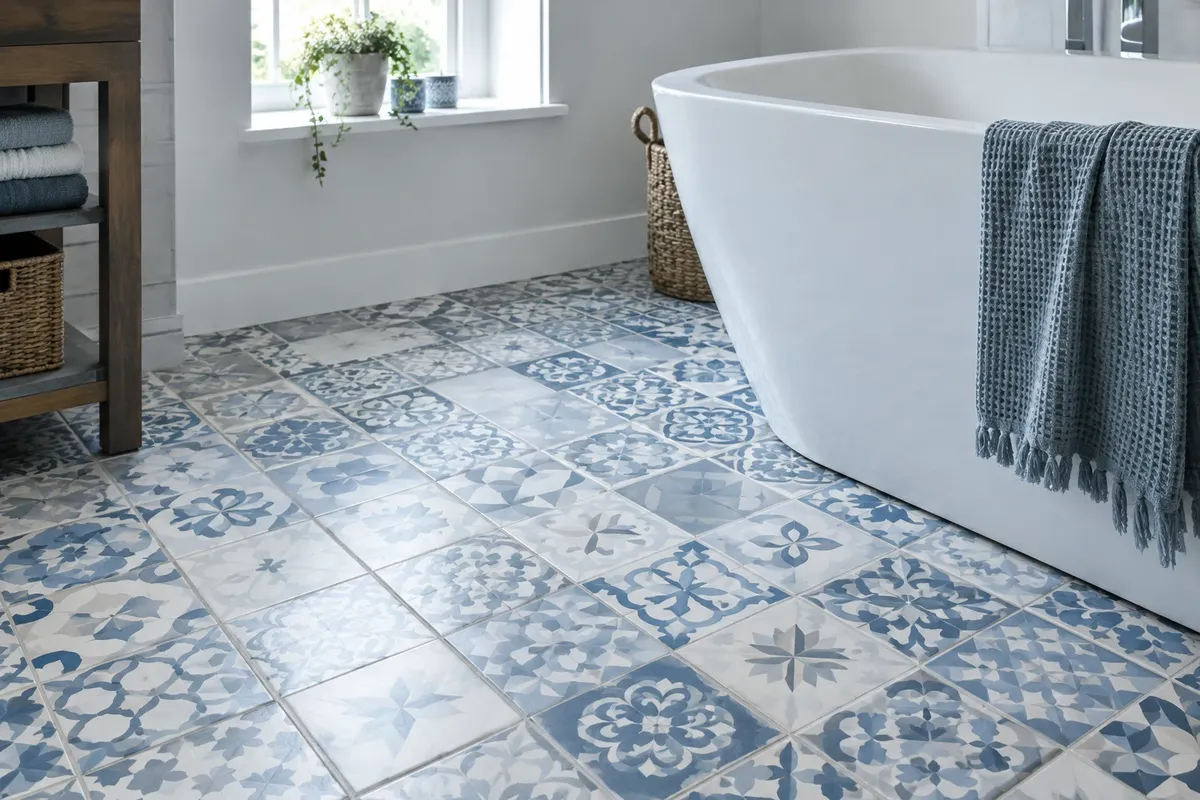
- Retro and patchwork – formats 10 × 10, 15 × 15 and 20 × 20 cm with decor are the basis of patchwork floor tiles and colourful retro walls. Ideas can be found in the article Retro bathroom and patchwork tiles.
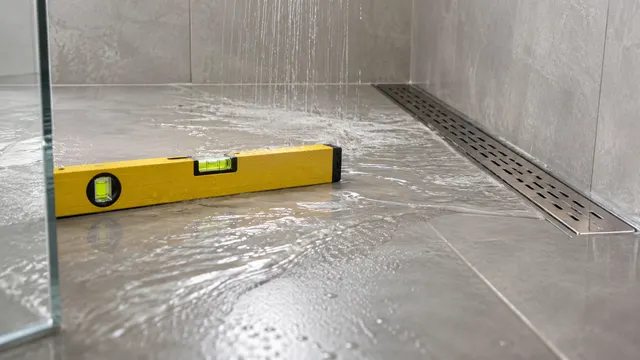
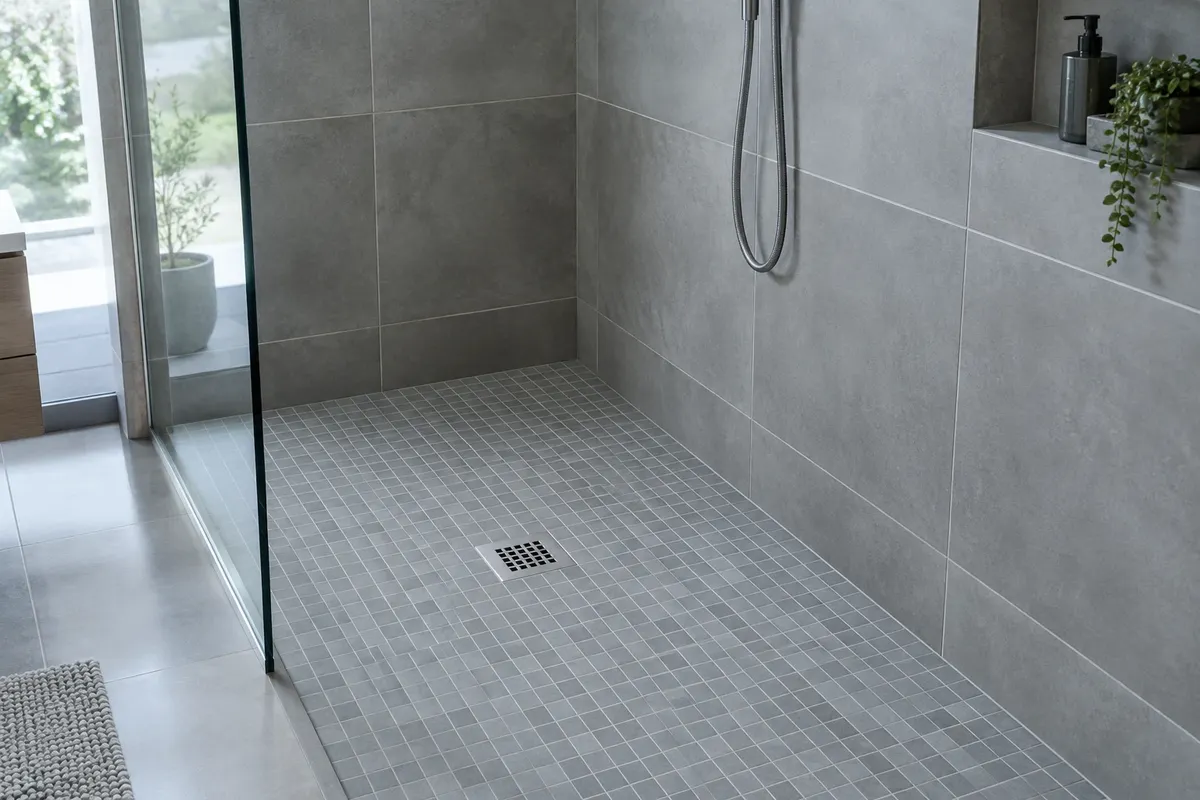
- Shower floor with fall – with point drainage, the floor slopes in four directions and small tiles better follow the sloped surfaces than large formats, which would need to be cut diagonally. The fall is described in the article Creating a fall in the shower floor.
- Niches, reveals and rounded surfaces – in a small niche, a large tile would need a lot of cutting. Small format or mosaic can cover even an arched wall or column.
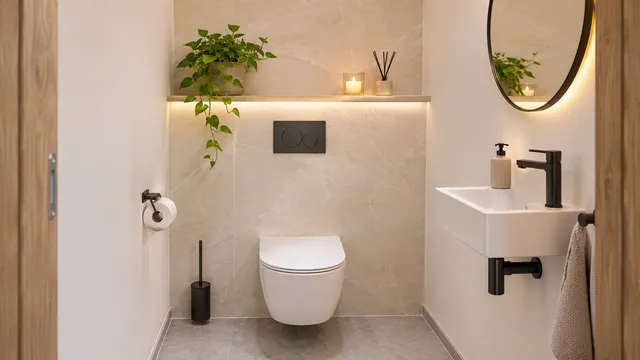
- Small WC – in a room 80 cm wide, small format looks natural. Combinations can be found in the article Wall tiles for WCs.
- Accent – a strip behind the sink, one wall in the shower or tiles behind the mirror, the rest larger format.
When they are not suitable
On large surfaces, small format means many grout joints to clean and longer work. Laying 100 pieces per square metre takes longer than laying three tiles 60 × 60 cm, which is why the labour cost for small formats is often calculated differently – ask about it in advance. If you want a bathroom that feels calm and is easy to maintain, choose a format of 30 × 60 cm and larger for large areas, and use small format only for accents. A comparison of large formats can be found in the article Tile and floor tile formats.
Slip resistance on the floor
Whether the floor tiles are slippery is determined by their surface and slip resistance class, not the format. A small glossy tile can be just as slippery as a large one. For the shower floor, choose tiles with the appropriate class according to the manufacturer – what the markings mean is explained in the article Tile parameters.
Grouting and maintenance
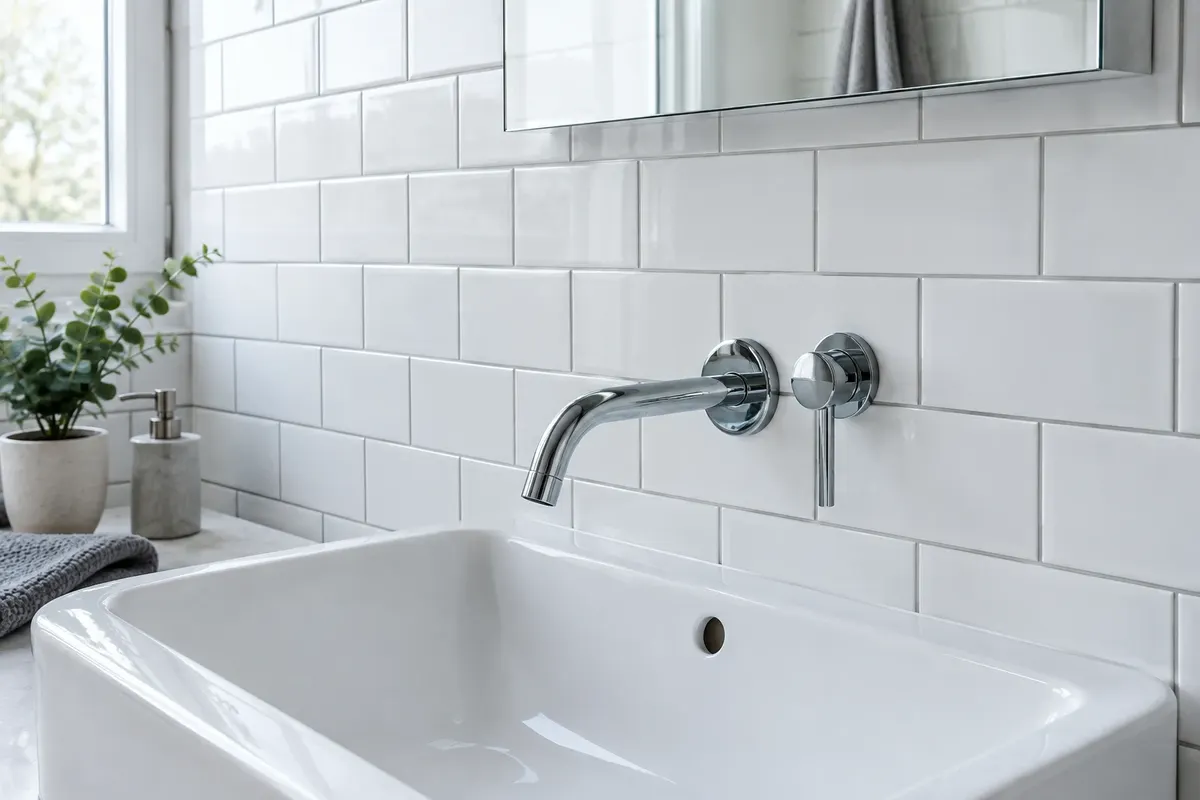
With small format, the grout joints make up a large part of the surface, so their colour significantly changes the appearance. A white grout with a white tile looks clean, while a contrasting grey or black highlights the grid and shows less dirt. In the shower, consider using epoxy grout – it is more water-resistant and easier to clean. The consumption of grout for a given format, width and depth of the joint can be calculated by the adhesive and grout consumption calculator. The choice of grout is discussed in the article Adhesive, grout and trims.
Laying small formats
- Joint width – small tiles are often not rectified, so they have a wider joint according to the manufacturer's recommendation. Cross spacers will maintain an even joint.
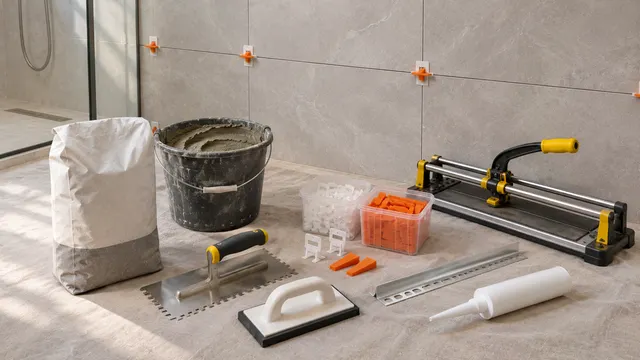
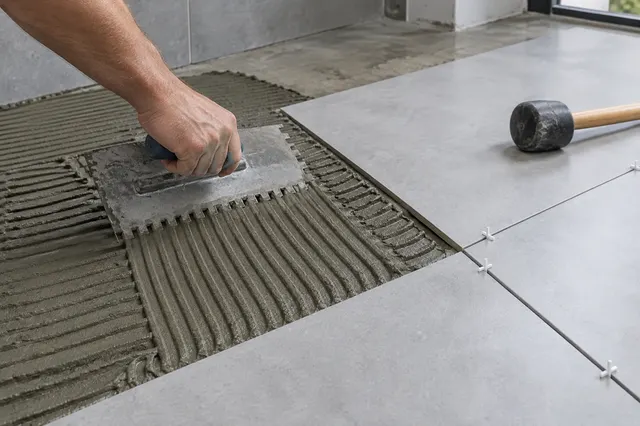
- Adhesive – smaller notched trowel, so the adhesive does not push into the joints. For glass mosaic, white adhesive is used, grey would show through.
- Mosaic on a mesh is glued in whole sheets, which is faster than laying individual pieces.
- Uneven wall – small format hides minor unevenness better than large, which needs a very flat substrate.
Metro tiles and other small shapes
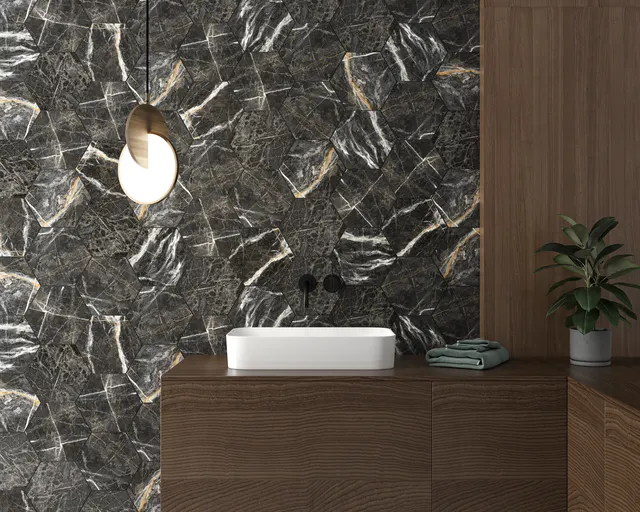
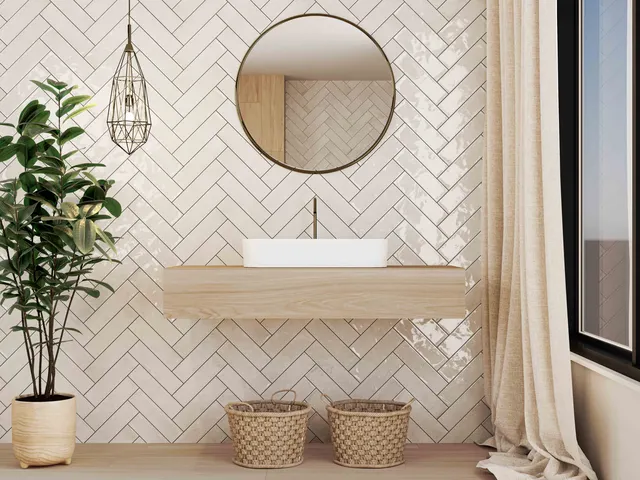
Small formats also include rectangular metro tiles, such as 7.5 × 15 or 10 × 20 cm, hexagons, and herringbone tiles. Metro tiles are laid with a half offset, while herringbone requires more cutting at the edges. The same applies as for squares: many joints, slower laying, and a distinctive appearance that is more suitable for smaller areas.
See small formats and decors live in the studio in Senec at Bratislavská 71 – the colour of the grout is best assessed with a sample. On the e-shop vkupelni.sk you will find wall tiles in various formats.
Common mistakes
- Small format for the whole bathroom – many joints to clean and the bathroom feels restless.
- No reserve – with small formats with decor, it is difficult to later buy the same batch.
- Labour cost on the invoice – laying small formats takes longer, agree on the price in advance.
- Glossy mosaic on the shower floor – slip resistance is determined by the surface, not the size of the tile.
- Grey adhesive under glass mosaic – shows through and darkens the mosaic.
Sources: the calculation of the number of pieces and the length of joints is geometric (without joint width and cutting); our articles Tile and floor tile formats, Retro bathroom and patchwork tiles, Tile parameters, and Adhesive, grout and trims. The width of the joint and type of adhesive is always determined by the manufacturer of the tiles and adhesive.
Terms in the glossary: Patchwork · Large-format tiles · Fall · Floor drain (point drainage) · Slip resistance R9 to R13 · Epoxy grout (RG)
Frequently Asked Questions
How many tiles of 10 × 10 cm are there on m²?
Without joints 100 pieces, for the format 15 × 15 cm 44 pieces, 15 × 20 cm 33 pieces, and 20 × 25 cm 20 pieces. When purchasing, add a reserve for cutting.
Can small format be combined with large?
Yes, and often it is the best solution. Place the small format on one wall, a strip behind the sink or in the niche, and tile the rest of the bathroom with a larger format in a similar colour.
Are small tiles suitable for a small bathroom?
For one wall, strip or niche yes. For entire walls and the floor of a small bathroom, a larger format is calmer, which has fewer joints.
Why are small tiles used in the shower?
With point drainage, the floor slopes in four directions, and small tiles conform to the sloped surfaces without cutting diagonally.
Are small tiles less slippery?
Slip resistance is determined by the surface and class of the floor tiles, not the format. For the shower floor, choose tiles with an appropriate slip resistance class.
What grout for small wall tiles?
For showers, a more durable epoxy grout is recommended. The colour of the grout significantly changes the appearance – white looks clean, while a contrasting colour highlights the grid.
Is the installation of small formats more expensive?
It takes longer, which is why tilers often price it differently than standard formats. Agree on the labour cost before starting.
AI Advisor
Have a question on the topic? Ask the advisor – they will respond based on TGB Kúpeľne articles.
AI advisor – answers are generated by artificial intelligence from TGB Kúpeľne articles and may contain errors.
Bathroom design
These are tips. We will draw your bathroom for you.
In the 3D bathroom planner, you can design your bathroom yourself for free. We will prepare a custom visualisation with specific wall tiles for you in the studio – free of charge with your purchase.
Online design for free Custom visualisation
TGB Kúpeľne Studio · Bratislavská 71, Senec · Map