How it is made · Wall and floor tiles
How ceramic wall tiles are made and how they differ from porcelain stoneware
Ceramic wall tiles, also known as earthenware, are made similarly to porcelain stoneware – from clays that are ground, pressed, and fired. The difference lies in the composition and temperature. Limestone or dolomite is added to the tile body, and it is fired at a lower temperature, around 1,140 °C. The body remains porous and absorbs more than 10% water, but it hardly shrinks, and the tiles have precise dimensions and beautiful glazing. It is excellent for bathroom walls, but not suitable for floors or outdoors.
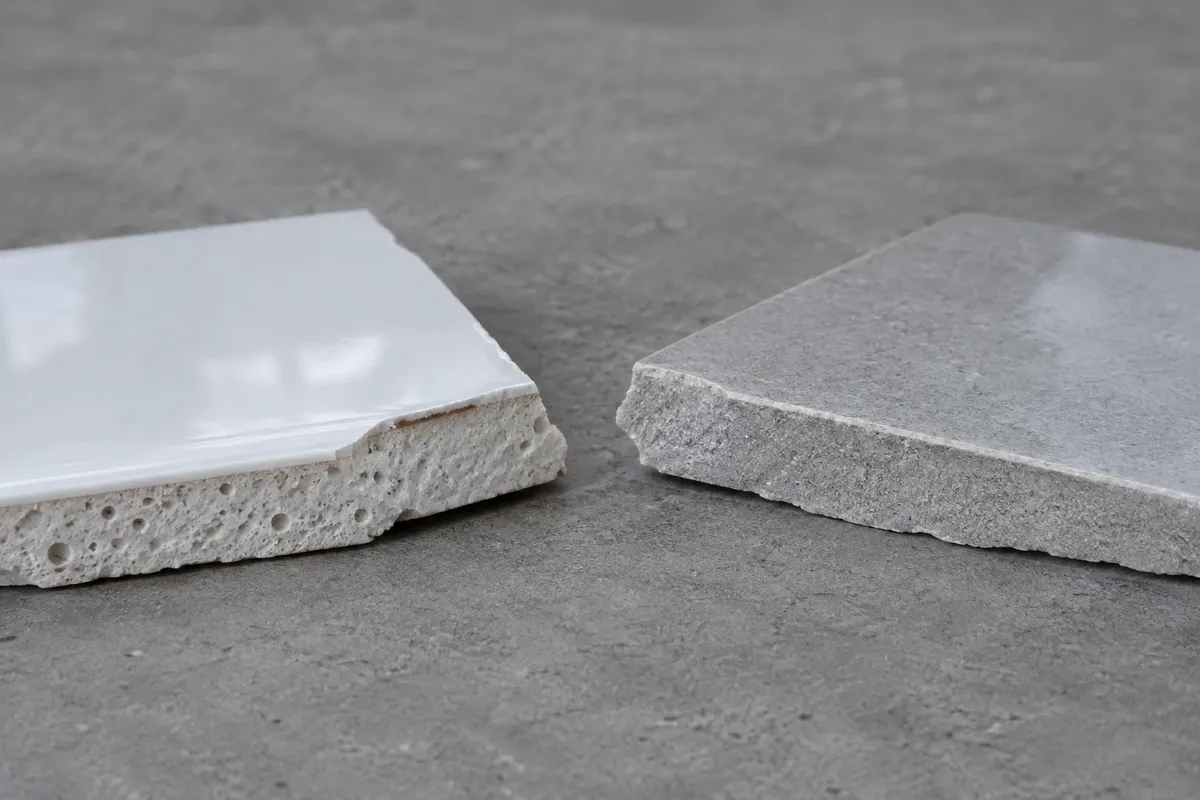
At first glance, wall tiles and floor tiles look the same – ceramic with glazing and patterns. In reality, they are two different materials. Wall tiles have a lighter, porous body, while floor tiles made from porcelain stoneware are dense and hard. The difference arises during production, which is why each has its place in the bathroom. Let's go through how ceramic wall tiles are made and what this means for installation.
Earthenware, majolica and monoporosa
In stores, you will encounter several names. Earthenware is the Slovak term for tiles with a porous body. Manufacturers and technical literature distinguish them by technology:
| Type | How it is made | Note |
|---|---|---|
| majolica | traditional double firing in a tunnel kiln – first the body, then the glaze | the oldest technology |
| birapida | rapid double firing in a roller kiln | two firings, but shorter |
| monoporosa | a single rapid firing of both body and glaze at once in a roller kiln | for example, Italgraniti and Panaria tiles |
Researchers from the Italian CNR state that porous tiles are made with both red and white bodies, and that quickly fired white bodies often had higher strength and lower porosity than red ones. Italian manufacturers Italgraniti and Panaria label their wall tiles as monoporosa with a white body.
Raw materials: why limestone is in wall tiles
The tile material consists of clays and other natural raw materials, but unlike porcelain stoneware, it also contains limestone or dolomite. Italian expert Nilo Tozzi, who developed the monoporosa technology, explains their dual role: during firing, new crystalline phases are formed that give strength to the body, and the tile shrinks almost not at all during firing. Carbonates decompose at high temperatures and release carbon dioxide, which leaves pores in the body.
Almost zero shrinkage is a significant advantage for the tile. The tiles come out of the kiln with precise dimensions and straight edges, allowing them to be laid in a regular grid even on long walls.
Milling, pressing and drying
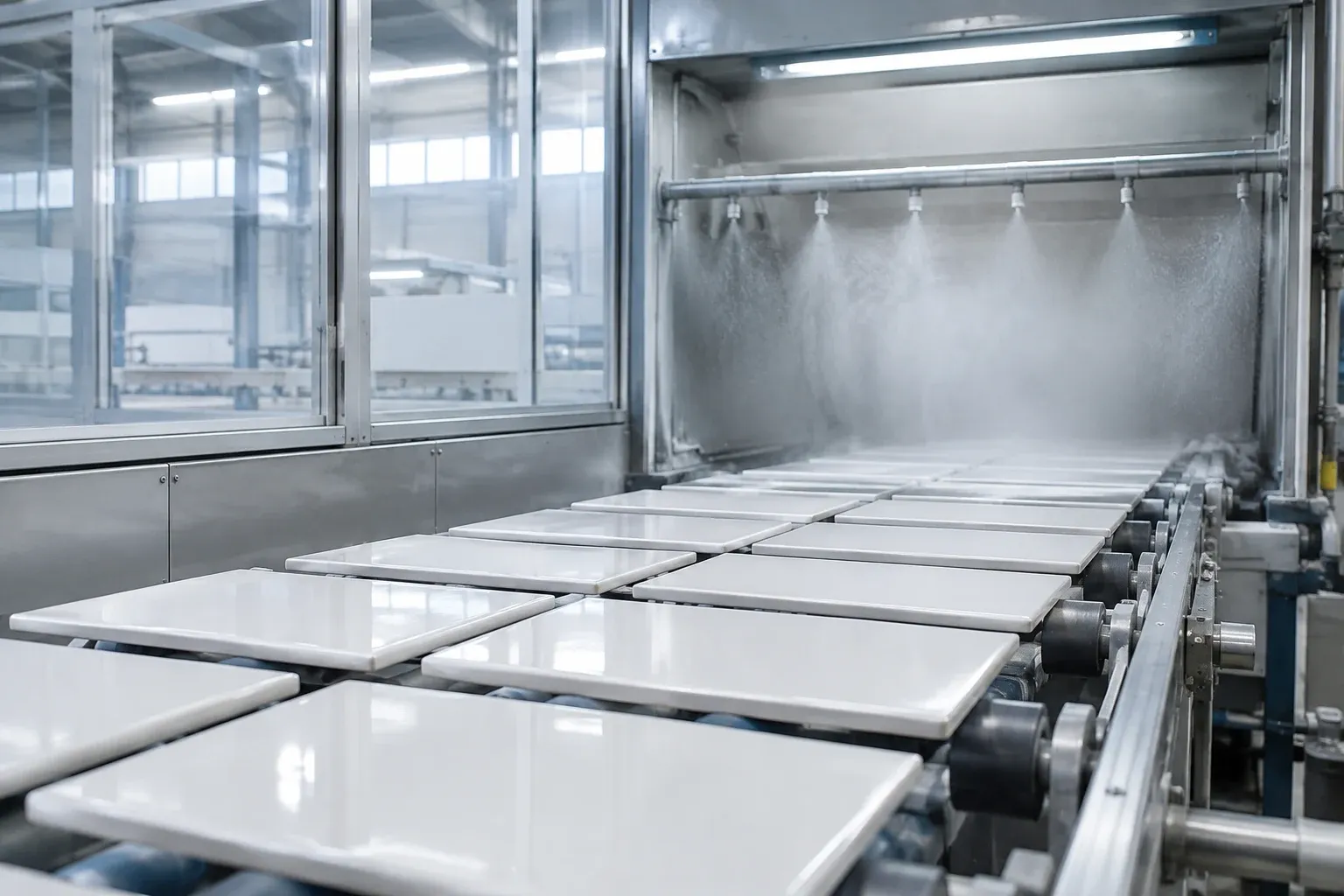
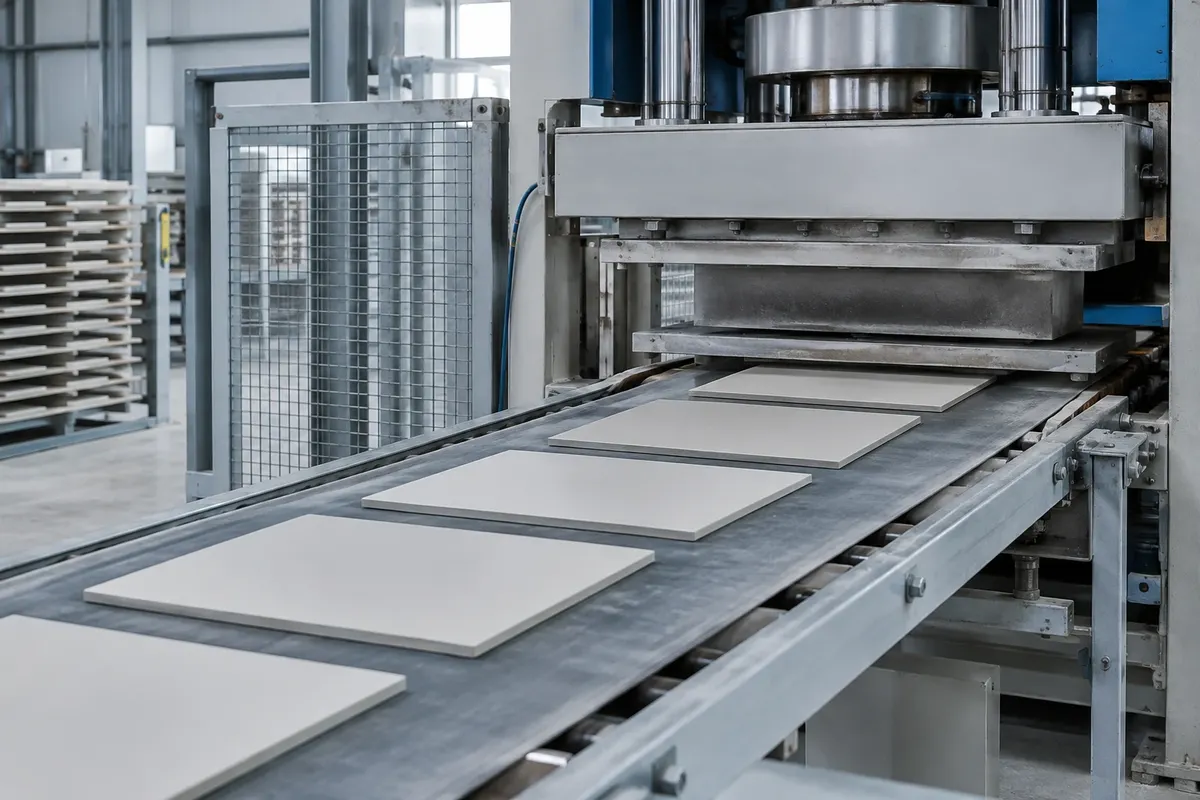
The raw materials are milled with water, dried to a granular powder, and pressed dry in hydraulic presses – this is how Italgraniti describes it. Tozzi notes that the transition to monoporosa required hydraulic presses instead of older impact presses. The pressed tile is dried to ensure it contains no water before glazing is applied.
Glaze and pattern
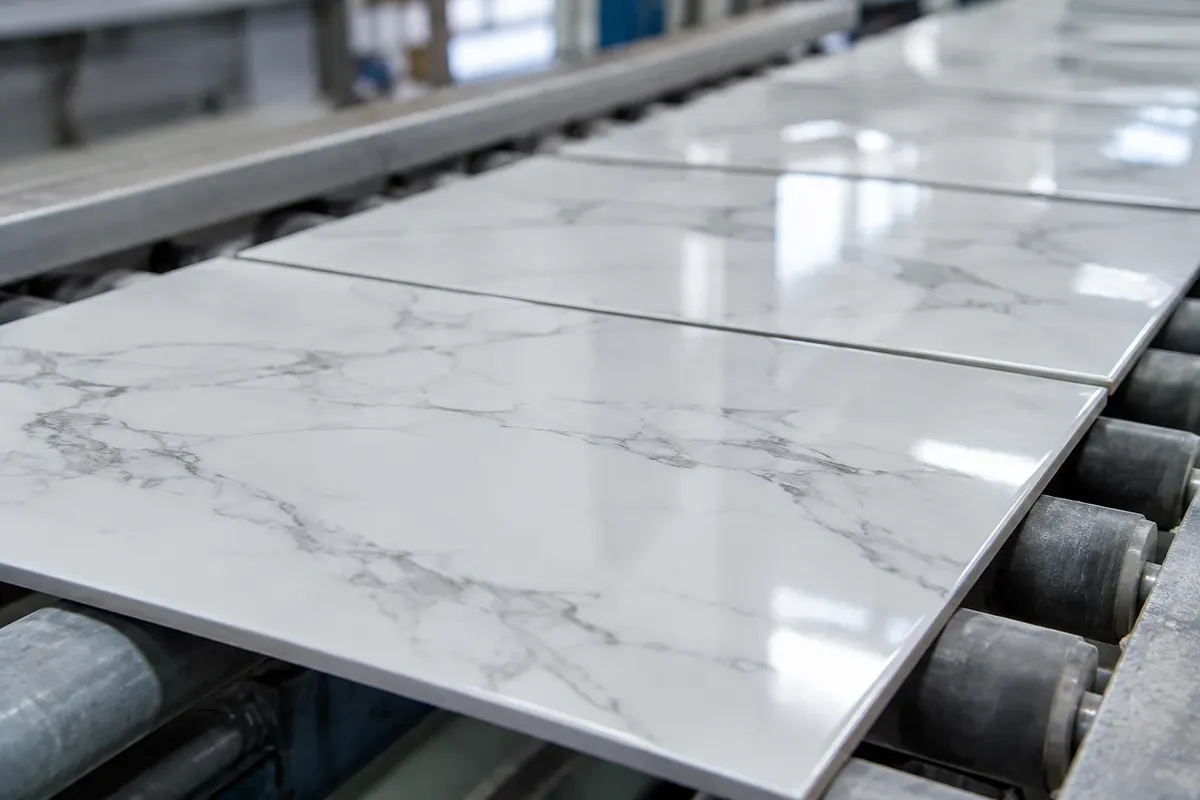
Glaze is a thin glassy layer that gives the tile its colour, shine, and impermeable surface. Italgraniti states that it obtains colours from highly pure colour oxides and digitally prints marble veining in high resolution. The surface can be glossy, satin, or structured – we describe relief tiles, which are currently in fashion, in the article Relief tiles.
According to Tozzi, the glaze on standard monoporosa tiles begins to change into a glassy layer at temperatures above 1,050 °C. The most important thing is that the glaze and body expand equally during heating and cooling – otherwise, the tile may warp or the glaze may crack.
Firing at around 1 140 °C
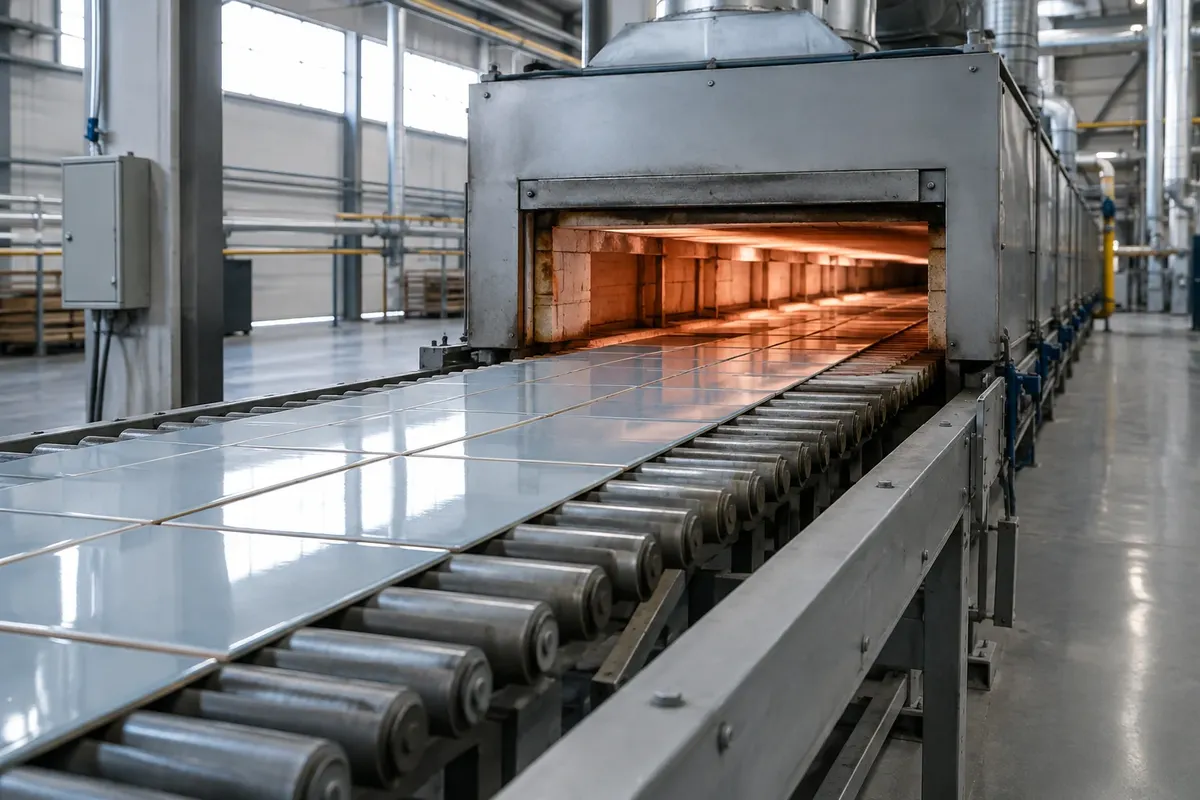
In monoporosa, the body and glaze are fired simultaneously. Italgraniti fires tiles with a white body in single-layer roller kilns at temperatures around 1,140 °C. This is lower than for porcelain stoneware, which requires temperatures above 1,200 °C. At a lower temperature and with limestone in the material, the body does not densify – pores remain in it, giving it lightness and water absorption.
| Property | Ceramic wall tiles (BIII) | Porcelain stoneware (BIa) |
|---|---|---|
| firing temperature | around 1 140 °C (Italgraniti) | above 1 200 °C (Florim) |
| water absorption | above 10 % | at most 0,5 % |
| frost resistance | no (Panaria: not frost-resistant) | yes |
| where it fits | walls indoors | floor, walls, shower, terrace |
| cutting and drilling | easier, softer body | more challenging, hard body |
What the standard says: group BIII
The EN 14411 standard classifies pressed tiles with water absorption above 10% into group BIII, and their requirements are in Annex L. Italgraniti states that the Square Wall tile has a bending strength of at least 12 N/mm² and a breaking strength of at least 600 N for a thickness of 7.5 mm. This is completely sufficient on the wall – the tile does not bear the load of walking or furniture.
Panaria explicitly states that its monoporosa tile is not frost-resistant. The porous body absorbs water, which could expand in freezing conditions and crack the tile. Therefore, the tile is not suitable for terraces, balconies, or facades – porcelain stoneware is the right choice there. More in the article Tiles for balconies and terraces.
Formats and thickness of the tile
Since the tile shrinks almost not at all during firing, manufacturers today also produce it in elongated formats that would be difficult to keep straight with other materials. For example, Italgraniti produces the Square Wall tile in a format of 25 × 75 cm with a thickness of 10.5 mm, Panaria produces the Even tile in a format of 35 × 100 cm with a thickness of 8 mm and rectified edges. A larger format means fewer grout joints on the wall – fewer places for dirt to settle. With rectified tiles, a narrow grout joint can also be chosen.
On the box and in the technical sheet, you can identify the tile by the group designation – wall tiles are group BIII, porcelain stoneware BIa. If you are unsure whether the product is suitable for the floor, check this designation and the frost resistance information.
What does this mean for your bathroom
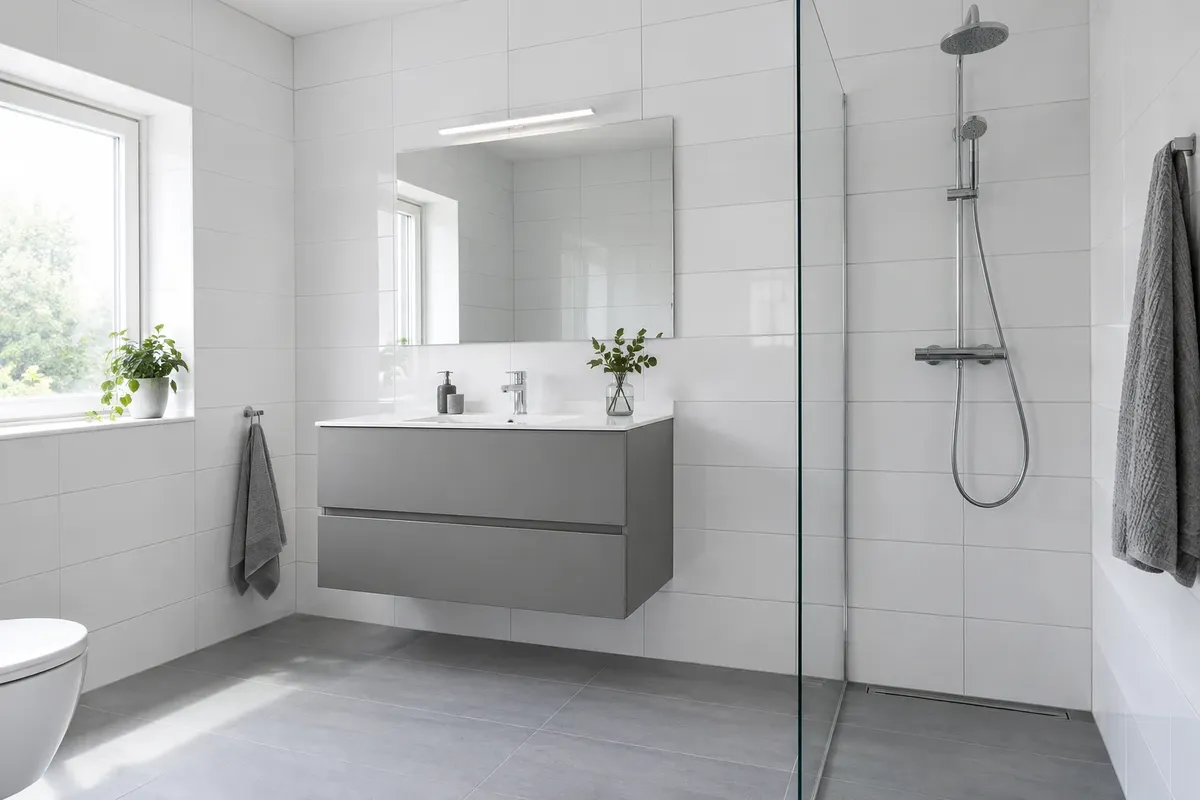
- Wall tile, porcelain stoneware for the floor. You can use porous tiles and porcelain stoneware on the wall in the bathroom and shower. Porcelain stoneware belongs on the floor.
- In the shower, waterproofing is key, not the tile. The porous tile is protected by glaze, and there must be a liquid waterproofing membrane underneath it – see Waterproofing the bathroom.
- Adhesive and grout according to the material – the suitability of the adhesive for porous or porcelain stoneware is indicated by the manufacturer in the technical sheet. What to buy along with the tile is described in the article Adhesive, grout, and trims.
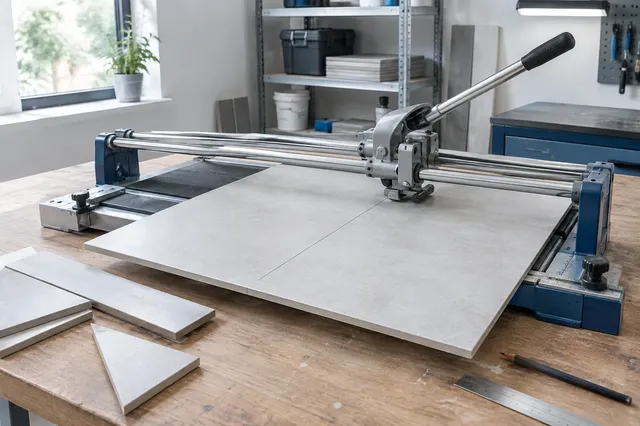
- Easier cutting: softer body is easier to cut and drill than porcelain stoneware, see Cutting tiles and floor tiles.
- Batch and shade: tiles are also sorted by shade – buy from one batch and with a reserve.
How to choose wall tiles and floor tiles for the bathroom is described in the article How to choose wall and floor tiles, the properties of porcelain stoneware in the article Porcelain stoneware tiles. You can try out combinations of tiles in the 3D bathroom planner, and find inspiration in the gallery Wall and floor tiles.
Related: How porcelain stoneware tiles are made
Frequently Asked Questions
How is ceramic wall tile made?
From clays and other natural raw materials with the addition of limestone or dolomite. They are ground, dried into powder, pressed, glazed, and the tiles are fired, using the monoporosa technology at a temperature of around 1,140 °C.
What is earthenware?
Ceramic wall tiles with a porous body that absorbs more than 10% water. According to standard EN 14411, it belongs to group BIII and is used on interior walls.
What is the difference between wall tiles and floor tiles?
The tile has a porous body fired at a lower temperature, absorbs more than 10% water, and is not frost-resistant. Porcelain stoneware tiles are dense, fired above 1,200 °C, and absorb a maximum of 0.5% water.
Can ceramic wall tiles be used in the shower?
Yes, on the shower wall, yes. The glaze retains water, and especially the waterproofing beneath the tiles. Porcelain stoneware with slip resistance is suitable for the shower floor.
Why shouldn't wall tiles be used on the terrace?
They are not frost-resistant. The porous body absorbs water, which expands when frozen and can crack the tile. For example, Panaria states that its monoporosa tiles are not frost-resistant.
What is the difference between white and red body tiles?
Tiles are made with both white and red bodies. According to measurements by the Italian CNR, quickly fired white body tiles had higher strength and lower porosity than red ones. Both are suitable for interior walls.
Sources and further information
- Italgraniti – Impronta Square Wall: technical sheet for the tile with a white bodypdf.archiexpo.com
- Panaria Ceramica – Even: technical data for the monoporosa tileviva-interiors.com
- Digitalfire – Nilo Tozzi: Monoporosa, single firing of tilesdigitalfire.com
- CNR – Mechanical properties of porous tiles (group BIII)iris.cnr.it