How it is made
How a tap is made: brass, machining and surface treatment
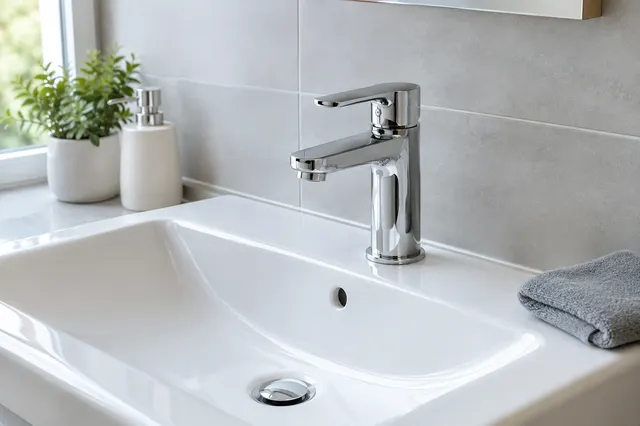
The body of a tap is most often cast from brass. The channels through which water flows are created by a sand core placed in the mould. The casting is then machined, ground, and polished, and receives a layer of nickel and chrome in the galvanising shop. Coloured surfaces – black, gold, or bronze – are most often created using PVD technology on a chrome base. Finally, the cartridge, lever, and aerator are installed in the tap.
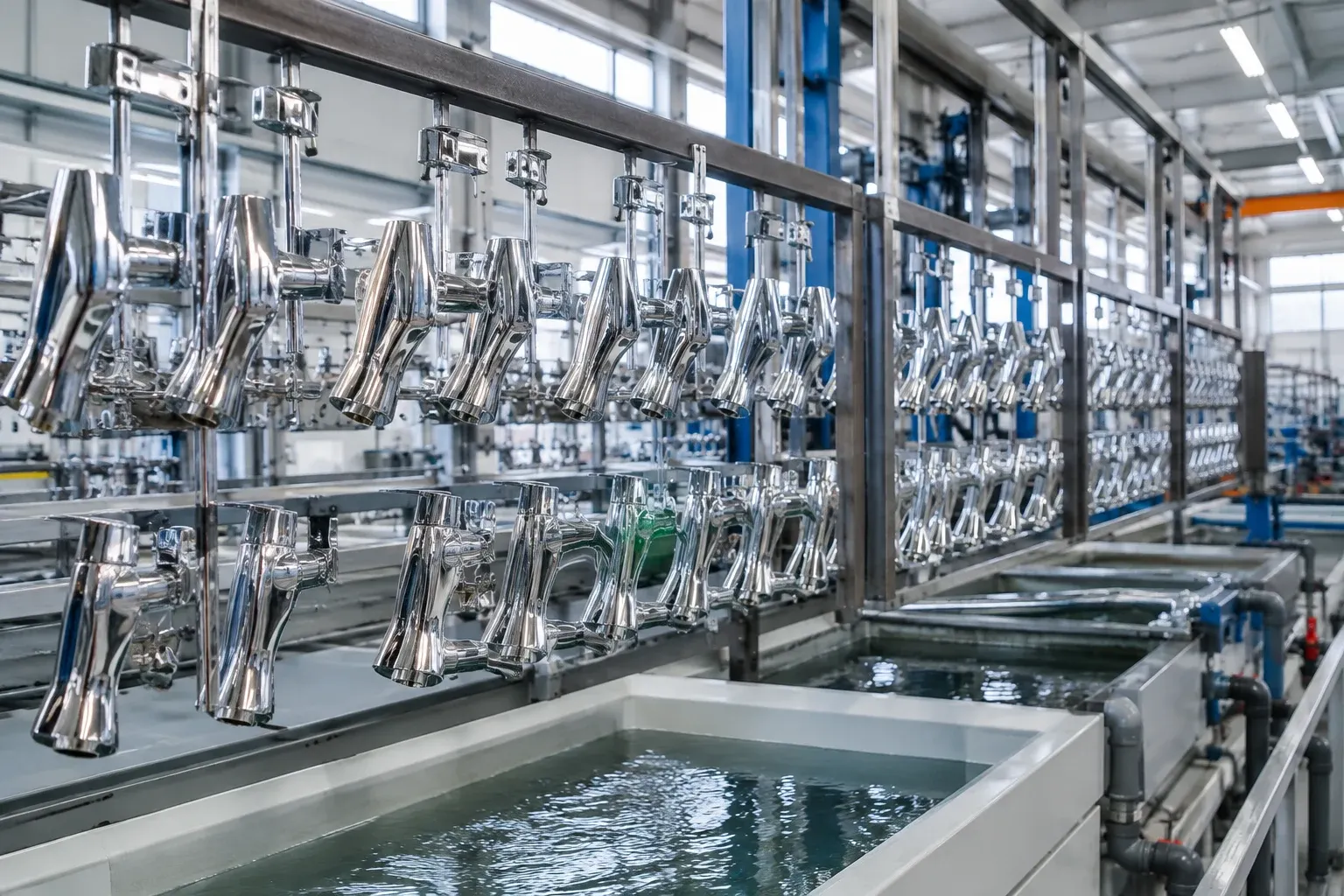
Illustrative image: shiny chrome tap bodies on a stand in the galvanising shop
We use the tap several times a day. Beneath the shiny surface lies a solid brass body with water channels, created in the foundry and undergoing dozens of processing steps. We describe the production based on data from manufacturers Oras, Hansa, and Hansgrohe. How to choose a tap for a sink and bath can be found in the article Bath and sink tap.
Production steps in brief
| Step | What is done | Why |
|---|---|---|
| core | made of fine sand to shape the water channels | so that cavities for water remain in the casting |
| casting | molten brass is poured into a mould with the core | the body of the tap is formed |
| machining | inlets are cut, holes are drilled, and threads are cut | precise locations for the cartridge, inlets, and outlet |
| grinding and polishing | the rough surface is smoothed to a shine | chrome replicates every imperfection |
| galvanisation, PVD | nickel and chrome are applied, possibly colour | hard, glossy and durable surface |
| installation and testing | cartridge, lever, aerator, inspection | finished and functional mixer |
brass resistant to dezincification
The body of the mixer is made from brass – an alloy of copper and zinc. It arrives at the foundry in bars. Oras and Hansa emphasize that they use brass resistant to dezincification. With regular brass, aggressive water can leach zinc over time, weakening the metal. Resistant brass prevents this. Waste from production is not discarded: Oras states that they remelt the cuttings and return the machining chips to the supplier for the production of new bars.
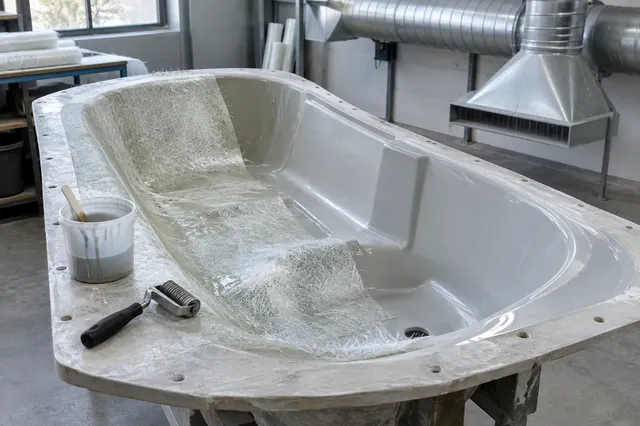
sand core and casting
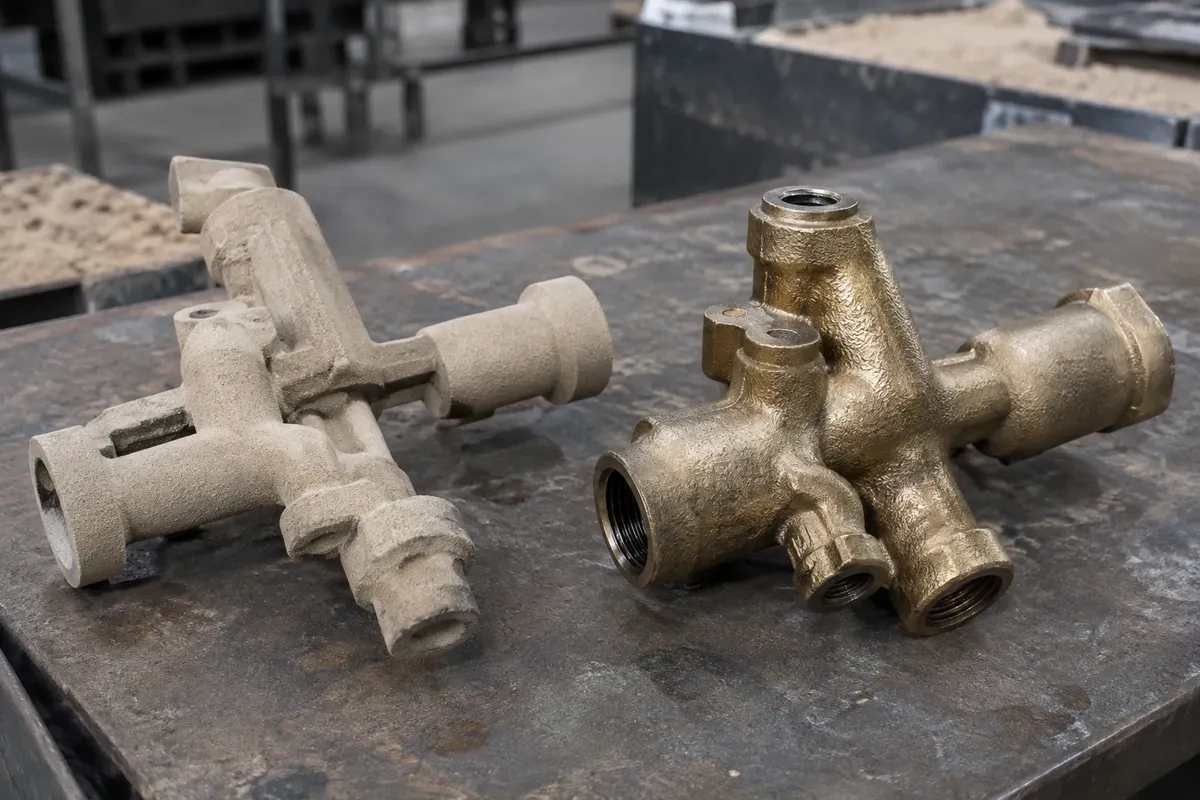
To keep channels for hot and cold water in the casting, a core is inserted into the mould. Oras makes it from fine sand and hardener, which are heated in the core box. The core has the exact shape of the channels through which water will flow. Hansa describes that a worker places the core in the mould and blows out the remaining sand, the moulds are closed and filled with molten brass. Hansgrohe casts bodies using low-pressure casting in their foundry in Schiltach. After cooling, the sand core crumbles and is emptied, leaving the finished channels in the body.
machining, grinding and polishing
The raw casting has inlets and a rough surface. First, excess parts are cut off, then machines drill holes and cut threads – for the cartridge, supply hoses, outlet and aerator. Precision is important: the cartridge must fit in the body without leaks.
Then comes grinding and polishing, partly on automatic lines and partly by hand. The surface must be perfectly smooth, as the galvanic layer is very thin and any groove would be highlighted. Oras states that polished bodies must not be touched with bare hands – a fingerprint would be visible under the chrome.
Nickel, chrome and PVD finishes
The glossy surface is created in the galvanizing shop. Parts are hung on racks and gradually pass through baths – first a layer of nickel is applied and finally chrome. At the Hansgrohe plant in Schiltach, galvanization is fully automated.
| Layer | Thickness at Hansgrohe | Task |
|---|---|---|
| nickel | 15 to 25 µm | protection against corrosion, shine and surface leveling |
| chrome | 0,3 to 0,6 µm | hard, glossy and easy-to-clean surface |
| PVD | based on chrome | coloured finishes – black, gold, bronze, graphite |
The chrome layer is thinner than one micrometer. Therefore, do not clean the mixer with abrasive sponges or acids – the procedure can be found in the article Water scale on the mixer.
PVD coloured finishes (physical vapour deposition) are created in a vacuum chamber, where a very thin layer of metallic compounds from vapour is applied to the surface. Hansgrohe uses this technology to produce 15 of its 17 coloured finishes, with chrome always being the base. Plastic parts, such as some levers and hand showers, must first be made electrically conductive before chrome plating – Hansa applies copper, nickel and finally chrome to them.
Cartridge, installation and inspection
The heart of the mixer – the cartridge – is installed into the finished body. In single-lever mixers, there is a ceramic cartridge with two plates that slide over each other to mix hot and cold water. In thermostatic mixers, there is a thermostatic cartridge that maintains the set temperature. The lever, aerator and supply hoses are added.
Finished mixers are inspected. Hansa states that out of about 3,000 mixers produced daily at the plant in Rauma, 1% is randomly inspected. For mechanical mixing mixers, for example, the European standard EN 817 applies.
For concealed mixers, two parts are made: the body, which is built into the wall, and the top part with the lever and cover. The body does not need to be shiny, but it must be precisely machined and tight, as it will be inaccessible after years without demolition. What to prepare before tiling is described in the article Concealed basin mixer.
What this means when choosing
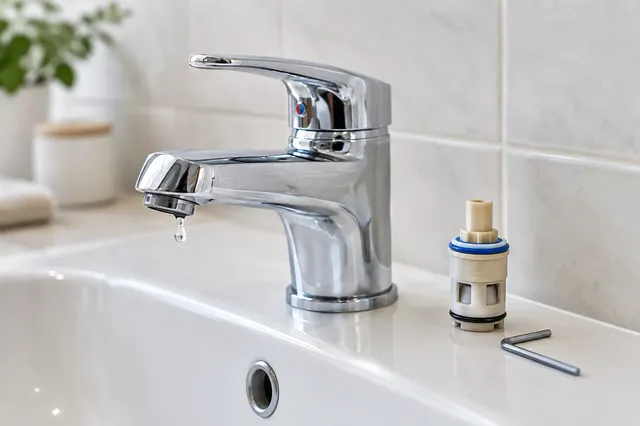
- A quality mixer has a brass body, ceramic cartridge, replaceable aerator and available spare parts. When repairing, the cartridge is replaced, not the entire mixer – see Dripping mixer.
- Material of the body and whether it is brass resistant to dezincification is stated by the manufacturer in the technical sheet or product description.
- The surface is thin – clean chrome and PVD gently, without acids, chlorine and abrasive sponges.
- Type of mixer for the basin, bath and shower can be selected with the articles Bath and basin mixer and Shower mixer.
Mixers and showers can be found in the e-shop in the category Mixers and showers.
Sources: Oras – From brass bars into faucets; Hansa – Building durability into every faucet; Leuze Verlag – Hansgrohe, galvanic surfaces and PVD in Schiltach; EN 817; our articles Bath and basin mixer and Dripping mixer.
Terms in the glossary: Cartridge · Aerator · Shower tray · Thermostatic mixer · Concealed mixer
Frequently Asked Questions
What is a tap made of?
The body of a quality tap is most often cast from brass, an alloy of copper and zinc. Manufacturers like Oras and Hansa use corrosion-resistant brass. The surface is made up of a layer of nickel and chrome, or possibly a coloured PVD layer.
How are the channels inside the tap created?
A core made of fine sand and hardener, shaped like the future channels, is placed in the mould during casting. After cooling, the sand is removed, leaving cavities in the body through which water flows.
What is the thickness of the chrome layer on the tap?
Very thin. For Hansgrohe taps, the nickel layer is 15 to 25 µm and the chrome layer is 0.3 to 0.6 µm. Therefore, do not clean the tap with abrasive sponges or acids.
What is the PVD surface of the tap?
A coloured layer applied in a vacuum chamber from metal compound vapours. This technology produces black, gold, or bronze taps. Hansgrohe uses this technology to create 15 out of 17 coloured surfaces, always on a chrome base.
What is inside a single-lever mixer?
A ceramic cartridge with two plates that slide over each other to mix hot and cold water. When the tap drips, it usually suffices to replace the cartridge.
AI Advisor
Have a question on the topic? Ask the advisor – they will respond based on TGB Kúpeľne articles.
AI advisor – answers are generated by artificial intelligence from TGB Kúpeľne articles and may contain errors.
Bathroom design
These are tips. We will draw your bathroom for you.
In the 3D bathroom planner, you can design your bathroom yourself for free. We will prepare a custom visualisation with specific wall tiles for you in the studio – free of charge with your purchase.
Online design for free Custom visualisation
TGB Kúpeľne Studio · Bratislavská 71, Senec · Map