How it is made
How a shower enclosure is made: toughened glass, aluminium profiles and treatment against limescale
A shower enclosure consists of toughened safety glass, aluminium profiles and fittings. The glass is first cut, ground and drilled, then heated in a furnace to above 600 °C and rapidly cooled with air. The profiles are created by extruding heated aluminium through a die and receive anodising or powder coating. Finally, a treatment is applied to the finished glass, allowing water to bead and reducing limescale adherence.
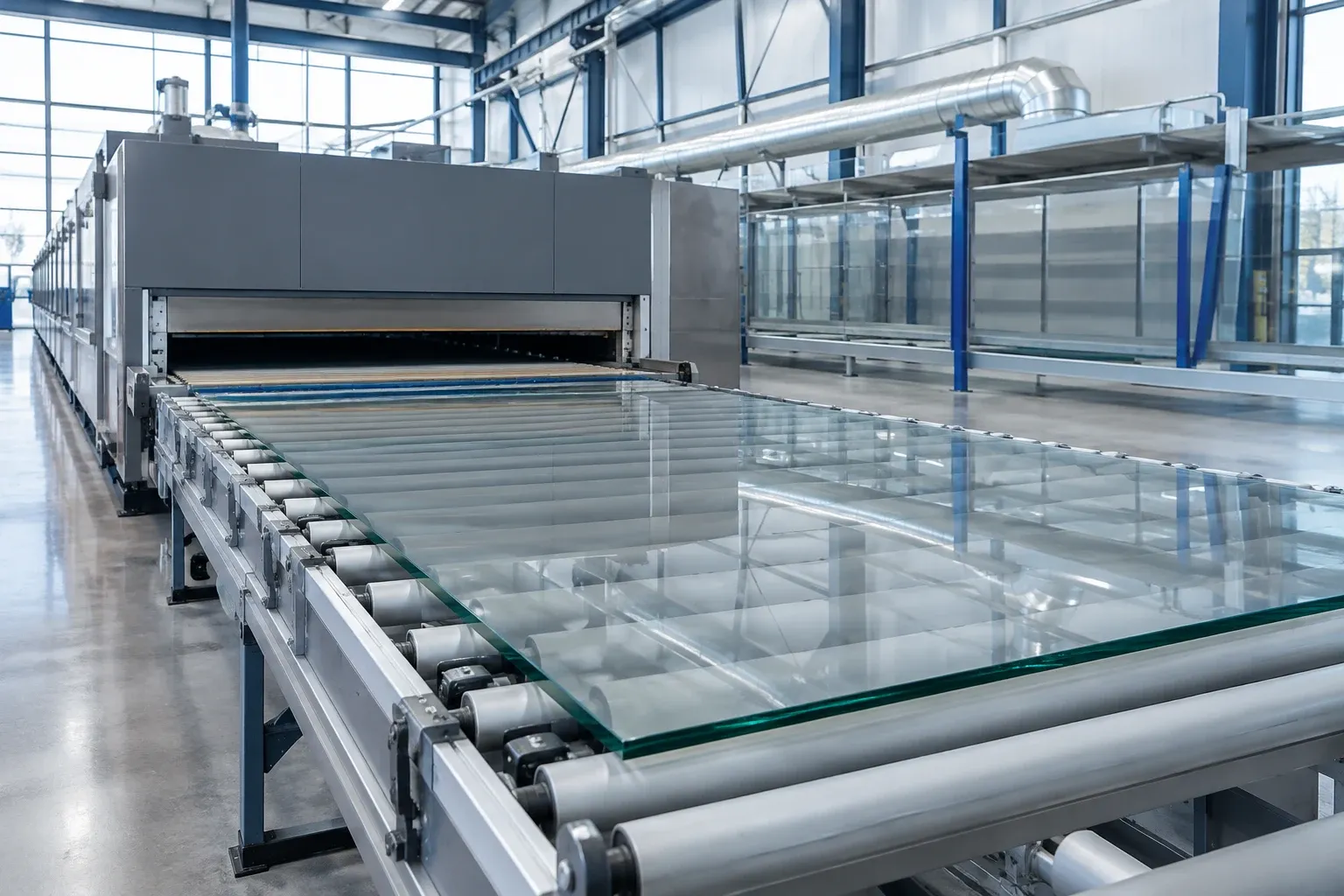
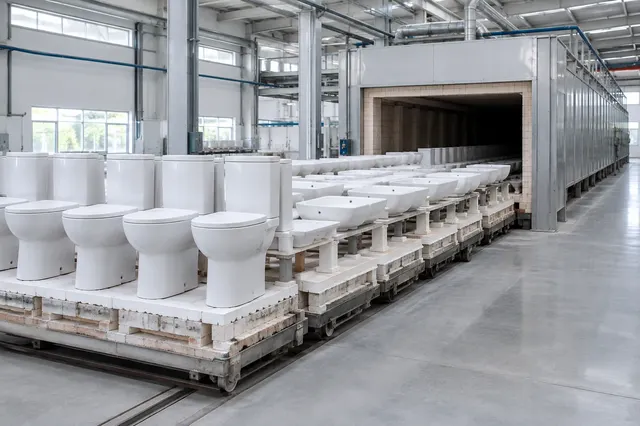
Illustrative image: Clear glass panel comes out of the tempering furnace
A shower enclosure looks simple: glass walls, doors, a few profiles and hinges. However, each part is made using different technologies. The glass is tempered in a furnace, profiles are extruded from aluminium, and a treatment against limescale is applied to the finished glass. We describe the process based on information from manufacturers of glass, profiles and shower enclosures. You can find out how to choose a ready-made enclosure in the article Quality shower enclosure.
What a shower enclosure consists of
| Part | Material | How it is made |
|---|---|---|
| walls and doors | toughened safety glass | cutting, edge grinding, drilling, tempering in a furnace |
| profiles and trims | aluminium | extrusion, anodising or powder coating |
| hinges and handles | metal, such as chrome-plated brass | are attached to the finished glass |
| glass treatment | a thin layer that repels water | is applied to the finished tempered glass |
Glass: everything is done before tempering
The starting point is ordinary flat glass, which glassworks produce in large sheets. First, it is cut to the exact size of the doors and walls, then the edges are ground and polished, and holes for hinges, handles, and brackets are drilled. This order is mandatory. IQ Glass states that the glass must be cut before tempering; otherwise, it may crack and shatter during cutting. The glass manufacturer Press Glass warns that tempered glass cannot be mechanically modified, so all requirements must be specified in the order.
For you, this means one thing: a shower enclosure cannot be "shortened a bit" or drilled on site. For a custom shower, the opening must be precisely measured before ordering – see the article Custom Shower Enclosure.
Tempering: above 600 °C and rapid cooling
The prepared sheet goes into the tempering furnace. According to IQ Glass, it is heated above 600 °C and then its surface is rapidly cooled with cold air from both sides. The surface hardens before the centre. When it cools and shrinks inside, the surface remains permanently compressed while the interior is pulled. For the glass to break, the impact must first overcome this surface pressure – which is why tempered glass is much stronger than ordinary glass.
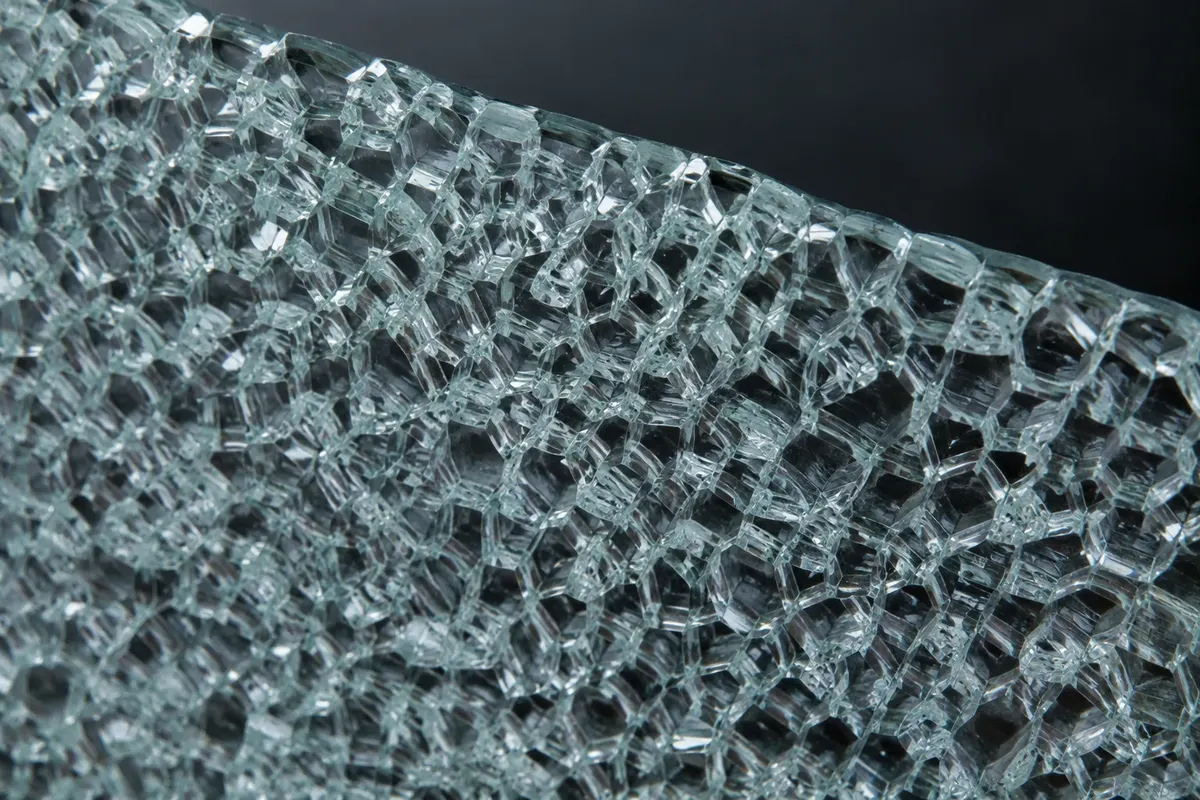
When tempered glass does break, the tension is released all at once, and the sheet shatters into small pieces with blunt edges. Ordinary glass breaks into long sharp shards. The requirements for toughened safety glass are specified by the standard STN EN 12150-1, and for shower screens as a whole by STN EN 14428.
Heat Soak Test: heat test
During the production of flat glass, tiny crystals of nickel sulfide can enter. In tempered glass, these may expand over time and cause the glass to spontaneously break. Therefore, tempered glass can still be tested with heat. Saint-Gobain Glass states heating to (290 ± 10) °C for at least 2 hours, Press Glass about 290 °C. Sheets with risky inclusions break already in production – according to Press Glass, almost 99% of them – and the strength of the remaining glass is not reduced by the test. Whether the glass has passed this test is indicated by the manufacturer in the technical data sheet.
Aluminium profiles: extrusion and anodising
The profiles that hold the glass against the wall and form the door frame are made from aluminium through extrusion. The profile manufacturer Gutmann describes the process as follows: an aluminium billet is heated to about 500 °C and pressed through a die, which gives the profile its external shape. Hollow and multi-chamber profiles are created using shape cores. Long profiles are then stretched, cut to production lengths, and artificially aged to harden them.
The surface of the profiles is treated in two main ways:
- Anodising (anodic oxidation) – an electrolytic process that creates a hard, scratch-resistant layer on aluminium while preserving its metallic appearance. Gutmann offers it in natural colour, bronze shades, and black.
- Powder coating – applied without solvents and can be done in standard RAL colour chart shades.
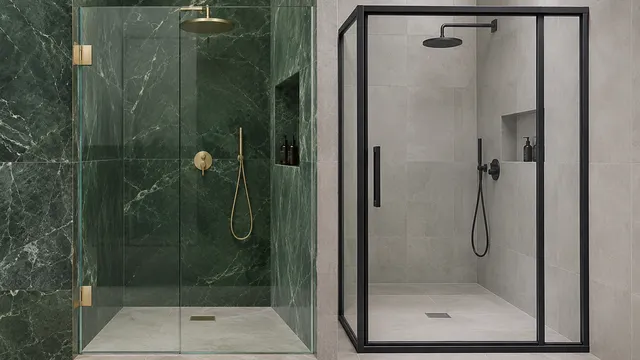
For example, Ravak offers profiles made of thick-walled aluminium in white lacquer, satin, and glossy anodised finishes for its enclosures, along with hinges and handles made of chrome-plated brass. Black and other coloured profiles are described in the article Shower Enclosures with Black Profiles.
Glass treatment against limescale
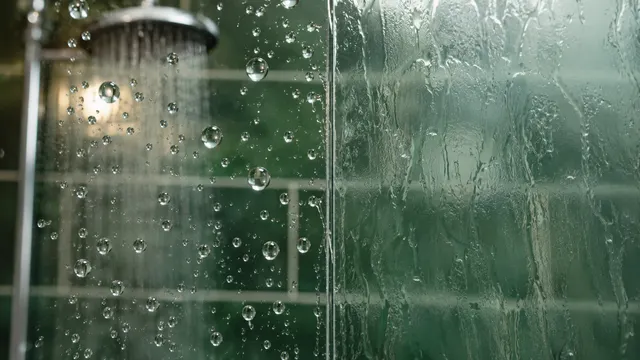
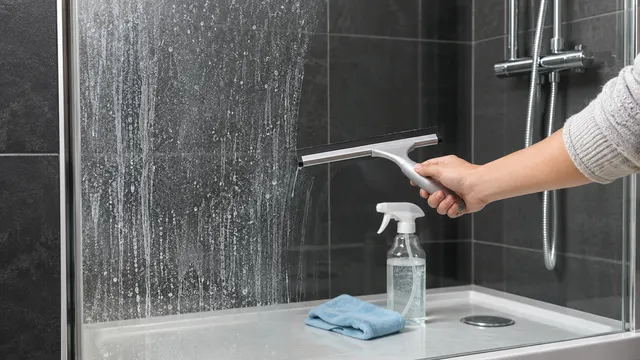
A protective layer is often applied to finished tempered glass. Ravak calls it AntiCalc and describes it as a layer chemically bonded to the glass that repels water. Water beads off in droplets, and limescale or dirt does not chemically bond with the glass, making it easy to wipe clean. According to Ravak, all its shower enclosures receive this treatment during production. Other manufacturers use similar treatments under their own names.
However, the treatment is not permanent. Ravak sells a product called AntiCalc Conditioner for its renewal, and with regular use, it offers a 10-year warranty on the treatment's functionality. How to care for treated glass and when the treatment is worthwhile is described in the articles Protective Treatment of Shower Glass and How to Clean a Shower from Limescale.
Completion and installation
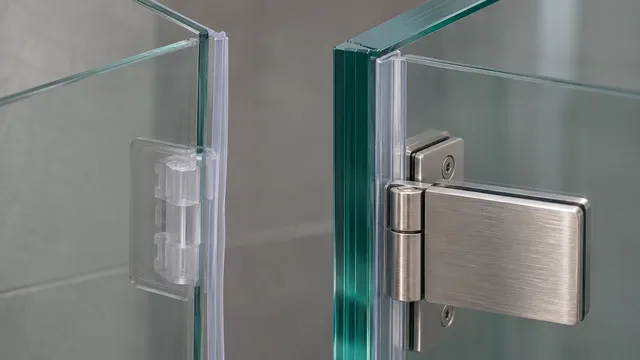
Hinges, handles, rollers, and seals are attached to the glass, and the enclosure is packaged as a set. On site, an installer will fit it according to the manufacturer's instructions: the profile against the wall compensates for wall irregularities, and the seals prevent water from leaking outside the shower. In frameless enclosures, the glass supports itself only on the hinges and wall brackets, so the quality of the glass and fittings is crucial here. A comparison can be found in the article Frameless or Framed Shower Enclosures.
What this means when choosing
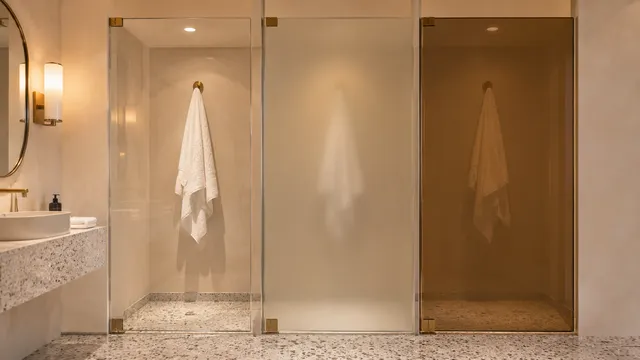
- Type and thickness of glass – toughened safety glass according to STN EN 12150-1, most commonly 6 or 8 mm. Clear, frosted, and smoked glass are compared in the article Shower Glass.
- Heat Soak Test – if the manufacturer states that the glass has passed the heat test, the risk of spontaneous breakage is lower.
- Profiles and fittings – rigid profiles with uniform surface treatment and metal hinges. Check if seals and rollers can be purchased separately for the series.
- Glass treatment – find out what it is called, how to maintain it, and how to renew it.
- Measurement – tempered glass cannot be modified after production, so the opening size must be precise.
Shower enclosures and screens can be found in the e-shop in the category Shower Enclosures and Screens. You can try out how the enclosure would look in your space using the 3D bathroom planner.
Sources: IQ Glass – Toughened glass; Press Glass – Heat Soak Test; Saint-Gobain Glass, A. Kasper – Heat soaking; Gutmann – aluminium extrusion technology; TZB-info – Ravak AntiCalc glass treatment; Ravak – PROFI catalogue 2023; Ravak – AntiCalc Conditioner; STN EN 12150-1 and STN EN 14428; our articles Quality Shower Enclosure and Shower Glass.
Frequently Asked Questions
What type of glass is used to make a shower enclosure?
From toughened (tempered) safety glass, most commonly 6 or 8 mm thick. The requirements for it are specified by the standard STN EN 12150-1, and for shower screens as a whole STN EN 14428.
Can a shower enclosure be shortened or drilled?
No. Cutting, edge grinding and drilling holes are done before tempering. Interfering with tempered glass would disrupt the tension within it and the panel would shatter. Therefore, the opening must be precisely measured before ordering.
How is the glass for a shower enclosure tempered?
The cut and ground panel is heated in a furnace to above 600 °C and its surface is rapidly cooled with cold air from both sides. The surface remains permanently compressed, making the glass much stronger and causing it to shatter into small blunt pieces if broken.
What are the profiles of the shower enclosure made of?
From aluminium, which is heated to about 500 °C and pressed through a die shaped like the profile. The surface is then anodised (a hard layer with a metallic appearance) or powder-coated.
How does the glass treatment against limescale work?
A thin layer is applied to the glass that repels water. Water beads up and limescale does not chemically bond with the glass, making it easy to wipe off. The treatment wears off over time – manufacturers sell products for its renewal.
What is the Heat Soak Test?
A test of tempered glass at around 290 °C for several hours. Panels with a risk of nickel sulfide inclusion will break during production – according to Press Glass, almost 99% of them do. The strength of the glass is not reduced by the test.
AI Advisor
Have a question on the topic? Ask the advisor – they will respond based on TGB Kúpeľne articles.
AI advisor – answers are generated by artificial intelligence from TGB Kúpeľne articles and may contain errors.
Bathroom design
These are tips. We will draw your bathroom for you.
In the 3D bathroom planner, you can design your bathroom yourself for free. We will prepare a custom visualisation with specific wall tiles for you in the studio – free of charge with your purchase.
Online design for free Custom visualisation
TGB Kúpeľne Studio · Bratislavská 71, Senec · Map