Maintenance and repairs
Radiator not heating: warm at the top, cold at the bottom and other causes
When the radiator does not heat, the cause is revealed by which part is cold. A cold top means air. A lukewarm bottom is normal with low flow, but a cold bottom across the entire width even with the valve fully open indicates sludge. We will go through the symptoms one by one – what you can handle yourself and when to call a heating technician or building administrator.
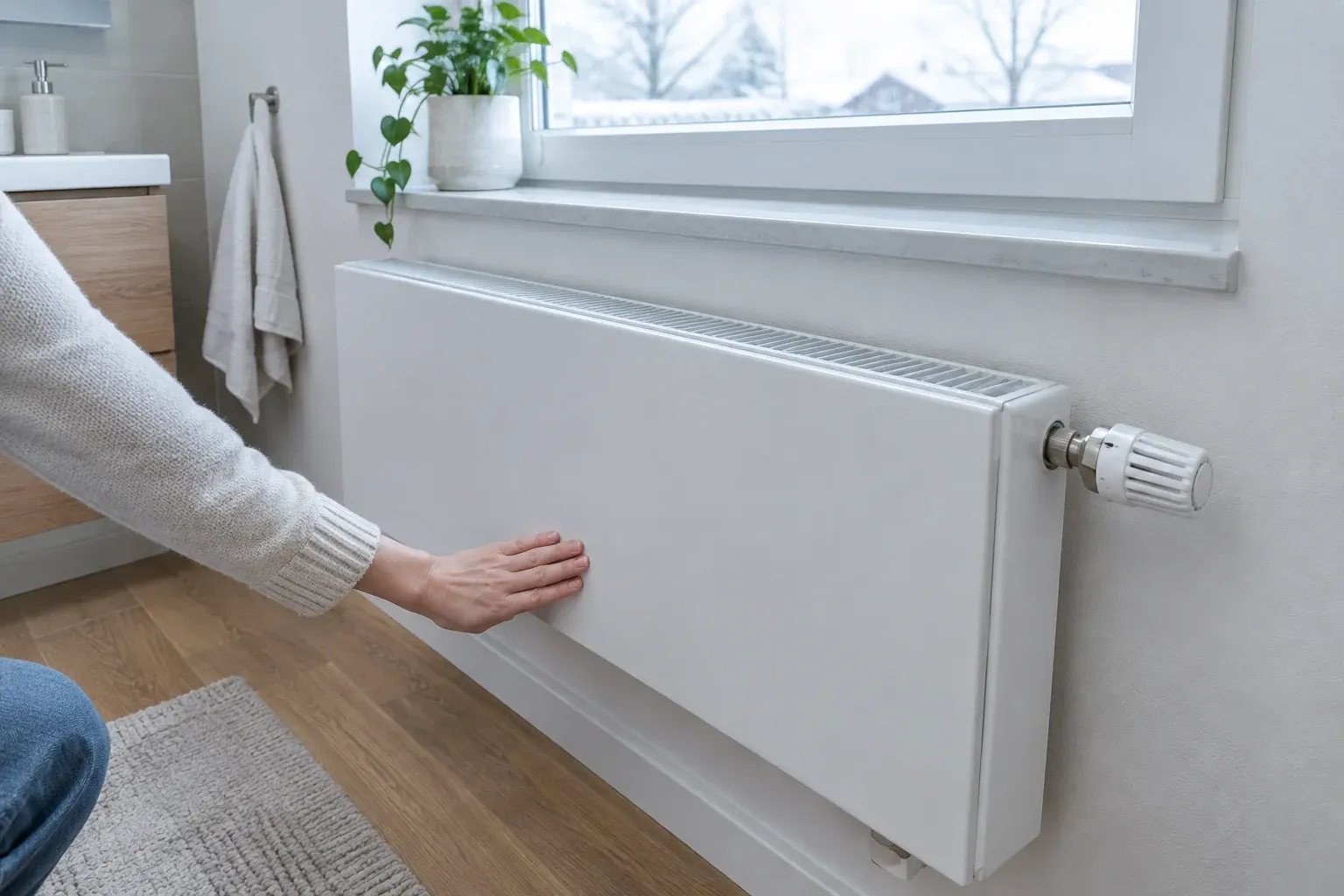
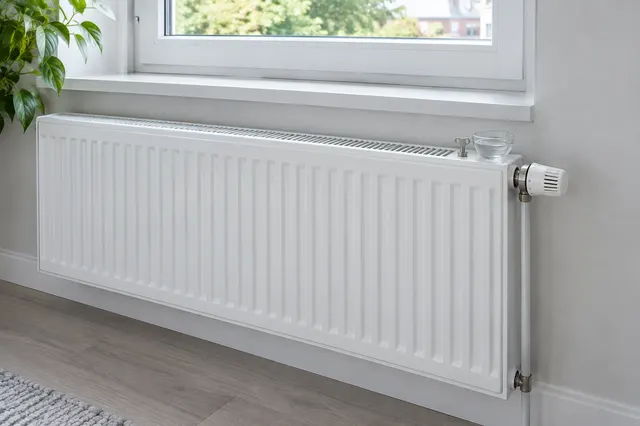
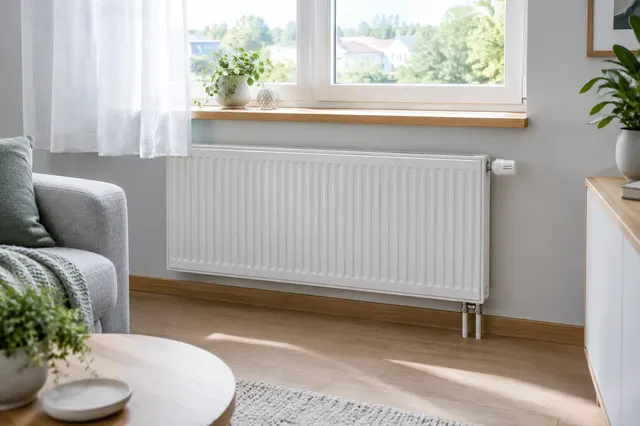
Illustrative image: A hand checks the temperature of a white radiator with a thermostatic head
A radiator that is not heating is not always broken. It may just be regulating, or it might be low on water or flow. You can find the step-by-step process for bleeding a radiator in the article Bleeding a radiator and setting the head in the article Thermostatic head. We start with diagnosis here.
Quick diagnosis: where is the radiator cold
First, turn the head fully and wait about half an hour for the radiator to stabilise. Then, check with your hand which parts are warm:
| Symptom | Most common cause | What to do |
|---|---|---|
| top cold, bottom warm | air in the radiator | bleed |
| top warm, bottom lukewarm, the room is warm | the head is regulating, flow is low | nothing, it's fine |
| top warm, bottom cold, the room is cold | stuck valve, low pre-regulation or sludge | check the valve pin, then call a heating engineer |
| bottom cold across the entire width even with the head fully open | sludge at the bottom of the radiator | flush the radiator or system |
| completely cold | stuck pin, closed fitting, low pressure, boiler or pump not working | check the valve and pressure, then call a heating engineer |
| one side warm, the other cold | low flow or incorrect connection | heating engineer |
| the furthest radiators in the house are heating poorly | unbalanced system | hydraulic balancing |
Top warm, bottom cold: when is it normal
Hot water usually enters the radiator from the top, transfers heat, and the cooled water flows out from the bottom. When the valve head partially closes, the water flows slowly and cools down before it passes through the entire radiator. The bottom then becomes lukewarm to cold – and that is fine as long as the room is warm. The thermostatic head measures the air temperature and allows as much water into the radiator as needed.
The problem arises when the room is cold and the radiator only heats at the top even with the head fully open. In this case, check the valve and sludge. Bleeding will not help – you will only drain water from the radiator and additionally reduce the pressure in the entire soil stack in a prefab block of flats.
Stuck valve under the head
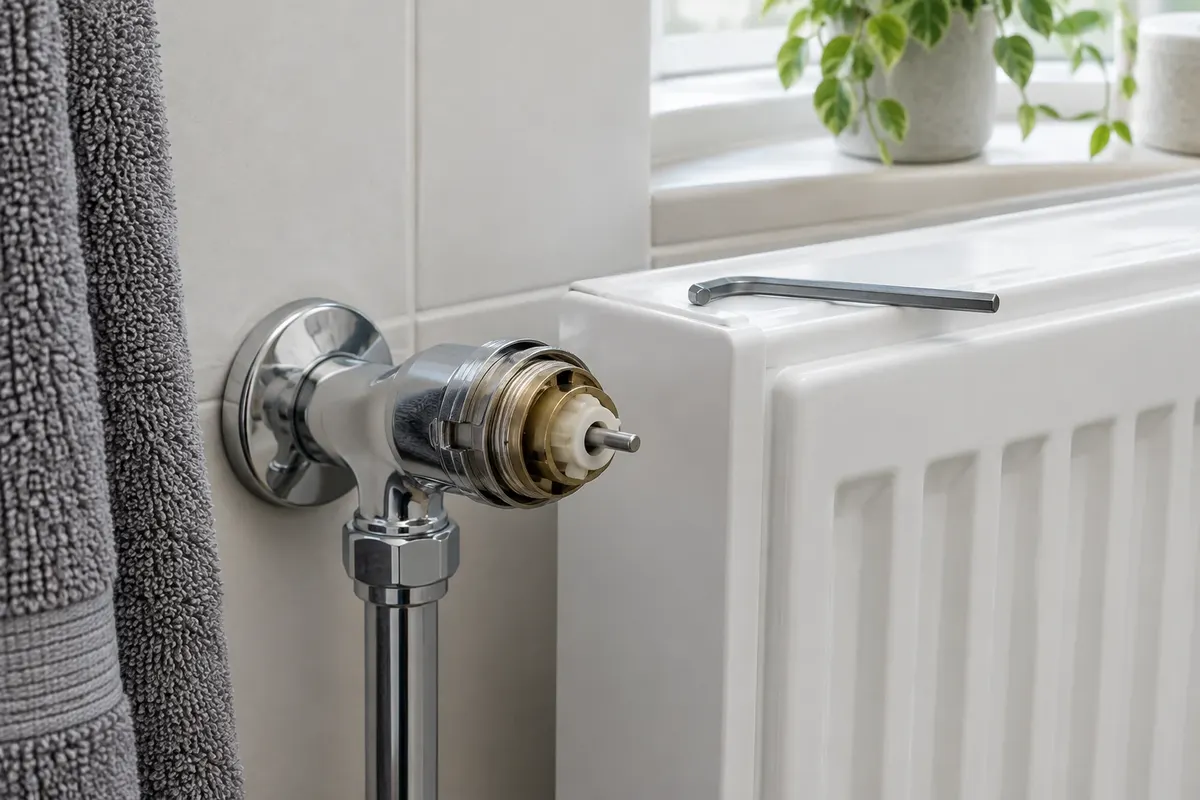
Under the thermostatic head is the valve pin. After the summer, when the valve has been closed for a long time, it can get stuck, and the radiator then does not heat at all or only slightly. Danfoss recommends:
- Remove the head – depending on the type, using an Allen key or turning counterclockwise.
- Gently press the pin with the flat end of the key. The pin should move about 2 to 3 mm and then return.
- If it does not move or remains pressed, do not force it and call a heating engineer.
To prevent the valve from getting stuck, keep the heads fully open over the summer. Danfoss also warns that you will not save anything by leaving one radiator fully open and the others closed – one fully heated radiator consumes more heat than two or three turned only a quarter.
Sludge in the radiator
In older systems, sludge – rust and dirt from pipes and the boiler – settles over time. It is heavier than water, so it stays at the bottom of the radiator and hinders flow in the lower part. A typical symptom: the top is hot, the bottom is cold across the entire width, even with the head fully open and the radiator bled.
You cannot remove sludge yourself. A heating engineer will disassemble the radiator and flush it or flush the entire system and may recommend a filter that captures sludge before the boiler. In a family house, you deal with him, in a prefab block of flats through the manager – the radiator is connected to the common soil stack.
Pre-regulation, fitting and connection
- Pre-regulation – many thermostatic valves have an adjustable maximum flow. If someone set it low when replacing the radiator, the radiator will not get enough water. The adjustment belongs to the heating engineer.
- Return fitting – there is usually a shut-off fitting under the radiator. If it remained closed after replacing the radiator or painting, the radiator will heat poorly.
- Connection – radiator manufacturer KORAD warns that reversing the supply and return connection causes a drop in thermal output of 30 to 40%. This mainly concerns radiators after improper replacement.
Pressure and boiler: when multiple radiators are not heating
When multiple radiators are not heating at once, the cause is usually in the system. In a house with its own boiler, check the pressure on the manometer – what value it should have and how to top up the water is described in the chapter What pressure should be in the heating. Next, check the boiler settings, program, and circulation pump. If radiators close to the boiler are heating and distant ones are not, the system is unbalanced – water flows mainly where there is the least resistance. Hydraulic balancing, which the heating engineer will set, will help.
In a prefab block of flats: what you can do and what belongs to the manager
- You may adjust the head, release a stuck pin according to the manufacturer's procedure, and bleed the radiator according to the manager's instructions.
- Do not drain the water – you will reduce the pressure in the entire soil stack and your neighbours' radiators may stop heating.
- Report to the manager cold radiators in multiple flats, sludge, and suspicion of unbalancing – flushing and balancing of the house is ordered by the manager.
- Replacing a radiator in a prefab block of flats affects the common system, so always agree it with the manager.
Heated towel rail in the bathroom is not heating
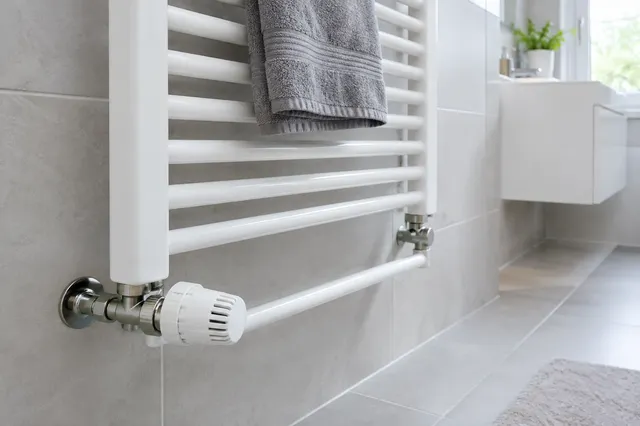
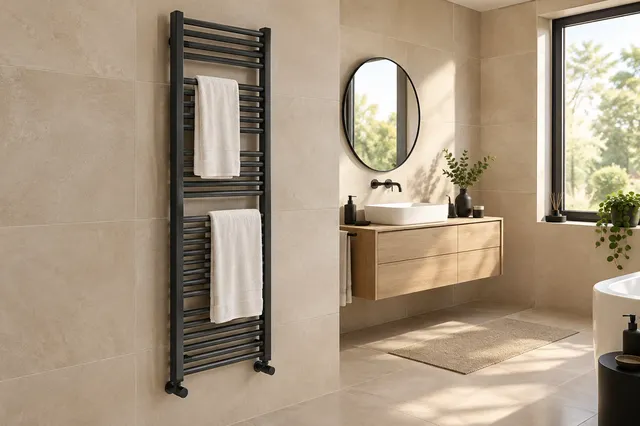
With a heated towel rail, air is trapped at the top, and the air vent is usually located at the top of one of the vertical pipes. An automatic air vent that releases air on its own is available on the e-shop, for example, Klum 1/2″ for €11.29 (as of November 2026) in the category Radiator Accessories. A combined towel rail with an electric heating element heats electrically even when the heating is turned off during the off-season – if it still doesn't heat, check the socket and the controller settings according to the manual. Learn more about towel rails in the article Heated Towel Rail. If the radiator heats but is covered by a cover or curtain, see the article Cover and Foil Behind the Radiator.
When to call a heating engineer
- the valve pin does not move even after being released,
- the radiator is cold at the bottom across its entire width even after bleeding and with the head fully open,
- the pressure in the system drops quickly or water is dripping somewhere,
- no other radiators are heating and the boiler reports an error,
- after replacing the radiator, it heats weaker than the original.
Sources: Danfoss – answers regarding thermostatic heads (stuck valve, pin 2 to 3 mm, one radiator fully open), KORAD radiator catalogue (connection, performance drop with reverse connection by 30 to 40 %), guides for bleeding radiators (nehnutelnosti.sk – towel rail valve at the top), overviews of causes for cold bottoms of radiators (sludge in older systems), offer from vkupelni.sk (November 2026); our articles Bleeding a Radiator and Thermostatic Head.
Terms in the dictionary: Soil Stack · Heated Towel Rail
Frequently Asked Questions
Why is the radiator warm at the top and cold at the bottom?
With the valve partially closed, this is normal – water flows slowly and cools down before it passes through the entire radiator. If the room is cold and the bottom is cold even with the valve fully open, the cause is usually a stuck valve, low pre-regulation or sludge.
Why is the radiator warm at the bottom and cold at the top?
There is air in the upper part of the radiator. Bleeding will help – the procedure can be found in the article Bleeding the radiator. In a house with its own boiler, check the pressure in the system.
What to do when the radiator does not heat at all?
Turn the valve fully, check if the valve pin under the head is stuck and if the fitting is open. If more radiators are not heating, check the pressure and boiler. Otherwise, call a heating technician.
How do I know if there is sludge in the radiator?
Typical is a cold bottom across the entire width, even when the radiator is bled and the valve is fully open. A heating technician will remove sludge by flushing the radiator or the entire system.
Will bleeding help if the radiator is cold at the bottom?
No. Air stays at the top. With a cold bottom, you will only drain water from the radiator and reduce pressure in the entire soil stack in a prefab block of flats.
Why do only some radiators heat in the flat?
If radiators near the boiler heat and those further away do not, the system is unbalanced – water flows where there is the least resistance. Hydraulic balancing will help, which the heating technician will set, in a prefab block of flats through the administrator.
AI Advisor
Have a question on the topic? Ask the advisor – they will respond based on TGB Kúpeľne articles.
AI advisor – answers are generated by artificial intelligence from TGB Kúpeľne articles and may contain errors.
Bathroom design
These are tips. We will draw your bathroom for you.
In the 3D bathroom planner, you can design your bathroom yourself for free. We will prepare a custom visualisation with specific wall tiles for you in the studio – free of charge with your purchase.
Online design for free Custom visualisation
TGB Kúpeľne Studio · Bratislavská 71, Senec · Map