Maintenance and repairs
Why is the radiator hot at the top and cold at the bottom?
You can tell there is air in the radiator if it is cold at the top and warm at the bottom, or if it gurgles. In this case, bleeding with a key on the upper valve will help. If the radiator is warm at the top and cold at the bottom, it usually isn't air – water is flowing slowly through it, most often because the thermostatic head has closed the valve, the valve is stuck, or the heating is poorly balanced. In a prefab block of flats, bleed only after consulting with the manager.
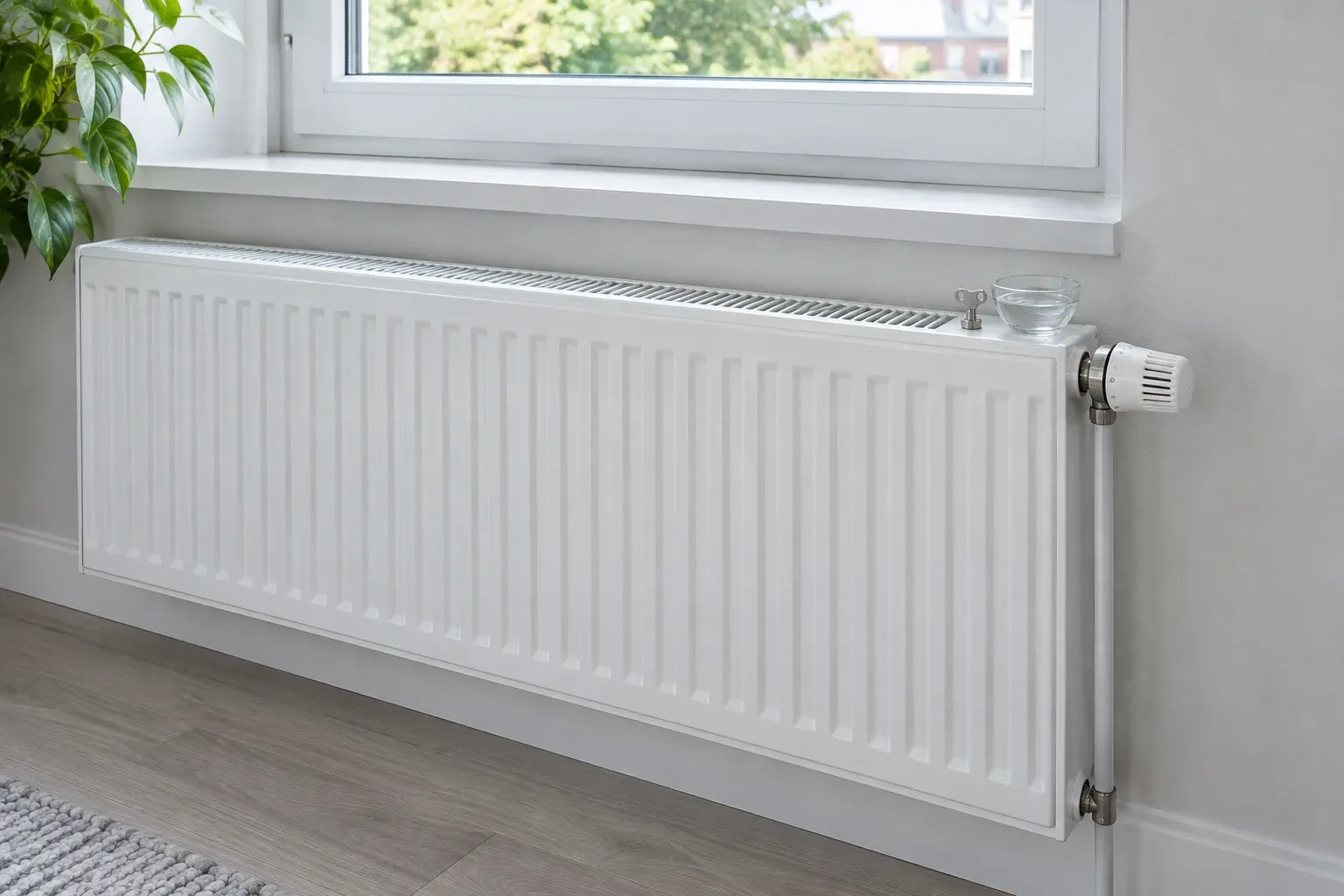
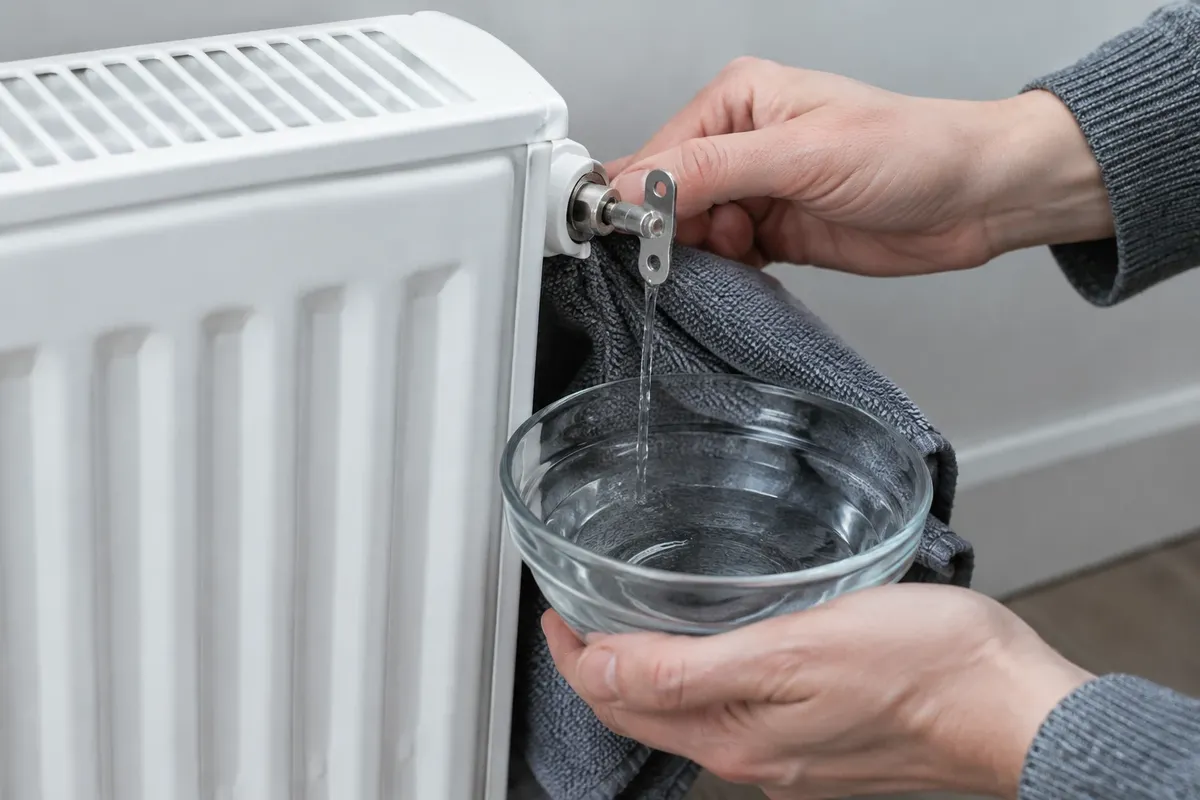
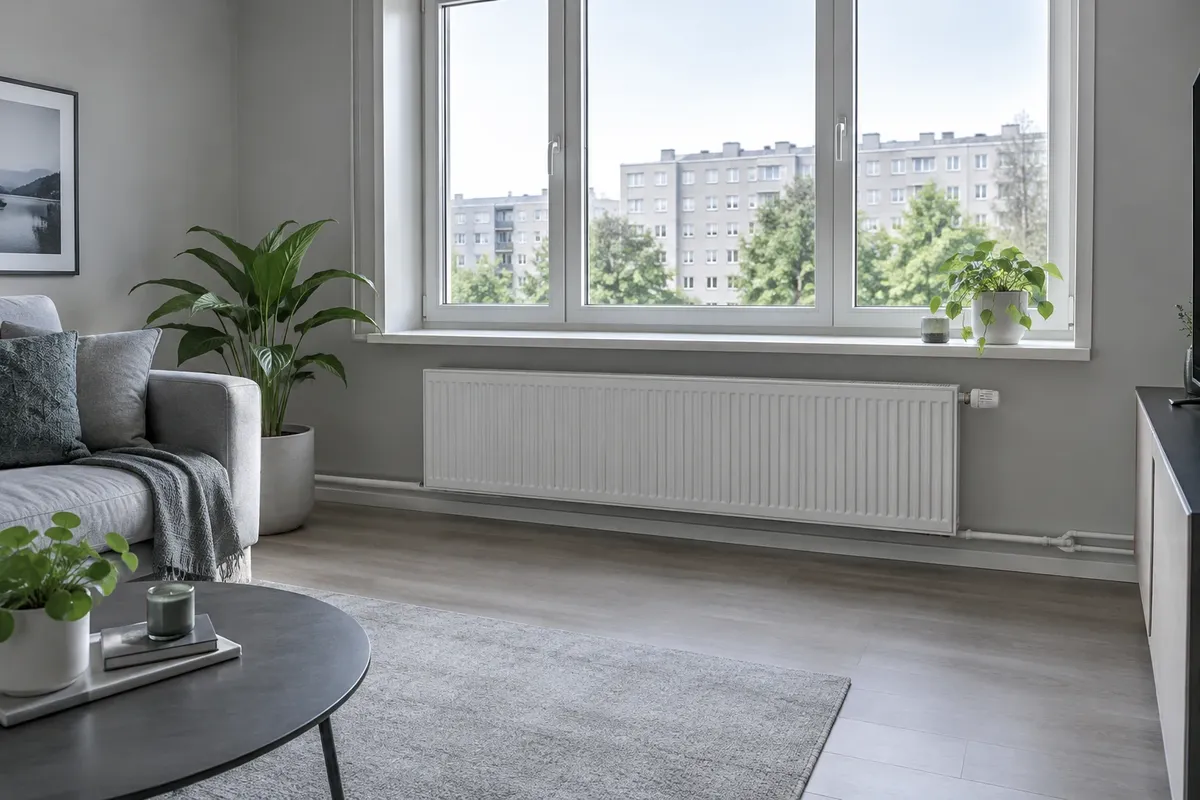
Illustrative image: white panel radiator under the window with a thermostatic valve, air vent key and container in the top corner
At the beginning of the heating season, many people ask why the radiator isn't heating fully. The answer depends on which part is cold. Air accumulates at the top of the radiator – that's why the radiator heats at the bottom and is cold at the top. When it's the other way around, with the radiator hot at the top and cold at the bottom, venting usually doesn't help. In the article, you'll find how to identify the cause, how to vent a radiator in a house and a flat, what to watch out for in a prefab block of flats, and when to call a heating engineer.
What your radiator is telling you
| What do you see | Most common cause | What to do |
|---|---|---|
| hot at the bottom, cold at the top, bubbling or hissing | air in the radiator | vent, check pressure |
| hot at the top, cold at the bottom and the room is warm | the head has closed the valve – this is fine | nothing, the radiator provides as much heat as needed |
| hot at the top, cold at the bottom and the room is cold | low flow: stuck valve, head, low presetting, sludge, unbalanced system | turn the head fully, check the valve, then call a heating engineer or administrator |
| completely cold | closed or stuck valve, low pressure, the heating season hasn't started in the prefab block of flats yet | check the valves and pressure, ask the administrator in the flat |
| cold radiators on the top floor of the building | air at the top of the system or low pressure | vent and top up pressure according to the boiler instructions |
| the radiator only heats at the connection | low flow or sludge in the bottom part | heating engineer – flushing, balancing |
The manufacturer of fittings Caleffi describes that air in the system accumulates in the upper part of the radiators, limiting heat transfer and causing corrosion and noise. Therefore, the air vent valve is installed in the upper corner of the radiator.
Why is the radiator hot at the top and cold at the bottom
Hot water enters the radiator at the top, transfers heat in the radiator, and the cooled water flows out at the bottom. When it flows slowly, it cools down before passing through the entire radiator – the top part is hot and the bottom is lukewarm to cold. This is not a fault as long as the room is warm.
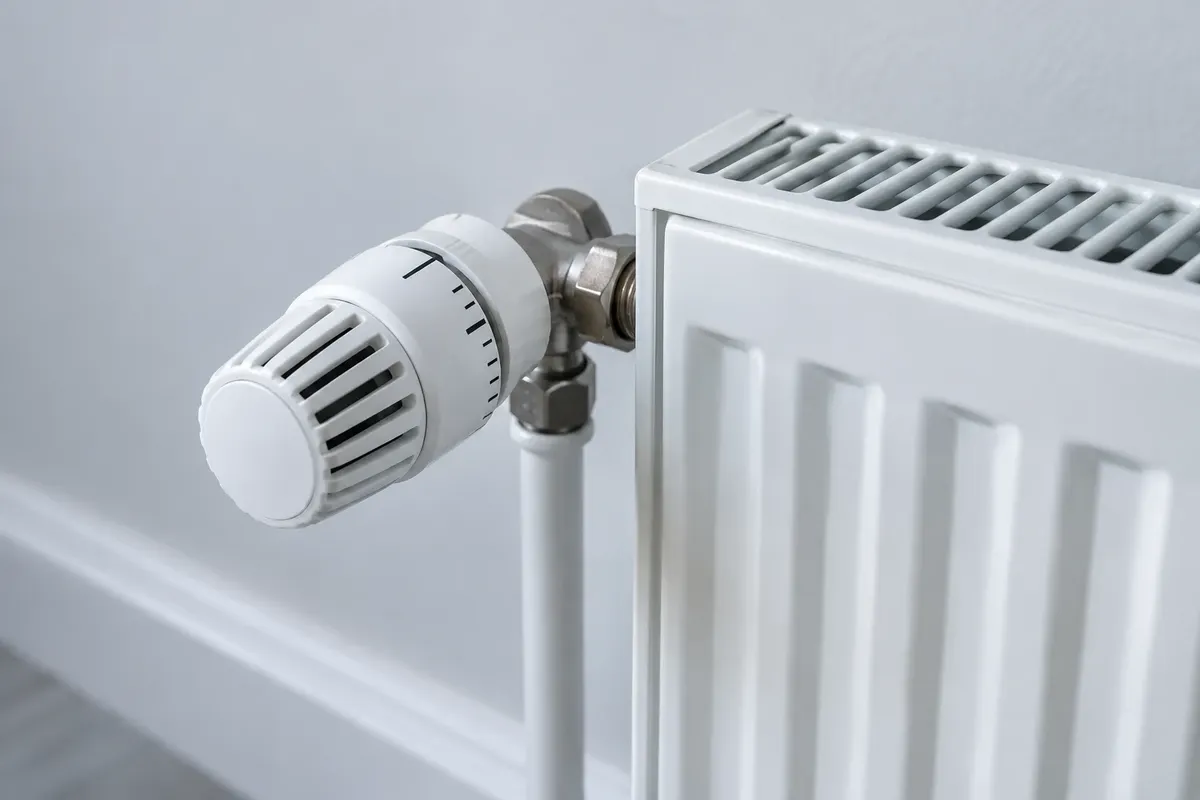
The thermostatic head from the manufacturer Danfoss senses the air temperature in the room and regulates how much water flows through the radiator. When the room is warm enough, the valve closes and the bottom of the radiator cools down. However, if the room is cold and the radiator only heats at the top, look for the cause in the flow:
- Turn the head fully and wait half an hour. If the radiator heats up fully, the head was just regulating.
- Stuck valve – there is a valve pin under the head that can get stuck after summer. If the radiator does not respond even with the head fully open, have the valve checked. During summer, keep the heads fully open to prevent them from getting stuck.
- Presetting – some valves have adjustable flow. If someone set it low during a radiator replacement, the radiator won't get enough water. Adjustments are for the heating engineer.
- Sludge and unbalancing – in older systems, sludge settles in the bottom of the radiators. In a house with multiple radiators, water flows mainly where there is the least resistance. Flushing and balancing the system helps.
What you will need
- air vent key with a square end, for some valves a flat screwdriver is sufficient,
- cloth and container – a little water will always leak from the valve,
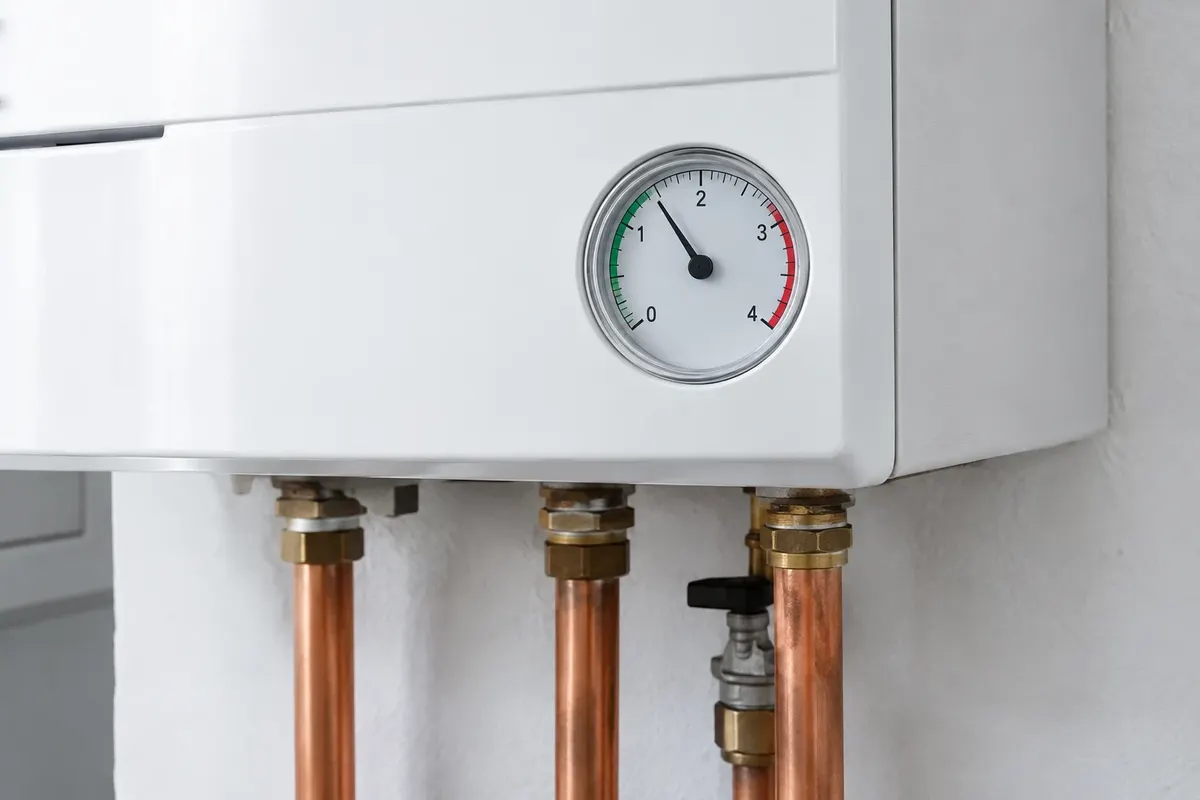
- access to the manometer of the boiler or heating system to check the pressure.
If the air vent valve is damaged or continues to drip, it can be replaced. For example, on vkupelni.sk, a manual air vent valve Klum 1/4" costs €1.12 and a metal 1/2" costs €3.51 (November 2026), other parts can be found in the category Radiator Accessories. The valve is replaced when the radiator is drained or the valves are closed – this is work for a heating engineer.
Procedure in a house or flat with its own boiler
- Heat the heating system and let the radiators run for a while to allow the air to rise.
- Turn off the circulation pump or heating and wait a few minutes for the water to settle and the air to rise to the upper corners. With a hot radiator, wait until it cools down a bit – the water from the valve may be hot.
- Check the pressure on the manometer to know what value you are starting from.
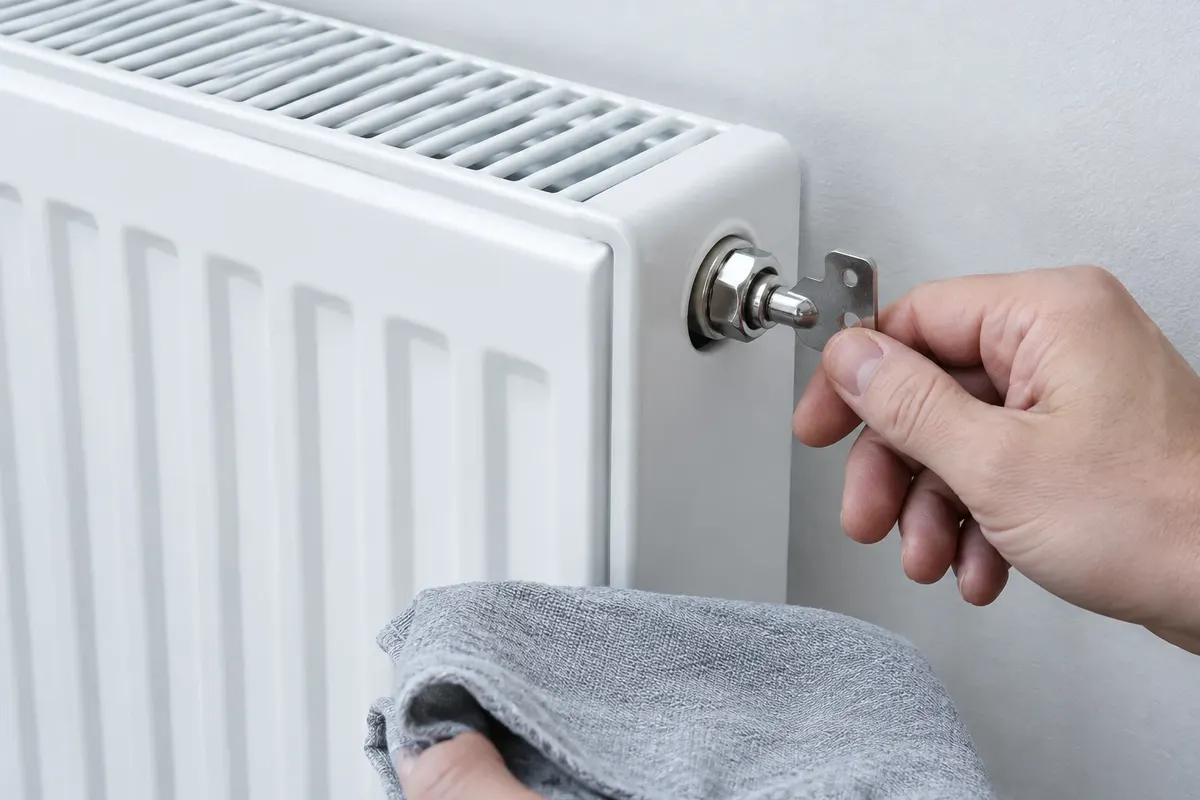
- Find the valve – on a panel radiator, it is in the upper corner, usually on the opposite side to the head, on a heated towel rail at the top of one of the vertical pipes.
- Open the valve – place a container and cloth under the valve and slowly loosen it counterclockwise by a quarter to half a turn with a key. Air will start to hiss.
- Close the valve when a steady stream of water flows out without bubbles. Tighten it gently to avoid damaging the seal.
- Continue with the other radiators. In a multi-storey house, start on the ground floor and work your way up.
- Add pressure according to the boiler manual, turn on the pump, and check after an hour if the radiators are heating evenly. Repeat the bleeding after a few days – air is released gradually.
What pressure should the heating system have
You can find the correct value in the boiler manual or heating project. The radiator manufacturer Empiria states in the manual that the pressure in the system should be at least 1 bar and at least 0.2 bar higher than the height of the water column above the manometer. From physics, 10 m of water height corresponds to approximately 1 bar.
| Highest radiator above the manometer | Height of the water column | Lowest pressure according to the rule |
|---|---|---|
| 2 m (flat or bungalow) | around 0,2 bar | 1 bar (lower limit) |
| 6 m (house with a floor) | around 0,6 bar | 1 bar (0,6 + 0,2 = 0,8 bar is less) |
| 9 m (house with an attic) | around 0,9 bar | 1,1 bar |
Empiria further states that the highest pressure should be at least 10% below the opening pressure of the safety valve, and water should only be drained from the system in essential cases. Every new water brings air and oxygen into the heating system. If the pressure drops even without bleeding, water is leaking somewhere or the expansion vessel is not functioning – in that case, call a heating engineer.
Bleeding a radiator in a prefab block of flats
In a residential building with central heating, there is one system for the entire building. The boiler room or heat exchange station replenishes the water, not you. Therefore:
- Ask the administrator if the radiators are bled in the flats or centrally on the soil stacks. In many buildings, radiators on lower floors do not have a bleed valve, and air escapes on the highest floors.
- Bleeding days – the administrator will announce them in advance. On that day, open the thermostatic heads fully and follow the instructions.
- Do not drain too much water. Close the valve as soon as water flows out without bubbles. A larger leak will reduce the pressure for neighbours throughout the riser.
- If the radiator is only warm at the top, report it to the administrator. Balancing the house, pre-regulating valves, and replacing heads is handled by the heating engineer of the administrator.
- Replacing a radiator in a prefab block of flats requires the administrator's consent, as the riser is drained.
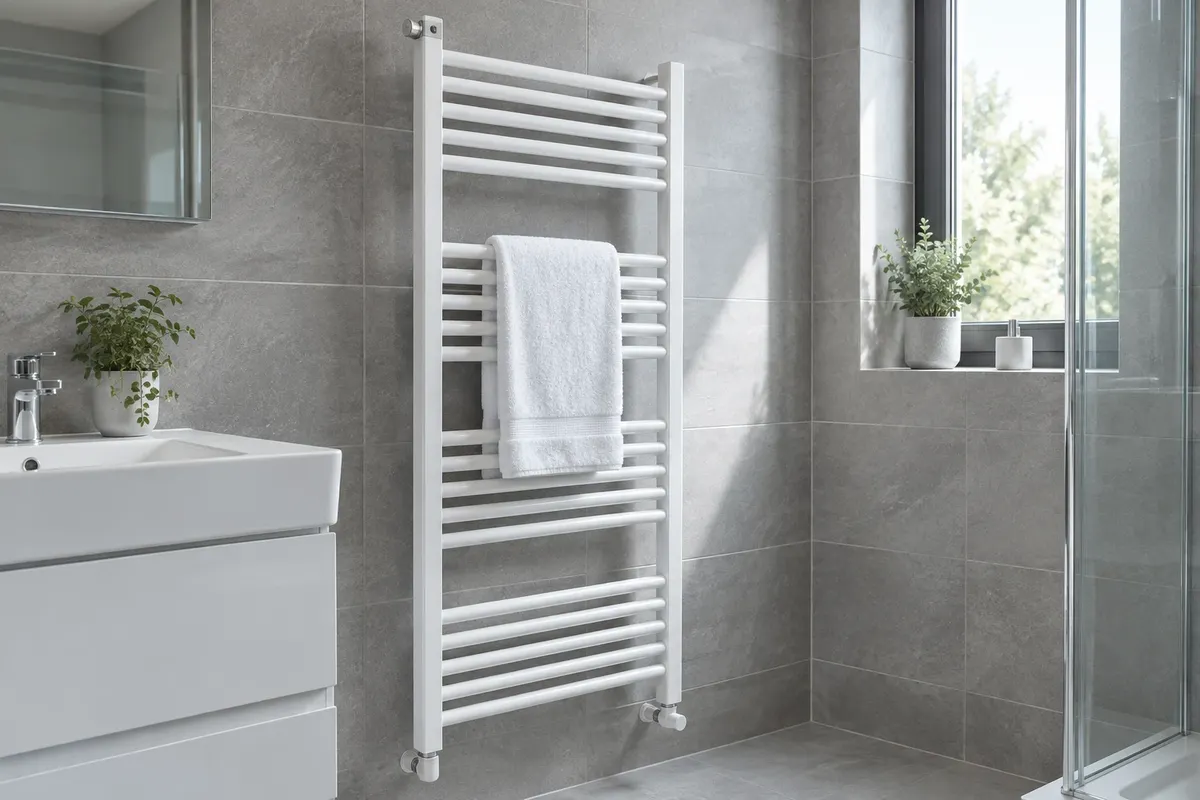
Heated towel rail in the bathroom
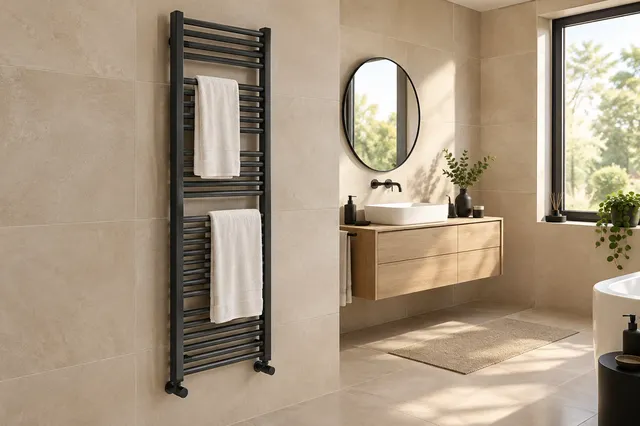
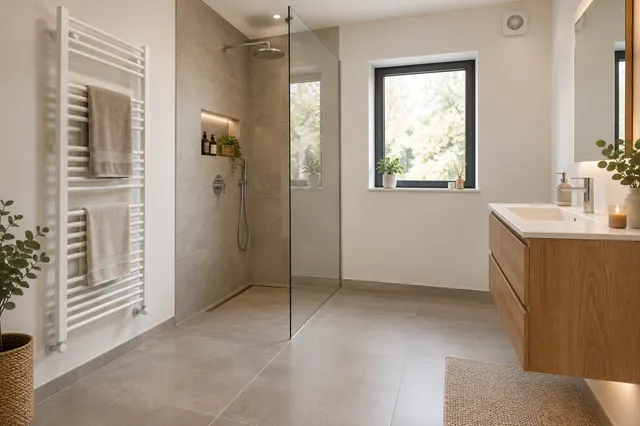
The heated towel rail is bled in the same way, only the valve is at the top of one of the vertical pipes. If the towel rail is warm at the bottom and cold at the top, there is air in it. An electric towel rail is factory filled and does not need bleeding. For a combined towel rail with a heating element, follow the manufacturer's instructions – the element must not be turned on in an empty towel rail. More in the article Heated towel rail for the bathroom.
Automatic air vent
An automatic air vent can be installed in places where air often accumulates – the highest radiator, underfloor heating manifold, heated towel rail. It releases air automatically. Caleffi uses a hygroscopic safety closure in radiator automatic vents. The automatic vent does not replace pressure checks and will not help with sludge or poor balancing.
Common mistakes
- Bleeding a radiator that is warm at the top and cold at the bottom – there is no air in it.
- Valve fully unscrewed – water then flows out under pressure from the opening.
- Bleeding while the pump is running without pressure control, and then cold radiators on the upper floor.
- Frequent topping up of water instead of looking for a leak.
- In a prefab block of flats, draining water without agreement with the administrator.
Further guides for minor repairs can be found in the overview Maintenance and repairs of the bathroom. We address heating, ventilation, and mould in the bathroom in the section Heating and ventilation of the bathroom and in the article Mould in the bathroom. If you are dealing with the entire bathroom in a residential building, check the page Bathroom in a prefab block of flats.
Sources: Empiria manual for the installation and operation of radiators (pressure in the system min. 1 bar and at least 0.2 bar higher than the hydrostatic height, highest pressure at least 10% below the opening pressure of the safety valve, closed system, water should only be drained in essential cases), Danfoss (thermostatic head measures air temperature and regulates flow through the radiator), Caleffi technical sheet for automatic air vents series 504 (air accumulates in the upper part of radiators, hygroscopic safety closure), prices from vkupelni.sk (category Heating and ventilation, November 2026), our article Heated towel rail for the bathroom.
Terms in the dictionary: Heated towel rail · Soil stack (riser) · Underfloor heating
Frequently Asked Questions
Why is the radiator warm at the top and cold at the bottom?
How do I know if there is air in the radiator?
The radiator is cold at the top and warm at the bottom, or it bubbles or gurgles. When the bleed valve is slightly opened, air hisses out.
Should the heating be turned off when bleeding?
It is best to turn off the circulation pump and wait a few minutes for the air to rise. Let the hot radiator cool down a bit to avoid burns.
What pressure should be in the heating after bleeding?
According to the boiler manual. The radiator manufacturer Empiria states at least 1 bar and at least 0.2 bar more than the height of the water column – 10 m height is approximately 1 bar.
Can I bleed a radiator in a prefab block of flats myself?
Only if the administrator allows it and the radiator has a bleed valve. Only release the air, do not drain the water. Follow the administrator's instructions during bleeding days.
How often should radiators be bled?
At the beginning of the heating season and whenever the radiator is cold at the top or bubbles in it. After adding water to the system, repeat the bleeding after a few days.
At the beginning of the heating season and whenever the radiator is cold at the top or gurgling. After adding water to the system, repeat the bleeding process after a few days.
AI Advisor
Have a question on the topic? Ask the advisor – they will respond based on TGB Kúpeľne articles.
AI advisor – answers are generated by artificial intelligence from TGB Kúpeľne articles and may contain errors.
Bathroom design
These are tips. We will draw your bathroom for you.
In the 3D bathroom planner, you can design your bathroom yourself – for free and without registration. If you want assurance, we will prepare a photorealistic custom visualisation based on actual dimensions and specific tiles in the studio. It's free with a purchase.
Online design for free Custom visualisation
TGB Kúpeľne Studio · Bratislavská 71, Senec · Mon–Fri 8:00–12:00 and 12:30–17:00, Sat 9:00–12:00 · Map