Heating and ventilation
Radiator cover and reflective foil behind the radiator: what helps and what takes away heat
The radiator cover hides the front of the radiator, but it slows down the heat. The reflective foil behind the radiator, on the other hand, returns some heat to the room – most effectively with poorly insulated external walls. We will show what measurements say, how to properly install the foil, and what to do with the thermostatic head when you cover the radiator.
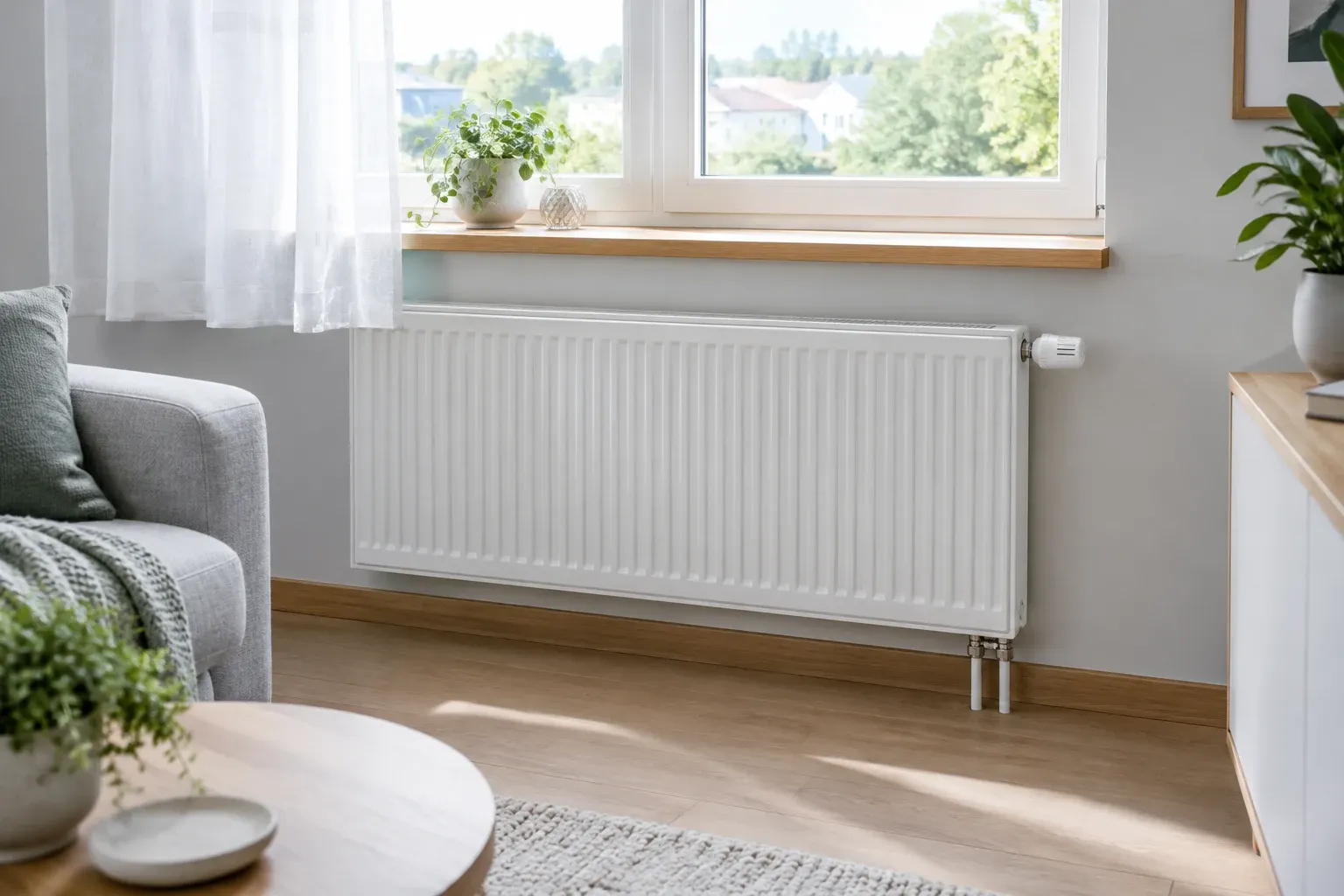
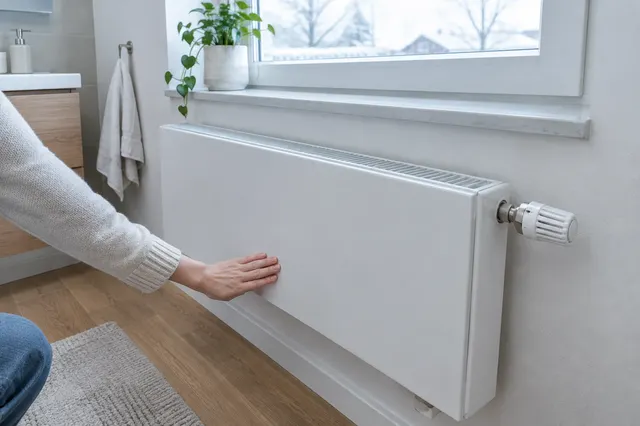
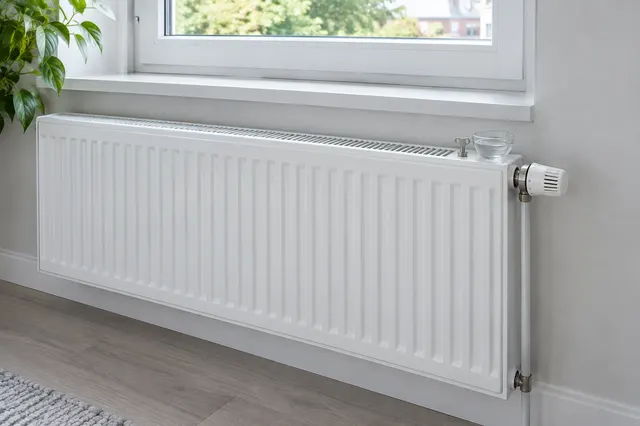
Illustrative image: white panel radiator under the window with reflective foil on the wall
A radiator under a window is not always attractive, and a cover or reflective foil are among the most common modifications. Each of them affects heat differently: the cover reduces the radiator's output, while the foil can reduce losses through the wall. How to set the radiator with a thermostatic head is described in the article Thermostatic head, and if the radiator does not heat at all, see Radiator not heating.
How the radiator transfers heat
The radiator heats in two ways. By convection – cold air enters from the bottom, heats up on the fins and panels, and rises into the room. And by radiation – the front surface emits heat directly to people and objects. According to data from Korado, standard panel radiators transfer 30 to 50% of heat through radiation from the front surface, with the rest through air convection.
This leads to two rules. Anything that covers the front of the radiator reduces radiation. Anything that narrows the air path up or down reduces convection. The back of the radiator also heats the wall behind it – and this is where the foil helps.
Radiator cover: why it takes away heat
The cover hides the front of the radiator, and the air must pass through a grille. Thus, the radiator will transfer less heat to the room at the same water temperature. How much depends on the shape of the cover – only the manufacturer of the cover or the heating technician can provide an exact figure. An overview based on what the radiator covers:
| What the radiator covers | What happens | What to do |
|---|---|---|
| cover with a grille at the front, open at the bottom and top | less radiation, convection remains | as many openings as possible, gap between the cover and radiator |
| full cover or cover closed at the top | warm air is trapped in the cover | leave the air outlet at the top free |
| long curtain or thick drape over the radiator | heat goes behind the curtain to the window | the curtain ends above the radiator or at the windowsill |
| furniture or sofa right in front of the radiator | air does not flow into the room | leave a gap or move the radiator |
| wide windowsill right above the radiator | warm air has a harder time getting out | gap between the windowsill and radiator or ventilation openings |
If you need a cover for safety, for example in a children's room, keep in mind that the radiator must heat more. The heating technician will take this into account when designing a new radiator. Design the cover so that it can be removed – there is an air vent and a valve with a head underneath it.
Thermostatic head under the cover
The head with a built-in sensor measures the temperature of the surrounding air. Under the cover or behind the curtain, the air is warmer than in the room, so the head closes the valve before the room is warm. Instructions for thermostatic heads explicitly state that a head with a built-in sensor must not be covered by curtains, radiator covers, or other obstacles.
The solution is a head with a remote sensor. Danfoss supplies it with a thin capillary tube up to 2 m long – the sensor is attached to the wall outside the cover and curtains or to a rail under the radiator. More about installation in the article Thermostatic head.
Reflective foil behind the radiator: what measurements say
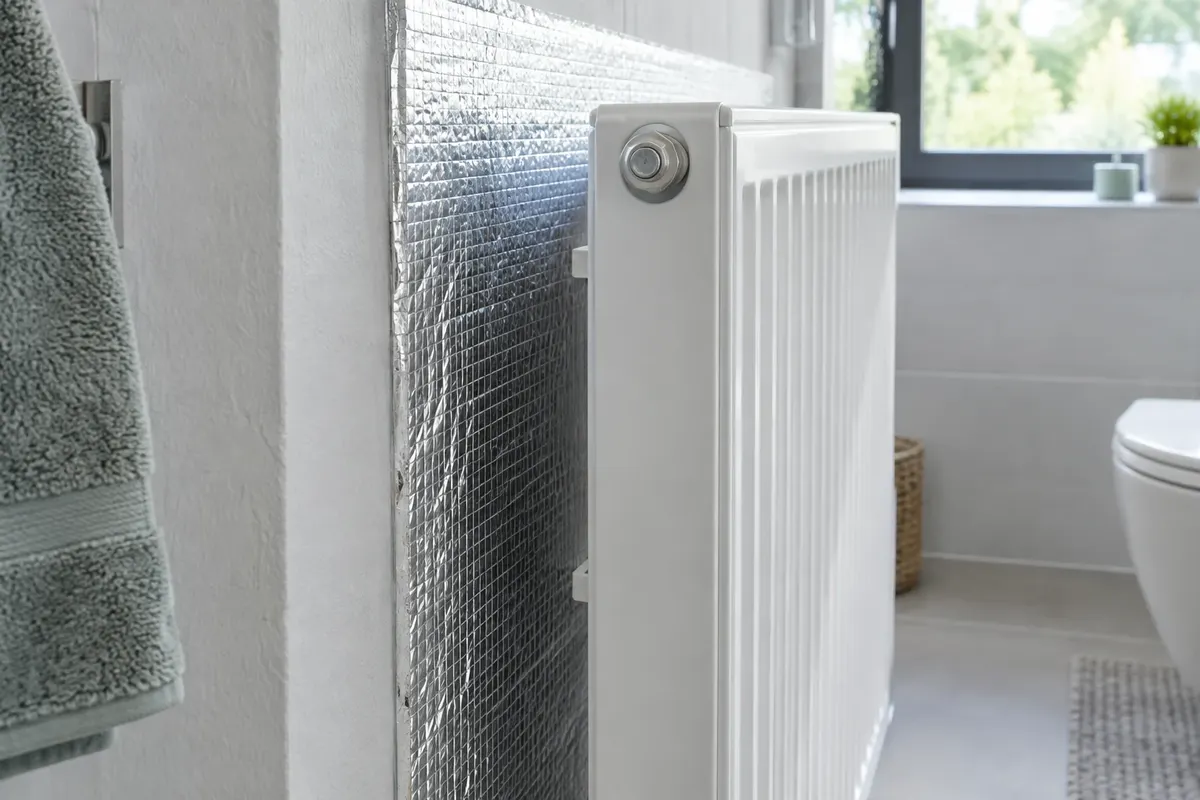
A radiator on an external wall also heats the wall behind it, and some of this heat escapes outside. A foil with a shiny layer between the radiator and the wall reduces this loss. Measurements:
- Harris (Applied Energy, 1995) – in a test room the size of a small bedroom, ordinary aluminium foil placed behind a radiator reduced the room's energy consumption by up to 6%, and heat loss through the wall behind the radiator fell below 30% of its original value. A shaped foil from the store was only slightly more effective. The annual saving in the British climate was estimated at approximately 60 kWh per room.
- Baldinelli et al. (2017) – the effect depends on how well the external wall behind the radiator is insulated. The worse the insulation, the greater the benefit.
In practice, this means: foil behind the radiator makes sense on an external, poorly insulated wall, for example in an uninsulated older house. On an internal wall or in an insulated house, the benefit is small – heat from the wall stays in the flat. Don't expect miraculous savings; it's a cheap supplementary measure.
How to install the foil
- Check the wall – place the foil behind radiators on external walls.
- Turn off the radiator and let it cool down.
- Choose a foil with an insulating layer – a foil on a thin foam backing works better than plain aluminium foil, as it also insulates the wall a bit.
- Stick it to the wall with the shiny side facing the radiator, not on the radiator. Leave an air gap between the radiator and the foil – experts recommend at least 2 cm.
- With bottom connection of the radiator, the foil can often be slid in without disassembly; otherwise, a heating engineer will remove the radiator.
Foil stuck directly to the radiator does not work and may damage its paint. Do not cover the valve or head with it.
In the bathroom: heated towel rail and cover
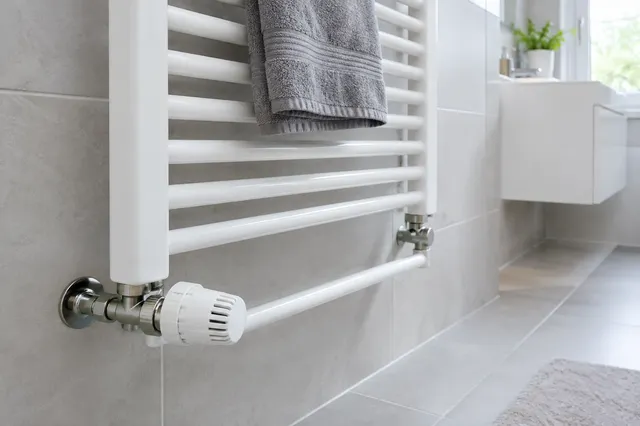
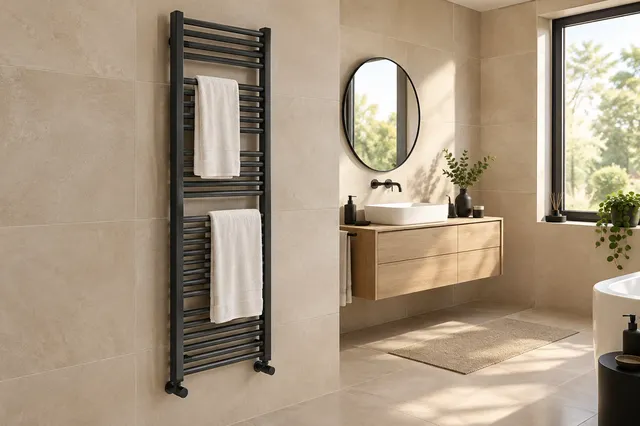
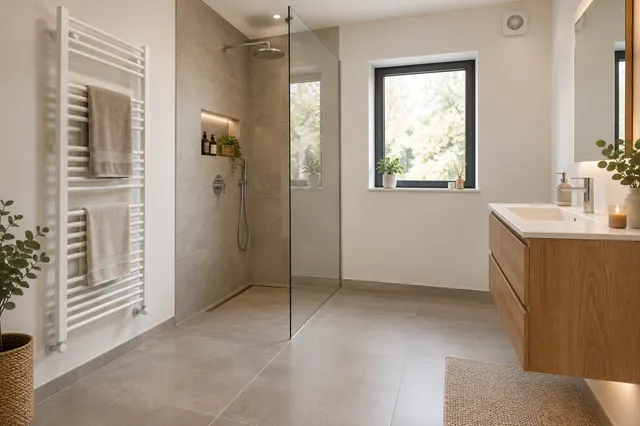
Do not cover the heated towel rail in the bathroom – it dries towels and dehumidifies the air, which is just as important for mould as heat. The foil behind the rail only makes sense on an external wall and must withstand moisture. Do not cover the electric heating element in a combined radiator with anything not permitted by the instructions. If the radiator in the bathroom is insufficient, recalculate the output according to the article Heated towel rail. You can find both heated and designer radiators in the online shop under the category Bathroom radiators.
When it’s better to consider something else
- The radiator only heats at the top or not at all – a cover or foil won't help; you can find the causes in the article Radiator not heating.
- The radiator is too small for the room – a larger or more powerful radiator will be recommended by the heating engineer based on heat losses.
- Cold wall and mould behind the radiator – the solution is insulation and ventilation, not foil.
Sources: D. J. Harris: Use of metallic foils as radiation barriers to reduce heat losses from buildings, Applied Energy 52 (1995); Baldinelli et al. (2017) according to the overview Radiator reflector (Wikipedia); data sheets for Danfoss thermostatic heads (Aero, Redia – remote sensor, capillary up to 2 m); instructions for thermostatic heads (covering with covers and curtains); Korado – share of radiation from panel radiators (Dům a byt); Deník.cz – air gap with reflective foil.
Frequently Asked Questions
Does the radiator cover reduce performance?
Yes. The cover blocks the front of the radiator, which radiates some heat, and hinders air circulation. A cover with large openings, open at the bottom and top, and with a gap from the radiator will reduce heat less.
Is reflective foil behind the radiator worth it?
Yes, on an external, poorly insulated wall. In a 1995 measurement, it reduced energy consumption in the test room by up to 6%. On an internal wall or in an insulated house, the benefit is minimal.
Can the foil be applied directly to the radiator?
No. The foil should be attached to the wall with the shiny side facing the radiator, and there should be an air gap of at least 2 cm between them. It would not work on the radiator and could damage the paint.
What about the thermostatic head under the cover?
The head with a built-in sensor under the cover measures the warm air and closes the valve before the room is warm. Use a head with a remote sensor that can be attached to the wall outside the cover.
Does it make sense to have foil behind the radiator on the inner wall?
Almost not. The heat that passes into the inner wall stays in the flat. The foil helps where heat would escape through the wall.
Can I cover the heated towel rail in the bathroom?
We do not recommend it. The heated towel rail dries towels and dehumidifies the air, which protects the bathroom from mould. Do not cover the electric heating element of the combined radiator with anything not permitted by the instructions.
AI Advisor
Have a question on the topic? Ask the advisor – they will respond based on TGB Kúpeľne articles.
AI advisor – answers are generated by artificial intelligence from TGB Kúpeľne articles and may contain errors.
Bathroom design
These are tips. We will draw your bathroom for you.
In the 3D bathroom planner, you can design your bathroom yourself for free. We will prepare a custom visualisation with specific wall tiles for you in the studio – free of charge with your purchase.
Online design for free Custom visualisation
TGB Kúpeľne Studio · Bratislavská 71, Senec · Map