Maintenance and repairs
Cleaning wall tiles and floor tiles: matte, glossy, cement haze, and steam cleaner
Glazed wall tiles and porcelain stoneware tiles are durable, but each surface is cleaned a bit differently. Matte and textured floor tiles need a brush, glossy ones need to be wiped dry, and polished ones often require sealing. Cement haze must be removed with an acidic product after grouting has cured. Overview by surface and dirt.
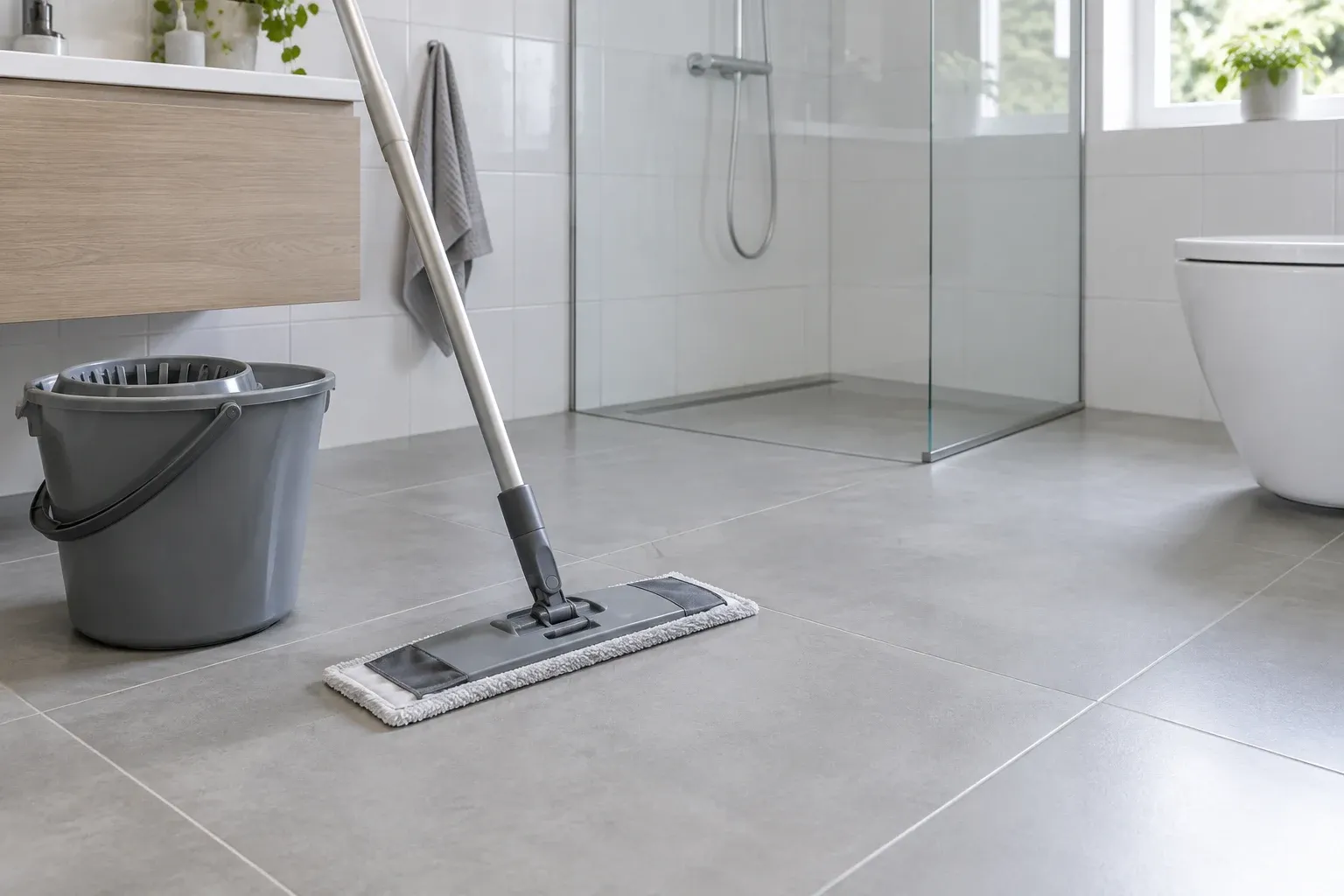
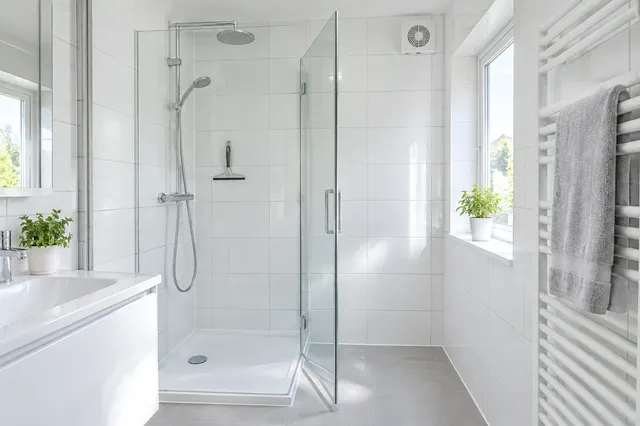
Illustrative image: cleaning matte gres tiles in the bathroom with a mop
Most ceramic wall tiles and porcelain stoneware tiles in the bathroom have a glaze or dense surface that does not absorb water or dirt. Therefore, they are easy to clean – if you choose the right product. We address grout joints, mould, and their restoration in the article Cleaning grout joints and explain the difference between surfaces in the article Matte or glossy floor tiles.
Cleaning by surface
| Surface | Regular cleaning | Beware of |
|---|---|---|
| glazed wall tiles | neutral cleaner for ceramics, soft cloth | abrasive powders and scouring pads |
| matte floor tiles | neutral cleaner, mop, rinse with clean water | residues of cleaner that remain on the surface |
| textured and anti-slip floor tiles | soft brush, more water, rinse | a cloth just spreads dirt into the texture |
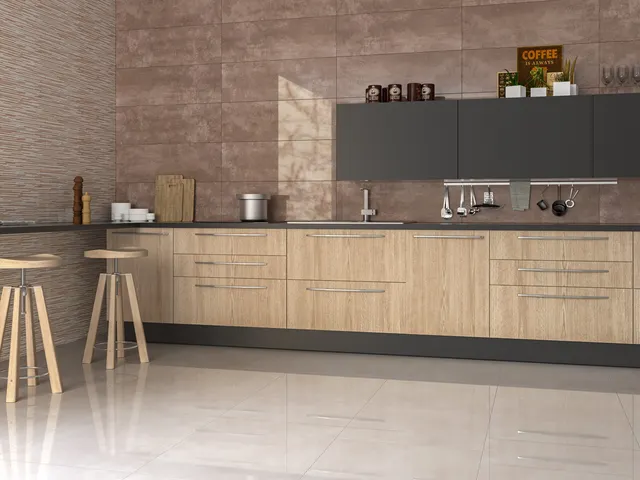
| glossy glazed floor tiles | neutral cleaner, wipe dry | soap and waxes – streaks and film |
| polished and semi-polished gres (lappato) | neutral cleaner, sealing according to the manufacturer | greasy products, abrasives |
| natural stone | neutral to mildly alkaline cleaner | acids including vinegar and descalers |
Regular cleaning step by step
- Sweep or vacuum sand and dust – sand under the mop acts like sandpaper.
- Wash with lukewarm water and cleaner in the dosage according to the instructions. More product does not mean a cleaner floor – residues will remain on the surface and attract dirt.
- Rinse with clean water to ensure no cleaner remains on the surface.
- Wipe the glossy floor tiles dry, otherwise streaks and water marks will remain.
- Ventilate – a fan in the bathroom helps the floor dry quickly.
HG warns that soap leaves streaks on glossy floors. For limescale on wall tiles in the shower, use a ceramic cleaner as per the instructions and rinse afterwards.
Cement haze after installation
After grouting, a thin grey haze of cement and lime will remain on the floor tiles. A regular cleaner won't remove it; an acidic cleaner for construction residues is needed. RAKO describes its product CL 802 as a concentrated non-foaming cleaner that is diluted with water and removes cement and lime residues, cement haze, rust, as well as limescale and urine scale. It is suitable for ceramics, granite, agglomerated quartz, and other acid-resistant materials, and according to the manufacturer, it is effective on textured and slip-resistant floor tiles.
- Wait – the grout joints are not acid-resistant and must cure first. Hornbach recommends waiting at least 10 to 14 days after installation.
- Check the material – acidic products are not suitable for marble, travertine, limestone, and other acid-sensitive stones.
- Moisten the floor tiles with clean water to prevent the cleaner from soaking into the joints.
- Apply the diluted cleaner according to the instructions, let it sit briefly, and scrub with a brush or pad.
- Rinse thoroughly and wipe away water until the surface is free of haze.
When handling the concentrate, RAKO recommends protective work gear. Test the product first in a hidden area.
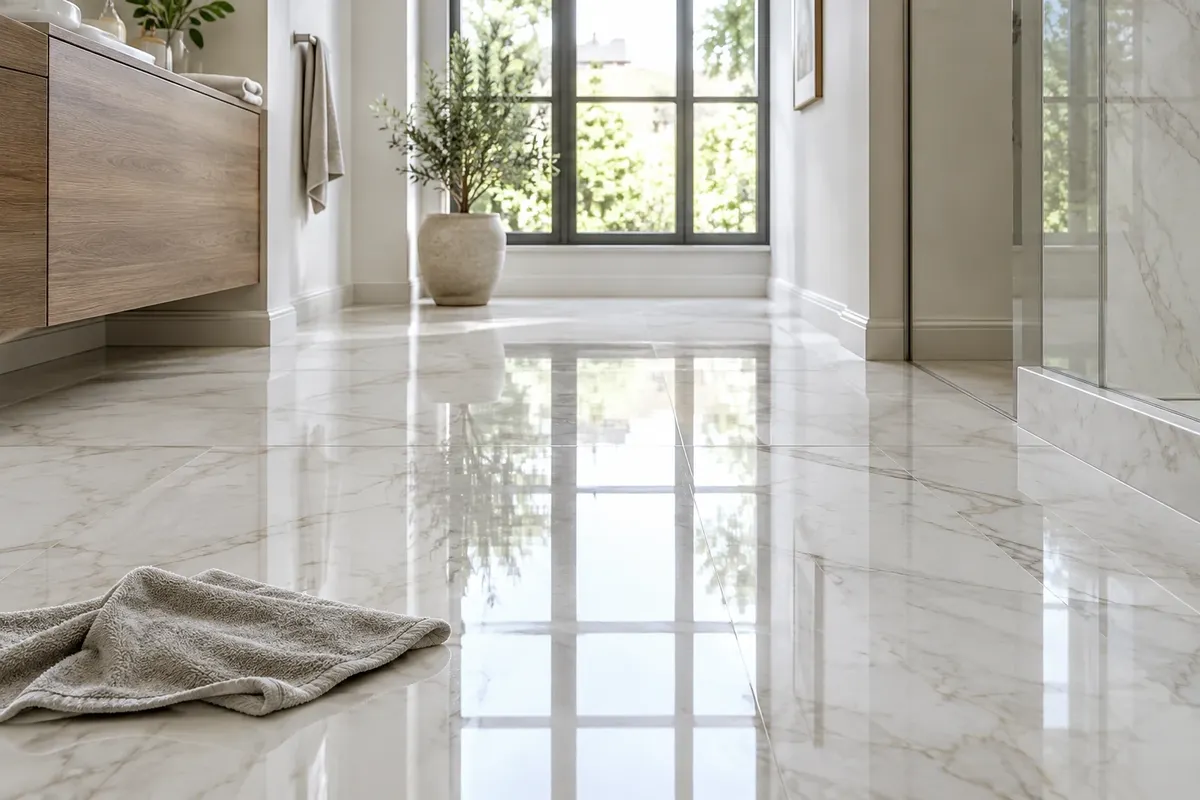
Glossy and polished floor tiles
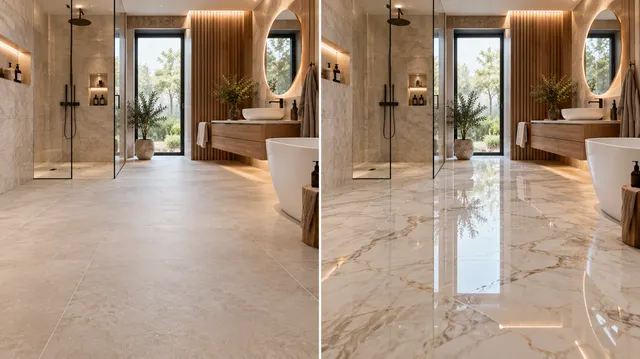
Glossy glazed floor tiles are easy to clean, but they show every streak. Clean them with a neutral cleaner without soap and wax, and wipe dry. Polished gres is a different case – the shine comes from grinding, and the surface may be more prone to grease stains. Hornbach states that many manufacturers recommend impregnating polished floor tiles immediately after construction work is completed, and warns that polished surfaces are prone to the accumulation of greasy cleaning agents. RAKO offers a separate product CL 809 for surface impregnation. Always follow the manufacturer's instructions for the tiles and the product, and test on a sample piece first.
Matte and slip-resistant floor tiles in the shower
Matte and textured floor tiles are safer in the shower, but dirt, soap, and limescale cling to the small unevenness. A cloth only spreads them around, so use a soft brush and more water. Soap film can make the surface slippery, so regular cleaning is also a safety issue. RAKO offers separate products for regular maintenance of floors in both normal and heavily used areas, as well as a product for the entire bathroom.
Steam cleaner for floor tiles and wall tiles
A steam cleaner heats water in the boiler to boiling point, and steam loosens dirt without scrubbing and without chemicals. It is practical for glazed floor tiles, wall tiles, and joints in the bathroom; HG describes it as a larger but worthwhile investment. Consider the following:
- Test it first in a hidden area and follow the instructions of the device as well as the tile manufacturer.
- For joints, use a brush attachment and dry the floor after cleaning.
- Clean silicone and natural stone with steam only if the instructions allow it.
- Steam will not remove limescale and cement haze – acidic products are intended for those.
Stains: what to use for what
| Dirt | What with |
|---|---|
| grease, residue from creams | degreasing cleaner for ceramics, such as RAKO CL 810 |
| limescale | acidic cleaner for ceramics, not for natural stone |
| cement haze, rust | cleaner for construction residues, such as RAKO CL 802 |
| shoe marks | stain and adhesive remover as per the manufacturer's instructions |
| mould in joints and silicone | procedure in the article Cleaning Joints |
What damages the surface
- Scouring pads and abrasive powders on glossy and polished floor tiles.
- Acids on natural stone – marble, travertine, and limestone will lose their shine and develop dull spots.
- Undiluted concentrates and mixing different cleaners.
- Soap and waxes on glossy floor tiles – film and streaks.
- Acidic cleaner on fresh joints before they cure.
How to remove limescale from taps and showerheads is described in the article Limescale on the Tap.
Sources: technical sheet RAKO CL 802 and information sheet RAKO (RAKO SYSTEM products CL 801 to CL 810), Hornbach – How to Clean Floor Tiles (cement coating, waiting 10 to 14 days, polished floor tiles, natural stone), HG – tips for cleaning floor tiles (soap on glossy floors, dosing, steam cleaner), Kärcher – brochure Steam Cleaning; our articles Cleaning Joints and Matte or Glossy Floor Tiles.
Terms in the glossary: Gres (porcelain stoneware tiles) · Slip resistance R9 to R13 · Lappato (semi-gloss surface) · Sealing (impregnation) · Travertine · Sanitary silicone
Frequently Asked Questions
What to wash matte floor tiles with?
With lukewarm water and a neutral ceramic cleaner, using a mop or soft brush, then rinse with clean water. Residues of cleaner cling to matte and structured surfaces and attract dirt.
Why do streaks remain on glossy floor tiles?
Most commonly from soap, wax, or too much cleaner and from water that dries on the surface. Clean with a neutral cleaner in the correct dosage and wipe the floor dry.
How to remove cement haze from floor tiles?
With an acidic cleaner for construction residues, such as RAKO CL 802, at least 10 to 14 days after grouting. First, dampen the tiles, dilute the product according to the instructions, and rinse thoroughly. Do not use it on acid-sensitive stone.
Can I use a steam cleaner on floor tiles?
Yes, on glazed floor tiles, wall tiles, and grout joints. Test it first in a hidden spot and follow the instructions for silicone and natural stone. Steam will not remove limescale and cement haze.
Should polished floor tiles be sealed?
Many manufacturers recommend sealing immediately after construction work is completed, as the polished surface is more prone to grease stains. Follow the manufacturer's instructions for the tiles and the product.
What should I use to clean marble or travertine floor tiles?
A neutral or mildly alkaline cleaner designed for natural stone. Acids, including vinegar and descalers, will etch the surface and leave dull spots.
AI Advisor
Have a question on the topic? Ask the advisor – they will respond based on TGB Kúpeľne articles.
AI advisor – answers are generated by artificial intelligence from TGB Kúpeľne articles and may contain errors.
Bathroom design
These are tips. We will draw your bathroom for you.
In the 3D bathroom planner, you can design your bathroom yourself for free. We will prepare a custom visualisation with specific wall tiles for you in the studio – free of charge with your purchase.
Online design for free Custom visualisation
TGB Kúpeľne Studio · Bratislavská 71, Senec · Map