Maintenance and repairs
Drain cleaner and cleaning spiral: how to safely clear a drain
Drain cleaner is a colloquial term for granulated or gel drain cleaners. Most strong cleaners contain sodium hydroxide, which breaks down fats and hair, but it is caustic – use it only according to the instructions, with gloves and goggles and never mix it with other products. If the blockage is further down the pipe, a cleaning spiral will help. If water does not drain in multiple places, call a professional.
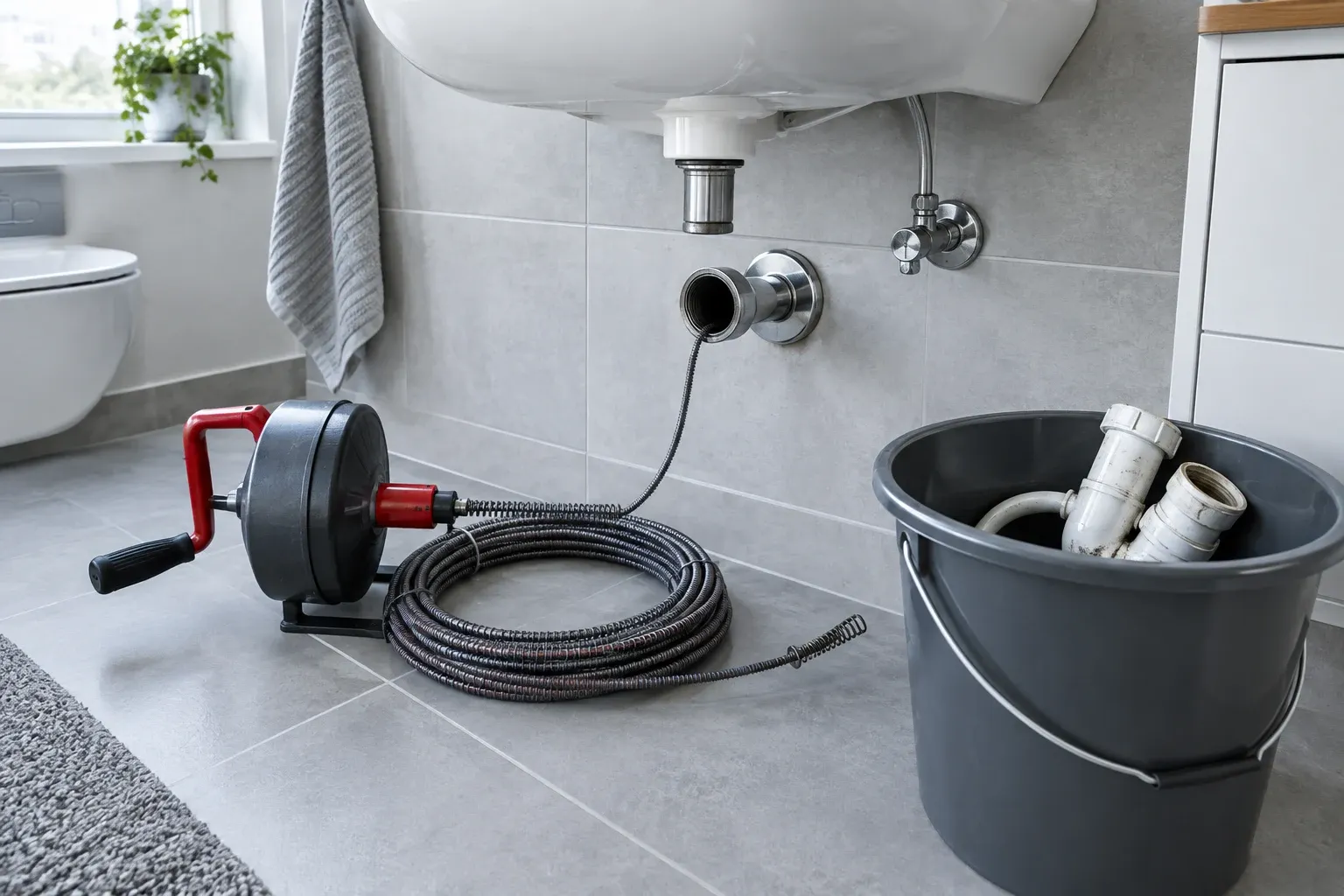
Illustrative image: manual cleaning spiral with handle at the open drain under the sink
When water drains slowly in the sink or shower, many first reach for a drain cleaner. However, a chemical cleaner is not always the first or best choice. Most blockages can be removed mechanically – by cleaning the waste trap or using a spiral – and chemicals should only be used when absolutely necessary. We describe the entire process from the strainer to the plumber in the article Blocked drain; here we focus on cleaners and spirals in detail.
Chemicals or a spiral: when to use each
| Problem | What helps | What not to do |
|---|---|---|
| hair in the shower or sink drain | remove the strainer, clean the waste trap, plastic tape with hooks | do not pour cleaner into a drain full of hair and water |
| soap and grease in the pipes | hot water, cleaner according to instructions | do not combine multiple cleaners |
| blockage behind the waste trap | cleaning spiral through the drain | do not use a spiral immediately after chemicals |
| blocked toilet | toilet plunger, toilet spiral with ceramic protection | a standard steel spiral can scratch ceramics |
| water is backing up in multiple places | plumber or drain cleaning company | do not pour additional chemicals |
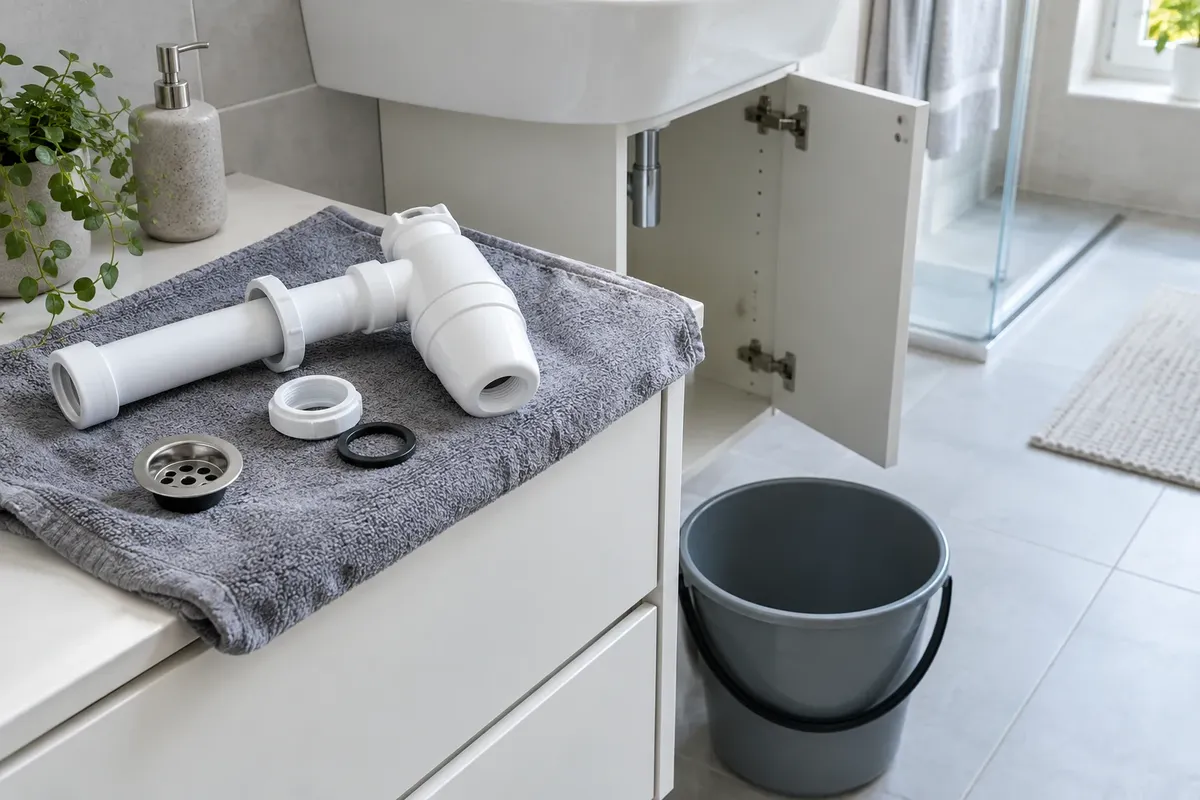
How a drain cleaner and similar products work
Strong drain cleaners often contain sodium hydroxide. It is a strong alkali that breaks down fats, soap, and hair. When dissolving in water, it heats up, which is why the granules in the drain "work". According to safety data sheets, it causes serious skin burns and eye damage (H314) and can be corrosive to metals (H290) – for example, it damages aluminium.
- Granulated cleaner – is poured into the drain and covered with water according to the instructions.
- Gel cleaner – is thick, runs down the walls of the pipes, and is easier to dose.
- Acidic cleaners – there are also cleaners based on acids. They are very aggressive and react violently with alkaline cleaners.
- Enzymatic and biological products – work more slowly and are better suited for regular prevention than for acute blockages.
Safe use of a cleaner
- Read the instructions on the packaging – amount, contact time, and what type of pipe the cleaner is suitable for.
- Gloves and goggles – even a drop in the eye is a serious injury. Ventilate the bathroom.
- Measure exactly according to the instructions – granules heat up when they come into contact with water, so do not lean over the drain.
- Do not mix the cleaner with other products, especially acidic limescale removers.
- Do not use a plunger or spiral after chemicals – the mixture could splash out.
- Rinse the drain thoroughly with water after the contact time has elapsed.
- Keep out of reach of children, in the original packaging.
If the cleaner gets into the eyes or on the skin, follow the instructions on the packaging and in the safety data sheet, where you will also find contact information for the National Toxicology Information Centre.
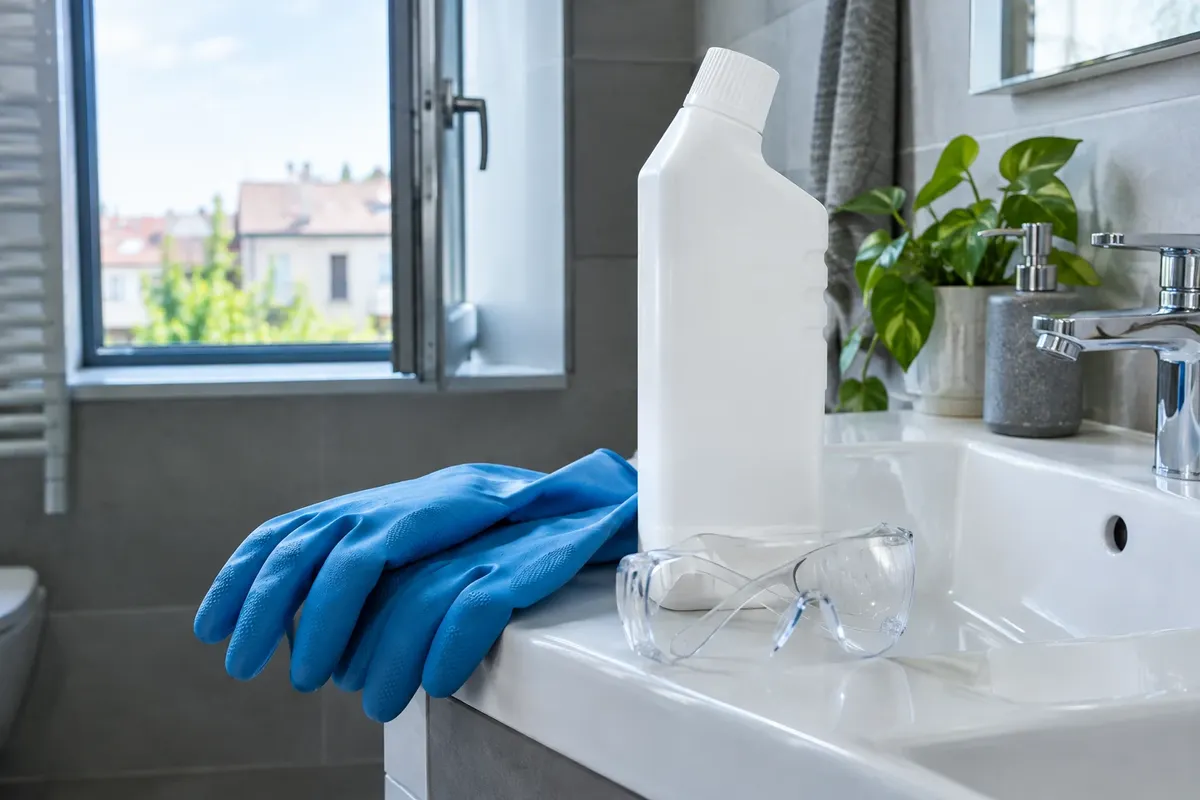
When not to use a drain cleaner
- Water does not drain at all – the cleaner will remain in the waste trap and will not reach the blockage. First, clean the waste trap or use a spiral.
- Aluminium or damaged parts – sodium hydroxide can damage metals, check the packaging for what materials the cleaner is suitable for.
- Home wastewater treatment plant or septic tank – some cleaners are not suitable for them, check the cleaner's instructions and the treatment plant.
- Drain where you have already poured another cleaner – there is a risk of a violent reaction.
Cleaning spiral: types
| Spiral | Suitable for |
|---|---|
| plastic tape with hooks | hair stuck under the strainer in the sink and shower |
| manual spring spiral with handle | sink, bath, shower – blockage behind the waste trap |
| spiral with drum | longer pipe sections, easier winding |
| drill attachment | longer and stronger blockages, only at slow speeds |
| toilet spiral with protective casing | toilet – does not scratch ceramics |
| electric machine (drain cleaning) | sewerage and soil stacks – done by companies |
When choosing, pay attention to the length of the spiral and the diameter of the pipe it is intended for. Bathroom drains typically have a diameter of 32 to 50 mm, while toilets and sewerage have more.
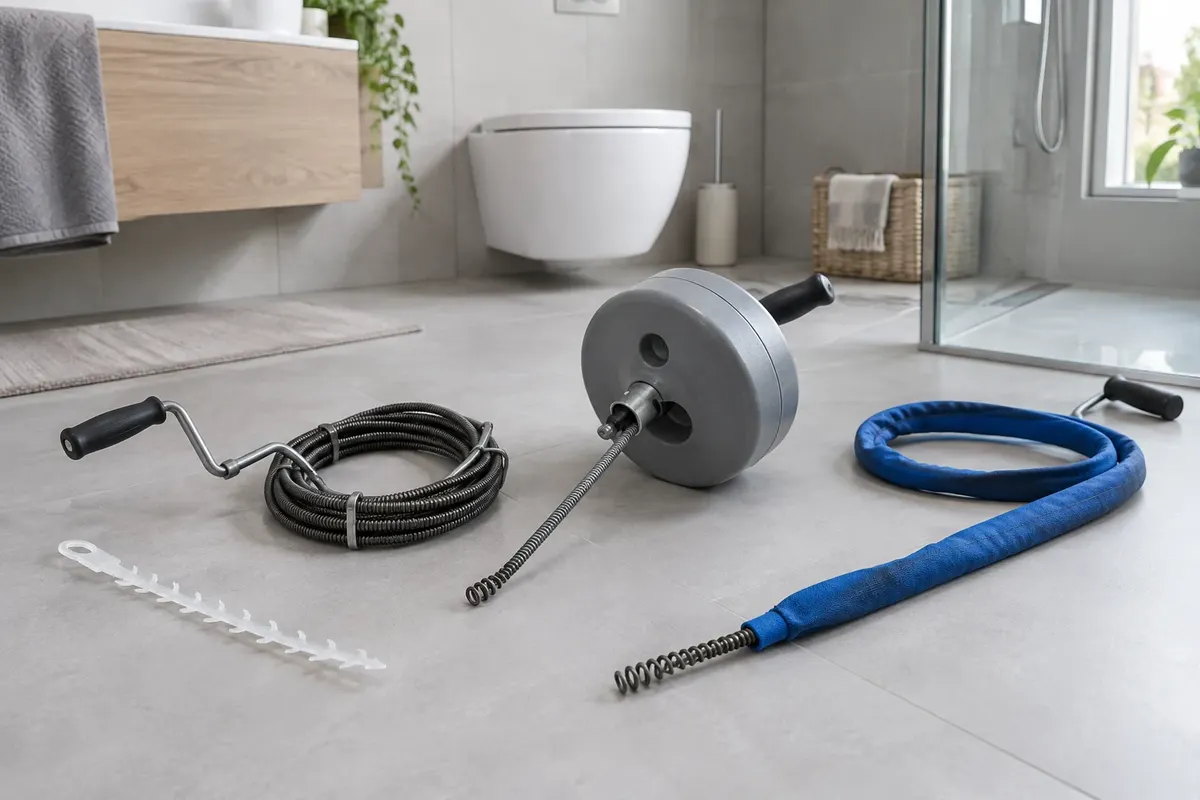
How to use the spiral step by step
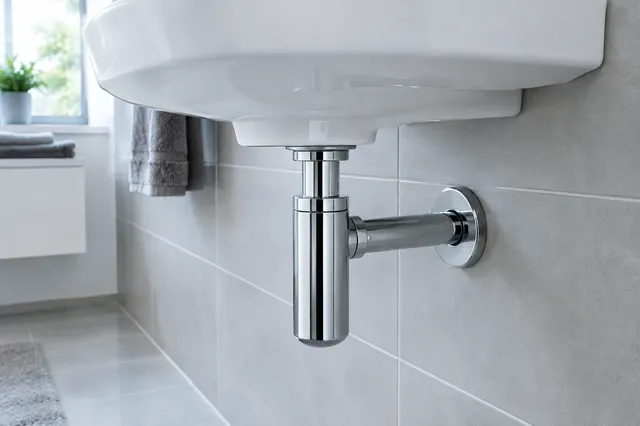
- Remove the waste trap under the sink – the spiral goes directly into the wall drain, not through the waste trap. We describe how to remove the waste trap in the article Waste Trap.
- Insert the spiral into the drain and slowly push it while turning the handle clockwise.
- When encountering resistance, keep turning and gently push – the spiral will drill through the blockage or catch it.
- Pull out the spiral along with the debris and clean it over a bucket.
- Reassemble the waste trap and flush the drain with hot water. Check the joints with a dry cloth.
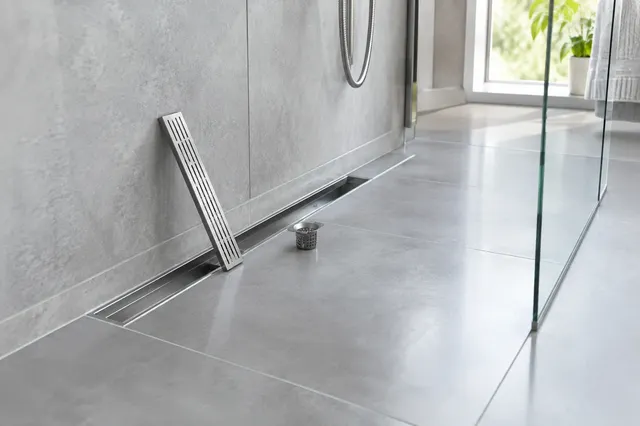
For the linear shower drain and shower tray, the waste trap is cleaned from above after removing the grate and odour trap. The procedure is in the article Linear Shower Drain or Point Drain.
When to call a plumber or for drain cleaning
- water does not drain even after cleaning the waste trap and using the spiral,
- water returns at multiple points simultaneously, for example in the shower when you flush the toilet,
- toilet bubbles or there is a smell of sewage from the drains,
- the drain keeps getting blocked.
In an apartment building, a shared soil stack may be blocked – in that case, contact the building manager. Machine cleaning (drain cleaning) is done by companies with an electric spiral or high-pressure water.
How to prevent blockages
Use a strainer in the shower and sink, do not pour grease or food scraps down the drain, and clean the waste trap from time to time. If the plastic waste trap is old and leaking, it is easier to replace it – you can find them in the e-shop in the category Sink Waste Traps. More guides can be found in the section Maintenance and Repairs of the Bathroom.
Common mistakes
- Chemicals first – most blockages can be resolved mechanically, without caustics.
- Mixing cleaners – a principle with acid reacts violently.
- Plunger after chemicals – caustic will spray out.
- Steel spiral for toilets – will scratch ceramics.
- No gloves and goggles – sodium hydroxide will burn skin and eyes.
Sources: safety data sheets for drain cleaners containing sodium hydroxide (H314 – causes severe skin burns and eye damage, H290 – may be corrosive to metals); our articles Blocked Drain, Waste Trap, and Linear Shower Drain or Point Drain. For a specific cleaner, follow the instructions on the packaging.
Terms in the glossary: Waste Trap · Soil Stack · Linear Shower Drain · Shower Tray · Floor Drain (Point Drain)
Frequently Asked Questions
What is a drain cleaner?
A colloquial term for granulated or gel drain cleaners. Most strong cleaners contain sodium hydroxide, which breaks down fats and hair.
Is drain cleaner dangerous?
Sodium hydroxide is caustic – according to safety data sheets, it causes severe skin burns and eye damage. Use it with gloves and goggles and only according to the instructions.
Can I combine drain cleaner with another cleaner?
No. Alkaline cleaner reacts violently with acidic ones. If you have already poured another cleaner, thoroughly rinse the drain first according to the instructions.
When to use a spiral instead of chemicals?
When water does not drain at all or the blockage is behind the waste trap in the pipe. Do not use the spiral immediately after chemicals.
Can I put a cleaning spiral in the toilet?
Only a toilet spiral with a protective casing. A regular steel spiral will scratch the ceramic.
When to call for drain cleaning?
When water does not drain even after cleaning the waste trap and spiral, returns in multiple places or the drains smell of sewage. In an apartment building, it may be a soil stack that the administrator addresses.
AI Advisor
Have a question on the topic? Ask the advisor – they will respond based on TGB Kúpeľne articles.
AI advisor – answers are generated by artificial intelligence from TGB Kúpeľne articles and may contain errors.
Bathroom design
These are tips. We will draw your bathroom for you.
In the 3D bathroom planner, you can design your bathroom yourself for free. We will prepare a custom visualisation with specific wall tiles for you in the studio – free of charge with your purchase.
Online design for free Custom visualisation
TGB Kúpeľne Studio · Bratislavská 71, Senec · Map