Maintenance and repairs
Boiler maintenance: safety valve, anode, limescale and winter draining
The boiler does not require much maintenance, but it will fail sooner without it. Regularly check the safety valve, have the magnesium anode inspected by service, and check for limescale on the heating element if you have hard water. Drain the boiler before frost at an unheated cottage. The exact intervals are specified in your heater's manual – adhering to them is often a warranty condition.
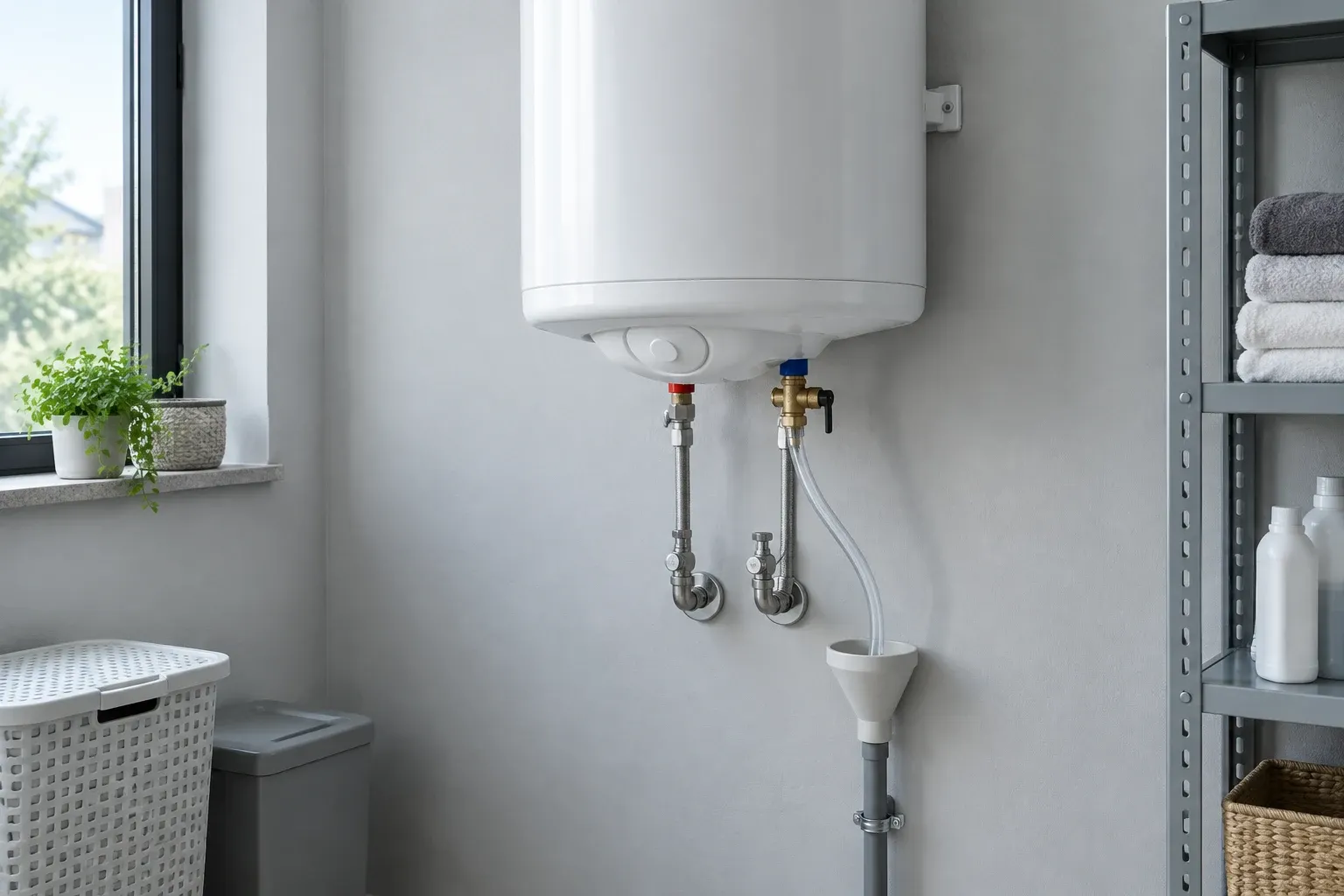
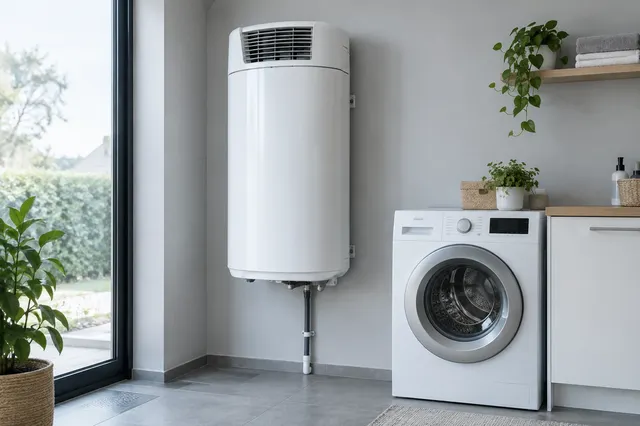
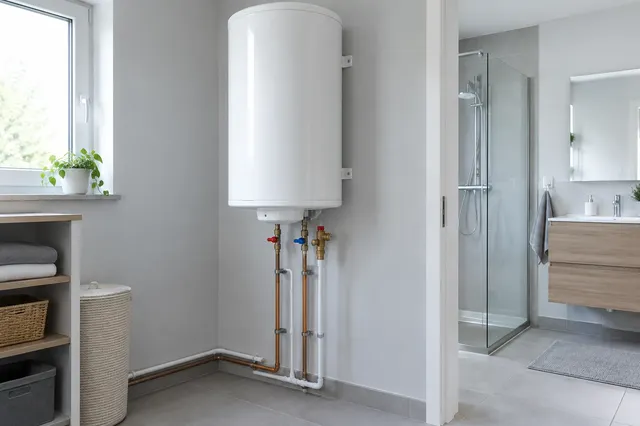
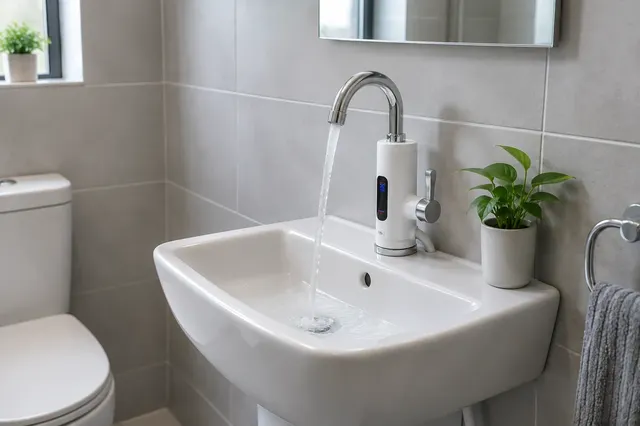
Illustrative image: white electric boiler on the wall of a technical room with a safety valve and waste hose
A storage water heater, commonly known as a boiler, works for years without notice. This is why maintenance is often forgotten – and the first warning is usually water on the floor or a cold shower. Most checks can be done by yourself; the anode inspection and descaling are done by service. How to choose a new boiler, what volume and type, is described in the article Boiler for the bathroom.
What the boiler needs and how often
The overview is based on manufacturers' manuals. For a specific heater, its manual always applies – intervals vary between brands.
| Action | When | Who |
|---|---|---|
| safety valve check | regularly according to the manual, more often with hard water | yourself |
| check the hose from the safety valve to the drain | during valve inspection | yourself |
| inspection of the magnesium anode | according to the manual, for example, Regulus within 12 months of commissioning and then every 12 months | service |
| removal of limescale from the tank and element | during anode inspection according to condition | service |
| temperature setting | at commissioning and when changing households | yourself |
| draining before frost | before winter if the space is not heated | yourself according to the manual |
Safety valve: the most important check
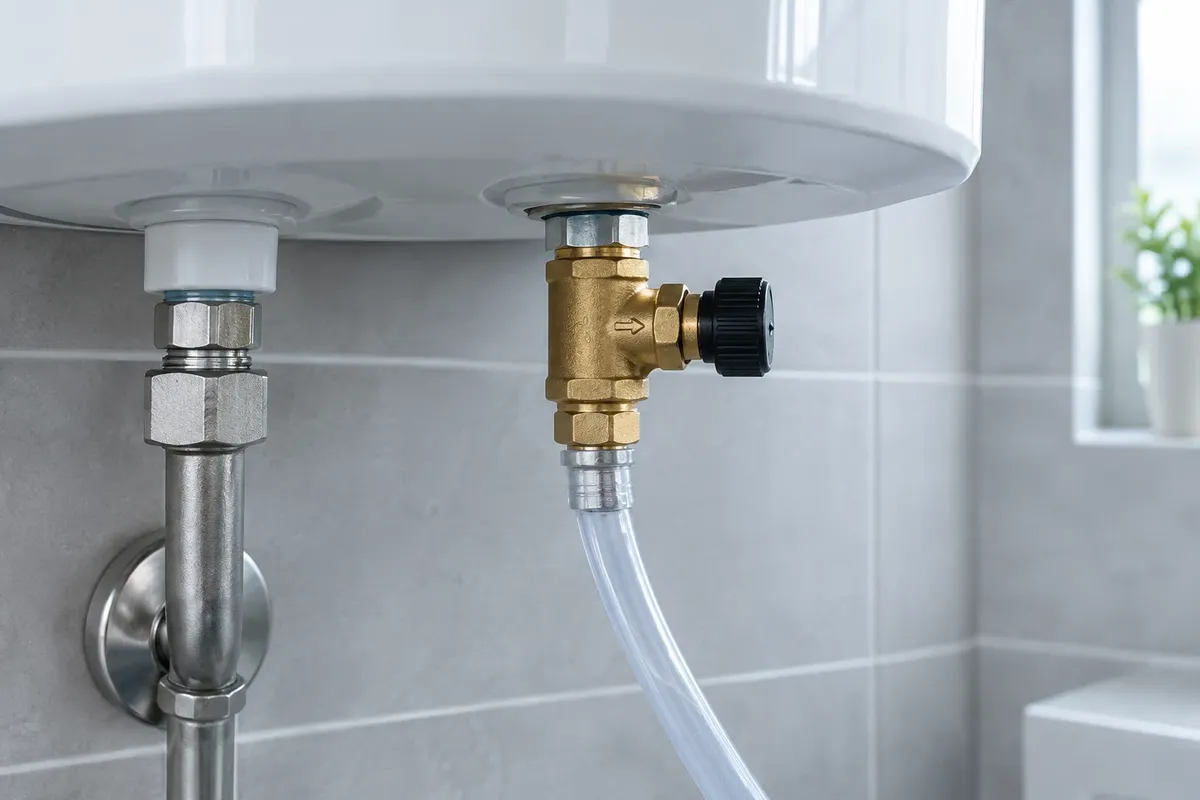
The safety valve is located on the cold water inlet to the boiler. The check valve inside prevents hot water from flowing back into the water supply, and the safety valve opens when the pressure in the tank exceeds the set value – for example, Eliz states 6.5 bar. Without a functioning valve, pressure during heating could damage the tank.
- Dripping during heating is normal. Water expands when heated, and the excess drips off. Therefore, manufacturers recommend directing the hose from the valve to the drain.
- Check: according to the manual, briefly open the valve by turning or lifting the control element – water should flow out. If it does not, the valve may be clogged with limescale. Tesy recommends regularly cleaning and checking the valve, more often with hard water.
- Nothing should be between the valve and the boiler – no shut-off valve or filter. According to the Eliz manual, a filter is placed on the inlet between the shut-off and safety valve.
- Do not change the type of valve. The original valve must not be replaced with a different type according to manufacturers – you may lose your warranty.
If water keeps flowing from the valve even when the boiler is not heating, the valve is clogged or the water supply pressure is too high. Regulus states that a pressure reducer is necessary for pressures above 6 bar and recommends an expansion vessel with a volume of 8 l on the cold water inlet to reduce water loss. A plumber will assess this.
Magnesium anode: why and when to check it
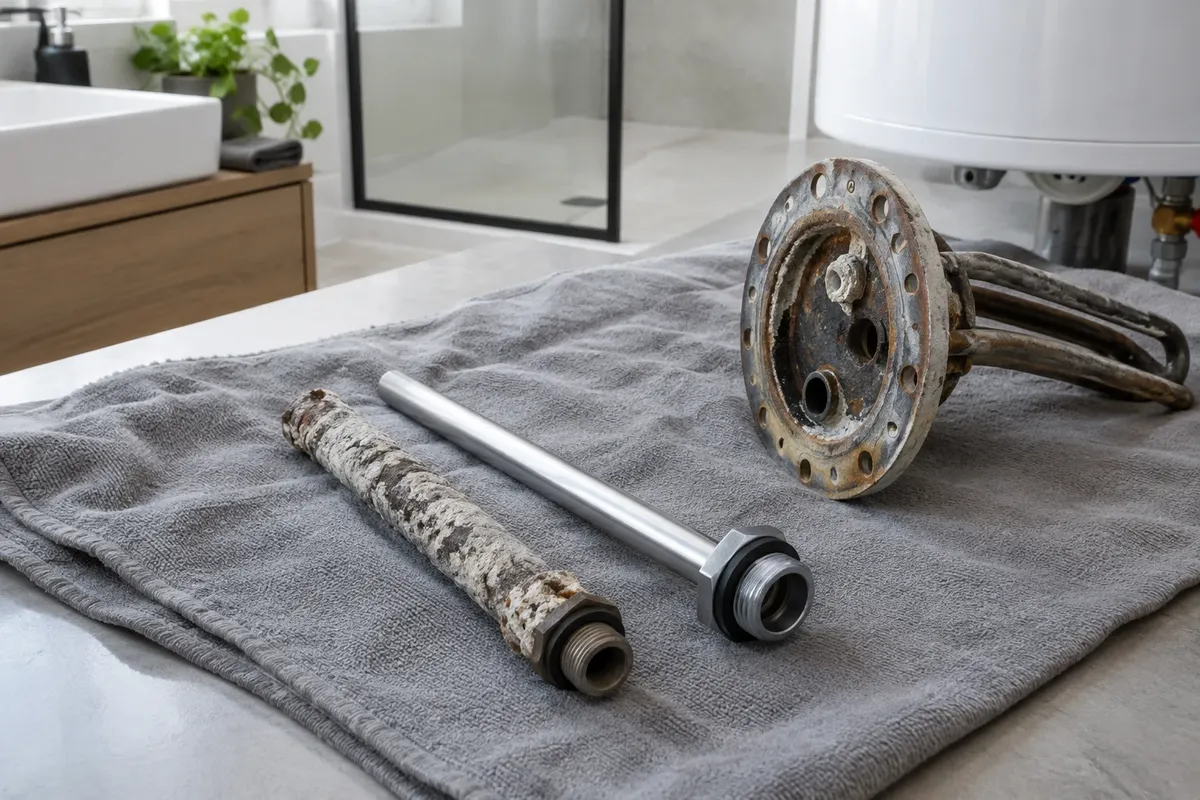
The inner tank of most boilers is steel with an enamel or glass-ceramic coating. The magnesium anode is a rod inside the tank that additionally protects it from corrosion – it gradually dissolves instead of the tank. When it runs out, the protection ends.
- Interval: Regulus requires an expert inspection of the anode within 12 months of commissioning and then at 12-month intervals as part of the warranty conditions. If the loss is greater than one-third of the volume, follow the instructions. For water with a higher calcium or iron content, it is recommended to check sooner.
- Other brands have their own intervals – you can find them in the manual and warranty certificate. If you do not know the interval, ask service.
- Electronic anode – some heaters have this instead of a magnesium one. It does not need replacing, but you can check its function according to the manual.
During the inspection, the service will drain the boiler, open the flange, assess the anode, and also see how much limescale is in the tank.
Limescale and descaling
In hard water, calcium deposits on the heating element and at the bottom of the tank. This is indicated by longer heating times than before or rumbling and cracking noises during heating. Descaling is performed by the service during the anode inspection – they will clean the tank and the element and reseal the flange. Do not pour any descalers into the tank yourself.
If you have hard water, consult a plumber about a filter or water treatment at the supply line. We describe how to remove limescale from the tap and shower head in the article Limescale on the tap.
Water temperature: how much to set
Regulus recommends maintaining the water in the tank at 60 to 65 °C – this ensures proper operation and protects against Legionella bacteria. Manufacturers also warn that at outlet temperatures above 43 °C, there is a risk of scalding, and fittings at the boiler can exceed 60 °C.
In households with children or seniors, you will appreciate a thermostatic mixer with a stop at 38 °C – the boiler can heat to a safe temperature, and hot water does not flow from the tap. More in the article Shower mixer.
Draining the boiler before winter
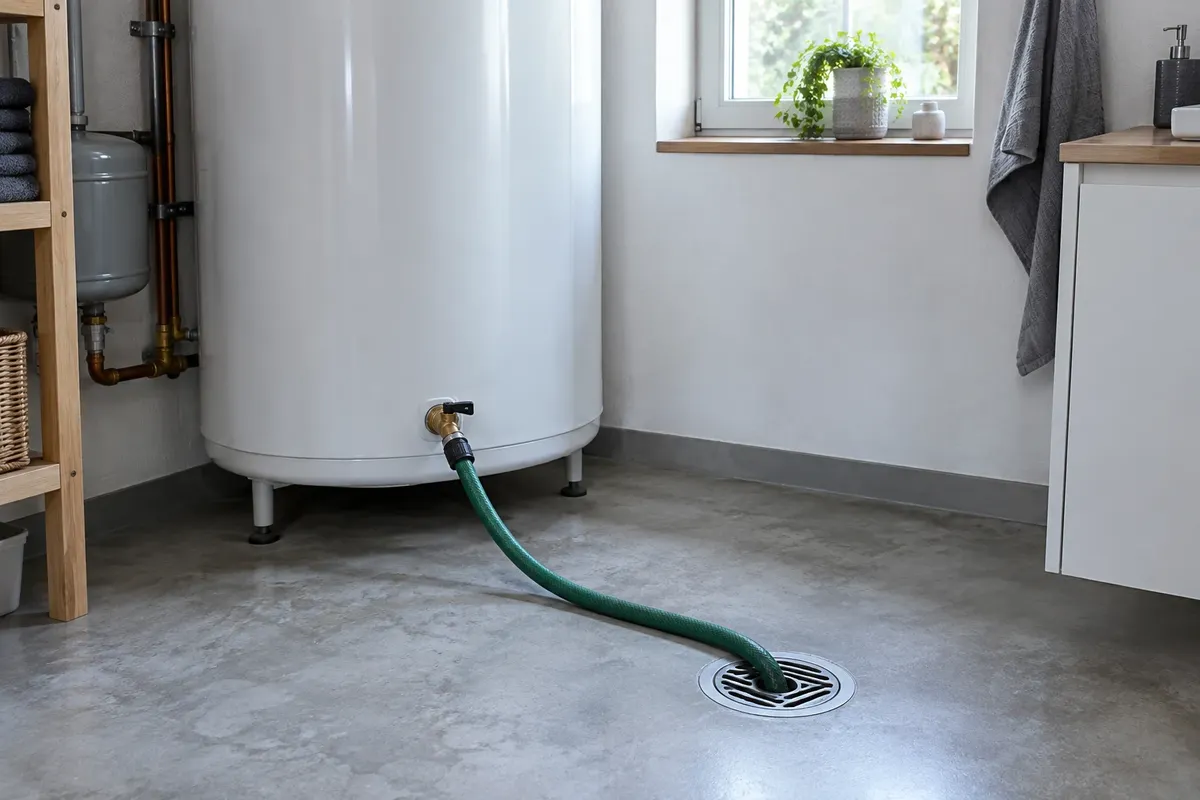
According to the Eliz manual, you should drain the heater that you have not used for a long time – water in the tank will freeze in frost and damage the tank. Such damage is not covered by the warranty. The usual procedure:
- Disconnect the boiler from the electricity – turn off the circuit breaker or unplug it.
- Let the water cool down – the water in the tank may be hot.
- Close the cold water supply to the boiler.
- Open the hot water tap to allow air into the tank.
- Drain the water through the drain valve according to the manual. The safety valve is not intended for draining.
In spring, close the drain valve, open the cold water supply, and let the hot water run from the tap until it flows freely without air. Only then turn on the boiler – an empty boiler must not be turned on, as the heating element would be damaged. We describe the entire winterizing of the bathroom at the cottage in the article Bathroom at the cottage and summer house.
When to call service or an electrician
- water is constantly leaking from the safety valve, even when it is not heating,
- water is dripping from the flange or from the bottom of the boiler,
- rusty water flows from the hot tap or has an unpleasant smell, while the cold water is fine,
- the boiler is not heating, the circuit breaker trips or the residual current device activates,
- the interval for inspecting the anode has passed.
Electrical work should only be done by a qualified electrician. If the tank itself is leaking, repair is usually not worth it. You can find new heaters in the e-shop in the category Water heaters and boilers, a tankless heater heats water with instantaneous mixer. More guides can be found in the section Maintenance and repairs of the bathroom.
Ak uvažujete o úspornejšom ohreve vody, pozrite článok Bojler s tepelným čerpadlom.
Common mistakes
- Shut-off valve between the safety valve and the boiler – cancels the protection against overpressure.
- Clogged or missing hose from the safety valve – water drips onto the floor or into the cupboard.
- The anode has not been checked for years – the tank will start to rust and the warranty may be void.
- Draining through the safety valve or without disconnecting from the electricity.
- Turning on an empty boiler after winter – will destroy the heating element.
Sources: operating and maintenance manuals for Eliz heaters (EURO SIK, EURO THV) and Tesy, warranty conditions and manual for Regulus (inspection of the magnesium anode, pressure reducing valve, temperature 60 to 65 °C), manual for Pyramis (filling before turning on); our articles Boiler for the bathroom and Bathroom at the cottage and summer house. The manual for the specific heater applies.
Terms in the dictionary: Thermostatic mixer · Overflow
Frequently Asked Questions
How often should I check the anode in the boiler?
According to the instructions for the heater. For example, Regulus requires inspection within 12 months of commissioning and then every 12 months, sooner if the water is hard. The service performs the inspection.
Is it normal for water to drip from the safety valve?
When heating, yes – water expands and excess drips. If it continues to drip even when the boiler is not heating, the valve is clogged or there is high pressure in the water supply and a plumber is needed.
Can I drain the boiler through the safety valve?
No, the safety valve is not designed for that. Disconnect the boiler from the electricity, close the cold water supply, open the hot water tap, and drain it through the drain valve according to the instructions.
What temperature should the boiler be set to?
Manufacturers recommend around 60 °C, Regulus 60 to 65 °C to protect against Legionella bacteria. A thermostatic mixer with a stop at 38 °C protects against scalding.
Should the boiler be drained for winter at the cottage?
Yes, if you are not heating the cottage. Frozen water can damage the tank, and such damage is not covered by the warranty. In spring, first fill the boiler and then turn it on.
Why does the boiler hum or crack?
Most often due to limescale on the heating element. Service will remove it during the anode inspection. Do not pour descalers into the tank yourself.
AI Advisor
Have a question on the topic? Ask the advisor – they will respond based on TGB Kúpeľne articles.
AI advisor – answers are generated by artificial intelligence from TGB Kúpeľne articles and may contain errors.
Bathroom design
These are tips. We will draw your bathroom for you.
In the 3D bathroom planner, you can design your bathroom yourself for free. We will prepare a custom visualisation with specific wall tiles for you in the studio – free of charge with your purchase.
Online design for free Custom visualisation
TGB Kúpeľne Studio · Bratislavská 71, Senec · Map