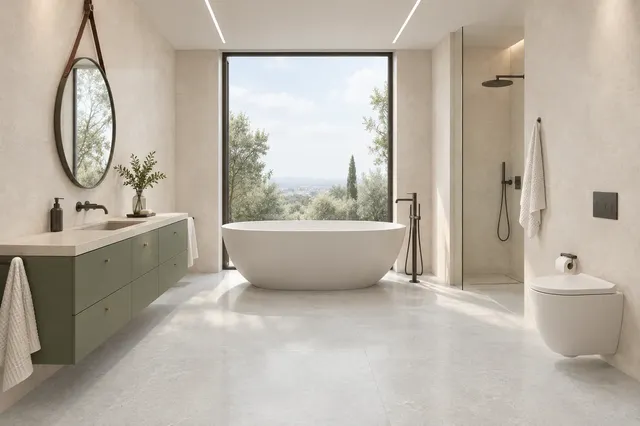
Small bathrooms and types of bathrooms
Bathroom in a cottage and summer house: frost, hot water, waste and materials
The bathroom in a cottage differs from an apartment mainly in that it stands closed for months and is often unheated in winter. Therefore, the pipes must be drained, the water in the waste traps and WC tank must not freeze, and the materials must withstand cold and moisture. Hot water usually comes from a flow heater or a small tank, and waste goes into the sewage system, septic tank, or home treatment plant.
In a cottage or summer house, you want a bathroom that works without worries even after winter. An apartment bathroom has a constant temperature and is used daily by someone. A cottage stands closed for weeks, often unheated in winter, and water may come from a well or home water supply. Therefore, the bathroom in a cottage is planned a bit differently – mainly the pipes, water heating, and materials.
Year-round or seasonal cottage
The first question is whether you will heat the cottage in winter. Everything else depends on that:
| What are you addressing | Heated all year round | Seasonal, unheated in winter |
|---|---|---|
| Water supply pipes | like in a house, in the heated part | with a fall to the drain valve, drain for winter |
| water heating | storage or instantaneous heater | preferably an instantaneous heater or a small storage tank that can be drained |
| waste traps and toilets | unchanged | drain or protect against freezing for winter |
| floor tiles and wall tiles | standard wall tiles and floor tiles | frost-resistant porcelain stoneware tiles, solid substrate |
| ventilation | fan like in a house | fan and ventilation every time you leave |
Water and frost: winterising the bathroom
Frozen water will burst pipes, mixers, and heaters. If you do not heat the cottage in winter, the pipes must be drained. The plumber leads them with a fall to the lowest point where the drain valve is located. Before winter, proceed as follows:
- Close the main water shut-off and open all taps to let the water drain from the pipes.
- Drain the heater exactly according to the manufacturer's instructions – disconnect it from the electricity before draining.
- Empty the toilet tank by flushing with the water supply closed, then soak up the remaining water with a sponge.
- Waste traps of the sink, shower, and toilet should be emptied or filled with a winterising agent according to the manufacturer's instructions. Do not pour regular antifreeze into the sanitary system.
- Mixers – for thermostatic mixers and shower systems, follow the manufacturer's instructions, some need to be disassembled before frost.
In spring, reverse the process: close the drain valve, turn on the water, bleed the mixers, and turn on the heater only when it is full of water. If the cottage is on a well or domestic water supply, consider them too – winterising the pump and tank is handled by their manufacturer and service.
Hot water: instantaneous heater or small storage tank
In a cottage where you stay for just a few days, a large storage tank is not worth it – it heats water you do not need. More commonly used is:
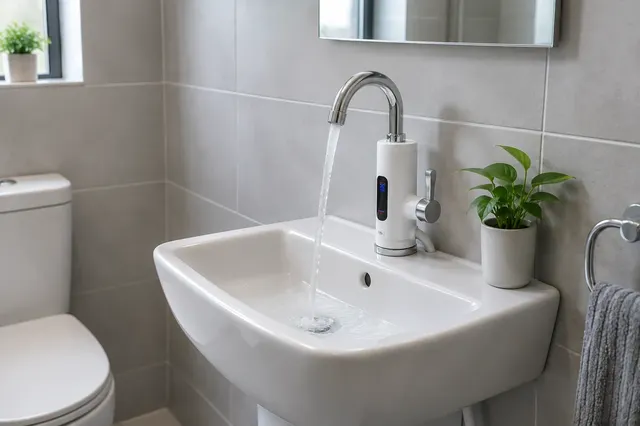
- Instantaneous heater – heats water only when needed, has no stored water to drain in winter. However, it requires a strong electrical supply, which an electrician will design. A small solution for the sink is also a heater mixer – more in the article Instantaneous mixer with heating.
- Small storage tank under or above the sink – cheaper electrical supply, but water needs to be heated in advance. A non-pressurised (open) storage tank requires a mixer designed for non-pressurised heaters; a standard mixer will not fit. An economical aerator is not suitable for a non-pressurised heater.
The type of heater also determines the mixer, so choose them together.
Waste: sewer, septic tank, or domestic treatment plant
If the cottage is connected to the sewer, handle waste like in a house. With a septic tank or domestic wastewater treatment plant, local conditions and regulations are decisive – the solution is designed by a designer and approved by the building authority. With a septic tank, it pays to save water: toilets with a smaller flush volume and economical mixers fill the septic tank more slowly. Some concealed cistern frames have economical flushing of 4/2 l, for example, the ECOLOGY series from Alcadrain – the bowl must be designed for such volume. More tips can be found in the article How to save water in the bathroom.
Sanitary ware and materials that last
- Floor tiles: porcelain stoneware tiles are frost-resistant and can withstand an unheated winter. A solid and dry substrate is important – details in the article Porcelain stoneware tiles.
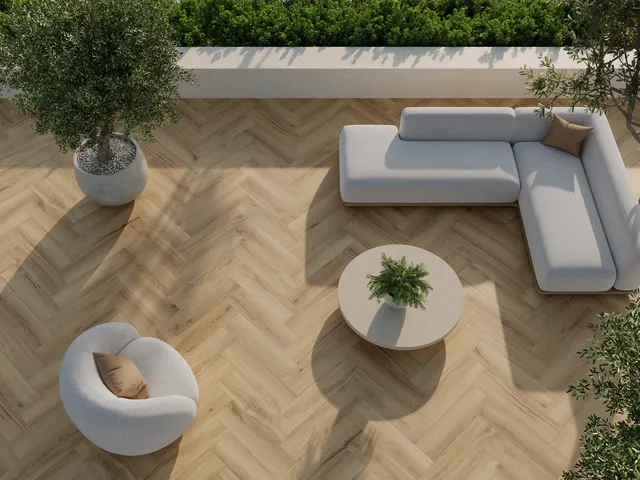
- Wood appearance: wooden boards in the shower absorb water, tiles that imitate wood look similar and moisture does not harm them. The laying process is described in the article Tiles that imitate wood.
- Toilets: close-coupled toilets are easier to drain and repair, wall-hung toilets with a concealed cistern frame look better and are easier to clean underneath. A comparison can be found in the article Wall-hung or close-coupled toilets.
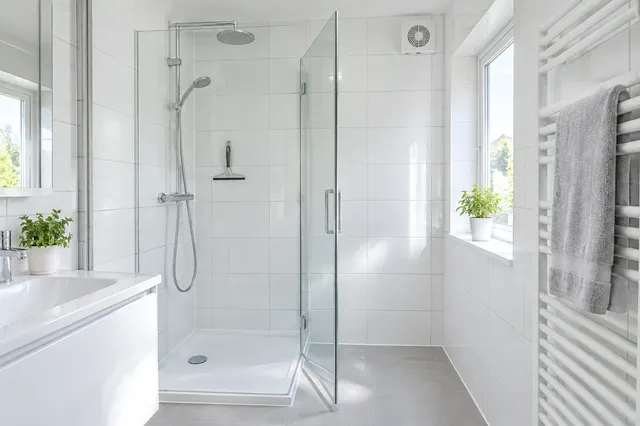
- Shower instead of bath: takes up less space, uses less water, and dries faster. A shower enclosure of 80 × 80 cm is a reasonable minimum, 90 × 90 cm is more comfortable.
- Furniture: preferably on legs or wall-mounted, not directly on the floor. Leave cabinet doors ajar when you leave.
Humidity and mould in a closed cottage
In a closed cottage, humidity from the last shower has nowhere to go. Before leaving, ventilate the bathroom thoroughly, wipe down the shower, take out wet towels, and leave the bathroom door open. A fan with a hygrometer will turn on automatically when humidity rises – if the cottage is powered, it helps even during your absence. The fan's performance is calculated by fan performance calculator, causes and removal of mould are described in the article Mould in the bathroom.
Heating in the cottage
In the cottage bathroom, an electric heated towel rail or electric underfloor heating is effective – they quickly heat the room upon arrival and can be controlled by a thermostat with a timer. For a permanently heated cottage, it is enough to maintain a temperature. The selection is described in the article Electric radiator for the bathroom.
Style: wood, stone, and muted colours
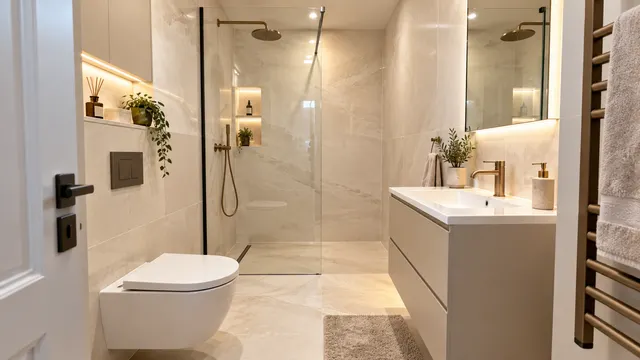
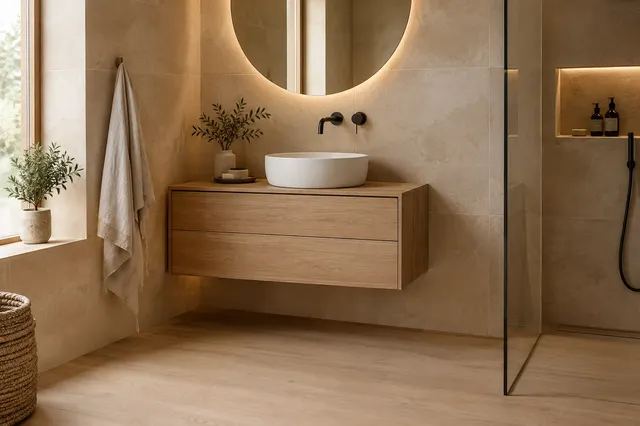
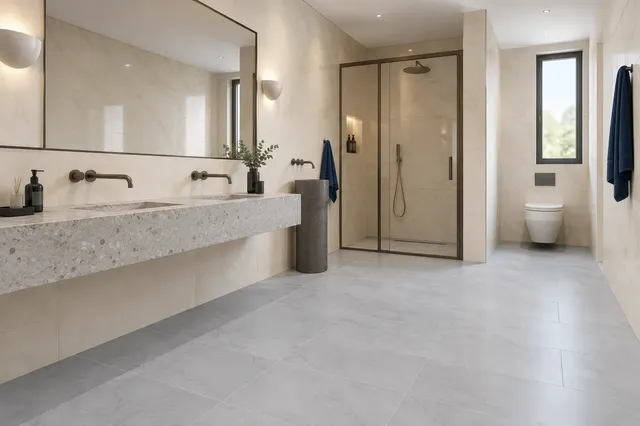
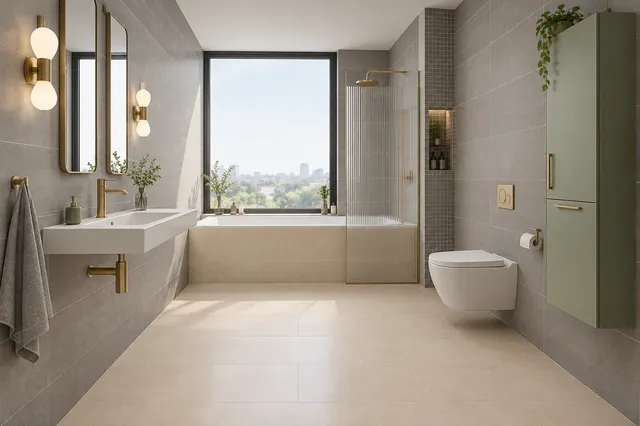
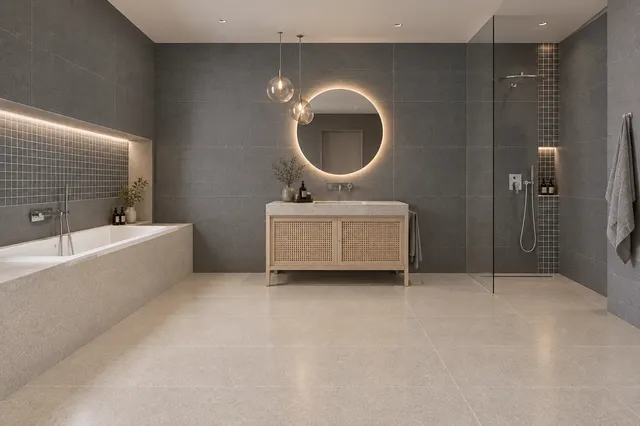
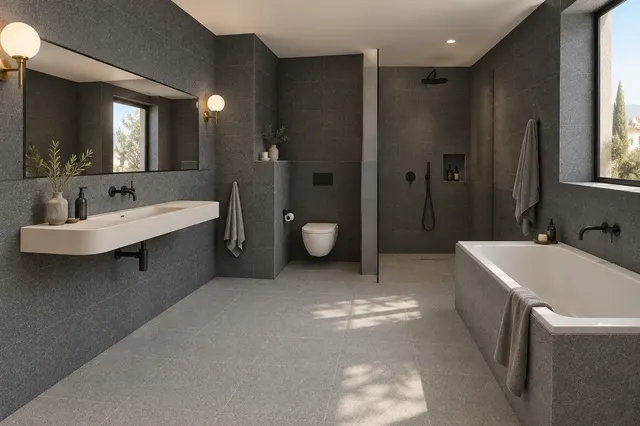
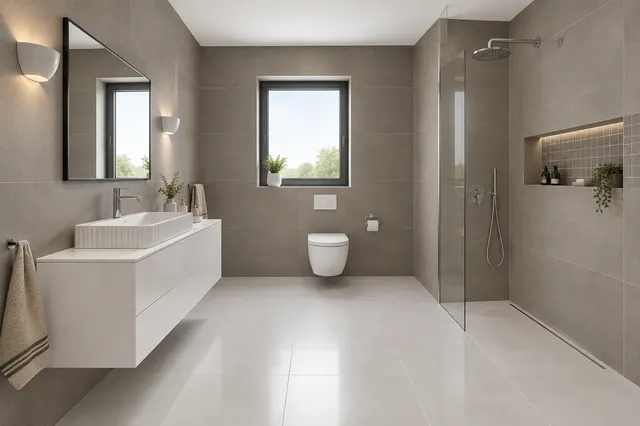
The bathroom in a cottage does not have to look like in the city. Warm tones, tiles that imitate wood or stone, matte mixers, and simple shapes are suitable. Ideas can be found in the articles Japandi bathroom and Brown and beige bathroom. If the bathroom is small, also check Small bathrooms and layouts bathroom 3 m².
See wall tiles, sanitary ware, and mixers in person at the store in Senec at Bratislavská 71. On the e-shop vkupelni.sk you will find floor-standing toilets and close-coupled toilets and floor tiles. Water, waste, and electrical installations, heaters, as well as septic tanks or treatment plants are always designed and installed by a professional.
Most common mistakes in the cottage
- Pipes without drainage option – water remains in the bends of the pipes and will burst them at the first frost.
- Large storage tank for a few days a year – heats water you do not use, and is difficult to drain for winter.
- Wood directly in the shower – absorbs water, turns black, and starts to mould. Wood belongs away from splashing water; in the shower, use tiles that imitate wood.
- Forgotten waste traps and toilet tank – even a small amount of water in the waste trap can damage ceramics or the waste trap when frozen.
- Closed bathroom without ventilation – after a week without ventilation, mould will appear in the corners.
Sources: our articles Porcelain stoneware tiles (frost resistance), Flow mixer with heating and Mould in the bathroom; manufacturer data from Alcadrain (flushing ECOLOGY 2/4 l) and Neoperl (water-saving aerators are not suitable for unpressurised heaters). The winterisation procedure is general – for a specific heater, mixer and pump, follow the manufacturer's instructions.
Terms in the glossary: Fall · Filling and draining valve · Waste trap · Gres (porcelain stoneware tiles) · Thermostatic mixer · Aerator
Frequently Asked Questions
How to winterize a bathroom in a cottage?
Close the main valve, open the taps and drain the pipes through the drain valve. Drain the heater according to the instructions, empty the WC tank and waste traps or pour a winterization agent into them.
What water heater for a cottage?
For short stays, a flow heater is suitable, which does not have a water storage for draining, or a small tank. A flow heater requires a strong electrical supply, which an electrician will design.
What tap for a small tank under the washbasin?
A tap for a non-pressurized (open) tank is designed for non-pressurized heaters. A standard tap or a water-saving aerator is not suitable for it.
What floor tiles for an unheated cottage?
Porcelain stoneware tiles that are frost-resistant. A solid and dry substrate is also important.
How to prevent mould in the bathroom of a cottage?
Before leaving, ventilate, wipe down the shower, take out wet towels and leave the doors open. A fan with a hygrostat will turn on automatically at higher humidity.
Wall-hung or close-coupled toilet for a cottage?
A close-coupled toilet is easier to flush and repair. A wall-hung toilet looks better and is easier to clean underneath, but the tank in the module also needs to be emptied for winter.
Does the bathroom in a cottage need to be heated?
If you do not heat the cottage in winter, the pipes, heater, and waste traps need to be drained. In a permanently heated cottage, it is enough to maintain a temperature, and the bathroom can be like in a house.
AI Advisor
Have a question on the topic? Ask the advisor – they will respond based on TGB Kúpeľne articles.
AI advisor – answers are generated by artificial intelligence from TGB Kúpeľne articles and may contain errors.
Bathroom design
These are tips. We will draw your bathroom for you.
In the 3D bathroom planner, you can design your bathroom yourself – for free and without registration. If you want assurance, we will prepare a photorealistic custom visualisation based on actual dimensions and specific tiles in the studio. It's free with a purchase.
Online design for free Custom visualisation
TGB Kúpeľne Studio · Bratislavská 71, Senec · Mon–Fri 8:00–12:00 and 12:30–17:00, Sat 9:00–12:00 · Map