Sinks, WCs and bidets
Waste trap: basin, bath, washing machine and wall-mounted – how to choose
The waste trap is a smell seal – the water that stands in it prevents odours from the sewage from entering the bathroom. A basin waste trap typically has a 5/4" connection to the outlet and a 32 mm waste, while sink and bath traps have a 6/4" connection and a 40 or 50 mm waste. For a vanity unit, a practical space-saving waste trap is used, and for a washing machine, a wall-mounted washing machine waste trap is prepared before tiling.
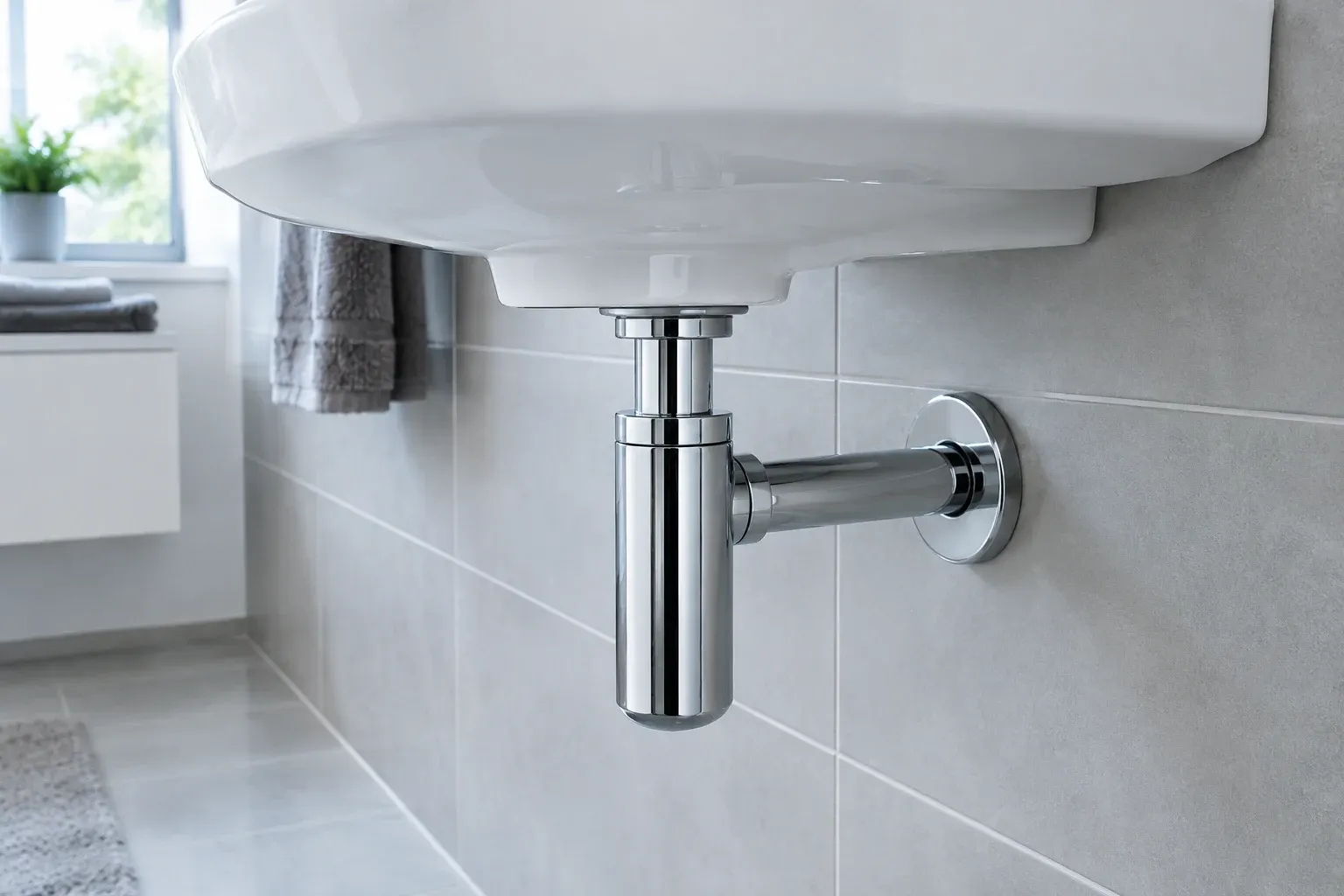
Illustrative image: Chrome bottle waste trap under the vanity unit on a wall with wall tiles
You only notice the waste trap when it drips, smells, or gets clogged. Yet, it determines whether a socket fits under the basin, whether the washing machine drains water properly, and whether odours escape from the drain. When choosing, you only need to know a few dimensions and which type fits where.
Overview of waste traps
| Waste trap | Connection | What to consider |
|---|---|---|
| basin | 5/4" to the outlet, 32 mm waste, possibly with a reduction to 40 mm | bottle, tubular, space-saving or designer |
| sink | 6/4", waste 40 or 50 mm | often with a connection for a washing machine or dishwasher |
| bath | waste and overflow set, waste 40 or 50 mm | plug control by chain, click-clack or rotary control |
| shower (tray) | according to the opening in the tray | for a low tray, a low waste trap, for the channel its own waste trap |
| washing machine | on the wall or behind the plaster, DN 40/50 | height according to the washing machine manual |
| wall-mounted basin | in the wall behind the basin | there will be free space under the basin |
Waste traps are manufactured according to the EN 274 standard (waste fittings for sanitary appliances). Manufacturers most commonly state the height of the water seal around 50 mm – for example, Alcadrain 50 to 53 mm, some basin waste traps from Geberit 75 mm. The higher the water seal, the harder it is for the water to dry out or be drained.
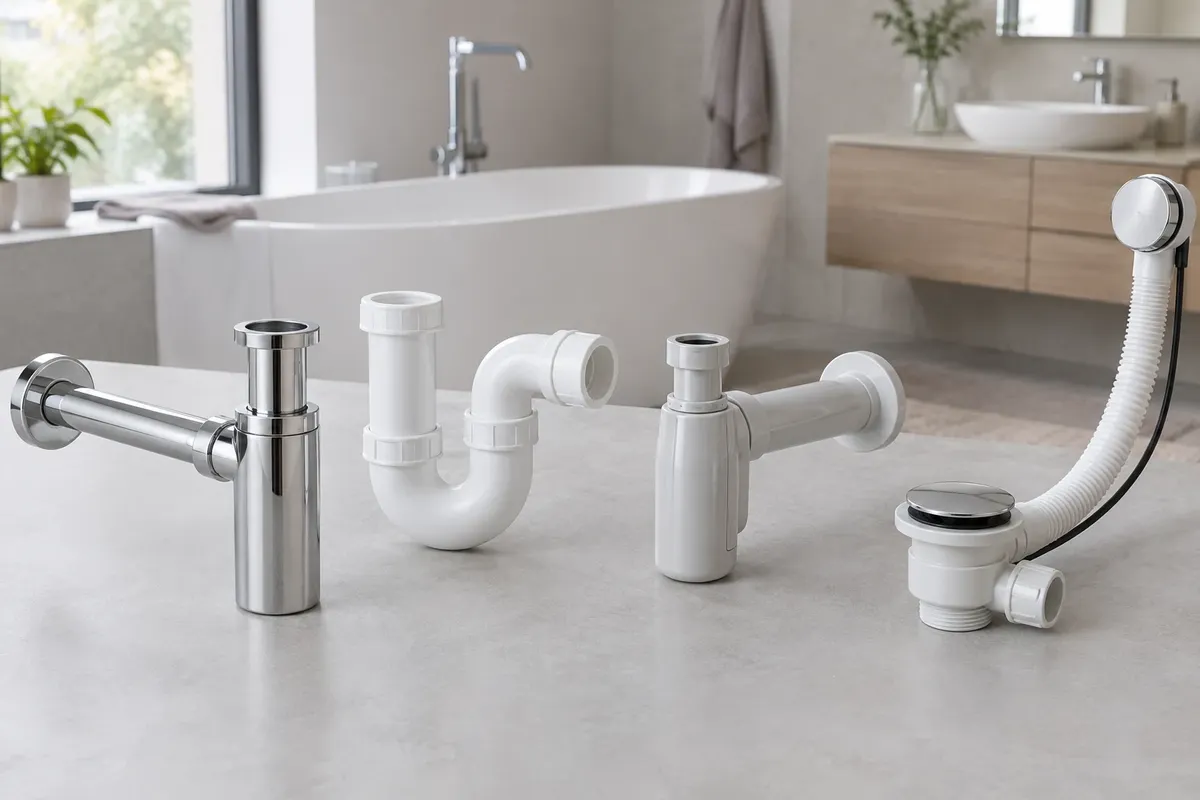
Basin waste trap: bottle, tubular or space-saving
- Bottle waste trap has a lower container that you can unscrew by hand and clean. It is the most common and looks good in chrome under a wall-mounted basin.
- Tubular waste trap has a U or S shape. It has fewer corners where dirt can accumulate, but it is cleaned by loosening the nuts on the bend.
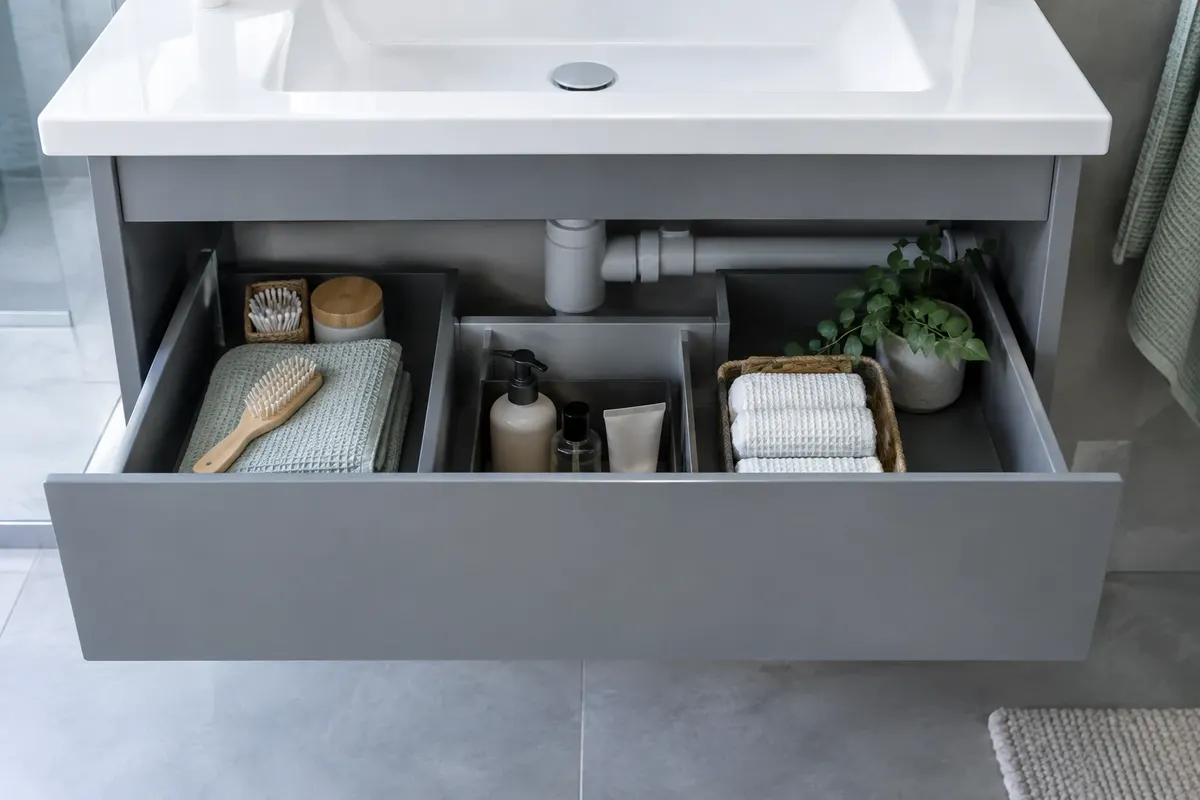
- Space-saving (furniture) waste trap leads the waste closely to the wall or down, so there is space for a drawer in the cabinet under the basin. For example, the space-saving waste trap from Hansgrohe has a water seal height of 50 mm, G 1 1/4 inlet and DN 32 outlet with a transition to DN 40.
- Designer waste trap in chrome, black or gold suits a countertop basin or a wall-mounted basin where the waste trap is visible.
A waste trap comes with an outlet. If the basin has an overflow (a hole below the edge), choose an outlet with an overflow; otherwise, water will leak from the overflow. Outlets come with a fixed grid, with a chain plug or click-clack, which you open by pressing. How to choose a cabinet that fits around the waste trap is described in the article Cabinet under the basin.
How to measure what waste trap you need
- Outlet diameter – usually 5/4" for basins, 6/4" for sinks and baths.
- Waste diameter in the wall – 32, 40 or 50 mm. A reduction or transition is used for differences.
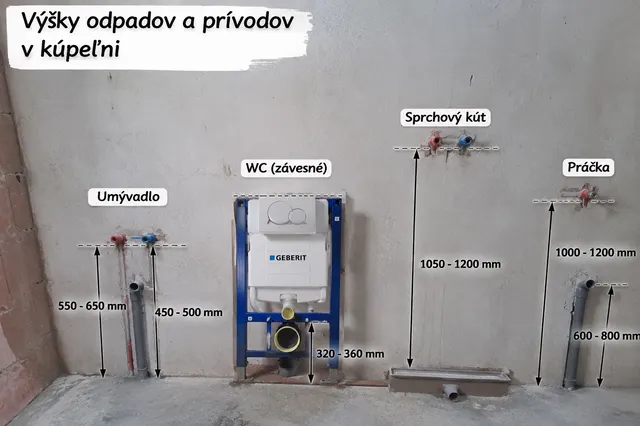
- Height of the waste above the floor and distance from the wall – based on this, you will select the length of the pipe, which can be shortened or extended.
- Space under the basin – if there will be a cabinet with a drawer, you need a space-saving waste trap.
Recommended waste heights for basins, baths, and washing machines can be found in the article Waste and water supply heights.
Bath waste trap and outlet
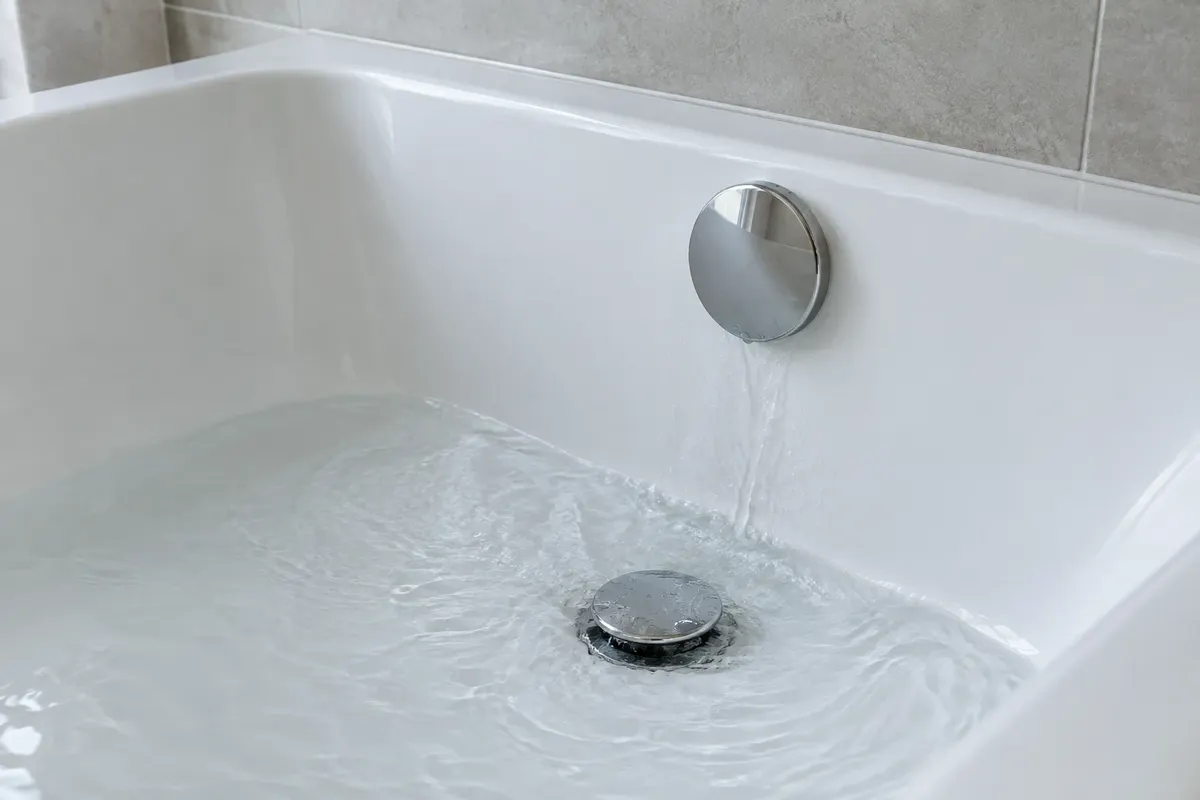
The bath waste trap is part of the waste and overflow set – it has an outlet at the bottom of the bath, an overflow below the edge, and a flexible hose between them. For example, the Alcadrain set for baths with a drain opening of Ø 52 mm has a smell seal of 50 mm, a flow rate through the waste trap of 52 l/min, through the overflow of 43 l/min, and thermal resistance of 95 °C. The plug is controlled by a chain, by pressing (click-clack) or by a rotary control on the overflow. When tiling a bath, leave an access panel near the waste trap – the procedure is in the article Tiled bath surround and niche.
Washing machine waste trap
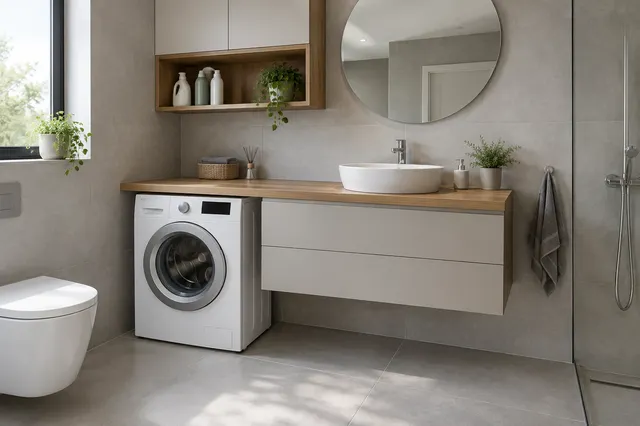
The washing machine drain hose is hung into the washing machine waste trap. A waste trap with a hose outlet is mounted on the wall, but a more aesthetically pleasing solution is a concealed waste trap – for example, the HL concealed waste trap for washing machines and dishwashers has a DN 40/50, a minimum installation depth of 65 mm, and a stainless steel cover plate measuring 110 × 225 mm. The concealed waste trap is installed before tiling, so be sure to check the height according to the washing machine's instructions. More in the article Washing machine in the bathroom: cabinet above the washing machine. For the sink, the washing machine or dishwasher connects to the sink waste trap with a hose connection.
Concealed vanity unit waste trap
With a wall-mounted sink without a cabinet, the waste trap can be hidden in the wall, leaving only a short pipe visible under the sink. This looks clean and makes cleaning under the sink easy. The body is installed in the wall before tiling, so the sink and waste trap should be selected in advance to ensure compatibility.
Material: plastic or metal
Plastic waste traps made of polypropylene are heat and chemical resistant and are perfectly adequate for use in a cabinet. Chrome-plated plastic or metal waste traps are used where the waste trap is visible. Metal waste traps are more durable mechanically, while plastic ones are easier to install. Match the colour of the visible waste trap with the tap.
Installation and seals
- Tighten the waste trap nuts by hand; using pliers risks cracking the plastic thread.
- The conical seal belongs on the pipe to the drain, and the flat seal goes between the outlet and the waste trap.
- After installation, run water and check the joints with a dry paper towel.
- The waste trap pipe should lead to the drain with a fall, not uphill.
If the waste trap smells, the water may have evaporated, the waste trap is dirty, or it is leaking. We describe how to clean it and what to do in case of a blockage in the article Blocked drain. You can find waste traps in our online shop in the Vanity unit waste traps category, and we can advise you at our studio in Senec at Bratislavská 71 – bring your old waste trap or a photo of it.
Common mistakes
- Standard waste trap for a cabinet with a drawer – the drawer won't fit, you need a space-saving waste trap.
- Outlet without overflow for a sink with an overflow – water from the overflow flows into the cabinet.
- Sunken seal – an old waste trap with a new seal often still leaks, it's simpler to replace the whole unit.
- Washing machine waste trap too low or too high – the washing machine discharges water spontaneously or the pump is overloaded.
- Concealed waste trap retrofitted – cannot be installed after tiling without demolition.
Sources: EN 274 (waste fittings for sanitary appliances); technical data from manufacturers Alcadrain (water seal 50 to 53 mm, bath set A501), Geberit (vanity unit waste trap with a water seal of 75 mm), Hansgrohe (space-saving vanity unit waste trap) and HL Hutterer & Lechner (HL404 concealed washing machine waste trap); our articles Blocked drain and Heights of drains and water supplies.
Terms in the dictionary: Waste trap · Overflow · Shower tray · Linear shower drain · Tiled bath surround · Access panel
Frequently Asked Questions
What waste trap for the sink?
Basin waste trap with a 5/4" connection to the outlet and a 32 mm drain, if the wall drain is 40 mm, with a reducer. For a cabinet with a drawer, choose a space-saving waste trap.
What is the difference between 5/4" and 6/4" waste traps?
It is the diameter of the thread on the outlet. 5/4" is used for basins, 6/4" for sinks and baths.
Why does the waste trap smell?
Water in the waste trap may have dried up, the waste trap is dirty or leaking. Run water, clean the waste trap and check the seals.
What waste trap for a washing machine?
Washing machine waste trap for wall or wall-mounted, which is installed before tiling. The height is determined by the washing machine manual, most often 60 to 100 cm above the floor.
What is a space-saving waste trap?
A waste trap that leads the drain close to the wall or low, so there is space left for a drawer under the basin.
Plastic or metal waste trap?
For a cabinet, a plastic waste trap made of polypropylene is sufficient. Where the waste trap is visible, a chrome or metal one in the colour of the tap is used.
AI Advisor
Have a question on the topic? Ask the advisor – they will respond based on TGB Kúpeľne articles.
AI advisor – answers are generated by artificial intelligence from TGB Kúpeľne articles and may contain errors.
Bathroom design
These are tips. We will draw your bathroom for you.
In the 3D bathroom planner, you can design your bathroom yourself for free. We will prepare a custom visualisation with specific wall tiles for you in the studio – free of charge with your purchase.
Online design for free Custom visualisation
TGB Kúpeľne Studio · Bratislavská 71, Senec · Map