Sinks, WCs and bidets
Toilets for children and seniors: reducer, adapter, step stool and grab bars
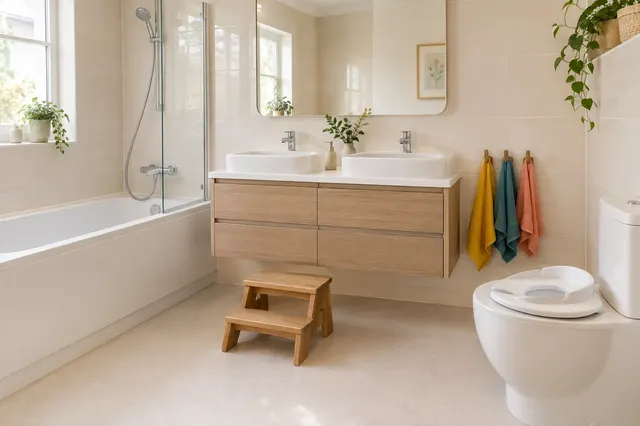
A family toilet does not have to be a compromise. A child reducer or a toilet seat with a child insert and a stable step stool can help children, while seniors can use an adapter that raises the seating height by 5 to 15 cm, or a higher toilet. The German standard for barrier-free apartments DIN 18040-2 states a seating height of 46 to 48 cm and folding grab bars on both sides 28 cm above the seat.
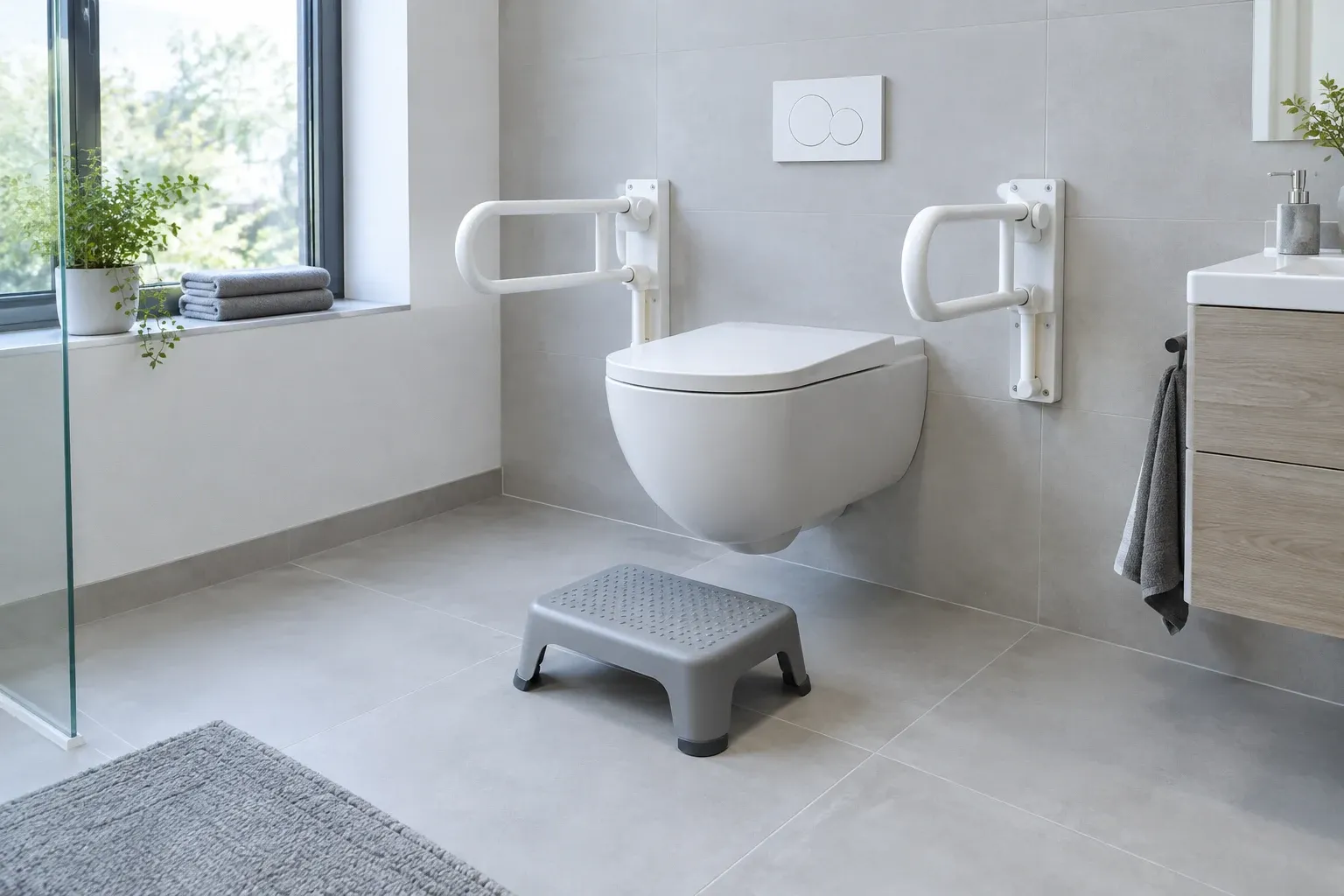
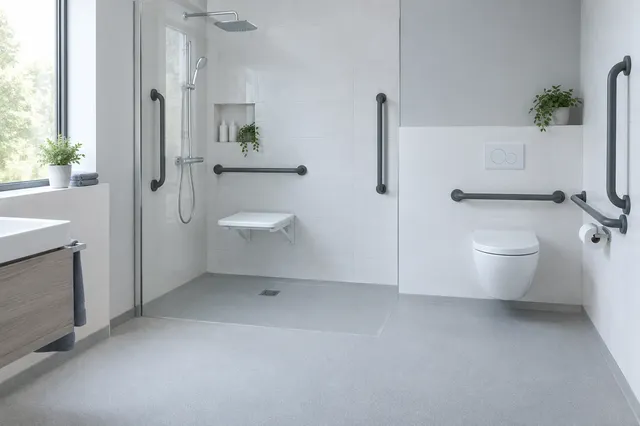
Illustrative image: wall-hung toilet with folding handles on both sides and a children's step
A child learning to use the toilet needs a smaller opening and something to stand on. A grandparent who has difficulty getting up needs a higher seat and firm support. Often, you address all these needs in one bathroom. Usually, you do not need to change the toilet – aids that can be removed later are sufficient. However, during renovation, you can prepare the bathroom to accommodate everyone.
Toilet height in numbers
| For whom | Seating height including the seat | Note |
|---|---|---|
| standard toilet | around 40 – 42 cm | most floor-standing and wall-hung toilets |
| seniors, tall people | around 45 – 46 cm | easier sitting down and getting up |
| barrier-free apartment according to DIN 18040-2 | 46 – 48 cm | with grab bars on both sides |
| children | standard toilet + step stool and reducer | do not permanently change the toilet height for children |
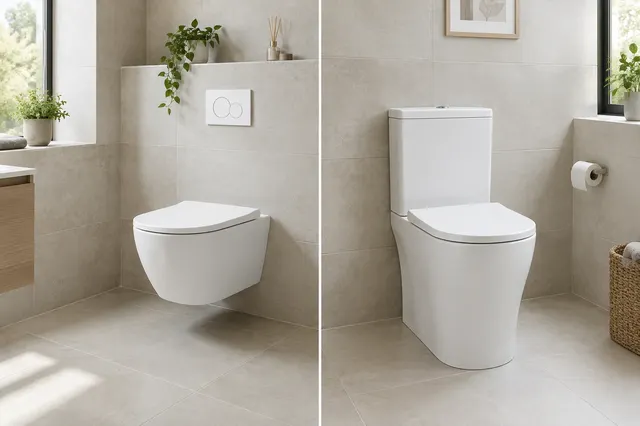
A wall-hung toilet can be installed at a height of your choice – the height is determined by the installation frame. A floor-standing toilet has a height determined by the bowl. A comparison of both solutions can be found in the article Wall-hung or close-coupled toilet.
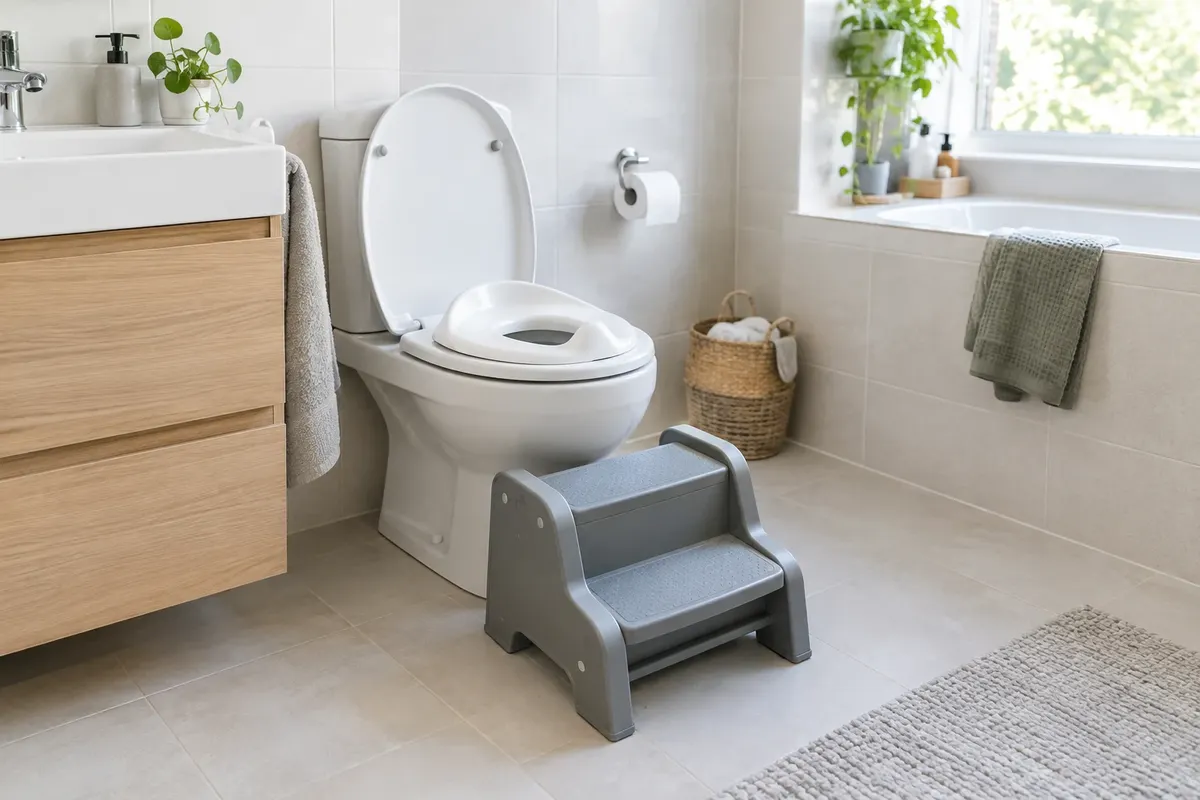
For children: reducer, child insert and step stool
- Child reducer sits on the toilet seat and reduces the opening. It usually has handles on the sides and can be hung next to the toilet.
- WC seat with child insert features a smaller seat built into the lid – the child can lower it themselves, and you won't need to store a reducer anywhere. We describe how to measure and choose a seat in the article WC seat.
- The step stool must be stable and have a slip-resistant surface and base. The child can place their feet on it, allowing them to sit comfortably and empty more easily. The same step stool can be used at the sink.
- Slow-closing seat protects little fingers from being pinched.
Do not install the WC or sink lower for children – they grow quickly, and a low WC would be uncomfortable for adults. You can find more tips in the article Bathroom for children and families.
For seniors: WC riser
The riser is placed on the bowl and raises the seat height by 5, 10, or 15 cm. Simple plastic risers, risers with lids, and those with armrests are available to assist with standing up. When choosing, pay attention to:
- Height – feet should rest flat on the floor when seated.
- Attachment – the riser must not move on the bowl. Check if it fits the shape of your bowl.
- Load capacity is indicated by the manufacturer, along with cleaning instructions.
- Armrests – helpful if there is no space for wall grab bars next to the WC.
Higher WC instead of a riser
If you are renovating, it is easier to install a wall-hung WC higher, for example, at 45 to 46 cm. You won't need a riser, and the WC will look like a standard one. For barrier-free apartments, DIN 18040-2 specifies a height of 46 to 48 cm including the seat. Test the height – it may be ideal for some, while too high for shorter household members. The simplest way is to sit on a chair or seat of similar height and see if you can comfortably stand up without using your hands for support. There are also solutions with adjustable WC heights.
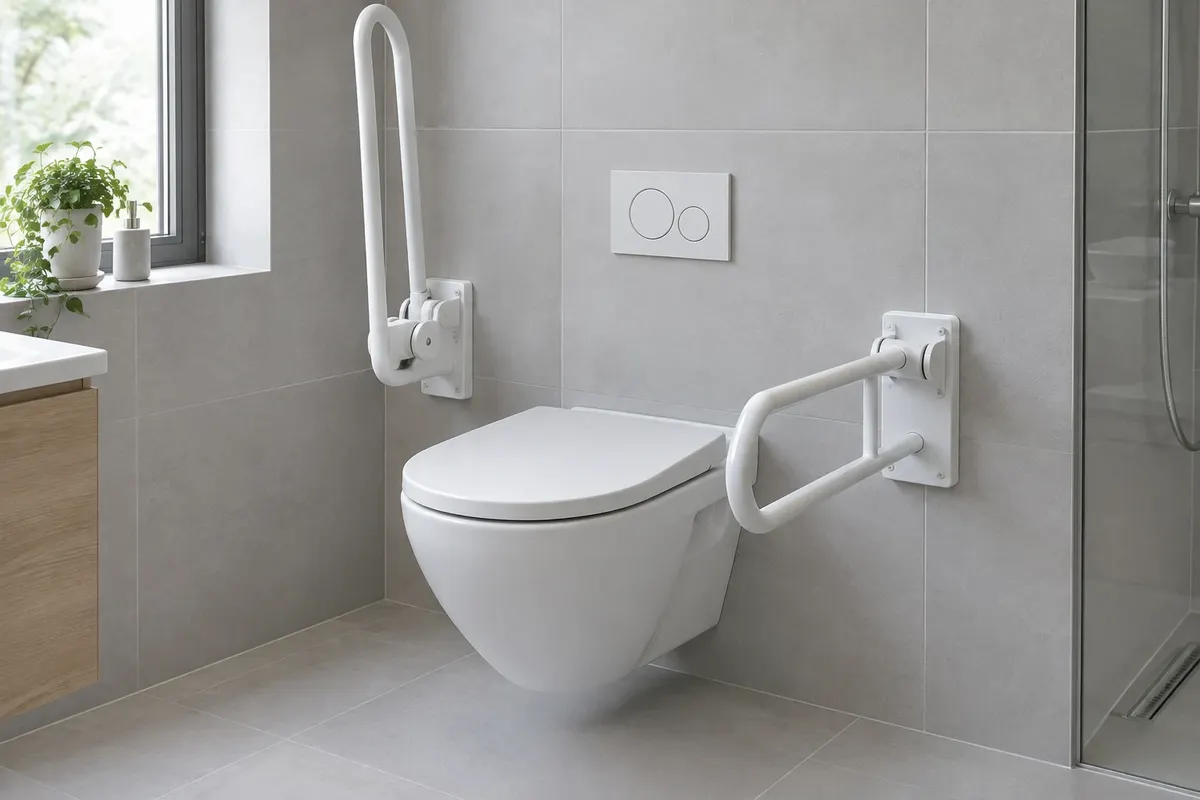
Grab bars by the WC
A grab bar helps more with sitting down and standing up than a higher WC. DIN 18040-2 for barrier-free apartments specifies these values:
| Grab bars by the WC | Value according to DIN 18040-2 |
|---|---|
| location | foldable grab bars on both sides of the WC |
| height of the top edge | 28 cm above the seat height |
| distance between grab bars | 65 – 70 cm |
| length | at least 15 cm from the front edge of the WC |
| load | point load 1 kN (approximately 100 kg) |
Grab bars are anchored to the load-bearing wall or to the reinforcement in the installation wall. Prepare the reinforcement during renovation, even if you do not need grab bars yet – they cannot be securely anchored into drywall without reinforcement. If the WC is next to a wall, a fixed grab bar can be placed on the wall side and a foldable one on the free side.
Space around the WC
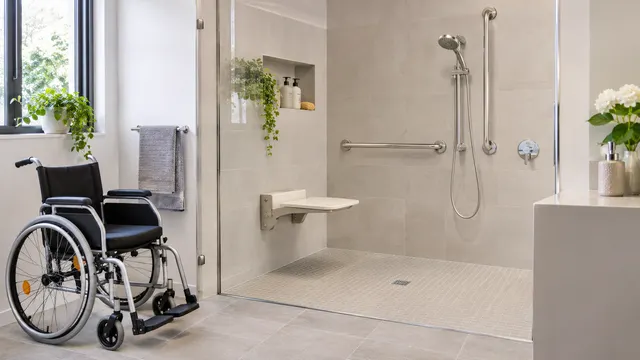
Leave free space in front of the WC for movement – DIN 18040-2 for barrier-free apartments specifies 120 × 120 cm. For a wheelchair, it is 150 × 150 cm, with at least 90 cm on one side and 30 cm on the other, and a bowl depth of 70 cm, so a person can transfer from the wheelchair. We describe a barrier-free shower in the article Barrier-free shower for seniors, and the entire bathroom for seniors in the chapter Barrier-free bathroom for seniors.
Additional aids at the WC
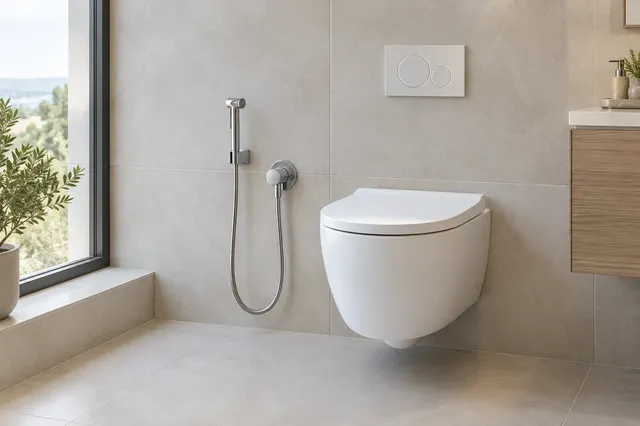
- Bidet spray makes hygiene easier for children and seniors – see WC with bidet and bidet spray.
- Toilet paper holder within reach from a seated position, not behind.
- Flush control button that you can reach without twisting.
- Night light and contrasting colours for grab bars and seat for those with poor vision.
- Slip-resistant mat in front of the WC that does not crumple or slip – see Bathroom mat.
- Shower toilet for seniors who need assistance with hygiene.
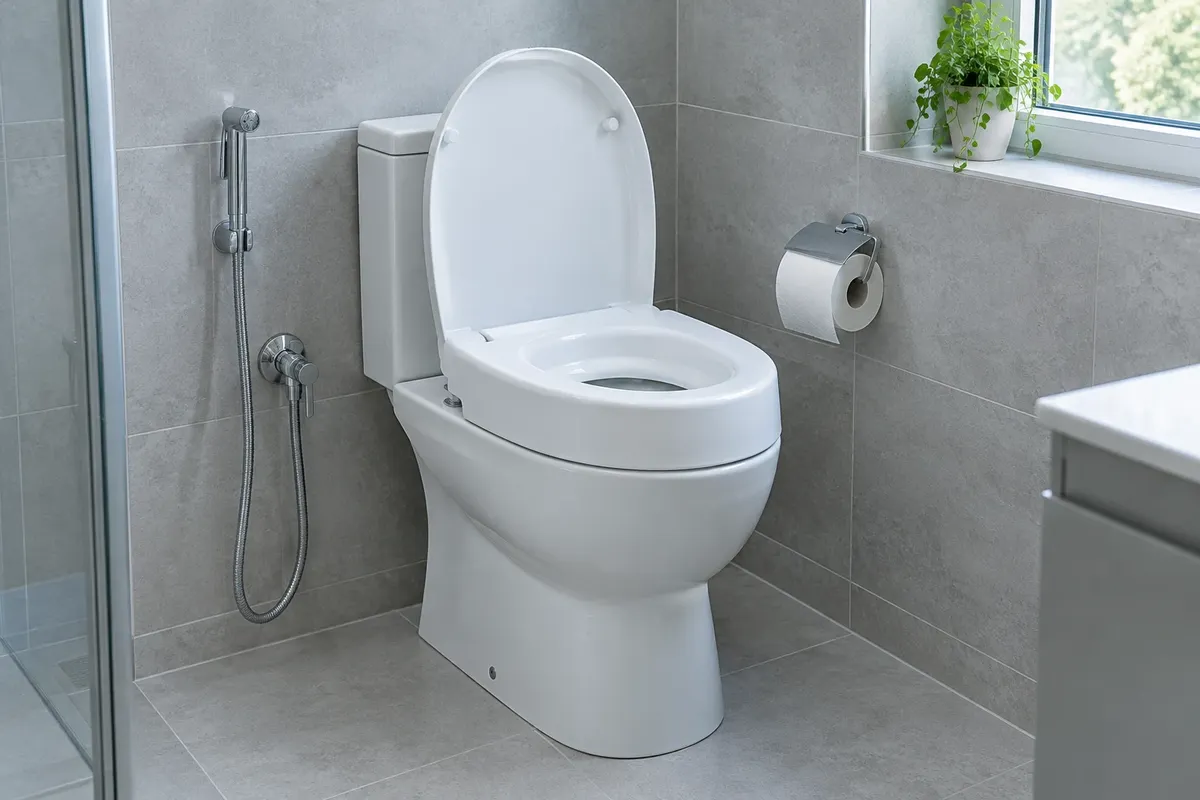
You can find grab bars and barrier-free accessories in the e-shop under the category Barrier-free accessories and grab bars, and WC seats in the category WC seats. We can advise you on designing a WC for the whole family at our studio in Senec at Bratislavská 71.
We describe the entire bathroom for seniors – shower, handles, lighting, and burn protection – in the article Bathroom for Seniors.
Common mistakes
- Low WC for children – children will grow, and it will be uncomfortable for adults.
- Riser that moves – does not fit the bowl and poses a risk of falling.
- Grab bar on drywall without reinforcement – will pull out under load.
- Unstable step stool – the child could fall off it.
- Paper behind – a senior may slip while reaching for it.
Sources: DIN 18040-2 Barrier-free construction – apartments (seat height 46 to 48 cm, foldable grab bars, movement areas) according to overviews from Baunetz Wissen and Villeroy & Boch; heights of risers according to data from manufacturers and suppliers of medical aids; our articles Barrier-free shower for seniors and Bathroom for children and families. DIN 18040-2 is a German standard that we use as a guideline.
Terms in the glossary: Wall-hung WC · Barrier-free shower · Installation (concealed) frame · Close-coupled toilet · Slip resistance R9 to R13 · Installation wall
Frequently Asked Questions
What height should a toilet bowl be for seniors?
For seniors, a seating height of around 45 to 46 cm including the seat is recommended. The standard for barrier-free apartments DIN 18040-2 states 46 to 48 cm.
How much does a toilet adapter raise the height?
Most commonly by 5, 10 or 15 cm. Choose a height where your feet are flat on the floor.
What is a child reducer for the toilet?
A smaller seat that sits on the toilet seat and reduces the opening. There are also toilet seats with a child insert built into the lid.
At what height should grab bars be placed by the toilet?
According to DIN 18040-2, the top edge should be 28 cm above the seating height, grab bars should be 65 to 70 cm apart and at least 15 cm behind the front edge of the toilet.
Can grab bars be mounted on drywall?
Only into the reinforcement in the installation wall. Prepare the reinforcement during renovation, even if you install the grab bars later.
Do children need lower toilets?
No. Install the toilet at a standard height and use a step stool and reducer for children, which can be removed later.
AI Advisor
Have a question on the topic? Ask the advisor – they will respond based on TGB Kúpeľne articles.
AI advisor – answers are generated by artificial intelligence from TGB Kúpeľne articles and may contain errors.
Bathroom design
These are tips. We will draw your bathroom for you.
In the 3D bathroom planner, you can design your bathroom yourself for free. We will prepare a custom visualisation with specific wall tiles for you in the studio – free of charge with your purchase.
Online design for free Custom visualisation
TGB Kúpeľne Studio · Bratislavská 71, Senec · Map