Sinks, WCs and bidets
Close-coupled toilet with rear or bottom waste: how to determine what you have and what to buy
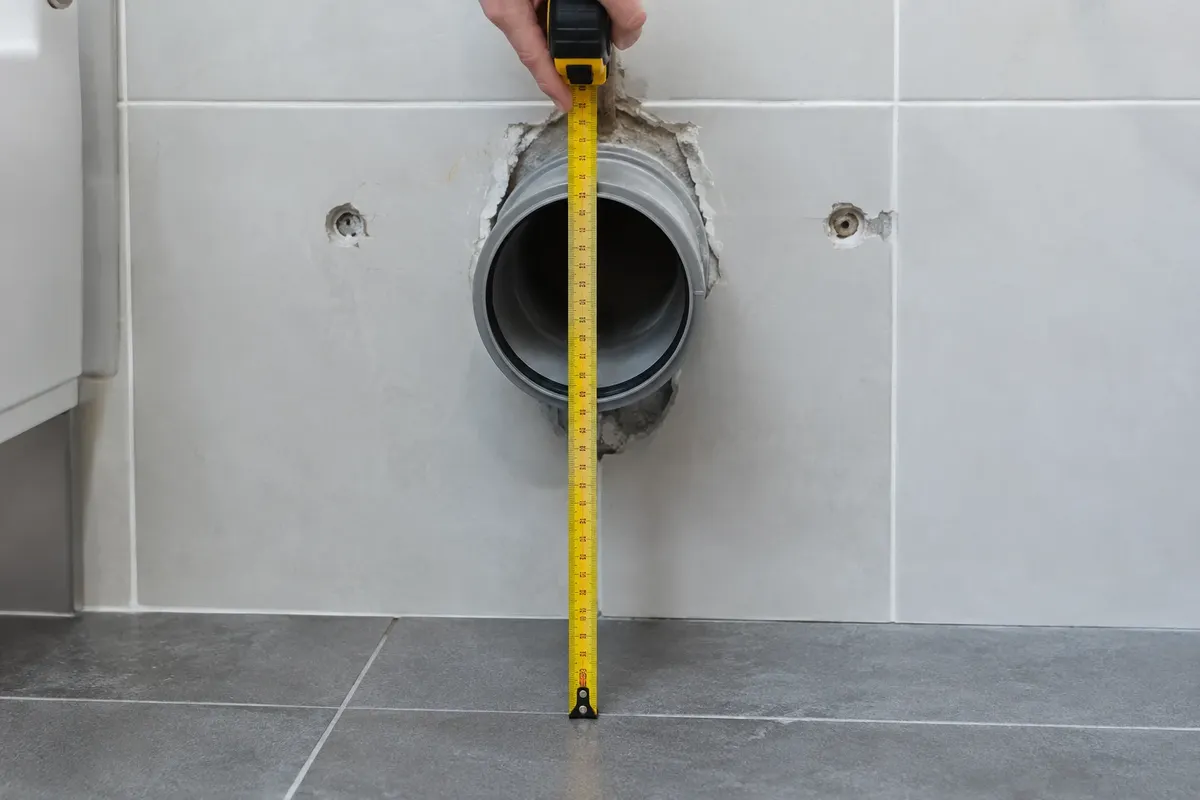
To determine whether you need a close-coupled toilet with rear or bottom waste, check behind the old toilet: if the waste pipe goes into the wall, you have rear (horizontal) waste; if it goes into the floor, you have bottom (vertical) waste. In the toilet description, they are indicated by the abbreviations VO and SO. Before buying, measure the height of the waste pipe centre above the floor for rear waste, and the distance from the wall for bottom waste. Small differences can be compensated with an eccentric sleeve or elbow; a bowl with vario waste can be connected in both ways.
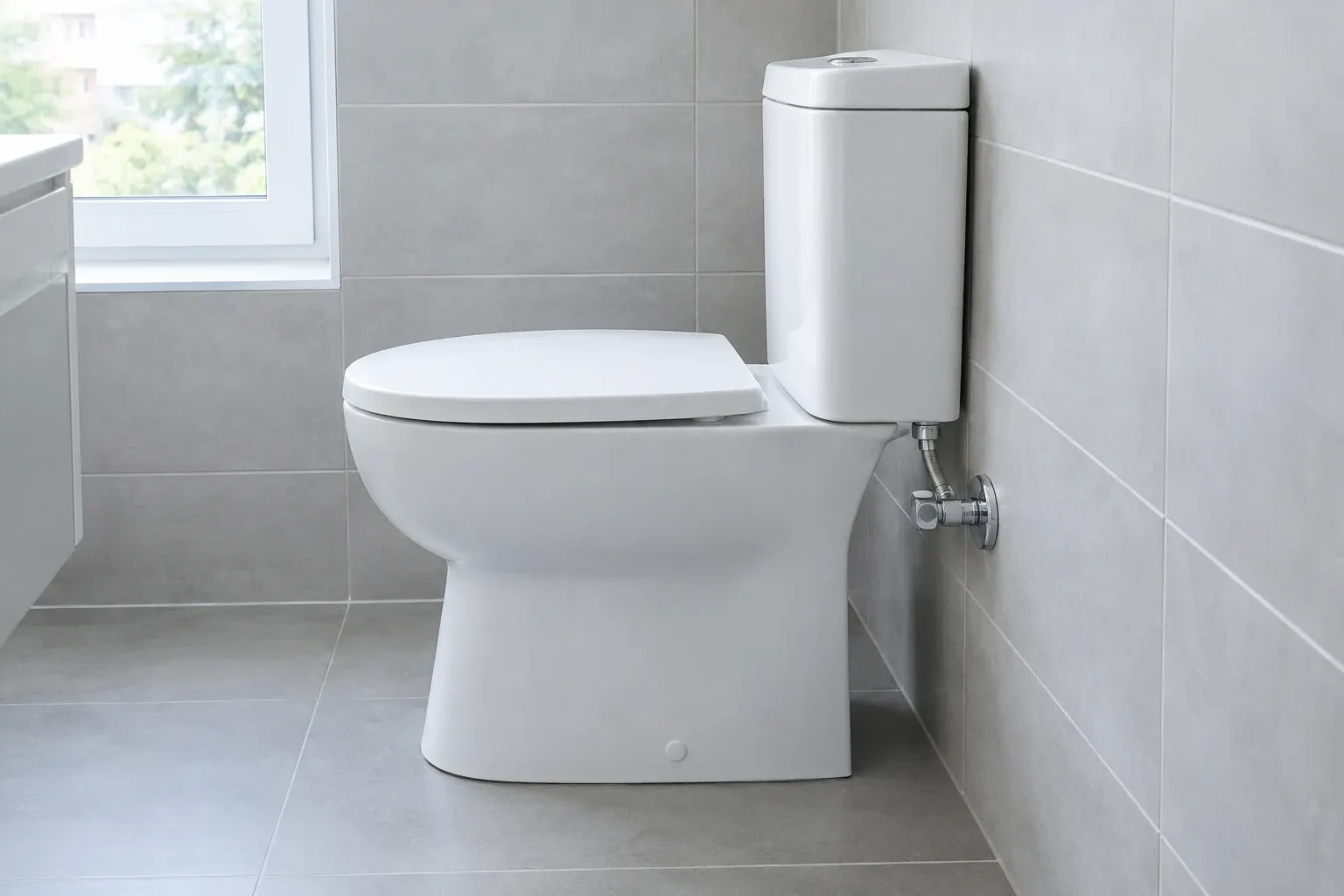
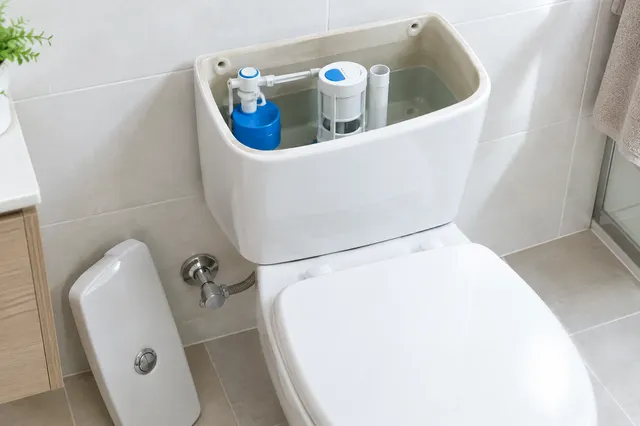
Illustrative image: white close-coupled toilet with a cistern against the wall tiled with light wall tiles, side view of the waste connection
When replacing an old toilet, the most common question is what type of waste is needed. A close-coupled toilet – a bowl with a cistern placed directly on it – is made with various connections to the plumbing. If you buy the wrong type, the bowl cannot be connected without modifications, or it will stand too far from the wall. Below you will find how to determine what waste you have, what to measure, and what the abbreviations in the toilet description mean.
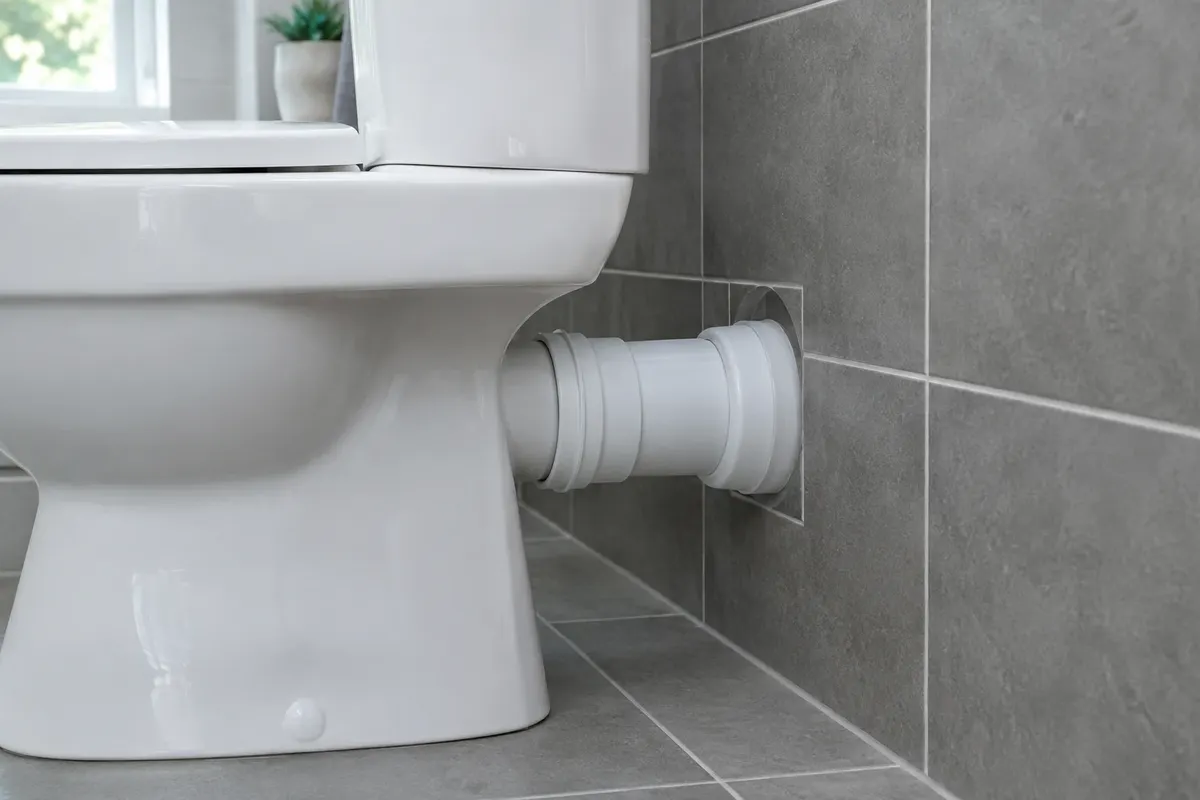
What types of waste does a close-coupled toilet have
| Type of waste | Abbreviation in the description | Where the pipe goes | When it is used |
|---|---|---|---|
| rear, horizontal | VO | into the wall behind the toilet | the plumbing is in the wall or in the installation wall |
| bottom, vertical | SO | for the floor under the WC | the drainage comes from the floor |
| angled | angled waste | angled down into the wall or to the floor | older installations with angled connections |
| vario (universal) | vario | into the wall or through a bend into the floor | when you are unsure of the type of waste, or during replacement without modifications |
The abbreviations VO and SO are used in the names by manufacturers such as Jika or Kolo – "Lyra plus VO" is a bowl with horizontal waste, "Lyra plus SO" with vertical. Some manufacturers use the terms "rear" and "bottom" waste instead of the abbreviation, or the English "horizontal" and "vertical outlet."
How to determine what type of waste you have
- Look behind the WC. If a pipe or sleeve comes out horizontally from the bowl into the wall, it is rear waste. If the bowl is directly above the opening in the floor and no pipe is visible from the side, it is bottom waste.
- If in doubt, look from the side at ground level – with bottom waste, the connection is hidden under the bowl, while with rear waste, the sleeve is visible between the bowl and the wall.
- Angled waste is identified by the pipe from the bowl pointing angled down into the wall.
If the old WC is being replaced anyway, the safest option is to measure the connection after its removal – then you can see exactly where the drainage neck is located.
What to measure before buying
| Waste | What to measure | Example from the manufacturer's instructions |
|---|---|---|
| rear (horizontal) | the height of the centre of the waste pipe above the finished floor | WC kombi Sapho Dynasty: centre of the bowl's waste 180 mm above the floor |
| bottom (vertical) | the distance from the centre of the pipe in the floor to the wall behind the WC | Sapho Dynasty with a 90° bend: 215 mm ± 15 mm from the wall |
| both | the diameter of the drainage neck and the space around the WC | usually DN 100 or DN 110 |
Compare these measurements with the technical drawing of the selected bowl – you can find it with the product or in the instructions. Differences of a few millimetres to centimetres can be compensated with transition pieces:
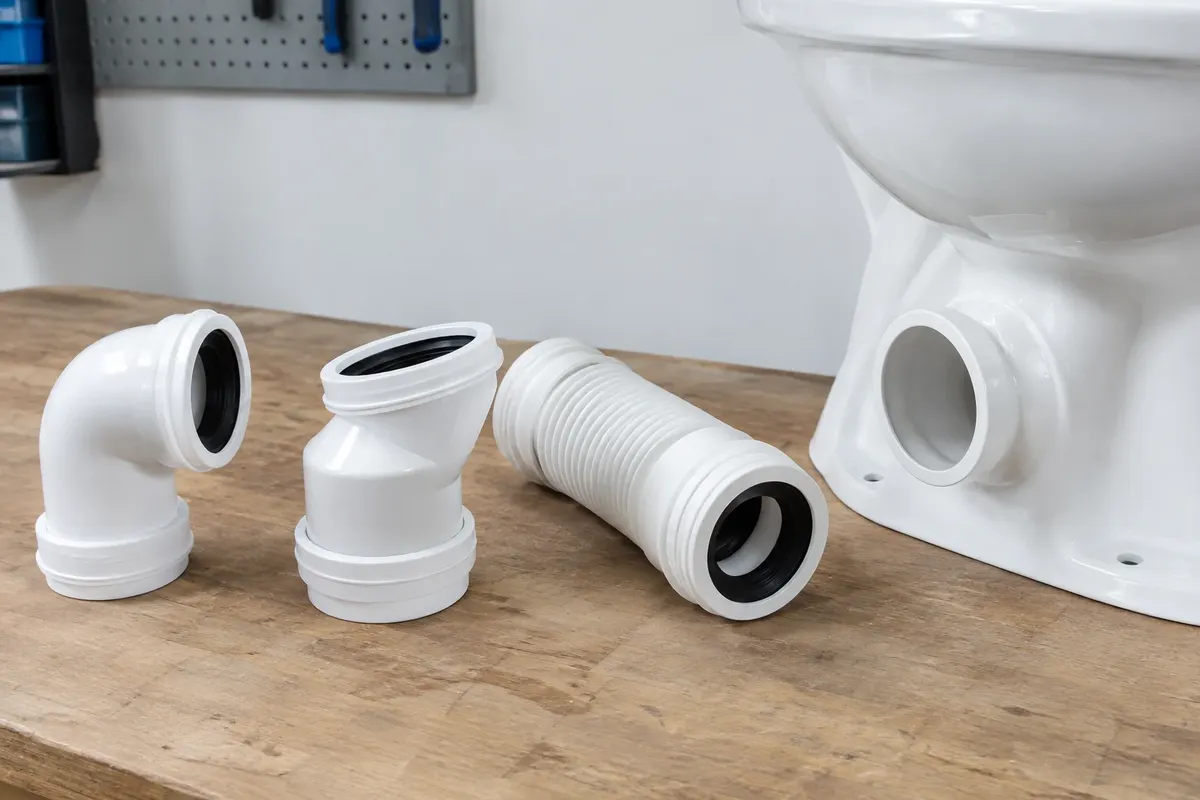
- Excentric sleeve – shifts the centre of the connection, for example by 20 mm, when the height of the pipe in the wall does not match exactly.
- Centric (straight) sleeve – for precise height matching.
- Flexible connection – a bendable pipe that bridges a greater distance or lateral offset.
- 90° bend for bottom waste or for vario bowls – manufacturers offer bends for various distances from the wall, for example Laufen/Jika for 70 to 220 mm and 220 to 305 mm.
Also measure the space around: the width of the area for the bowl, the distance from the side wall or sink (the centre of the WC should be at least 35 to 40 cm from the side wall) and the position of the angle valve for the water supply to the tank. If the new tank has the supply on the opposite side to the old one, you will need a longer hose or to move the valve.
With rear waste, also pay attention to how far from the wall the bowl will be. If the neck is deep in the wall, the bowl may not sit flush against the wall, leaving a gap between the tank and the wall.
Vario waste: when you are unsure
Bowls with vario waste have a neck shaped so that they can be connected horizontally into the wall or vertically through a bend into the floor. They are suitable for replacements when you do not want to take risks, or when the installations are still to be done. Connecting to the floor usually requires purchasing a bend for the specific distance from the wall – check if it is included in the package.
What if I want to change the type of waste
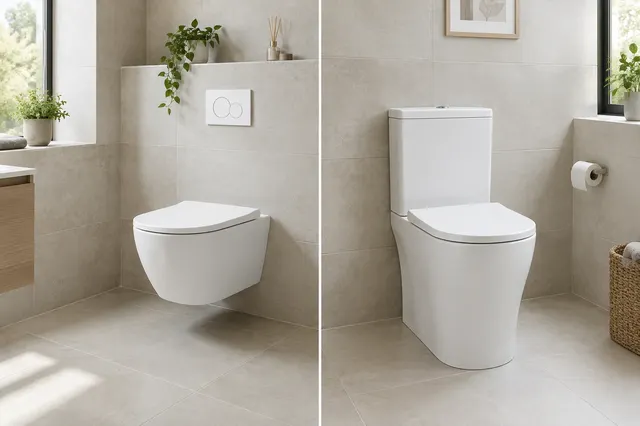
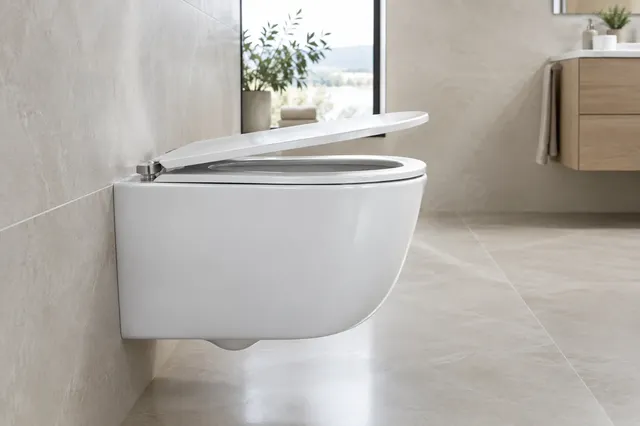
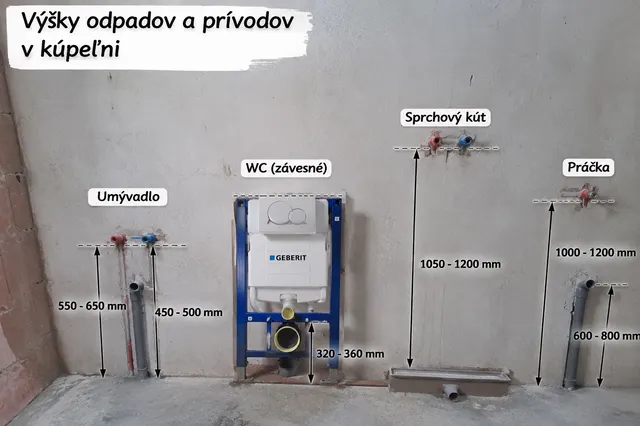
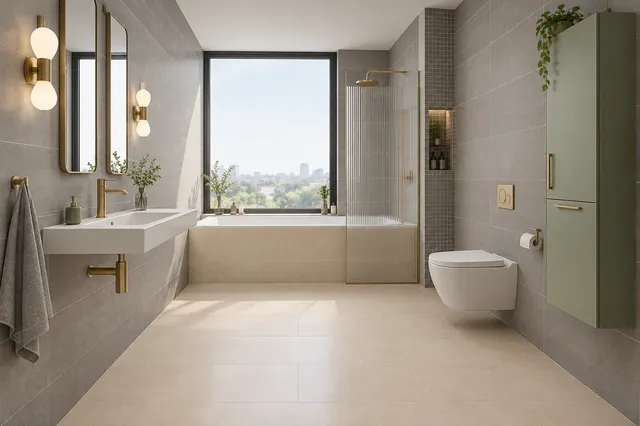
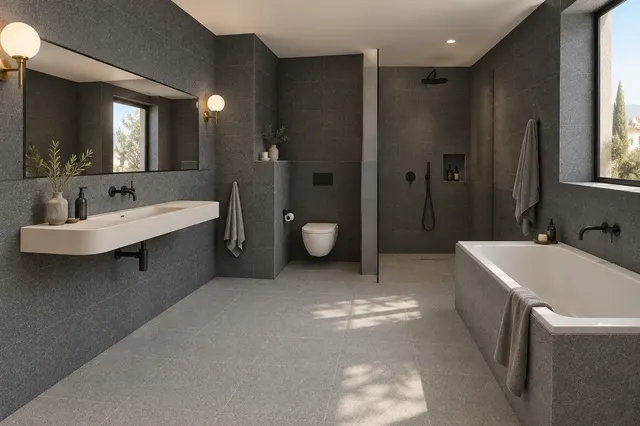
If you have waste in the floor and want a WC with rear waste (or vice versa), the drainage must be modified. In a family house, this is often possible, but in a prefab block of flats, the waste is connected to the soil stack and changes are limited by height and fall. During renovations, it is common to switch to a wall-hung toilet – the drainage is routed to an installation frame in the installation wall, and the floor under the WC remains free. The differences are explained in the article Wall-hung or close-coupled WC.
Dimensions of WC kombi
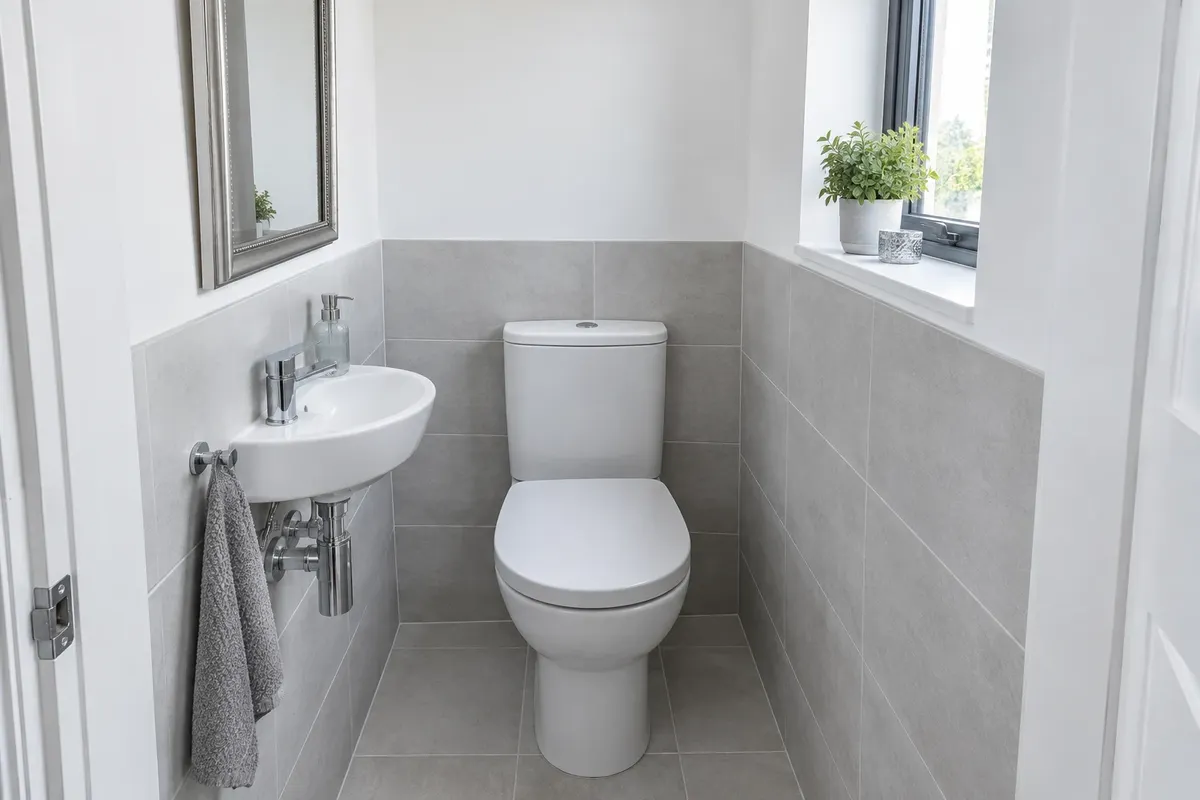
A WC kombi is longer than a wall-hung WC because the tank sits on the back of the bowl. Keep this in mind for small WCs – there should be at least 60 cm of free space in front of the bowl.
| Model (example) | Length × Width | Note |
|---|---|---|
| Cersanit Parva, horizontal waste | 610 × 350 mm | flush 3/6 l |
| Jika Lyra plus (VO, SO and angled waste) | 630 × 360 mm | bowl height 400 mm |
| Jika Deep, horizontal waste | 650 × 360 mm | bowl height 430 mm |
| Sapho Handicap (raised) | 675 × 375 mm | bowl height 470 mm |
For comparison: a wall-hung toilet is usually about 49 to 56 cm long. A raised bowl (around 47 to 48 cm) is easier for taller people and seniors to use.
Close-coupled toilet or would you prefer a wall-hung toilet?
| WC combo | part of the installation frame, centre of waste approximately 22 to 23 cm | |
|---|---|---|
| Installation | for existing waste, no demolition required | requires an installation frame and installation wall |
| Location | longer, the cistern is on the bowl | shorter, the cistern is in the wall |
| Cleaning | the bowl stands on the floor | the floor under the bowl is free |
| Replacement | quick replacement for the same type | during renovation, not for quick replacement |
A close-coupled toilet is the right choice when you are only changing the toilet and do not want to demolish. If you are renovating the entire bathroom or WC, it is worth considering a wall-hung toilet.
When the toilet smells or leaks at the floor
A sewage smell or wet floor behind the close-coupled toilet is often a sign of a leaky or old seal between the bowl and the waste. The rubber seal hardens over time and stops sealing. Replacing the seal is inexpensive, but the bowl needs to be disconnected and reinstalled. If water is leaking from the cistern into the bowl, the fault lies with the inlet or outlet valve – not the waste.
What else to consider when choosing
- Water supply to the cistern – side or bottom. The angle valve on the wall must be on the side where the cistern is supplied.
- Flushing – a dual flush button 3/6 l or 3/4.5 l saves water. A rimless bowl is easier to clean.
- Fixing – the bowl is screwed to the floor, the cistern is anchored to the wall in some models.
- Toilet seat – preferably from the same manufacturer to ensure it fits in shape and fixing. Check out the article Toilet seat.
- Spare parts – inlet and outlet valves can be replaced. When the toilet leaks, the article Toilet leaks can help.
Replacing a close-coupled toilet in brief
- Turn off the angle valve and flush, then vacuum the remaining water.
- Disconnect the water supply, unscrew the bowl, and carefully remove it from the seal.
- Seal the drain opening (for example, with a plug) to prevent odours from escaping.
- Measure the connection and choose a new bowl with the same type of waste.
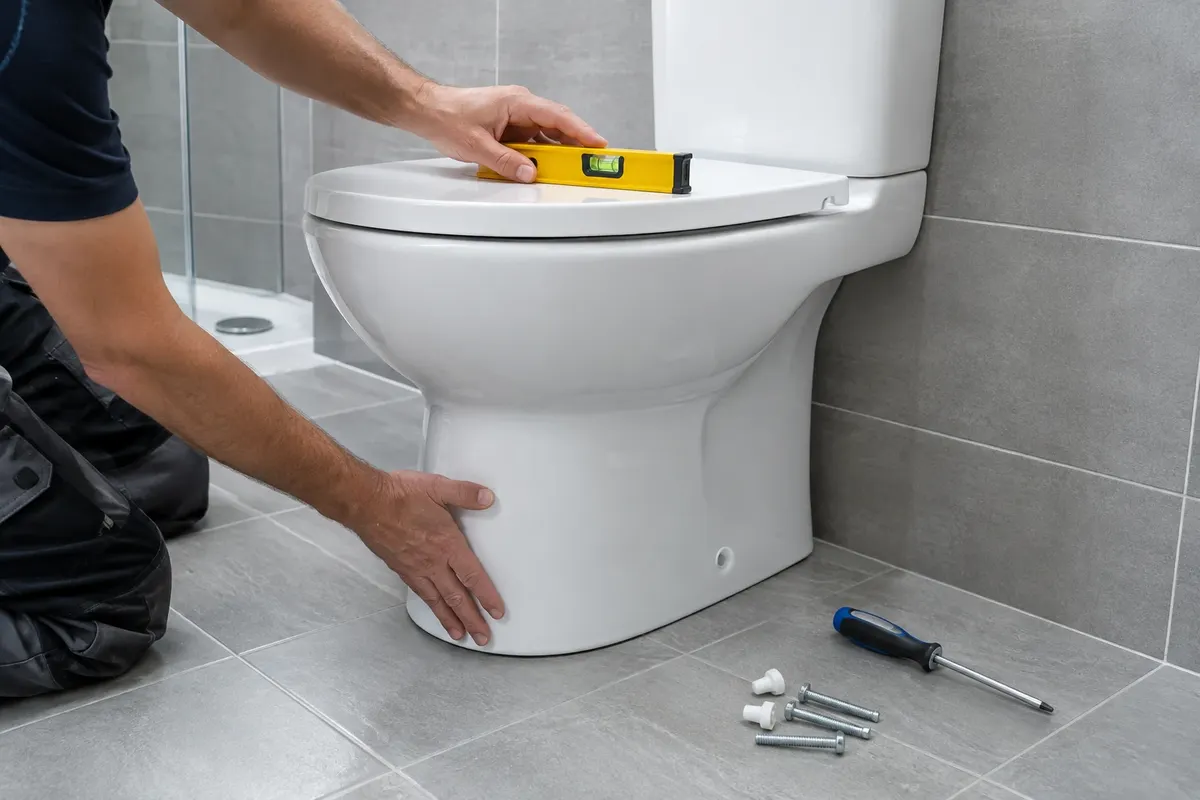
- Install the new seal, connect the bowl, level it with a spirit level, and screw it down.
- Install the cistern according to the instructions, connect the water, and check for leaks.
- Seal the joint between the bowl and the floor with sanitary silicone according to the manufacturer's instructions.
You can find close-coupled toilets and floor-standing toilets at vkupelni.sk in the Floor-Standing Toilets and Close-Coupled Toilets category. To see how a complete toilet or bathroom can look after replacement, check the gallery of bathrooms or design them in the 3D bathroom planner.
Sources: UBC/Sapho – installation guide for the Dynasty close-coupled toilet (bottom waste 215 ± 15 mm from the wall with a 90° bend, height of the centre of the rear waste 180 mm, straight or eccentric connection), Jika – product catalogue (Lyra plus close-coupled toilet with horizontal, vertical, and angled waste 630 × 360 × 400 mm, Deep 650 × 360 × 430 mm, Laufen waste bends for distances of 70 to 220 and 220 to 305 mm), Cersanit Parva (610 × 350 mm, 3/6 l), Sapho Handicap (675 × 375 mm, bowl height 470 mm), our articles Small WC and Wall-Hung or Close-Coupled Toilets.
Terms in the dictionary: Close-coupled toilet · Installation wall · Soil stack (riser) · Fall (gradient) · Wall-hung toilet · Installation frame (concealed cistern frame)
Frequently Asked Questions
How do I know if I have rear or bottom waste?
Look behind the toilet. If the pipe from the bowl goes into the wall, you have rear (horizontal) waste. If the bowl stands above an opening in the floor and the pipe is not visible from the side, you have bottom (vertical) waste.
What do VO and SO mean for toilets?
VO is horizontal (rear) waste into the wall, SO is vertical (bottom) waste into the floor. Abbreviations are used by brands like Jika and Kolo in product names.
What is a toilet with vario waste?
A bowl that can be connected horizontally into the wall or vertically into the floor through an elbow. It’s suitable for replacements when you’re unsure of the type of waste.
How high should the rear waste be for a close-coupled toilet?
It depends on the bowl – for example, with the close-coupled toilet Sapho Dynasty, the centre of the waste is 180 mm above the floor. A small difference can be compensated with an eccentric sleeve; the exact height can be found in the technical drawing of the bowl.
How far from the wall should the bottom waste be?
According to the bowl. For example, the Sapho Dynasty with a 90° elbow needs the centre of the waste to be 215 mm ± 15 mm from the wall. Manufacturers offer elbows for various distances.
Can I put a toilet with rear waste on a floor waste?
Only with a vario bowl and elbow or after modifying the plumbing. Changing the type of waste is work for a plumber.
AI Advisor
Have a question on the topic? Ask the advisor – they will respond based on TGB Kúpeľne articles.
AI advisor – answers are generated by artificial intelligence from TGB Kúpeľne articles and may contain errors.
Bathroom design
These are tips. We will draw your bathroom for you.
In the 3D bathroom planner, you can design your bathroom yourself – for free and without registration. If you want assurance, we will prepare a photorealistic custom visualisation based on actual dimensions and specific tiles in the studio. It's free with a purchase.
Online design for free Custom visualisation
TGB Kúpeľne Studio · Bratislavská 71, Senec · Mon–Fri 8:00–12:00 and 12:30–17:00, Sat 9:00–12:00 · Map