Tiles
Bathroom without wall tiles: what to replace wall tiles with and where you can't avoid them
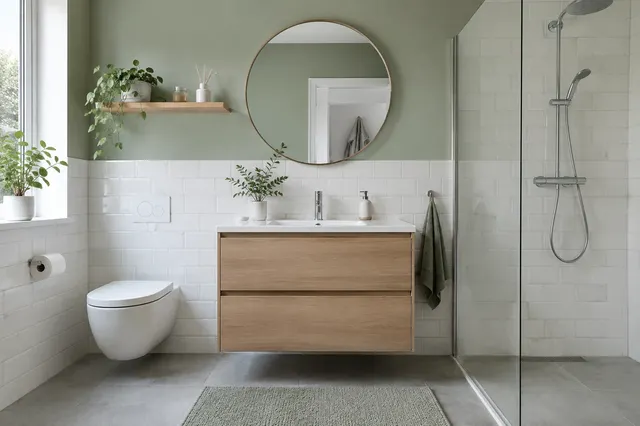
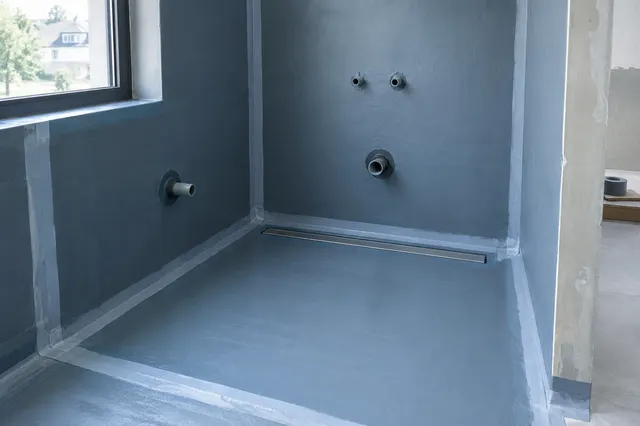
A bathroom without wall tiles does not mean a bathroom without protection. In the shower, by the bath and behind the sink, you need a waterproof layer and a surface that can withstand water – wall tiles, a liquid waterproofing membrane, panels or glass. For the other walls, a quality washable paint is sufficient. The most common solution is to have wall tiles only in the shower and paint or a liquid waterproofing membrane everywhere else.
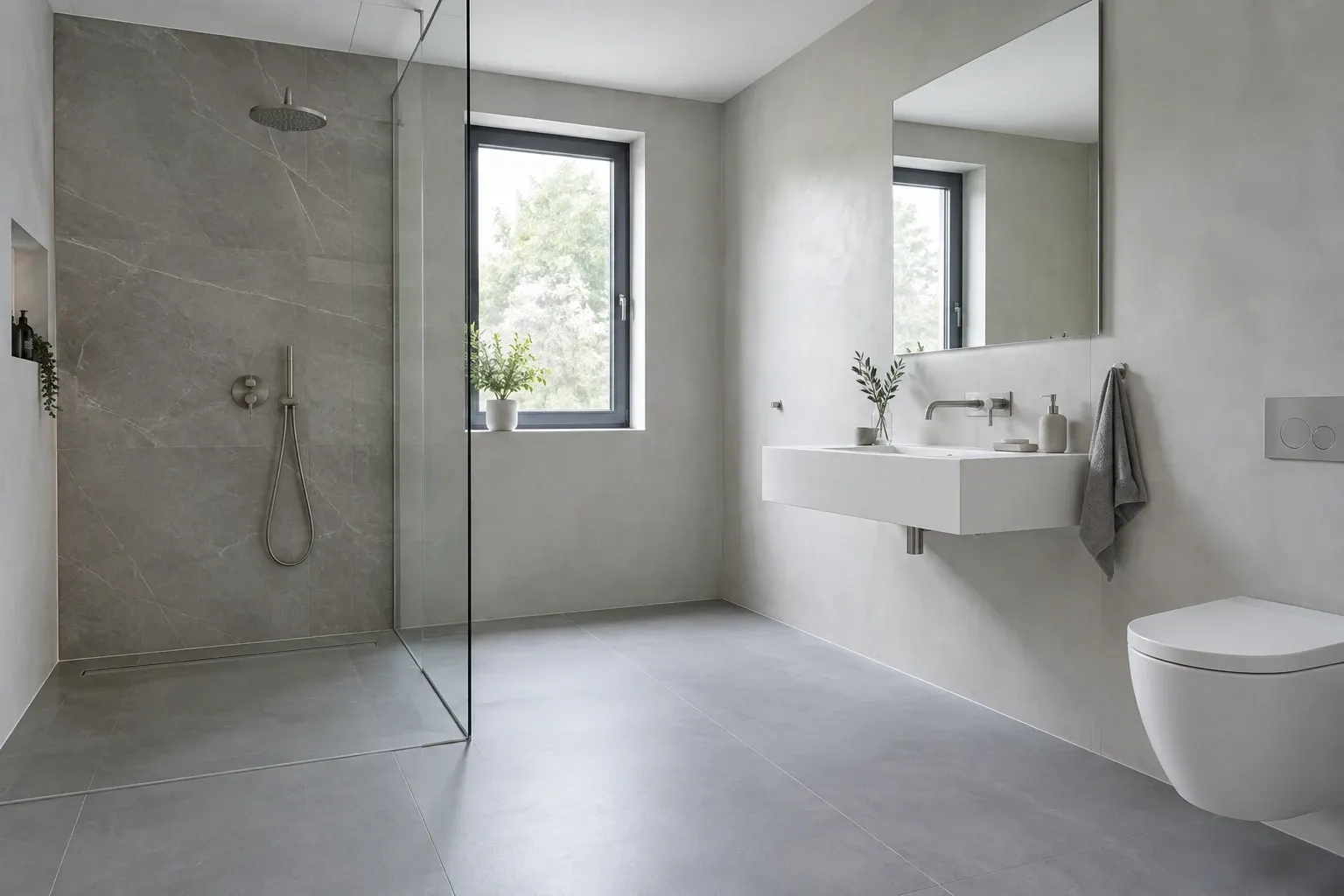
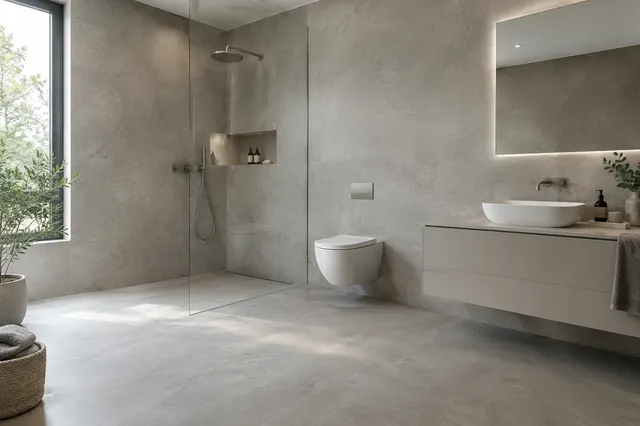
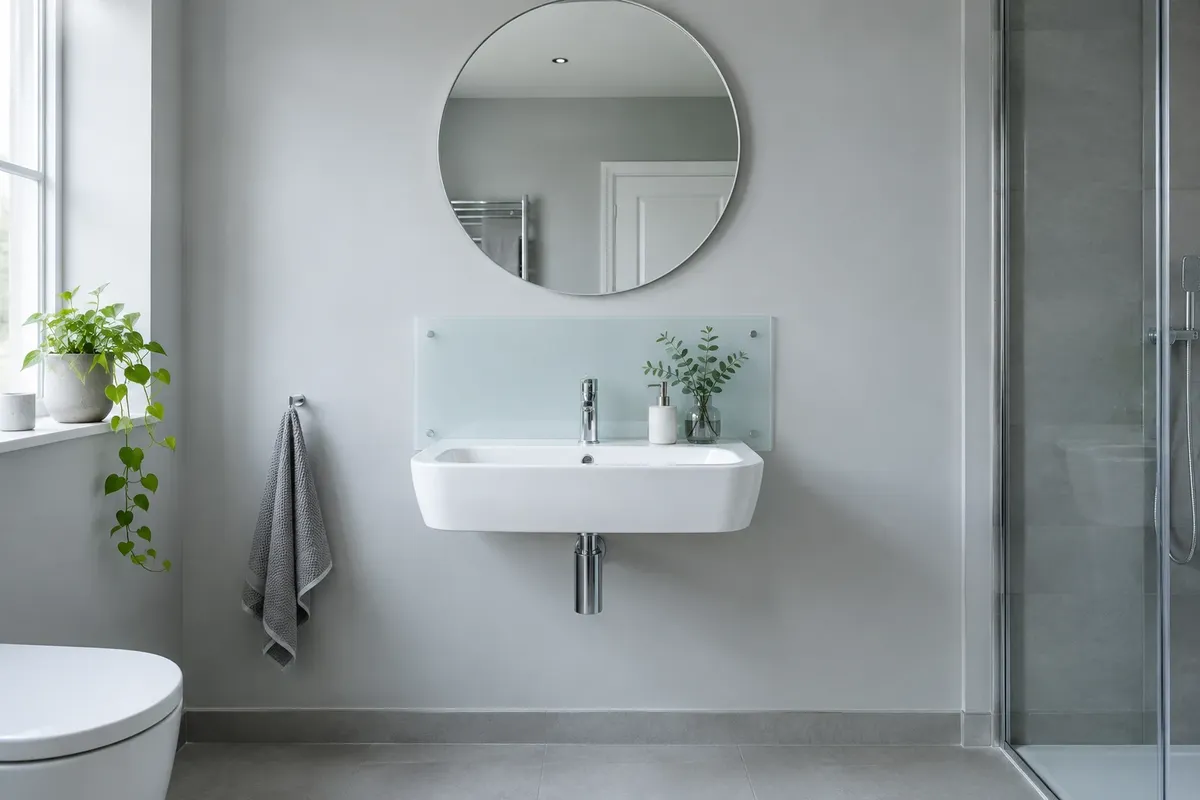
Illustrative image: bathroom with grey plaster on the walls, glass shower wall and one tiled wall in the shower
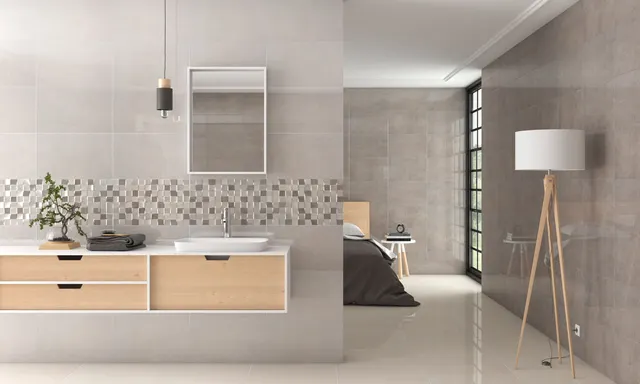
Less wall tiles mean fewer joints, a different atmosphere, and often faster work. However, water does not ask what surface you have chosen. Where paint can be used instead of wall tiles and to what height to tile, is clearly shown in the table in the article Paint for bathroom walls. Heights of wall tiles according to location can be found in the chapter Installation heights. Here we compare wall tile replacements and how to plan a bathroom without wall tiles.
Where you can't avoid wall tiles or their replacement
Everywhere water directly splashes, you need two layers: a waterproof layer on the substrate and a surface that can withstand water and is cleanable.
- Shower – walls at least up to the height of the screen, higher if the shower has no screen, and the shower floor.
- Wall by the bath, if you shower in the bath.
- Behind the sink – a strip where water splashes while washing.
- Floor – water stands here after showering and while mopping.
The waterproof layer consists of waterproofing – what it is and how it is done is described in the article Liquid waterproofing.
What to replace wall tiles with: comparison
| Surface | Where it is suitable | What under it | Repair |
|---|---|---|---|
| washable paint, class 1 or 2 (EN 13300) | walls out of reach of water, ceiling | flat wall, primer | easy to repaint |
| microcement and decorative liquid waterproofing membranes | walls, floor, and shower | in the shower waterproofing, topped with protective lacquer | demanding, repairs are often visible |
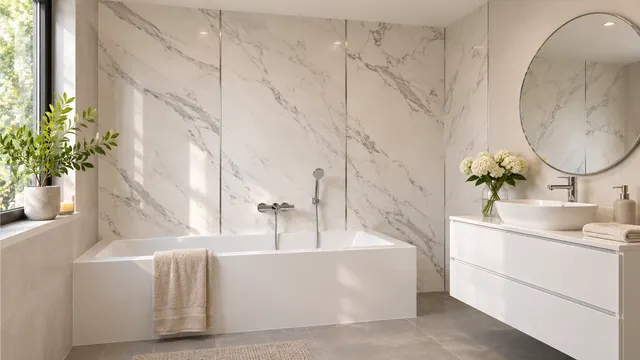
| large panels (SPC, composite) | dry walls, in the shower only systems designed for that | flat wall, joint sealing according to the system | panel replacement |
| tempered or lacquered glass | behind the sink, shower wall | solid flat substrate, adhesive according to the glass manufacturer | replacement of the entire piece |
| wallpaper for humid areas | dry walls, WC | flat wall, moisture-resistant adhesive | strip replacement |
| wood | out of water reach, well-ventilated bathroom | protective oil or varnish | sanding, new coat |
Level-access shower
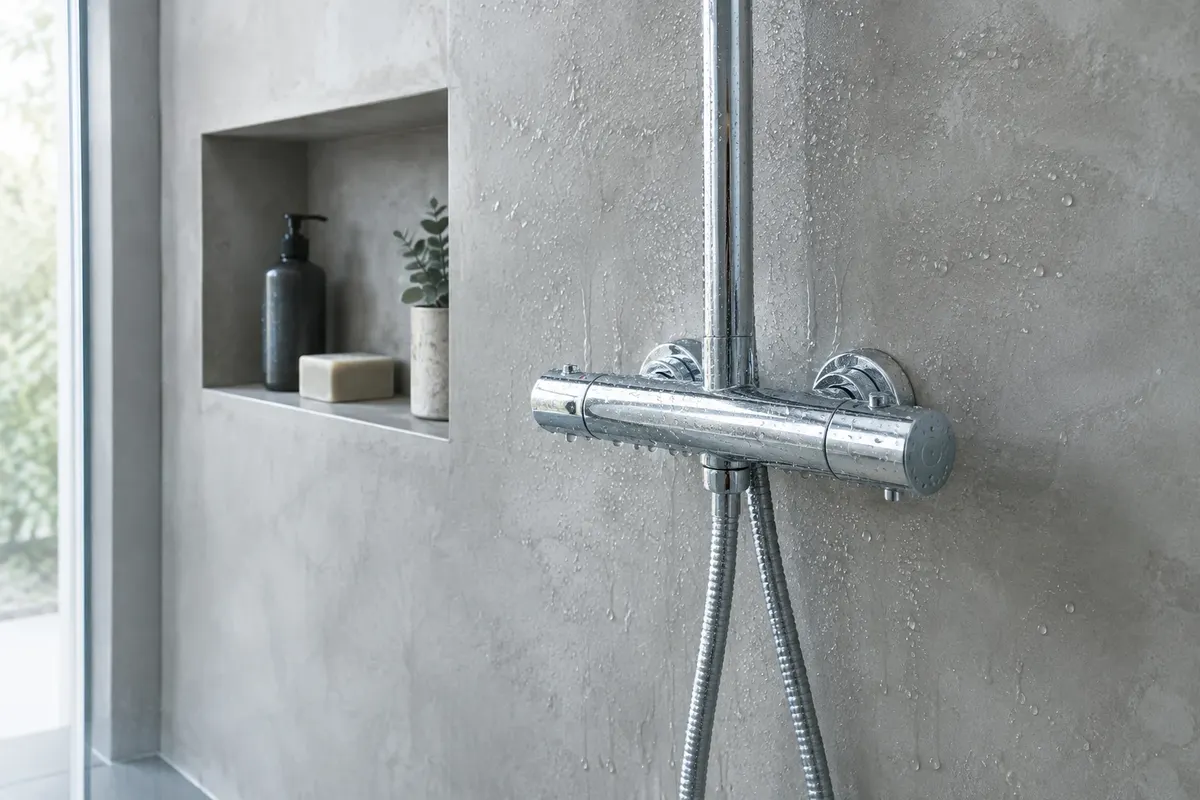
In the shower, you have four options. Each relies on waterproofing or a system that replaces it.
- Microcement on waterproofing – a continuous surface of wall and floor without joints. Requires a flat substrate, an experienced craftsman, and a protective varnish. More in the article Bathroom without joints.
- Panels designed for the shower – quick installation, but only the system expressly designated by the manufacturer for the shower, with sealed joints and penetrations. Comparison is in the article PVC panels and self-adhesive tiles.
- Glass – tempered safety glass as a shower wall or splashback behind the tap. Smooth, but limescale is visible on it.
- Wall tiles only in the shower – the safest compromise. With large format, for example, 120 × 120 cm or 160 × 320 cm, there are minimal joints, and the rest of the bathroom can be without tiles.
Floor
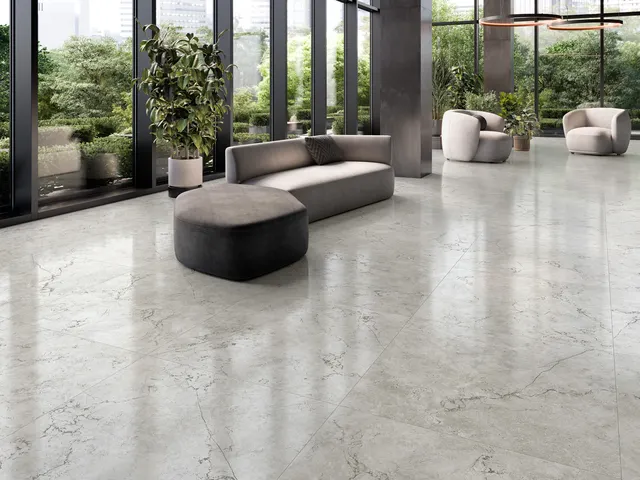
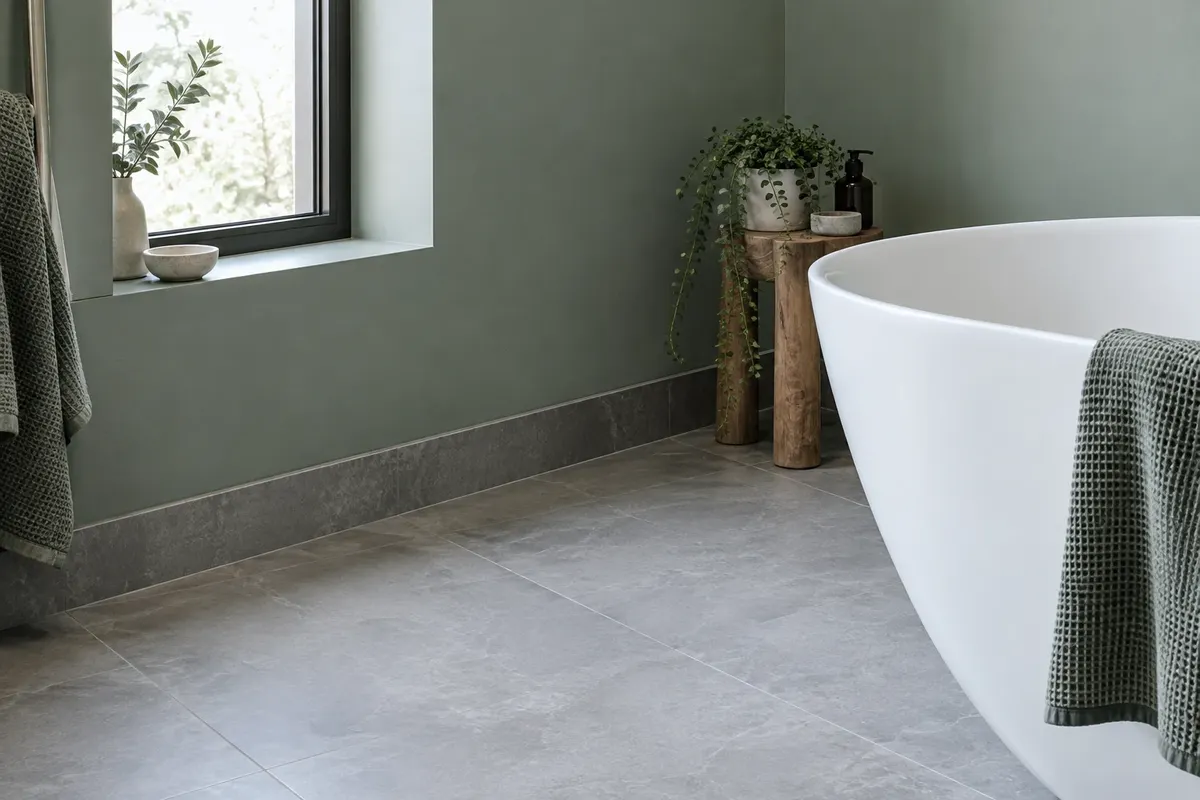
Floor tiles are still the most durable on the bathroom floor – they withstand standing water, cleaning agents, and falling objects. Microcement on the floor looks continuous, but its protective varnish should be used sparingly – clean without acids and abrasives and renew according to the manufacturer. Use vinyl floors only where the manufacturer allows them in the bathroom, and not in the shower. With every surface, consider the junction between the floor and the wall: paint at the floor level can quickly get damaged from mopping, so a skirting board made of floor tiles or a trim is suitable.
Walls out of water: paint, wallpaper, wood
For walls that do not get splashed, a paint with wet abrasion resistance class 1 or 2 according to EN 13300 is sufficient. The label "for bathrooms" on the can is not enough; the class in the technical data sheet matters. Wallpaper for humid areas and wood are suitable for a well-ventilated bathroom and out of water reach. For a decorative wall behind the bath without showering, you can also use a plaster or large panel.
Example: how much wall tiles will remain
A bathroom of 2.0 × 2.5 m with a height of 2.6 m has walls with an area of about 23.4 m². After subtracting the door of 0.8 × 2.0 m, approximately 21.8 m² remains – that’s how much you would tile up to the ceiling. If you tile only the shower of 90 × 120 cm in the corner up to a height of 2.0 m and the strip behind the sink of 60 × 60 cm, the tiling will be about 4.6 m². The remaining approximately 17 m² can be paint or plaster. Reserve for cutting should only be calculated from the tiled area – use tile quantity calculation to help.
What to consider when planning
- Flat walls – paint, plaster, and glass will show every unevenness. Plan for substrate leveling.
- Ventilation – without tiles, the wall is more sensitive to moisture. A fan with a timer or hygrometer is essential, more in the article Bathroom fan.
- Surface boundaries – where the tiles or panel end and the paint begins. A finishing strip or aligned edge looks better than an uncertain line.
- Order of work – waterproofing, then surface in the shower, finally paint on dry walls.
- Maintenance – use a squeegee on the plaster and glass after showering to prevent limescale buildup.
Advantages and disadvantages
- Advantages: fewer joints, continuous surfaces, easier colour change of walls, lower material cost with paint.
- Disadvantages: more sensitive surfaces, more challenging wall preparation, more work with plaster, and the need for an experienced craftsman, repairs can be visible.
Common mistakes
- Paint in the shower or behind the bath where showering occurs.
- Plaster without waterproofing – microcement is not a waterproof layer.
- Panel not designated by the manufacturer for the shower, or unsealed joints.
- Paint all the way to the floor without a skirting board – after a few months, it gets scratched.
- Bathroom without a fan – mould will quickly appear on the paint.
Sources: EN 13300 (wet abrasion resistance of paint), EN 14891 (waterproofing membranes under tiles), STN EN 12150-1 (tempered safety glass), technical data sheets and instructions from manufacturers of plasters and panels; our articles Paint for bathroom walls, Bathroom without joints, PVC panels and self-adhesive tiles, and the chapter Installation heights.
Terms in the dictionary: Waterproofing · Primer · Microcement · Tempered safety glass (ESG) · Large-format tiles · Vinyl floor (SPC)
Frequently Asked Questions
Can a bathroom be completely without wall tiles?
Yes, but in the shower, by the bath and behind the sink you need waterproofing and a surface that can withstand water – a liquid waterproofing membrane, panels designed for showers or glass. For dry walls, washable paint is sufficient.
What to replace wall tiles with in the shower?
Microcement on waterproofing, panels specified by the manufacturer for showers, or toughened glass. The safest option is to keep wall tiles only in the shower and leave the rest of the bathroom without them.
What colour to use in the bathroom instead of wall tiles?
A paint with wet abrasion resistance class 1 or 2 according to EN 13300, only for walls out of reach of water. The class in the technical data sheet matters, not the label on the can.
Is microcement waterproof?
No. Microcement is a surface, not a waterproof layer. In the shower, it requires waterproofing underneath and a protective lacquer on top.
What to put on the bathroom floor without floor tiles?
Floor tiles are the most durable. Microcement looks seamless, but its protective lacquer needs careful cleaning and should be renewed according to the manufacturer. Vinyl is only allowed where the manufacturer permits it in the bathroom, and not in the shower.
Is a fan necessary in a bathroom without wall tiles?
Yes. Paint and liquid waterproofing membranes are more sensitive to moisture than wall tiles, so you need a fan with a timer or hygrometer.
AI Advisor
Have a question on the topic? Ask the advisor – they will respond based on TGB Kúpeľne articles.
AI advisor – answers are generated by artificial intelligence from TGB Kúpeľne articles and may contain errors.
Bathroom design
These are tips. We will draw your bathroom for you.
In the 3D bathroom planner, you can design your bathroom yourself for free. We will prepare a custom visualisation with specific wall tiles for you in the studio – free of charge with your purchase.
Online design for free Custom visualisation
TGB Kúpeľne Studio · Bratislavská 71, Senec · Map