Tiles
Wall paint for the bathroom: washable, mould-resistant and where it can replace wall tiles
In the bathroom, paint can be used wherever water does not splash: above the tiles, on the ceiling, on walls out of reach of the shower and bath, and in the WC. Choose washable paint with a wet abrasion resistance class of 1 or 2 according to EN 13300 and for poorer ventilation, paint with mould-resistant treatment. In the shower, behind the bath with a shower and directly behind the sink, paint cannot replace tiles – there is no waterproofing. Even the best paint will not solve mould if the bathroom is not ventilated.
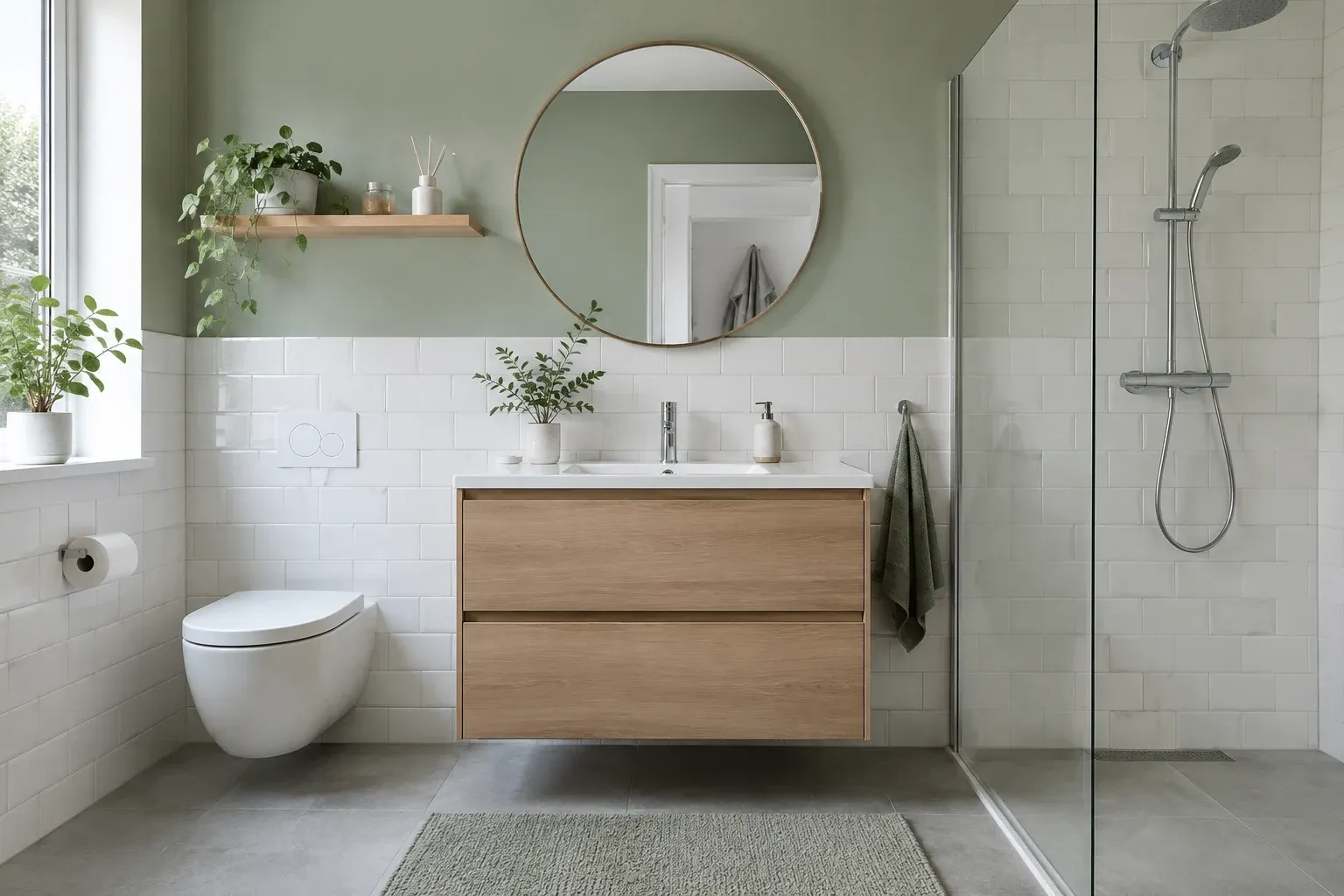
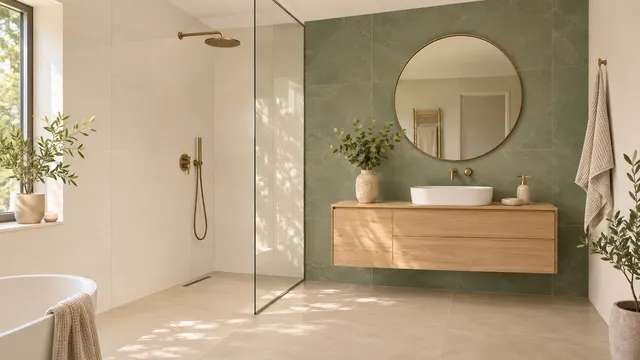
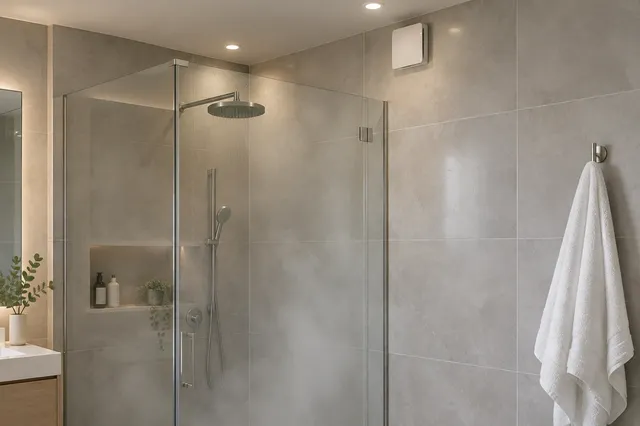
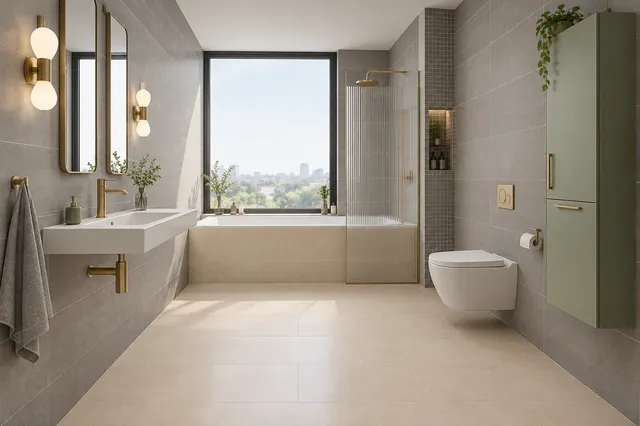
Illustrative image: Bathroom with tiles up to 120 cm and the wall above painted in a soft washable grey-green colour
Having wall tiles throughout the bathroom from floor to ceiling is not mandatory. More and more bathrooms have tiles only where there is water, and the rest of the walls are painted. This makes the bathroom feel cozier, tiles cost less, and you can easily change the colour. However, the bathroom is a humid space, so ordinary interior paint is not sufficient. In the article, you will find what paint to choose, where it can replace tiles, how to prepare the wall, and why paint alone won't solve mould issues.
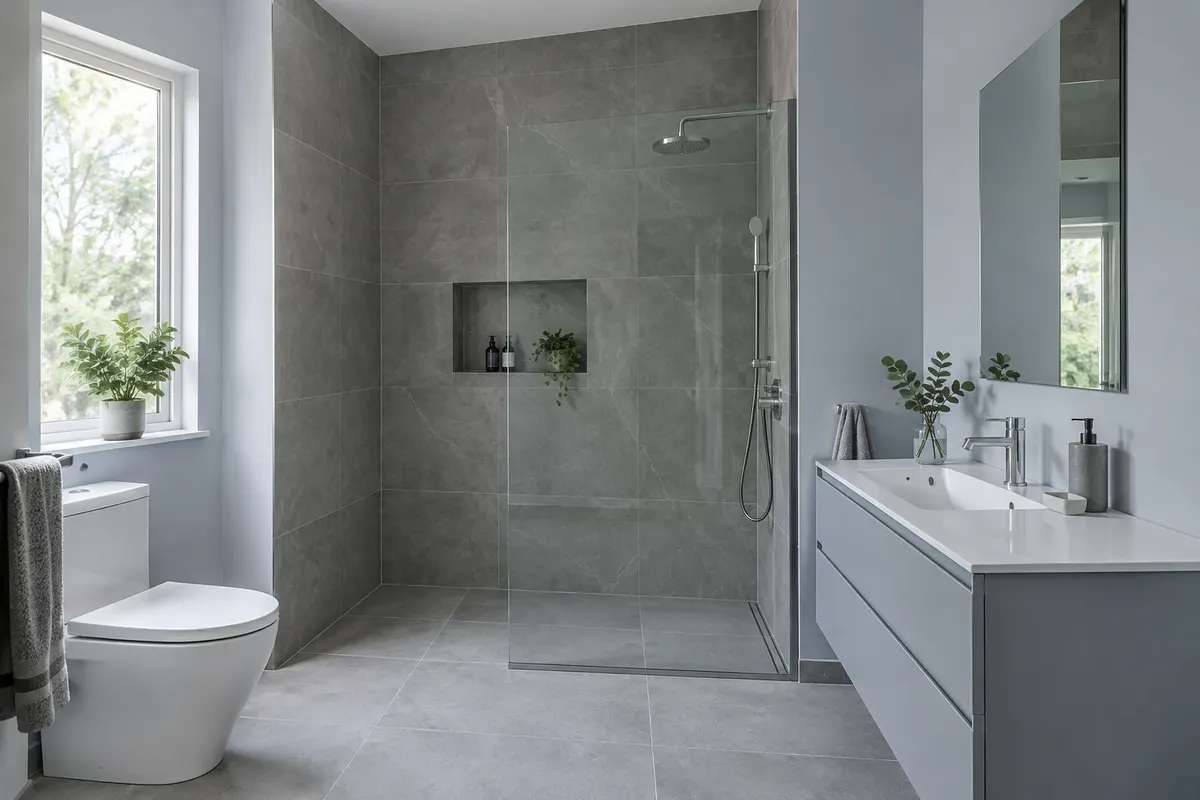
Where paint can replace wall tiles
| Location | Colour | Recommendation |
|---|---|---|
| shower, shower enclosure, walk-in | no | tiles at least to the height of the screen, around 200 cm, or to the ceiling, below which is waterproofing |
| wall by the bath when showering in the bath | no | tiles to the height of the shower, below which is waterproofing |
| wall by the bath without showering | above the tiles, yes | wall tiles at least above the edge of the bath, where water splashes |
| behind the sink | above the tiles, yes | wall tiles up to around 120 cm or to the height of the mirror, or a glass panel |
| walls out of reach of water | yes | washable paint class 1 or 2 |
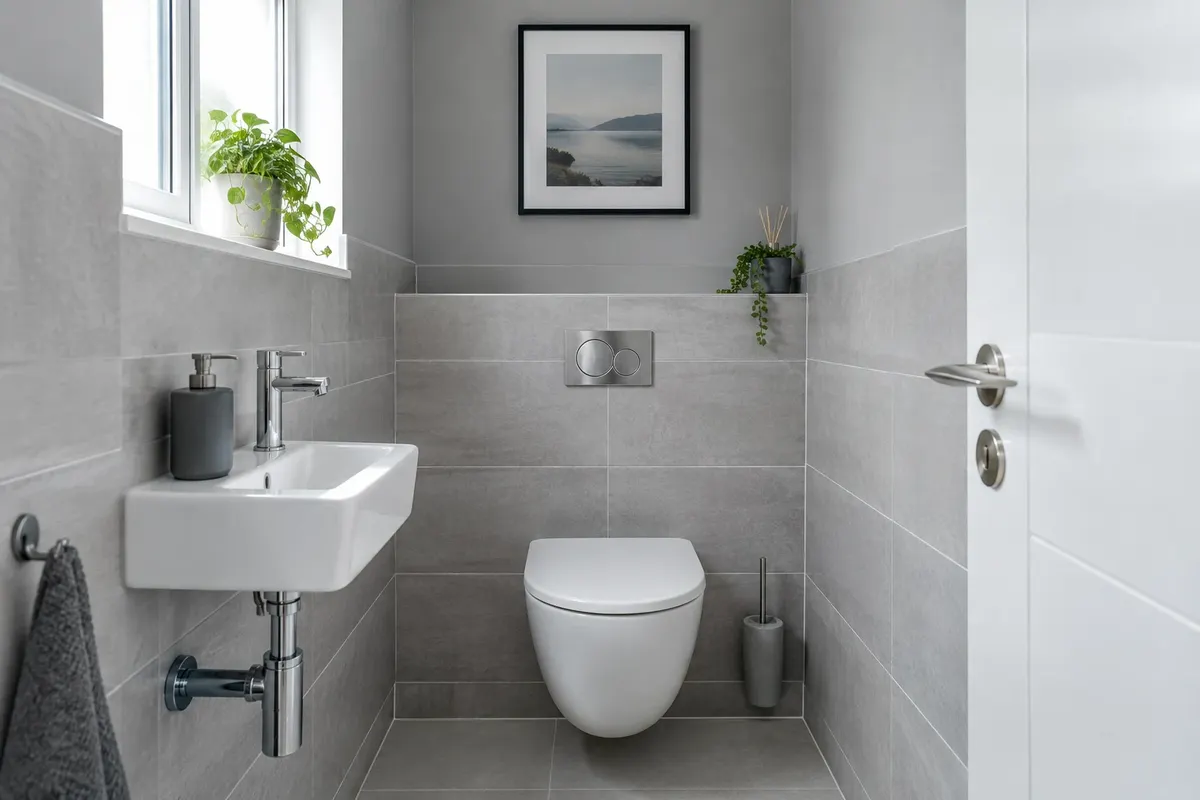
| WC | yes | wall tiles up to the height of the installation wall around 120 cm, above it paint |
| ceiling | yes | mould-resistant paint, vapour-permeable |
The combination of "wall tiles below, paint above" works best when the boundary of the tiles is in a straight line throughout the room – for example, at the height of the splashback or above the door frame. You can find out how to calculate the areas of wall tiles for partial tiling in the article How much wall tiles to buy.
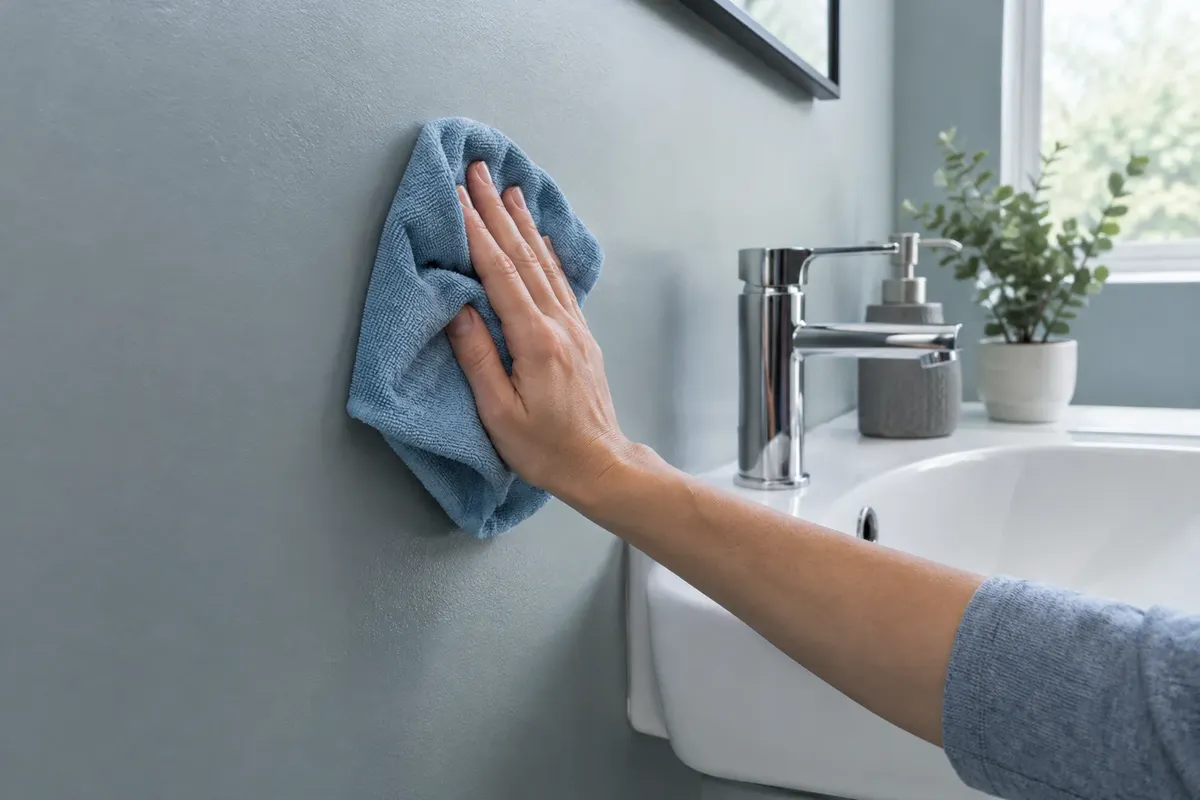
Washability: class according to EN 13300
On the can or in the technical data sheet of the paint, look for the information wet abrasion resistance according to standard EN 13300. It is tested by machine scrubbing the painted sample with a soapy abrasive pad and measuring how much paint is lost.
| Class | Loss of paint | What this means in the bathroom |
|---|---|---|
| 1 | less than 5 µm after 200 cycles | most durable, washable even more frequently |
| 2 | 5 to 20 µm after 200 cycles | washable, suitable for bathroom and kitchen |
| 3 | 20 to 70 µm after 200 cycles | partially washable, rather for walls further from water |
| 4 | less than 70 µm after 40 cycles | unsuitable for the bathroom |
| 5 | 70 µm and more after 40 cycles | unsuitable for the bathroom |
For the bathroom, we recommend class 1 or 2. Paints labelled as "washable" have class 3 or better according to EU eco-label rules – this is the lower limit for bathrooms. The class number is more important than the label "for bathrooms" on the can: for example, one paint sold for bathrooms and kitchens has only class 3 in the technical data sheet, meaning "partially washable".
Mould-resistant paint
Mould-resistant (fungicidal) paints contain substances that prevent mould growth on the surface of the coating. They are suitable for ceilings and walls in bathrooms where ventilation is poor – for example, in a bathroom without a window. Some manufacturers also offer a mould-resistant additive for regular paint; Primalex states that it should be combined with paints of abrasion class 3 or better.
However, mould occurs where moisture lingers for a long time – on cold walls, in corners, and behind furniture. If the bathroom is not ventilated, it will also appear on mould-resistant paint, just later. Therefore, first address the cause: a fan with a timer or humidity sensor, ventilation after showering, and a warm wall. More in the articles Mould in the bathroom and Bathroom fan.
Matte, satin or gloss
- Matte paint – gives a calm effect and hides wall imperfections. However, regular matte paint is harder to clean; in the bathroom, choose matte paint with class 1.
- Satin and semi-gloss – easier to wipe, a good compromise for the bathroom.
- Glossy – easiest to clean, but highlights every wall imperfection. Better suited for smaller areas.
Preparing the wall and painting
- Remove mould with a mould remover according to the instructions and let the wall dry. Do not repaint mouldy areas.
- Repair the plaster – fill cracks and holes, sand down imperfections.
- Prime – primer will unify the water absorption of the substrate. Mould-resistant primer is suitable for areas affected by mould.
- Apply in two coats according to the technical data sheet, adhering to the drying time between coats.
- Let it cure – ventilate the bathroom during drying and do not shower in it before the manufacturer recommends.
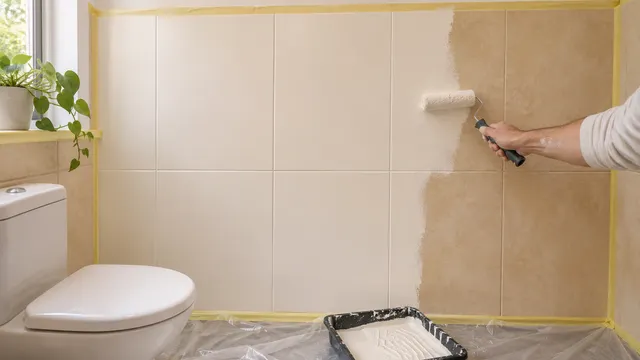
- Finish the edge with the wall tiles straight – with adhesive tape or a trim. The joint between the wall tiles and paint can be covered with a finishing profile.
For new drywall partitions in the bathroom, moisture-resistant boards are used; waterproofing still belongs under the wall tiles in wet zones. More in the article Drywall in the bathroom.
What shade to choose
- Shade from the wall tiles – the wall above the wall tiles in the tone of the wall tiles will extend the area and make the bathroom feel larger.
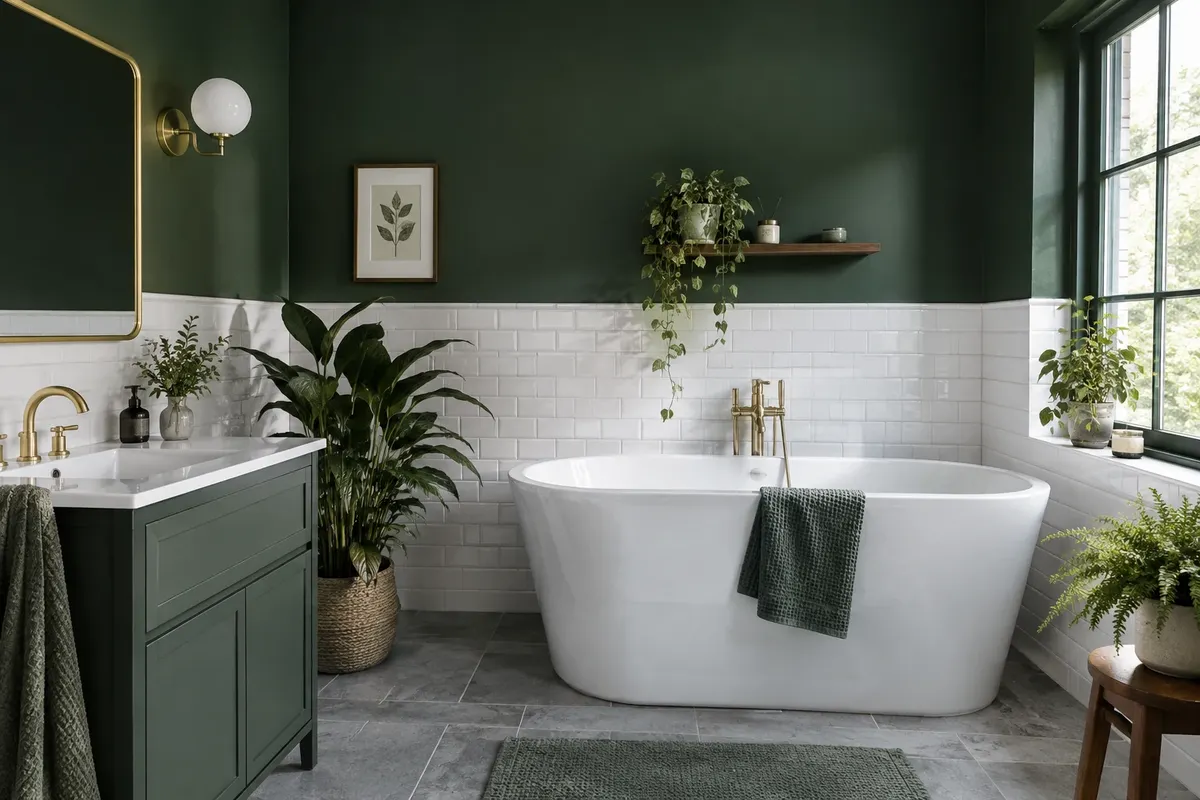
- Contrasting colour – a richer shade above light wall tiles will make the bathroom a cosy room. Suitable colours include green, blue, dark blue or dark grey.
- Ceiling – a light ceiling reflects light. In a low bathroom, keep the ceiling lighter than the walls.
- Sample on the wall – the paint looks different in daylight and under the light above the mirror. Paint a test area of at least 50 × 50 cm.
You can find inspiration in the articles Bathroom wall tile colours and Green bathroom. If you want to repaint the wall tiles themselves, check out the article Paint for wall tiles.
Alternatives to paint and wall tiles
- Glass panel behind the sink – protects the wall from splashes while keeping the paint behind it visible.
- Render (such as microcement) – a seamless surface without joints; in wet zones, it requires the manufacturer's system including waterproofing and lacquer.
- Large-format wall tiles only in the shower – one or two slabs, the rest of the wall painted. See Bathroom without joints.
Common mistakes
- Regular interior paint without wet abrasion class information.
- Paint in the shower or on the wall by the bath where showering occurs.
- Repainting mould without removal and without addressing ventilation.
- Painting before the plaster or skim coat dries.
- Uneven boundary between the wall tiles and paint that looks "unfinished".
Sources: EN 13300 and EN ISO 11998 (wet abrasion resistance classes 1 to 5 and scrubbing test), EU decision on eco-label for paints (washable paints class 3 or better), technical sheets: Primalex Mykostop and Mykostop prevention (anti-mould paint and additive for class 3 and better paints), Dulux Quick Renovation Bathroom (without constant water contact and long-term condensation), Hornbach bathroom and kitchen paint (class 3), our articles How much wall tiles to buy and Mould in the bathroom.
Terms in the glossary: Walk-in shower · Waterproofing · Installation wall · Liquid waterproofing membrane · Fan run-on · Primer
Frequently Asked Questions
What colour to use in the bathroom?
Washable paint with a wet abrasion resistance class of 1 or 2 according to EN 13300. For poorer ventilation, use paint with mould-resistant treatment or with mould-resistant additives.
Can paint be used instead of wall tiles in the bathroom?
On walls out of reach of water, yes – above the tiles, on the ceiling and in the WC. In the shower, by the bath with a shower and just behind the sink, paint cannot replace tiles because there is no waterproofing.
What does class 1 mean for paint?
The highest resistance to wet abrasion according to EN 13300 – after 200 cycles of scrubbing, less than 5 µm of paint is lost. Class 2 is still washable, class 3 is only partially washable.
Does mould-resistant paint help against mould?
It slows the growth of mould on the surface, but if the bathroom is not ventilated, mould will return. First address ventilation and wall temperature, then paint.
To what height should tiles be installed and where to paint?
In the shower at least to the height of the screen, around 200 cm, or to the ceiling. Behind the sink around 120 cm or to the height of the mirror, in the WC to the height of the installation wall. Above that, paint can be used.
Matte or glossy paint for the bathroom?
Satin or semi-matt is the easiest to wipe and does not highlight imperfections. Matte must have class 1 to be washable.
AI Advisor
Have a question on the topic? Ask the advisor – they will respond based on TGB Kúpeľne articles.
AI advisor – answers are generated by artificial intelligence from TGB Kúpeľne articles and may contain errors.
Bathroom design
These are tips. We will draw your bathroom for you.
In the 3D bathroom planner, you can design your bathroom yourself – for free and without registration. If you want assurance, we will prepare a photorealistic custom visualisation based on actual dimensions and specific tiles in the studio. It's free with a purchase.
Online design for free Custom visualisation
TGB Kúpeľne Studio · Bratislavská 71, Senec · Mon–Fri 8:00–12:00 and 12:30–17:00, Sat 9:00–12:00 · Map