Inspiration
Plants for the bathroom: which ones withstand humidity and low light
Plants from tropical forests are suitable for the bathroom, as they enjoy humid air and can tolerate indirect light – for example, peace lily, nephrolepis fern, calathea, aspidistra, or Phalaenopsis orchid. However, no plant can survive long without daylight; in a bathroom without a window, a grow light is needed or plants should be rotated with a spot by the window. Plants do not reduce humidity in the bathroom – ventilation remains necessary. If you have a cat or dog, choose plants that the ASPCA lists as non-toxic.
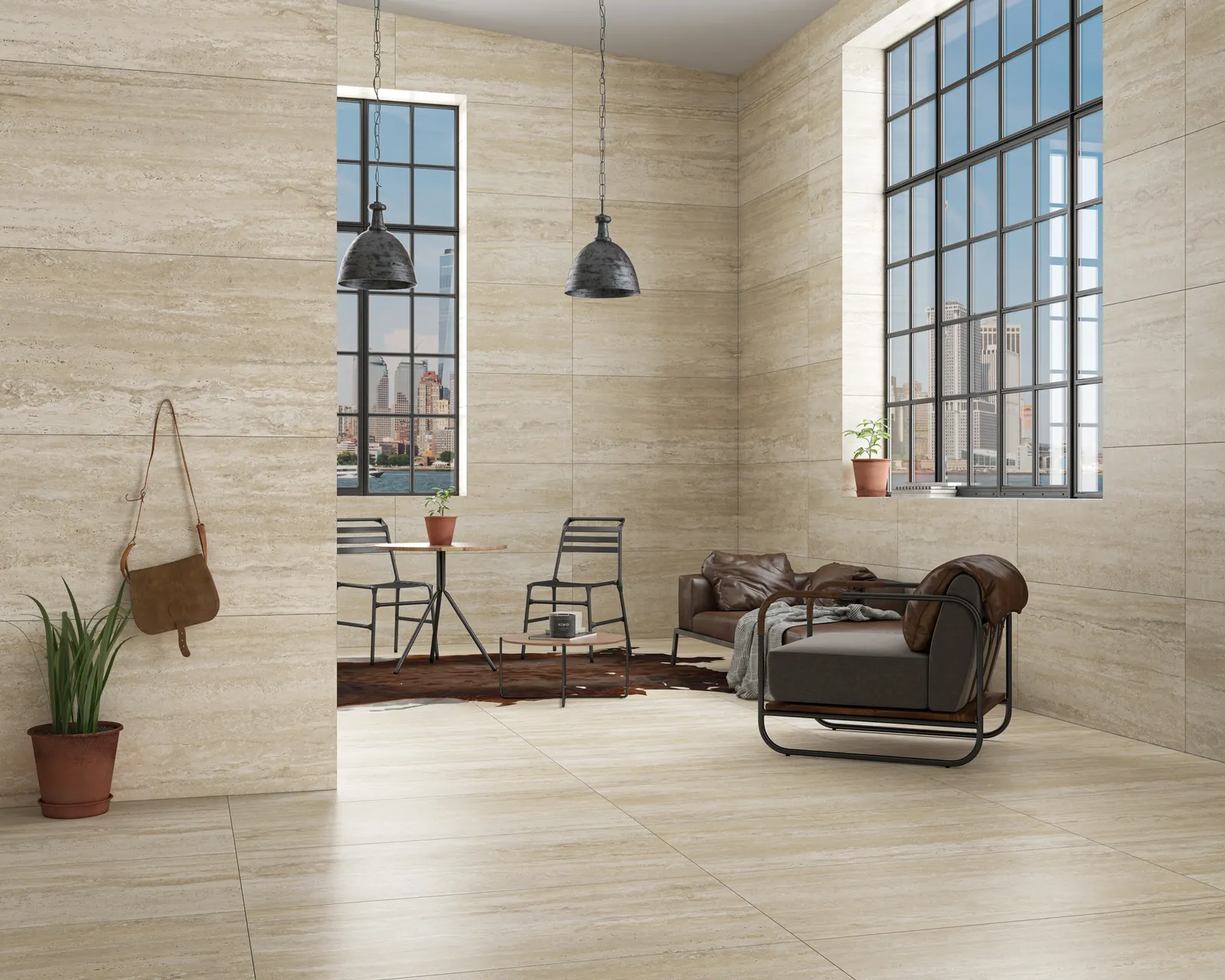
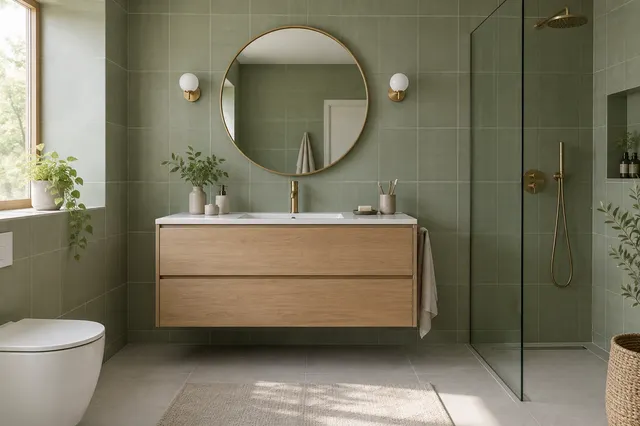
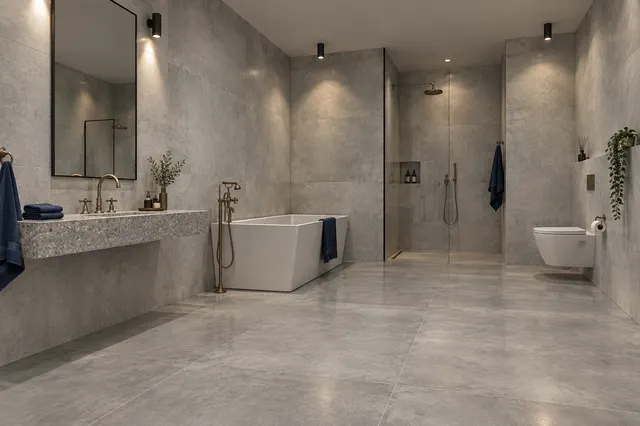
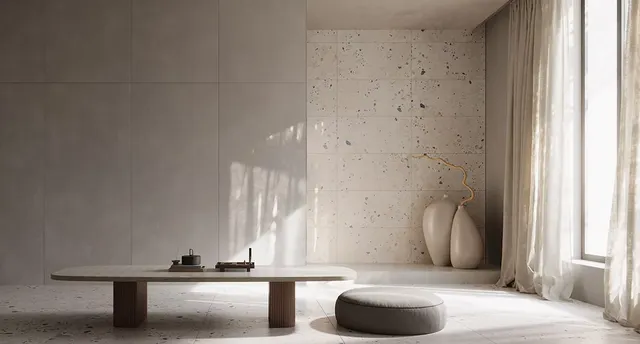
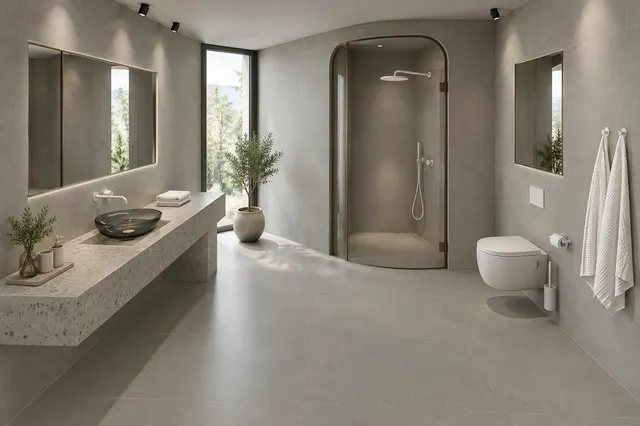
In the photo: Ecoceramic Valentino
Plants make the bathroom a more pleasant place – the green colour is calming and complements wall tiles that imitate wood or stone. However, the bathroom is not suitable for every plant: it is humid, the temperature changes throughout the day, and there is often little light. We bring you a list of plants that can tolerate such conditions, tips for a bathroom without a window, where to place plants, how to water them, and what to consider if you have pets at home.
What helps and harms plants in the bathroom
| Condition | How it feels | What to do about it |
|---|---|---|
| humid air | beneficial for tropical plants, harmful for drought-resistant ones | choose plants from humid forests, not cacti |
| little light | the most common problem, the plant weakens and pales | a spot by the window, grow light |
| temperature changes | warm after a shower, cool at night and when ventilating | not right by the window in frost and not on the radiator |
| soap, spray, shampoo | settle on the leaves | keep plants away from the shower, wipe leaves occasionally |
Plants that thrive in humidity and low light
| Plant | What is needed | Cats and dogs (ASPCA) |
|---|---|---|
| spider plant (Chlorophytum) | bright spot or partial shade, low maintenance | non-toxic |
| Boston fern (Nephrolepis exaltata) | humid air, diffused light | non-toxic |
| cast iron plant (Aspidistra elatior) | tolerates very little light | non-toxic |
| calathea (Calathea) | humidity, diffused light without direct sunlight | non-toxic |
| chamaedorea, indoor palm (Chamaedorea elegans) | partial shade | non-toxic |
| Phalaenopsis orchid | bright spot without direct sunlight | non-toxic |
| tillandsia (Tillandsia) | grow without soil, need light | non-toxic |
| pothos (Epipremnum) | tolerates less light, climbing | toxic |
| peace lily (Spathiphyllum) | semi-shade, humidity | toxic |
| philodendron (Philodendron) | partial shade | toxic |
| sansevieria | low light, does not like overwatering | toxic |
To start, the spider plant and aspidistra are the most forgiving – they can withstand watering mistakes and lower light. Calathea and ferns are prettier but need constant humidity and do not like drafts or cold glass. The Phalaenopsis orchid blooms for a long time if it has light, and it thrives in the bathroom on a windowsill that does not get direct sunlight. Tillandsia only needs to be soaked or misted occasionally – in a bathroom with a window, they can thrive on the humid air after showering.
Zamioculcas is often recommended for dark places and can tolerate humidity, but it does not like waterlogged soil. If you have pets, check it – just like any other plant – on the ASPCA list. When buying, ask for the Latin name, as Slovak names can vary in stores.
Where to place plants in the bathroom
- Window sill – the most light. However, in winter, the glass cools, and cold air can reach the plant when ventilating, so move sensitive plants further from the window.
- Shelf or niche – an open shelf above the bathtub or next to the mirror. A heavy pot needs a securely anchored shelf. You can find ideas for shelves in the article Open shelves and niches in the bathroom.
- Hanging planter – spider plant and pothos look nice hanging from the ceiling, taking up no floor space. Anchor the hook in the ceiling according to the ceiling material.
- On the floor in the corner – a larger aspidistra or palm in a pot with a saucer, so water does not drip onto the floor tiles.
- No in the shower, where water and soap splash, not on the radiator, and not on a cabinet just above a socket or near a light fixture.
When watering, be careful with electricity – water must not drip onto sockets, switches, and light fixtures. If additional light for plants is added in the bathroom, its placement and covering should be assessed by an electrician according to the zones we describe in the chapter Electricity in the bathroom: zones and IP rating.
Bathroom without a window
No green plant can survive long-term without natural light, even those said to tolerate shade. You have three options:
| Solution | How to do it | What to consider |
|---|---|---|
| grow light | light above the plant on a timer, for several hours a day | outside zones 0 and 1, covering according to the zone, connection by an electrician |
| plant rotation | the plant is in the bathroom for a few weeks, then returns to the window | two identical plants for rotation |
| artificial plants or cut branches | eucalyptus or dry branches in a vase | they do not gather dust if rinsed occasionally |
How to light and ventilate a bathroom without a window is described in the article Bathroom without a window.
Watering and care
- Water according to the soil, not according to the calendar. In humid air, water evaporates from the pot more slowly. Water only when the surface soil is dry.
- Pot with a hole and saucer – in a pot without drainage, water stays around the roots and they rot.
- Occasionally shower the leaves with lukewarm water or wipe them to remove residues from sprays and soap.
- Fertilise less – a plant with less light grows more slowly and consumes fewer nutrients.
- Watch the soil – a white coating or smell from the soil indicates excessive moisture, water less.
Do plants help against humidity and mould?
No. Plants evaporate water from the pot through their leaves, so they actually add to the humidity in the bathroom. Ventilation is the only solution against mould – a window or a fan with a timer that removes steam after a shower. We describe how to choose a fan in the article Bathroom fan, and the causes of mould in the article Mould in the bathroom.
Plants and pets
Cats love to nibble on leaves, especially when the plant hangs low or stands on the floor. The American organization ASPCA maintains a list of toxic and non-toxic plants for cats, dogs, and horses. Non-toxic plants include spider plant, nephrolepis, aspidistra, calathea, chamedorea, Phalaenopsis orchid, and tillandsia. Pothos, peace lily, philodendron, and sansevieria are considered toxic by the ASPCA – if you have pets, keep them out of reach or do not buy them. If a pet eats part of a plant and behaves differently than usual, consult a veterinarian.
Plants and bathroom style
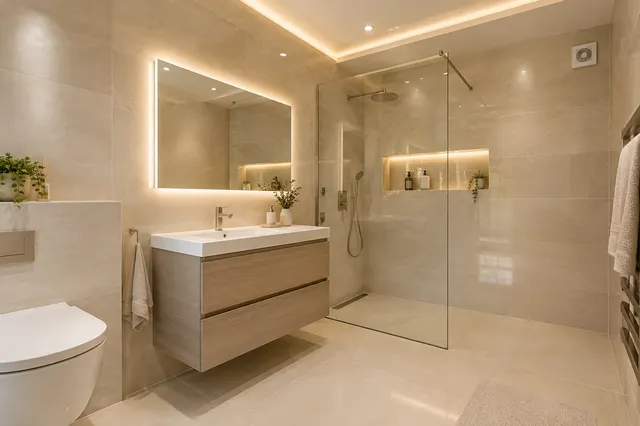
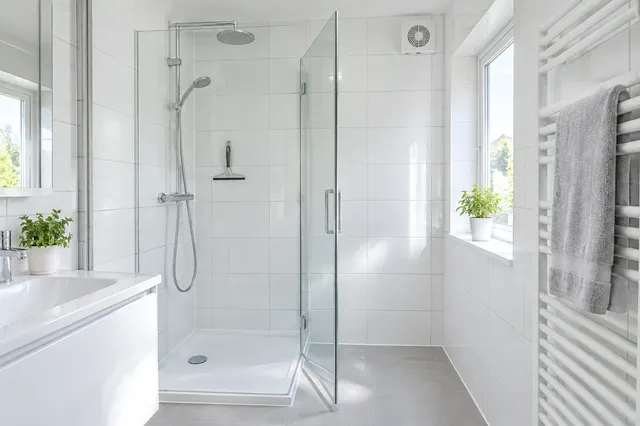
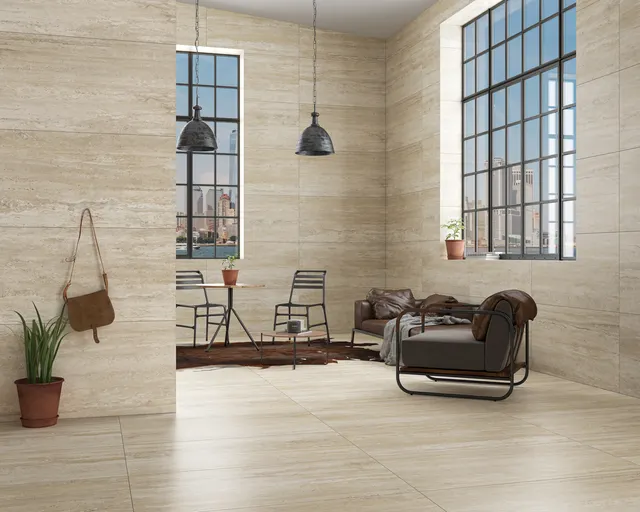
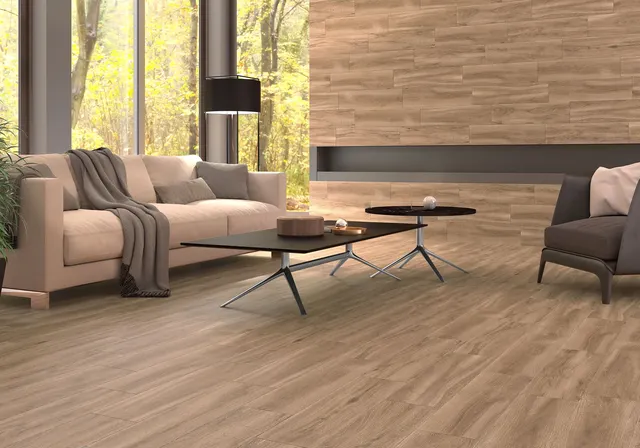
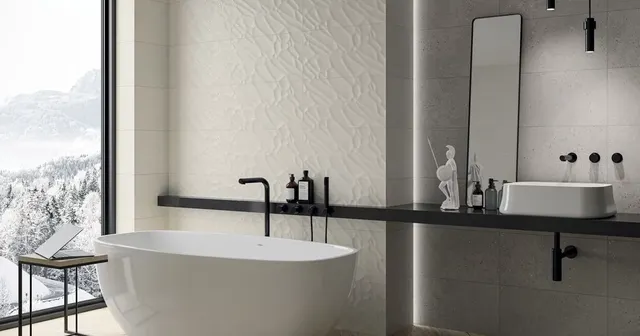
They look best against a calm background – with white and beige wall tiles, wood or travertine imitation. Green leaves complement matte black fittings and wooden furniture nicely. If you want greenery where plants cannot survive, green wall tiles can help – shades and combinations can be found in the article Green bathroom. A natural bathroom with wood, stone, and plants is described in the article Japandi bathroom.
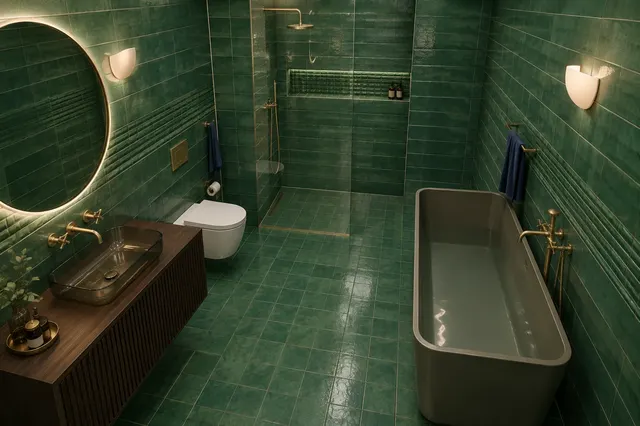
You can try how your bathroom would look with your tiles in the 3D bathroom planner for free. Shelves, hooks, and other accessories can be found in the category Shelves and racks on vkupelni.sk.
Common mistakes
- plant in a bathroom without a window without any light,
- cacti and succulents that do not tolerate humidity,
- pot without drainage and regular watering "according to the calendar",
- plant in the shower or on the radiator,
- toxic plant within reach of a cat or dog,
- relying on plants instead of ventilation.
Related: Green bathroom · Japandi bathroom · Bathroom without a window · Bathroom fan · Mould in the bathroom
Sources: ASPCA – Toxic and Non-Toxic Plant List for cats and dogs (spider plant, nephrolepis, aspidistra, calathea, chamedorea, Phalaenopsis orchid, and tillandsia are non-toxic; pothos, peace lily, philodendron, and sansevieria are toxic), STN 33 2000-7-701 (zones in the bathroom) according to the chapter Electricity and zones.
Terms in the glossary: IP rating · Electrical zones in the bathroom (zone 0, 1, 2) · Fan run-on · Travertine
Frequently Asked Questions
Which plants are suitable for the bathroom?
Plants that enjoy humid air and can tolerate indirect light – such as peace lily, nephrolepis fern, calathea, aspidistra, parlor palm, or Phalaenopsis orchid. Cacti and succulents do not belong in a humid bathroom.
What plant for a bathroom without a window?
No green plant can survive long without daylight. A grow light on a timer, which an electrician can install outside zones 0 and 1, or rotating plants with a spot by the window every few weeks will help.
Do plants help against humidity in the bathroom?
No. Plants evaporate water through their leaves, so they actually add to the humidity. Ventilation through a window or a fan with a timer is the only solution against humidity and mould.
Which plants for the bathroom are safe for cats?
According to the ASPCA list, for example, peace lily, nephrolepis fern, aspidistra, calathea, chamedorea, Phalaenopsis orchid, and tillandsia. Pothos, spathiphyllum, philodendron, and sansevieria are toxic to cats and dogs.
How often should you water plants in the bathroom?
According to the soil, not the calendar. In humid air, water evaporates more slowly, so water only when the surface soil is dry. The pot should have a drainage hole and a saucer.
Can plants be on the windowsill in the bathroom?
Yes, it gets the most light there. However, in winter the glass cools down and cold air flows in when ventilating, so sensitive plants like calathea should be moved further from the window.
AI Advisor
Have a question on the topic? Ask the advisor – they will respond based on TGB Kúpeľne articles.
AI advisor – answers are generated by artificial intelligence from TGB Kúpeľne articles and may contain errors.
Bathroom design
These are tips. We will draw your bathroom for you.
In the 3D bathroom planner, you can design your bathroom yourself – for free and without registration. If you want assurance, we will prepare a photorealistic custom visualisation based on actual dimensions and specific tiles in the studio. It's free with a purchase.
Online design for free Custom visualisation
TGB Kúpeľne Studio · Bratislavská 71, Senec · Mon–Fri 8:00–12:00 and 12:30–17:00, Sat 9:00–12:00 · Map