Bathrooms around the world
Japanese bathrooms: a place where one first washes and then bathes
In Japan, bathing has a different logic than a quick morning shower. The bath is not for washing but for warming and relaxation – the body is thoroughly washed outside of it first. This order applies in public baths as well as in ordinary households and explains why Japanese bathrooms look the way they do.
First cleansing, then immersion
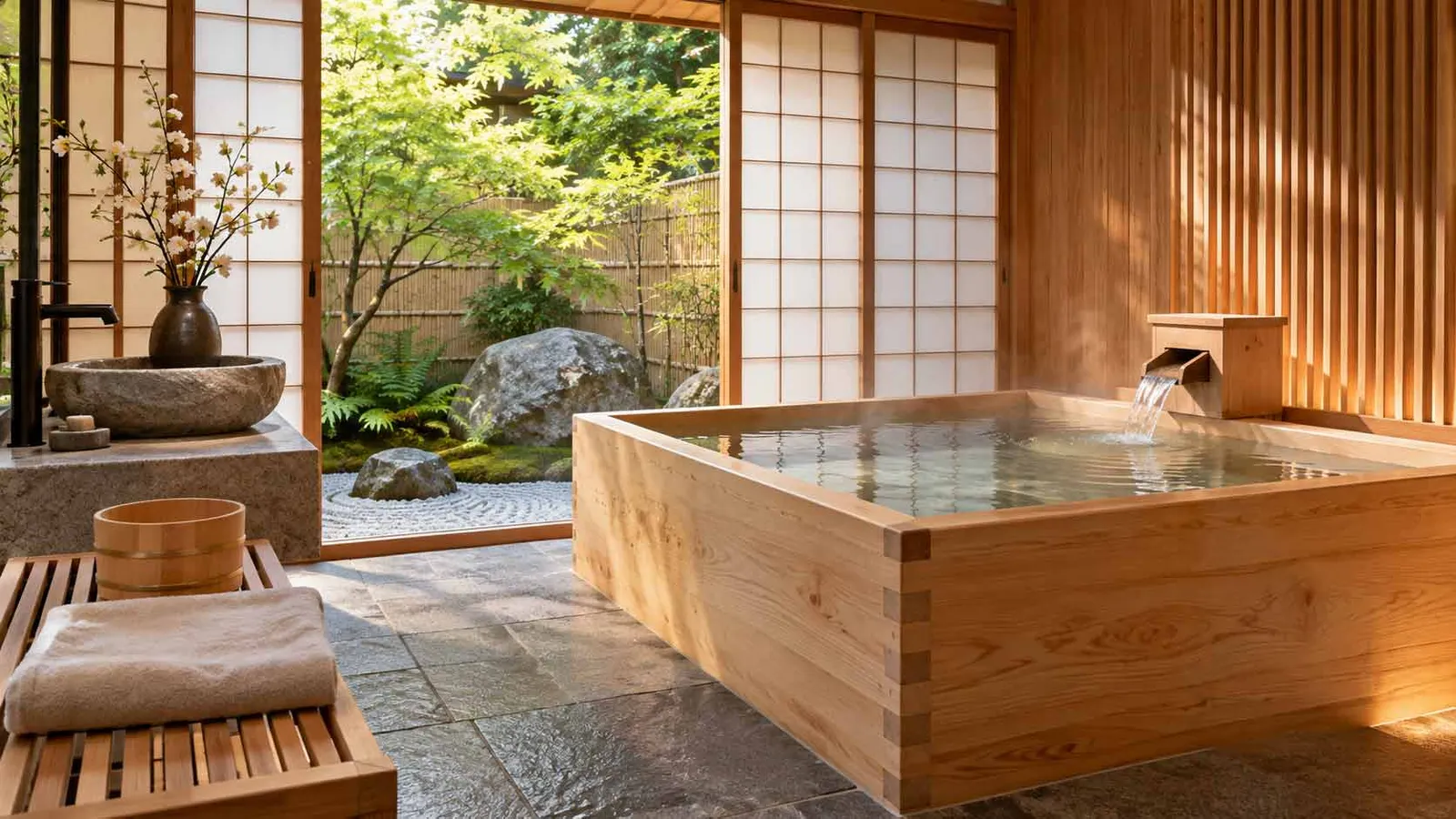
Before entering a communal bath, everyone thoroughly washes at a designated washing area. According to the Japan National Tourism Organization (JNTO), you will usually find a bucket, a low stool, often a handheld shower, and basic toiletries there. The entire body is washed, including the hair, soap is thoroughly rinsed off, and makeup is removed from the face. Before entering the bath, it is customary to pour hot water over oneself to acclimatise to the temperature – this is called kakeju in Japanese.
The reason is simple: the water in the bath must remain clean for everyone who comes after you. Therefore, even a small towel does not belong in it. It is placed on the edge of the bath or folded on the head, and long hair is tied up.
Silence, consideration, and a few rules
Bathing in Japan is not a noisy affair. A quiet voice is expected, no swimming or splashing, and phones are kept out of the bathing area. Photography is strictly prohibited in baths for privacy reasons. One enters the water without clothing – swimsuits remain in the changing room – with changing rooms and most baths being separated for men and women. Drinking alcohol before bathing is not recommended.
Travellers should also consider tattoos. Some traditional baths do not accept people with tattoos, although this is gradually changing. Solutions include facilities that explicitly tolerate tattoos or private baths for rent (kašikiriburo).
Onsen and sentō are not the same
Onsen is tied to a natural spring and has a legal definition. According to the Japanese Hot Springs Law of 1948, it is water that emerges from underground at a temperature of at least 25 °C at the source or contains a specified amount of certain designated substances.
Sentō, on the other hand, is a neighbourhood public bathhouse intended for daily hygiene. It mostly uses ordinary heated tap water, although some sentō have their own natural spring. They were once a necessity: as late as 1963, only about 60 percent of Japanese households had their own bath. They peaked around 1968, when there were approximately 2,700 operating in Tokyo. With the spread of bathrooms in apartments, their number quickly declined, and today only a few hundred remain in the metropolis.
What a Japanese bathroom looks like at home
In a typical Japanese apartment, you first enter a small changing room from the hallway, called dacuidžo, where there is usually a sink and often a washing machine. Behind it is the actual bathroom – a waterproof room where everything can get wet. It has a washing area with a handheld shower and stool, and a shorter but deep ofuro bath, where one sits with water up to the shoulders. The toilet is in a separate room.
The water in the bath is around 40 °C. Since everyone washes before immersion, the whole family can gradually bathe in the same water. In some households, the water from the bath is even used for laundry the next day.
The appearance of today's Japanese bathrooms was significantly influenced by the Tokyo Olympics in 1964. For the New Otani Hotel with 1,044 rooms, TOTO developed the first Japanese prefabricated bathroom units that could be quickly installed. The so-called unit bath then spread to apartment construction and is still common in hotels and small apartments today.
Simplicity has its purpose
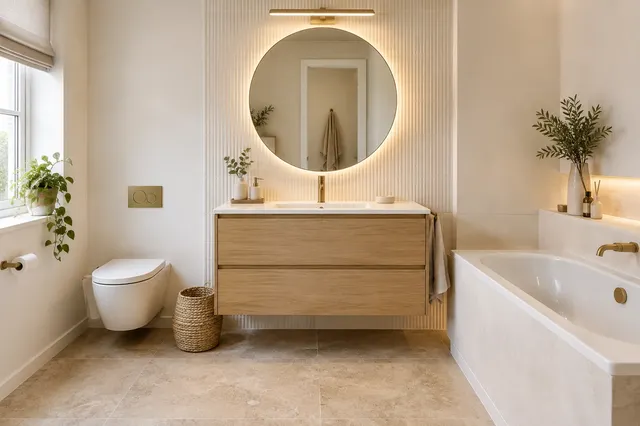
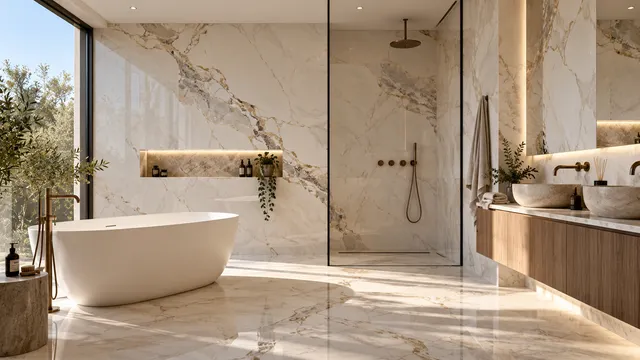
Many Japanese-style bathrooms work with calm colours, wooden accents, and visual order. However, this is not a mandatory list of materials. More important than the specific wall tiles is how the room is used: a clear separation of cleansing from relaxation.
What Japan can teach us
The Japanese principle can also be transferred to a Slovak bathroom without it resembling a backdrop:
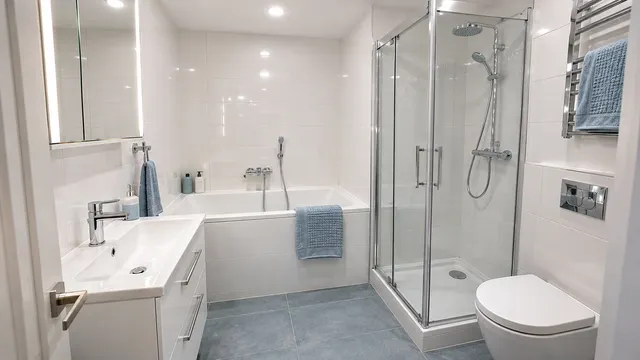
- Separate washing from relaxation. A shower enclosure right next to the bath or a shared "wet zone" behind a glass wall allows the bath to serve only for relaxation.
- Give the toilet its own space. A separate WC will ease the morning routine at home and make the bathroom a more peaceful place.
- Consider depth instead of length. In a smaller bathroom, a shorter, deeper bath that you sit in can be more pleasant than a long shallow one.
- Respect shared water. Those who shower before bathing will keep the water cleaner – at home and in wellness.
Respect for water and others may be an even stronger inspiration than the design itself.
What would it look like in your home? Design your bathroom in 3D for free or have a custom visualisation prepared at TGB Kúpeľne studio in Senec.
Sources and further information
- JNTO (Japan National Tourism Organization): How to best enjoy onsenjapan.travel
- JNTO: Bathing manners and tipsjapan.travel
- Japan Spa Association: What is onsen? (law on hot springs)spa.or.jp
- japan-guide.com: Hot spring waterjapan-guide.com
- Time Out Tokyo: onsen vs. sentó (tap water)timeout.com
- Japan Times (2016): Japan's public baths hope foreign tourists will help keep the taps runningjapantimes.co.jp
- Japan Times (2012): Dip into the history of the Japanese system bathjapantimes.co.jp
- TOTO: Origin and Evolution of Prefabricated Bathroomsjp.toto.com
- Embassy of Japan in Singapore: Sento (paintings of Fuji, Kikai-yu)sg.emb-japan.go.jp
- GATE12: Why is Mt. Fuji painted in public baths?thegate12.com
- The Japan Forum (TJF): Ofurotjf.or.jp
- Kids Web Japan (MOFA): Japanese bath, approx. 40 °Cweb-japan.org
- Wikipedia: Furo (shared water, washing)en.wikipedia.org
- X-House: layout of a Japanese bathroom (dacuidžo, separate WC)x-house.co.jp
- JREF (summary of data from the Tokyo government, 462 sentó as of 12/2022)jref.com