Tiles
Travertine in the bathroom: tiles and cladding with a travertine appearance
The travertine look is one of the most sought-after in bathrooms – the warm beige stone with typical pores creates a calm and natural atmosphere. However, real travertine is a porous limestone that is damaged by acids and acidic limescale removers and needs to be sealed. Therefore, porcelain stoneware that imitates travertine is more practical for a typical bathroom, as it looks similar, is almost non-absorbent, and does not require maintenance.
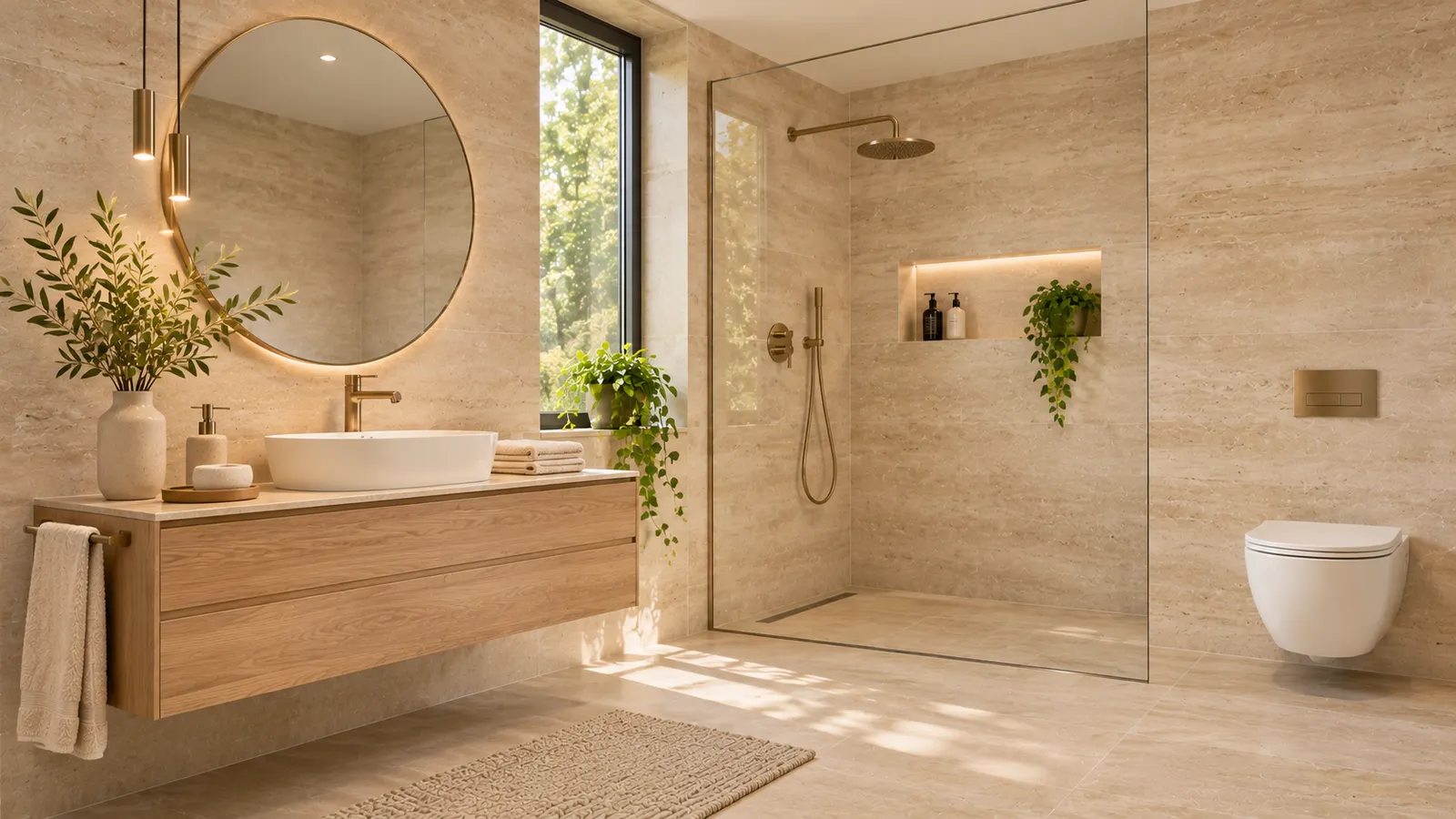
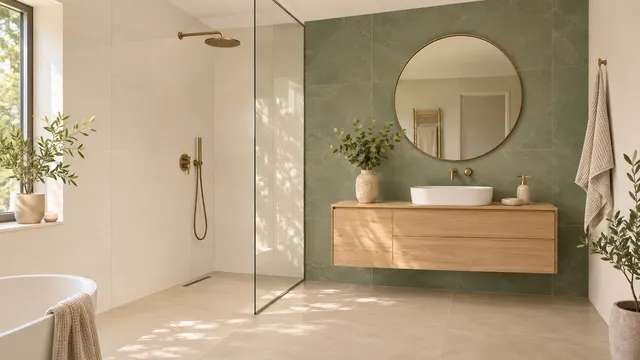
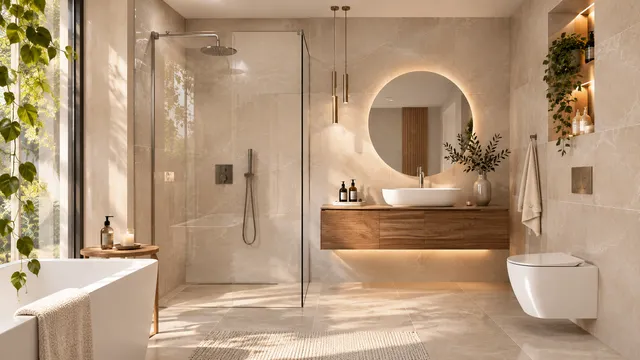
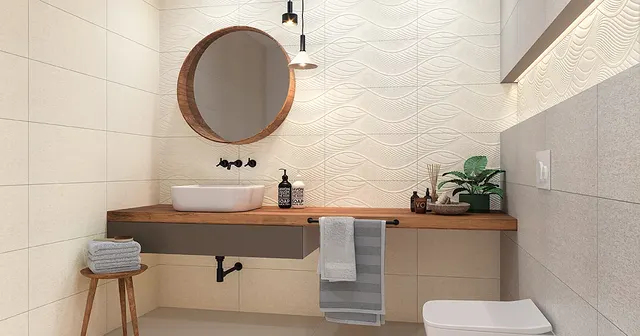
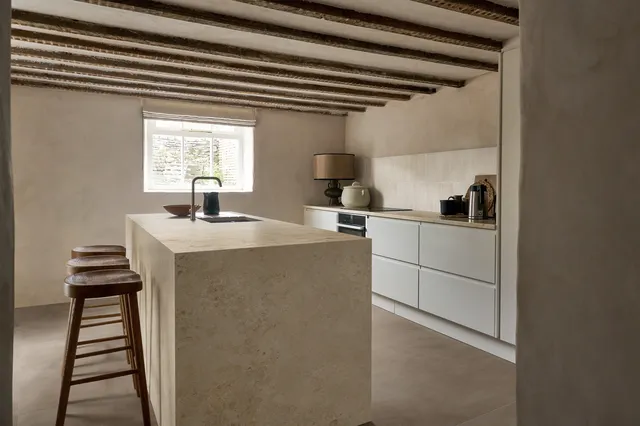
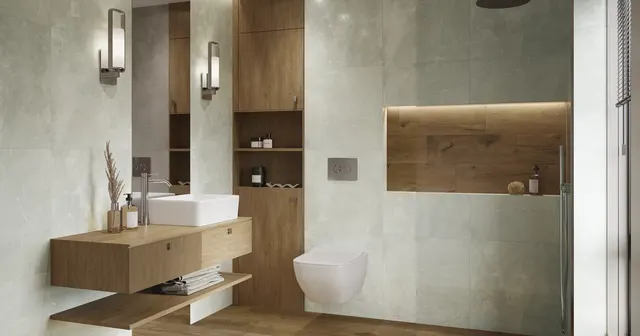
Illustrative image: bathroom with large-format wall tiles in travertine imitation
Travertine has made a big comeback in bathrooms. The warm beige stone with fine pores and horizontal patterns evokes a holiday hotel by the sea and pairs well with wood and brass fittings. When choosing, it is important to know whether you want real stone or its look in porcelain stoneware – they mainly differ in maintenance.
What is travertine
Travertine is a natural limestone formed by the sedimentation of minerals from springs. During its formation, small cavities and pores remain, giving it its characteristic appearance. The most famous travertine comes from Italy – it was used to build the Roman Colosseum, for example.
- Longitudinal cut – the stone is cut along the layers, showing distinct horizontal stripes on the surface.
- Transverse cut – cut across the layers, the pattern is softer, "cloudy".
- Surface – honed (matte and smooth), tumbled (with rounded edges, rustic), polished (glossy), and filled, when the pores are filled with grout.
Real travertine or porcelain stoneware with imitation
| Real travertine | Porcelain stoneware with travertine imitation | |
|---|---|---|
| Material | natural limestone, each piece is unique | ceramics with print, more motifs in the series |
| Water absorption | porous, absorbs water and grease | up to 0,5 %, almost non-absorbent |
| Acids | vinegar, lemon, and acidic limescale removers will etch it | common bathroom chemicals will not harm it |
| Maintenance | sealing, pH neutral agents, wipe stains immediately | regular cleaning |
| For showers | challenging – limescale and soap are difficult to remove | yes, with slip-resistant surface |
| Formats | slabs and tiles according to the quarry | including 60 × 120, 120 × 120 cm and large slabs |
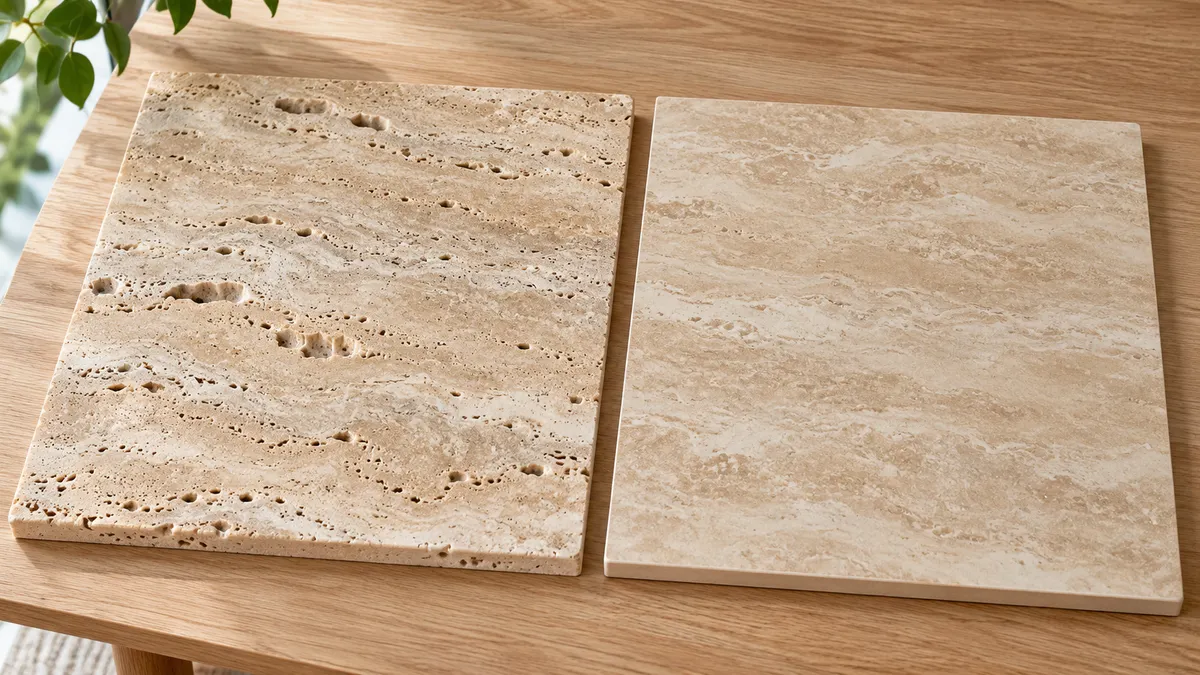
Choose real travertine if you want a unique natural material and don't mind regular maintenance. For a family bathroom, especially in the shower, we recommend porcelain stoneware with travertine imitation. We explain how porcelain stoneware differs from other floor tiles in the article Porcelain stoneware tiles.
Maintenance of travertine
- Real travertine should only be cleaned with pH neutral agents designed for natural stone. Wipe coffee, wine, or fruit juice immediately; otherwise, a stain may remain. Protect the stone with sealing according to the manufacturer's instructions and regularly renew the sealing.
- Porcelain stoneware with travertine imitation only needs to be washed with common agents. When using acidic limescale removers, think more about the cement joints, which are harmed by acids.
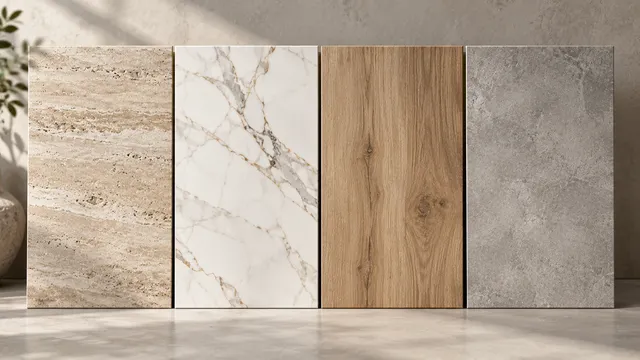
Shades of travertine
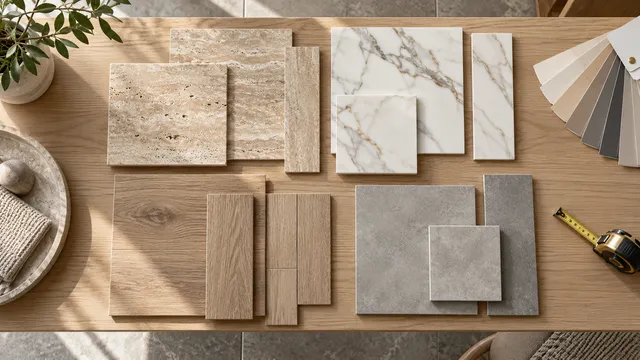
- Beige – classic warm travertine, the most versatile.
- Ivory – light creamy, visually enlarges even a small bathroom.
- Walnut – darker brown, suitable for an accent wall or floor.
- Grey – cooler, pairs well with concrete and black accessories.
Formats and laying
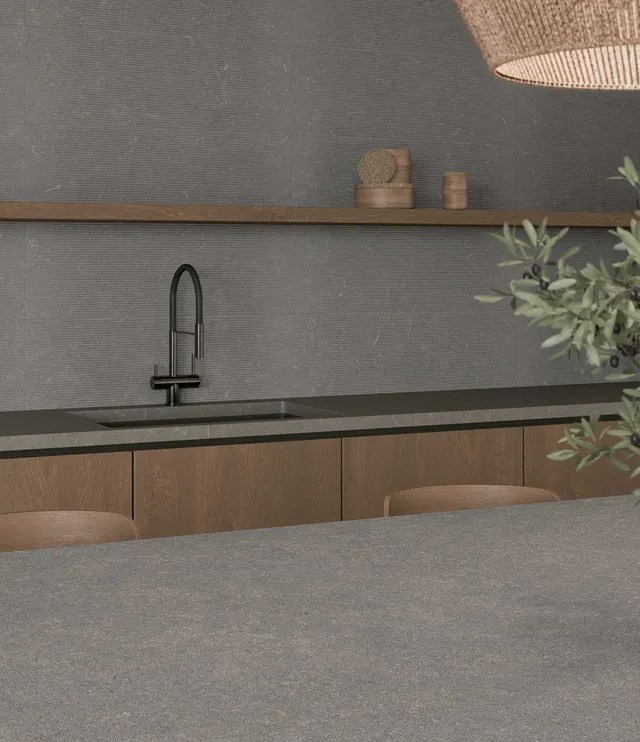
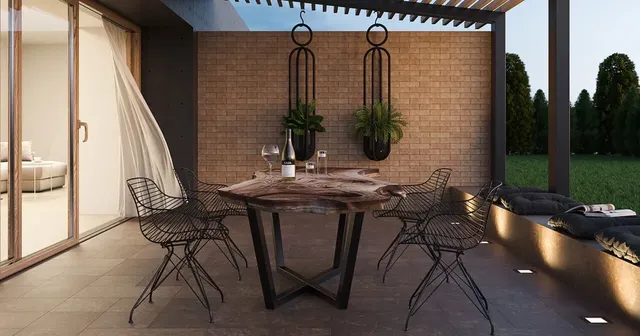
The travertine appearance is best highlighted in large formats of 60 × 120 cm, 120 × 120 cm or on slabs where the pattern does not repeat. When using tiles with longitudinal stripes, ensure that the stripes run in the same direction across the entire wall – most commonly horizontally. For the floor, a matte or honed surface with slip resistance R10 is suitable, and for a level-access shower, R10 to R11. Choose the grout in the shade of the tiles to create the effect of a single stone surface. More about formats can be found in the article Tile and floor tile formats.
What to combine with travertine
| Element | What fits well |
|---|---|
| wood | oak, walnut, teak – on furniture or flooring |
| faucets and accessories | brass, bronze, brushed gold or matte black |
| sanitary ware | white or cream, matte ceramics |
| colours | olive, sage, terracotta, natural linen |
| light | warm, around 2 700 to 3 000 K |
Why warm light, we explain in the article Bathroom tile colours.
Travertine in a small bathroom
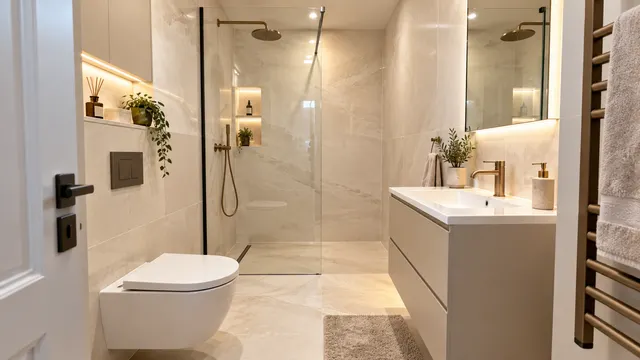
In a small bathroom, opt for light ivory or beige travertine in large format and lay the same tiles on the floor and walls. The bathroom will have no visible borders and will appear larger. Use darker walnut travertine on just one wall, for example behind the sink. More ideas can be found in the article Small bathroom.
All collections with travertine can be found in the style of bathrooms with travertine, comparisons with marble, wood and concrete in the article Imitations of travertine, marble, wood and concrete. More articles about tiles are on the page Wall and floor tiles.
Related: Porcelain stoneware tiles · Terrazzo in the bathroom · Concrete look · Marble in the bathroom · Tile colours
Sources: STN EN 14411 (water absorption of porcelain stoneware), manufacturer recommendations for maintaining natural travertine (cleaning with neutral pH agents, sealing, sensitivity to acids).
Frequently Asked Questions
Is travertine suitable for the bathroom?
Yes. Real travertine requires sealing and careful cleaning, which is why gres with a travertine imitation is more commonly used in regular bathrooms. It looks similar, absorbs almost no water, and is also suitable for the shower.
What is the difference between real travertine and travertine tiles made of gres?
Real travertine is a porous natural limestone that is etched by acids and easily discolours. Gres with a travertine imitation is ceramic with a water absorption of no more than 0.5%, does not need sealing, and is also produced in large formats.
How to clean travertine?
Real travertine only with neutral pH products for natural stone, without vinegar, lemon, and acidic limescale removers. Gres with a travertine imitation can be cleaned with regular products.
Does travertine need sealing?
Real travertine does – sealing reduces water absorption and protects it from stains. It needs to be regularly renewed. Gres with a travertine imitation does not need sealing.
What to combine travertine with in the bathroom?
With oak or walnut wood, brass or bronze fittings, white sanitary ware and warm lighting. It also pairs well with olive, sage, and terracotta colours.
Is travertine suitable for a small bathroom?
Yes, especially light ivory or beige in large format, the same on the floor and walls. Darker walnut travertine should only be used as an accent.
AI Advisor
Have a question on the topic? Ask the advisor – they will respond based on TGB Kúpeľne articles.
AI advisor – answers are generated by artificial intelligence from TGB Kúpeľne articles and may contain errors.
Bathroom design
These are tips. We will draw your bathroom for you.
In the 3D bathroom planner, you can design your bathroom yourself – for free and without registration. If you want assurance, we will prepare a photorealistic custom visualisation based on actual dimensions and specific tiles in the studio. It's free with a purchase.
Online design for free Custom visualisation
TGB Kúpeľne Studio · Bratislavská 71, Senec · Mon–Fri 8:00–12:00 and 12:30–17:00, Sat 9:00–12:00 · Map